
Try One Japanese Quiz Question at a Time With Mocchi

One-question-at-a-time practice with Mocchi is useful when you want to understand each decision before moving on. Choose a small target, answer before requesting help, and keep the explanation short enough that the next question still feels like your own attempt.

Mocchi presents one Japanese question, a learner answer, and a short explanation before moving on
What you need to know

Try One Japanese Quiz Question at a Time With Mocchi

A full page of questions can feel overwhelming when several answers depend on the same unclear point. A one-at-a-time format lets you focus, receive feedback, and continue at a manageable pace. It also changes the conditions: an explanation after one question may support the next answer. Use that support deliberately, then add a later fresh check if you want to see what you can retrieve independently. The format should serve the learning purpose rather than become a way to avoid every difficult attempt.

Choose a narrow target for the first few questions.

Attempt an answer before asking for the explanation.

Notice how feedback supports the next item.

Finish with a new independent check when appropriate.

Choose the format for the problem you have

If a long set makes you rush or lose track of explanations, one-at-a-time practice may help. Tell Mocchi the topic and why you want the slower format. A learner reviewing one particle contrast needs a different sequence from someone checking several unrelated weak points. Keep the first request small enough that you can inspect the answers carefully.

Do not assume that one format is universally better. A larger set can be useful for independent mixed practice, while a single-question sequence can help clarify a new decision. The format should match the activity you want to perform.

Make an answer before receiving the explanation

Read the full prompt, choose an answer, and state the clue that guided it. For a sentence such as 図書館で勉強します, the action happens at the library. If that relationship is the target, say so before checking. A correct guess and a supported reason give the tutor different information, even when the selected option is the same.
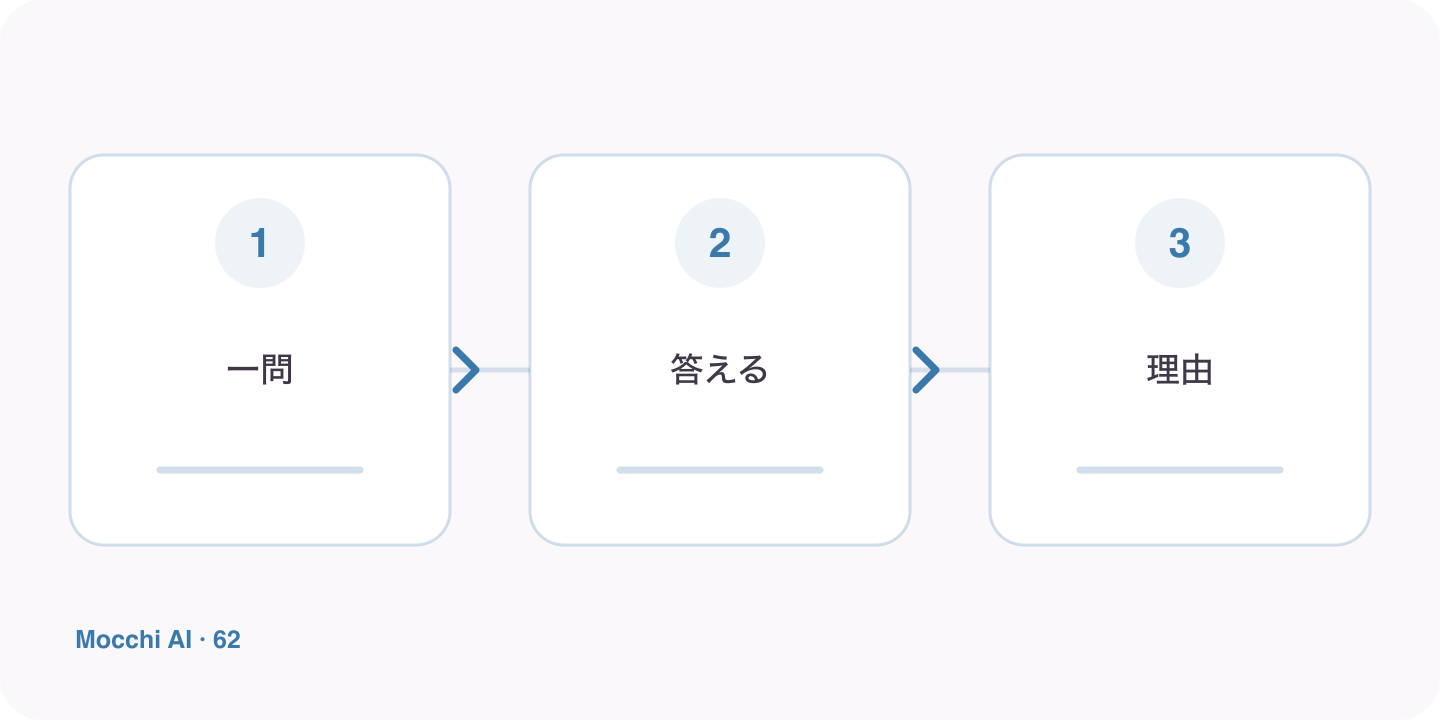
A single question leads to an answer and feedback before the next question is introduced
A one-at-a-time format gives room to inspect the decision, but later independent recall still matters.
JapaneseRomajiMeaning
図書館で勉強します。Toshokan de benkyō shimasu.I study at the library.
図書館に行きます。Toshokan ni ikimasu.I go to the library.

Keep feedback concise and connected to the decision

After the answer, ask for the main reason and one useful contrast if needed. A long explanation of every possible use can overwhelm the small format. If a new concept needs a full lesson, pause the quiz and study it deliberately. Then return to another question rather than letting the quiz become a sequence of answers you mostly read.

Notice when the previous explanation is supplying the answer

Immediate feedback can make the next item easier, which is helpful during learning. It does not automatically show unaided recall. If every question repeats the same relationship, ask for a small variation or a mixed follow-up. This makes the support visible and helps you choose an appropriate later check instead of interpreting a smooth run as permanent mastery.

Finish with a useful stopping point

Summarize one clue you understand better and one point still needing review. Ask Mocchi for a short next task or return later for a fresh example. Account limits and available features still apply, so choose a format and session size that suit your access. The useful result is a clearer decision and a manageable return point, not simply the largest number of chat turns.

Key points

A practical way to improve

Ask Mocchi for a few questions one at a time on a recent weak point. Answer each and state your reason before reading the explanation. After the small set, summarize the clue that helped most. At another session, request a fresh mixed question without the earlier explanation visible and compare how much support you need.

  1. 1

    Choose one clear goal

    Focus each session on a situation or skill you can actually use.

  2. 2

    Practice actively

    Say complete answers aloud instead of only reading or recognizing Japanese.

  3. 3

    Review and repeat

    Keep useful corrections and revisit the same skill until it feels natural.

FAQ

Frequently asked questions

Is one-at-a-time practice easier than a quiz shown all at once?

It can reduce visual load and allow immediate feedback, but it also changes the support available for later questions. Choose it for focused learning rather than comparing its score directly with a different format.

Can I stop after a small number of questions?

Choose a manageable set or tell Mocchi when you want to stop. End by identifying the useful clue or next review target rather than continuing only to make the session longer.

Should I read the explanation before choosing?

For a learning check, try first so the tutor can see your reasoning. If you need teaching before a quiz, ask for a short explanation as a separate step and recognize that the following attempt is supported practice.

Give each answer room for a reason

Use Mocchi's quiz format to make a small learning decision clear before moving to the next one.