

Ask Mocchi to Explain a Kanji Reading in the Word You Found

When a kanji reading surprises you, give Mocchi the complete word and sentence rather than the character alone. Learn the reading that belongs to that word, then compare another useful example without assuming one familiar sound fits every compound.

Mocchi reads a kanji inside a complete Japanese word and checks it against the surrounding sentence
What you need to know

Ask Mocchi to Explain a Kanji Reading in the Word You Found

Recognizing a character can create a tempting shortcut: you see a familiar shape and assign the reading you learned first. That may work in one word and fail in another. A word-focused question gives the tutor the information needed to explain what you encountered. It also helps you diagnose the actual problem: the character is visually unfamiliar, the word is new, or you are importing a reading from a different context.

Include the whole word in your question.

Use the sentence to establish the intended meaning.

Compare readings through useful vocabulary.

Practice the new word without its reading hint.

Give the tutor enough information to identify the word

A single character can leave several possible readings open. Include the complete word and enough surrounding text to establish its meaning. You can remove names and private details while preserving the relevant sentence. Ask Mocchi about the word you actually encountered, not a broad list of everything the character can do.

Explain your first guess too. If you borrowed a reading from another word, that comparison can become the lesson. The tutor can show how the examples differ and help you make a useful vocabulary note instead of treating the mistake as a failure to recognize the character at all.

Compare familiar words that share a character

The character 生 appears in words such as 生徒 and 先生, but the words need their own readings and meanings. Compare the vocabulary items as complete units rather than cutting them into isolated sounds and assuming a universal rule. A short sentence containing each word gives you another chance to connect its pronunciation with a meaningful use.
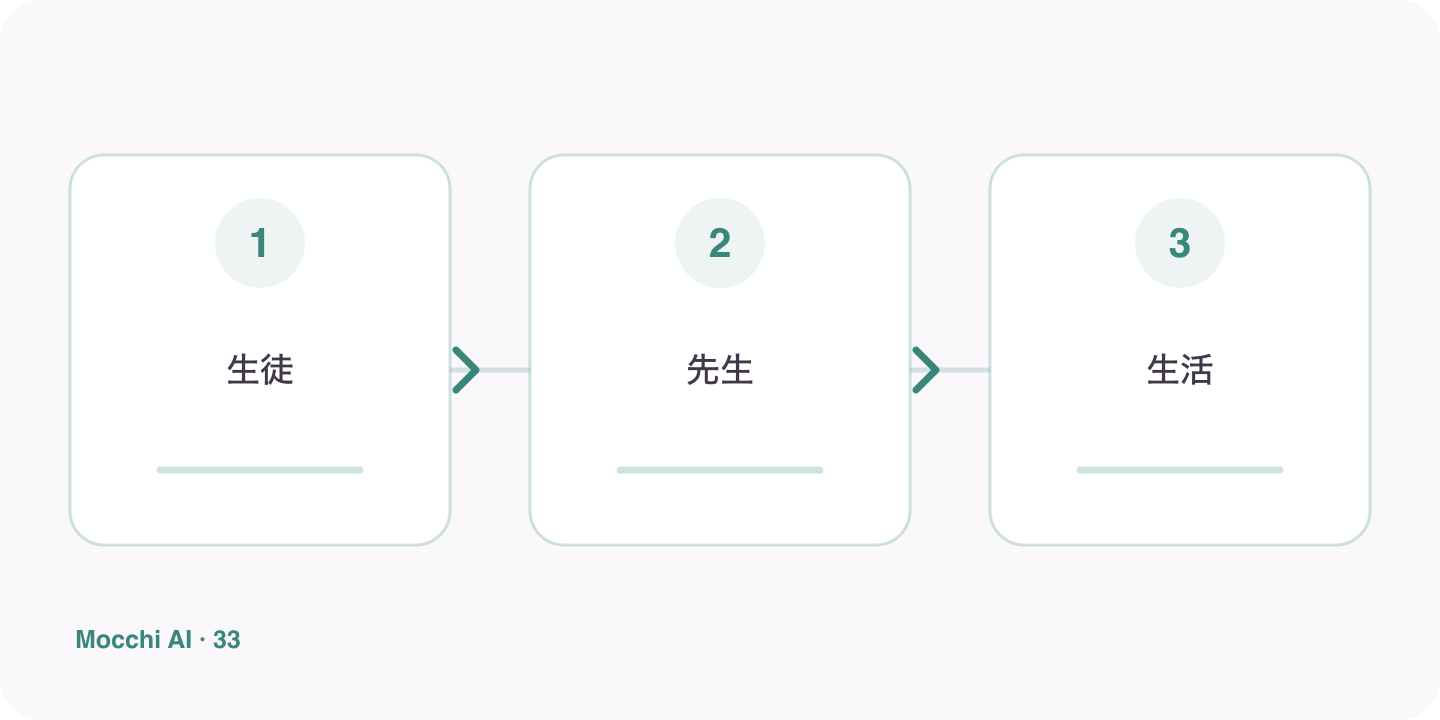
The full word, its context, and its reading are connected before a learner practices a fresh example
The same character can participate in words with different readings; ask about the word you are actually reading.
JapaneseRomajiMeaning
先生に質問します。Sensei ni shitsumon shimasu.I ask the teacher a question.
生徒が教室にいます。Seito ga kyōshitsu ni imasu.A student is in the classroom.

Distinguish an unfamiliar word from a forgotten reading

If you have never learned the word, a wrong reading may be a reasonable but unsuccessful guess. Learn the item in context before treating it as a retention problem. If you know the word but cannot retrieve its sound, use a short recall check and revisit it later. The practice should fit the weak link rather than automatically adding more isolated kanji drills.

Use annotation as support and then remove it briefly

Read the example with support when needed, then hide the reading and try again. Ask Mocchi for another sentence using the same word so you cannot rely only on the original line's appearance. Keep the grammar familiar during this check. A difficult new structure can obscure whether the reading itself is now available.

Build a small comparison set over time

Save the words that reveal a contrast you personally miss, with their readings and short meanings. At a later session, mix them into a small reading check. Do not assume that recognizing one set proves every compound containing the character is now predictable. Mocchi can help organize useful comparisons, while real words and independent attempts keep the knowledge connected to actual reading.

Key points

A practical way to improve

Choose a word whose reading you guessed incorrectly. Send Mocchi the word and a short non-sensitive sentence containing it. Ask for the reading and meaning of that word, then identify the character that led to your guess. Compare one other familiar word containing the same character. Finish by reading a new short sentence with the original word and no visible reading hint.

  1. 1

    Choose one clear goal

    Focus each session on a situation or skill you can actually use.

  2. 2

    Practice actively

    Say complete answers aloud instead of only reading or recognizing Japanese.

  3. 3

    Review and repeat

    Keep useful corrections and revisit the same skill until it feels natural.

FAQ

Frequently asked questions

Why does knowing a kanji not always tell me the reading?

A character can appear in different words with different readings. Knowing one familiar example is useful, but an unfamiliar word may still need its own reading and meaning checked.

Should I memorize all readings listed in a dictionary entry?

Not necessarily at once. Prioritize words relevant to your level and goals, and build a set of contextual examples. A reading list without vocabulary does not always help you identify the sound required by a particular word.

Can I use furigana forever instead of learning readings?

Furigana can support comprehension, but hide it occasionally to check whether you can retrieve a familiar word's reading. Use the support deliberately rather than assuming that following the annotation proves independent recognition.

Read the word that is in front of you

Use Mocchi to connect the actual vocabulary item, its context, and the reading you need for it.