
Celebrate, give, be blessed: the blessing kanji in four words
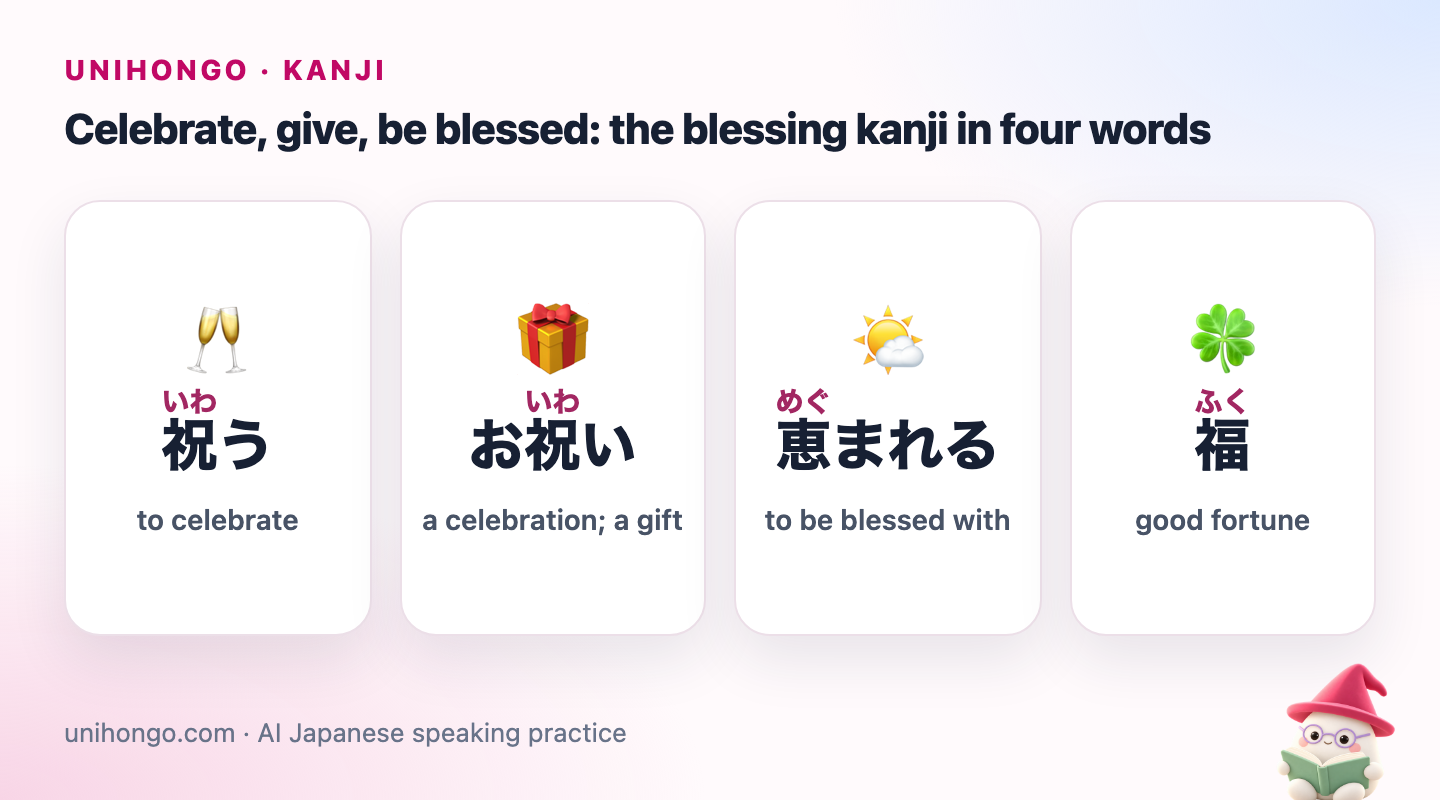
These four words show how Japanese divides the idea of blessing. The first two use 祝, for celebrating and the gift that goes with it. The third uses 恵, for the good things you are given. The fourth uses 福, for luck and fortune.
| Japanese | Romaji | Meaning |
|---|---|---|
| 祝う | iwau | to celebrate |
| お祝い | oiwai | a celebration; a gift |
| 恵まれる | megumareru | to be blessed with |
| 福 | fuku | good fortune |
Readings and parts of 祝, 恵 and 福
祝 and 福 share the same left side, 礻, called shimesuhen. It comes from 示, an altar, and appears in many kanji about gods, rituals and fortune, such as 神 (god) and 社 (shrine). 祝 adds 兄 (older brother) on the right; 福 adds 畐, a shape usually explained as a full jar or vessel. A full offering at the altar is an easy way to remember good fortune.
恵 has 心 (heart) at the bottom, which suits a kanji about kindness and grace. Its old form is 惠, still seen in some names.
| Kanji | Strokes | Reading type | Reading | Example |
|---|---|---|---|---|
| 祝 | 9 | on'yomi | shuku, shū | 祝日, shukujitsu; ご祝儀, goshūgi |
| 祝 | 9 | kun'yomi | iwa(u) | 祝う, iwau; お祝い, oiwai |
| 恵 | 10 | on'yomi | kei, e | 恩恵, onkei, benefit; 知恵, chie, wisdom |
| 恵 | 10 | kun'yomi | megu(mu), megumi | 恵み, megumi; 恵まれる, megumareru |
| 福 | 13 | on'yomi | fuku | 福袋, fukubukuro; 幸福, kōfuku |
Sixteen words for celebrations, gifts and luck
These words come up at weddings, births, New Year and every national holiday. The celebration words with 祝 are especially useful if you live or work in Japan, where gifts for life events are common and often have their own names.
| Japanese | Romaji | Meaning |
|---|---|---|
| 祝日 | shukujitsu | a national holiday |
| 祝福 | shukufuku | a blessing; to bless |
| 結婚祝い | kekkon iwai | a wedding gift |
| 出産祝い | shussan iwai | a gift for a new baby |
| ご祝儀 | goshūgi | a cash gift at a wedding |
| 内祝い | uchiiwai | a return gift |
| 祝杯 | shukuhai | a celebratory toast |
| 恵み | megumi | a blessing, a gift (of nature) |
| 恩恵 | onkei | a benefit |
| 知恵 | chie | wisdom, a clever idea |
| 幸福 | kōfuku | happiness (formal) |
| 福袋 | fukubukuro | a lucky bag |
| 福引き | fukubiki | a prize draw |
| 七福神 | shichifukujin | the Seven Lucky Gods |
| 自然の恵み | shizen no megumi | the gifts of nature |
| 天気に恵まれました。 | Tenki ni megumaremashita. | We were blessed with good weather. |
Uchiiwai is a custom worth knowing: when someone receives a celebration gift, for example for a wedding or a new baby, they often send a return gift, traditionally worth around a third to a half of what they received. The amount and timing vary by region and family, so follow local advice. Goshūgi is the cash given at a wedding in a special decorated envelope. Fukubukuro, lucky bags with mystery contents, go on sale at many shops in early January.
祝, 恵 or 福? Which blessing do you mean?
Think of the three kanji as three moments. 祝 is something you do: you celebrate, congratulate or toast. 恵 is something you receive: rain for the crops, a kind boss, a talent. 福 is a state of luck that you hope comes to you, often with a touch of folk religion. 祝福 combines celebration and fortune into the formal word for a blessing, used in weddings and religious contexts.
| Japanese | Romaji | Meaning |
|---|---|---|
| 誕生日を祝う | tanjōbi o iwau | to celebrate a birthday |
| いい友達に恵まれています。 | Ii tomodachi ni megumarete imasu. | I'm blessed with good friends. |
| 笑う門には福来る | warau kado ni wa fuku kitaru | good fortune comes to those who smile |
| 鬼は外、福は内 | oni wa soto, fuku wa uchi | demons out, good luck in |
| Point | 祝 (iwau) | 恵 (megumi) | 福 (fuku) |
|---|---|---|---|
| Core idea | celebrating, congratulating | a gift, grace received | good fortune, luck |
| Who acts | you and other people | nature, fate or people give it | luck comes to you |
| Typical words | お祝い, 祝日, ご祝儀 | 恵み, 恵まれる, 知恵 | 福袋, 幸福, 福の神 |
| Feeling | festive, social | grateful, modest | lucky, traditional |
Megumareru is the most useful word here for everyday conversation. It is modest: you are not boasting, just saying you were lucky to receive something good. Megumarete imasu ne, you are so fortunate, is also a kind thing to say to someone. Oni wa soto, fuku wa uchi is the chant at Setsubun, around 3 February, when many families throw roasted soybeans to drive out bad luck; the exact customs vary by region and household.
Dialogue: a wedding gift for a colleague
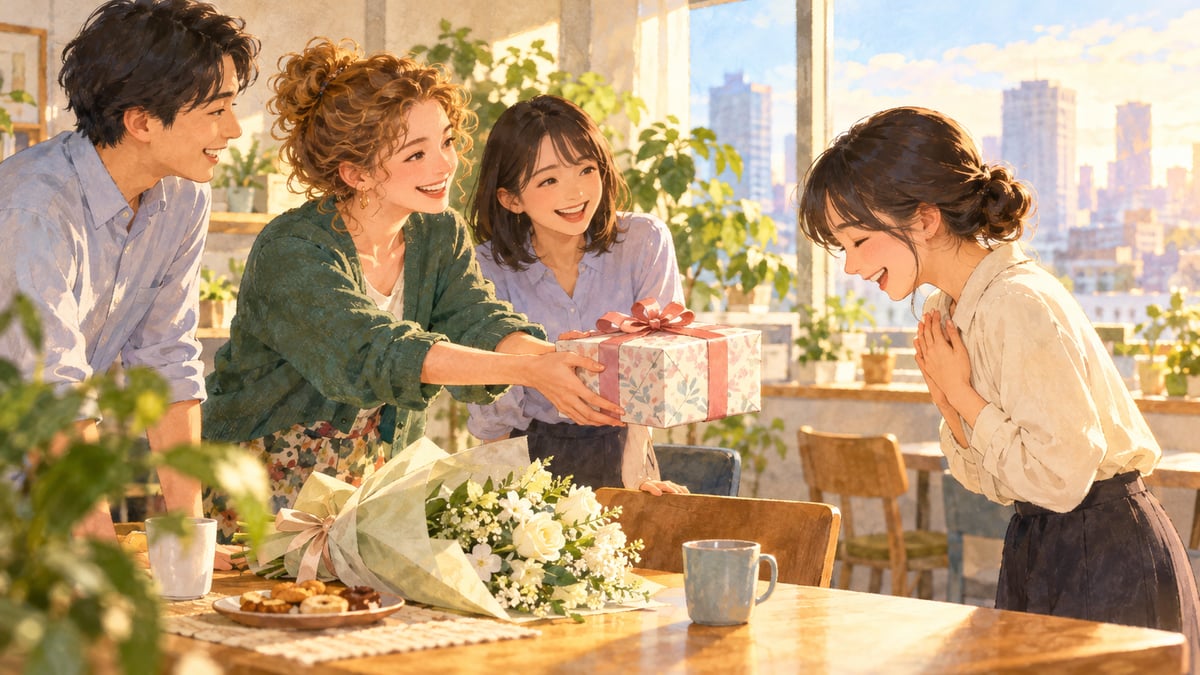
In many Japanese workplaces, colleagues chip in for a gift when someone gets married or has a baby. Here a team hands over a wedding gift. Everyone speaks politely, because it is the office, but the mood is warm.
| Japanese | Romaji | Meaning |
|---|---|---|
| 田中さん、ご結婚おめでとうございます! | Tanaka-san, go-kekkon omedetō gozaimasu! | You: Congratulations on your wedding, Ms Tanaka! |
| ありがとうございます。 | Arigatō gozaimasu. | Tanaka: Thank you so much. |
| これ、みんなからのお祝いです。 | Kore, minna kara no oiwai desu. | You: This is a gift from all of us. |
| えっ、いいんですか?うれしいです。 | E, ii n desu ka? Ureshii desu. | Tanaka: Oh, really? I'm so happy. |
| お二人の幸せを祈っています。 | Ofutari no shiawase o inotte imasu. | You: We wish you both every happiness. |
| いい同僚に恵まれて幸せです。 | Ii dōryō ni megumarete shiawase desu. | Tanaka: I'm lucky to have such good colleagues. |
| お幸せに! | Oshiawase ni! | Colleague: All the best to you both! |
Blessing tattoos and designs
Blessing is a beautiful idea for a tattoo, a gift or a shop name. Each of the three kanji reads differently on its own, and one of them has a dangerous twin.
- A lone 祝 looks like a celebration label. It appears on gift envelopes and on flower stands outside newly opened shops, so on skin it can read like a party sign.
- A lone 福 is clear and positive, but it strongly suggests New Year decorations. In Chinese homes, 福 is often hung upside down at Lunar New Year, a custom based on a Chinese pun that Japanese does not share.
- A lone 恵 is often read as the girl's name Megumi, so readers may think you have tattooed someone's name.
- Words often work better: 恵み (megumi, a blessing), 祝福 (shukufuku, blessing) or 幸福 (kōfuku, happiness) state the idea fully.
- Ask a native speaker to check the characters before you get inked, and read the look-alike section below first.
Look-alikes: when a celebration becomes a curse
The look-alike to fear is 呪 (noroi, a curse), which has 口 on the left where 祝 has the altar radical. The right side, 兄, is identical. One small slip turns a blessing into a curse, so this pair is worth checking twice. 福 has its own cousins: 副 (fuku, vice- or secondary), 富 (tomi, wealth) and 幅 (haba, width).
| Japanese | Romaji | Meaning |
|---|---|---|
| 呪い | noroi | a curse |
| 副作用 | fukusayō | a side effect |
| 富士山 | Fujisan | Mount Fuji |
| 専門 | senmon | a speciality, a field |
- Writing 呪 when you mean 祝. Check the left side: blessing has the altar radical.
- Using shukufuku for a simple congratulations. In daily life, say omedetō or oiwai.
- Saying I'm blessed with kōfuku. Use megumareru: ... ni megumarete imasu.
- Confusing 恵 with 専 (sen). 恵 has 心 at the bottom; 専 has 寸.
Names and places with these kanji
恵 is a popular kanji in names because it suggests grace and blessing. It can be read Megumi on its own, or e and kei in combinations such as Emi and Keita. 福 appears in several prefecture names, including 福岡 (Fukuoka), 福島 (Fukushima) and 福井 (Fukui). 祝 is rare in given names but appears in some family names.
| Japanese | Romaji | Meaning |
|---|---|---|
| 恵 | Megumi | blessing · girl |
| 恵美 | Emi | blessing and beauty · girl |
| 福岡 | Fukuoka | Fukuoka (city and prefecture) |
Prepare your congratulations with Mocchi and Hana-sensei
Before the next wedding, birth or promotion, sign in and write a short congratulations message to Mocchi with /correct, such as a card for a colleague. Mocchi fixes the Japanese, explains why oiwai or omedetō fits better than shukufuku, and remembers the phrases you stumble on so they come back in a later quiz.
Then rehearse the handover. In AI Sensei, pick Hana-sensei and ask for a roleplay as a colleague who has just got married. Give the gift, wish the couple well and reply to the thanks; afterwards, the session report lists the phrases worth polishing.