
The kanji for strength at a glance
Japanese has two kanji that cover most meanings of strength. 力 (chikara) is a noun for power, force and ability. 強 (kyō) is the kanji of 強い (tsuyoi), strong. From these come two very useful words: 強さ, strength as a quality, and 力強い, full of power. The four cards below show the core set.
A quick test helps: if you can build it up, use it up or put it into something, it is 力. If it describes how a person or thing is, it is 強い. Your stamina is 体力 (bodily power); a person who never gives up is 強い人, a strong person.
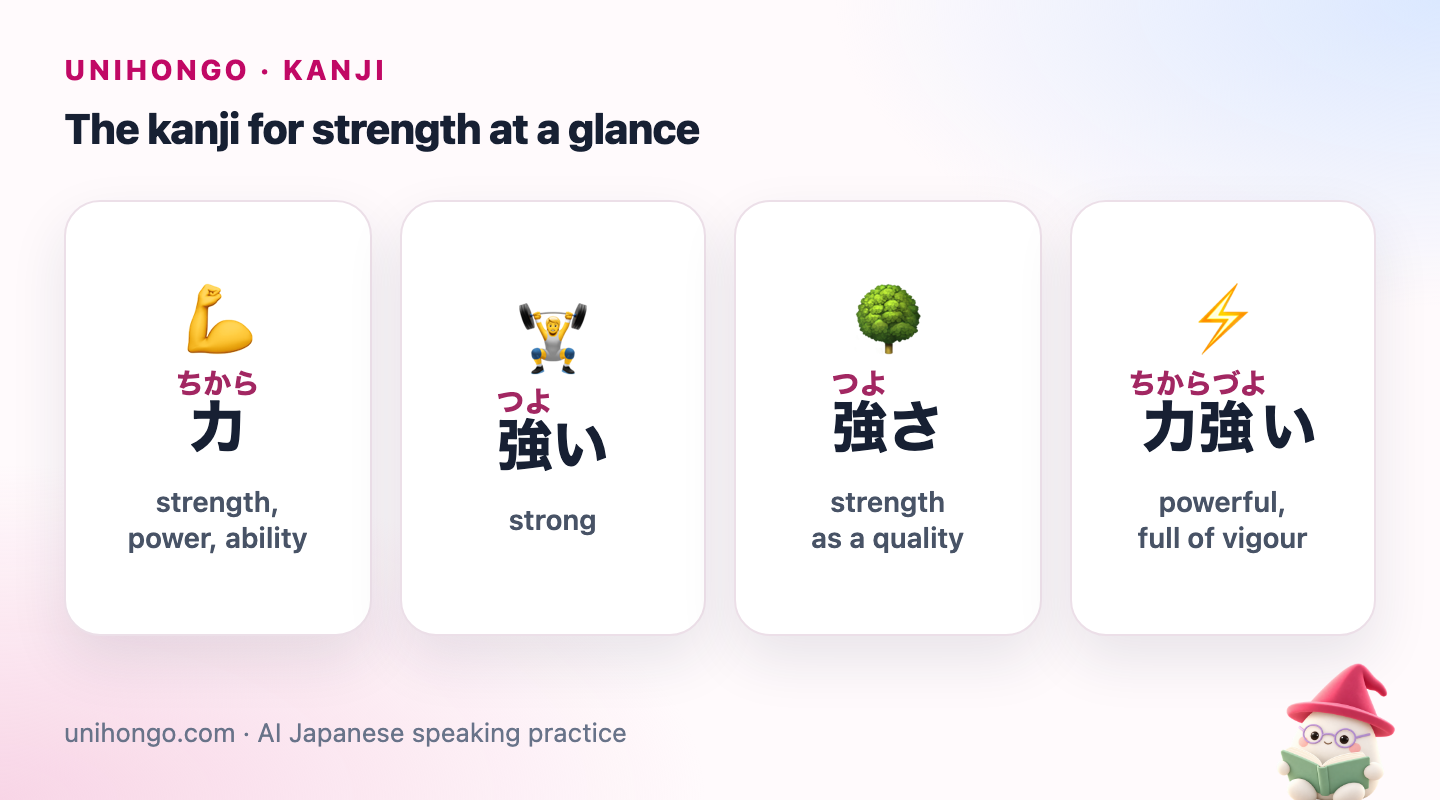
| Japanese | Romaji | Meaning |
|---|---|---|
| 力 | chikara | strength, power, ability |
| 強い | tsuyoi | strong |
| 強さ | tsuyosa | strength as a quality |
| 力強い | chikarazuyoi | powerful, full of vigour |
Readings, strokes and parts
| Kanji | Strokes | On'yomi | Kun'yomi | Core meaning |
|---|---|---|---|---|
| 力 | 2 | ryoku, riki | chikara | power, force, ability, effort |
| 強 | 11 | kyō, gō | tsuyoi, tsuyomaru, tsuyomeru, shiiru | strong, to strengthen, to force |
力 is one of the simplest kanji, with only two strokes. It is traditionally described as a picture of a strong arm or a plough, and it also works as a component meaning effort or power in other kanji, such as 男 (man), 勇 (courage), 努 (effort) and 動 (to move).
強 has 11 strokes. On the left is 弓 (bow); on the right are 厶 on top and 虫 below. You do not need an origin story to remember it: picture a bow pulled taut, and you have a strong image. The reading gō appears in a few words such as 強引 (gōin, pushy), and shiiru means to force someone, as in 無理を強いる, which is formal.
Everyday words with 力 and 強
These are words you will meet in conversations, the news and at work. Notice how often 力 means ability or effort rather than muscles, and how 強 covers being good at something.
| Japanese | Romaji | Meaning |
|---|---|---|
| 体力 | tairyoku | physical stamina |
| 努力 | doryoku | effort, hard work |
| 能力 | nōryoku | ability, capability |
| 協力 | kyōryoku | cooperation |
| 魅力 | miryoku | charm, appeal |
| 全力 | zenryoku | all your strength, full effort |
| 力持ち | chikaramochi | a physically strong person |
| 力士 | rikishi | sumo wrestler |
| 勉強 | benkyō | study |
| 強気 | tsuyoki | bold, confident, assertive |
| 強み | tsuyomi | a strong point, an advantage |
| 強化 | kyōka | strengthening, reinforcement |
力, 強い, 強さ or 力強い: which one fits
The four words overlap, but each has its own job. Choosing well makes your Japanese sound natural, and it matters even more if you are choosing a word for a design.
| Japanese | Romaji | Meaning |
|---|---|---|
| 日本語の力をつけたいです。 | Nihongo no chikara o tsuketai desu. | I want to build my Japanese ability. |
| 今日は風が強いですね。 | Kyō wa kaze ga tsuyoi desu ne. | The wind is strong today, isn't it? |
| 彼女の強さは優しさです。 | Kanojo no tsuyosa wa yasashisa desu. | Her strength is her kindness. |
| 力強い言葉をありがとう。 | Chikarazuyoi kotoba o arigatō. | Thanks for the encouraging words. (casual) |
| 私はお酒に弱いです。 | Watashi wa osake ni yowai desu. | I can't hold my drink. (lit. weak with alcohol) |
| Word | Part of speech | Use it for | Example idea |
|---|---|---|---|
| 力 | Noun | Power, ability, effort you have or give | Japanese ability, the power of music |
| 強い | Adjective | Describing someone or something as strong | A strong team, strong wind, strong medicine |
| 強さ | Noun | Strength as a quality or degree | The strength of a heart, wind strength |
| 力強い | Adjective | Powerful, vigorous, reassuring | A powerful voice, an encouraging word |
強い also means good at or resistant to: 朝に強い (good at mornings), 寒さに強い (handles the cold well). Its opposite is 弱い (yowai, weak), and the same pattern works there, as in the last example.
Idioms and set phrases with 力
Many everyday expressions use 力 to talk about help and effort. 力になる (to be a strength for someone) is one of the warmest ways to offer support, and 微力ながら is the modest version used at work.
| Japanese | Romaji | Meaning |
|---|---|---|
| 力を合わせる | chikara o awaseru | to join forces |
| 力を入れる | chikara o ireru | to put effort into, to focus on |
| 何かあったら、力になるよ。 | Nanika attara, chikara ni naru yo. | If anything happens, I'm here for you. (casual) |
| 微力ながらお手伝いします。 | Biryoku nagara otetsudai shimasu. | I'll help in my small way. (humble) |
| 力が抜けた。 | Chikara ga nuketa. | All my strength drained away; I was so relieved. |
In names, 力 appears as the boy's name Chikara, and 強 is used in boys' names such as Tsuyoshi. Both feel solid and a little old-fashioned, and families often choose them for their meaning.
Mini dialogue: helping a neighbour carry rice
Strength comes up naturally when you help someone. Here is a short exchange between you and an older neighbour, mixing polite and friendly speech the way real neighbours do.
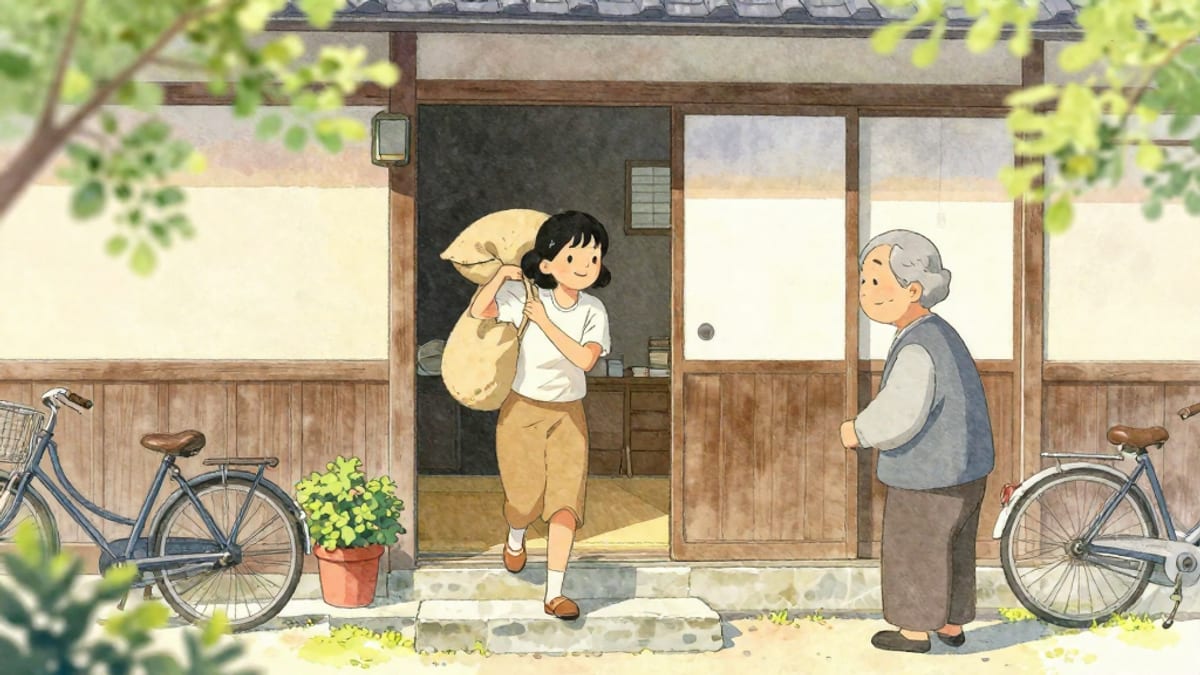
| Japanese | Romaji | Meaning |
|---|---|---|
| 重そうですね。持ちましょうか。 | Omosō desu ne. Mochimashō ka. | You: That looks heavy. Shall I carry it? |
| いいの?助かるわ。 | Ii no? Tasukaru wa. | Neighbour: Are you sure? That would help. |
| 大丈夫です。力には自信があります。 | Daijōbu desu. Chikara ni wa jishin ga arimasu. | You: No problem. I'm confident in my strength. |
| まあ、力持ちね。 | Mā, chikaramochi ne. | Neighbour: My, you're strong. |
| いつでも声をかけてください。 | Itsudemo koe o kakete kudasai. | You: Call me any time. |
力 or 強 as a tattoo or design
A single kanji looks bold, but it reads differently to Japanese eyes than many people expect. 力 on its own simply says power, rather like printing the English word power on your arm. It is not wrong, just plain. 強 alone looks like part of a word, because Japanese speakers read it as the stem of 強い, so it can look unfinished.
A full word usually says what you mean more clearly. 強さ (strength as a quality), 強く生きる (to live strongly) and 不屈 (fukutsu, unyielding, indomitable) all read naturally. Note that Chinese uses a slightly different simplified form of strong, 强, so a design copied from a Chinese source may not match the Japanese 強. Before you print or ink anything, ask a native speaker to check the characters, the stroke shapes and the font.
| Japanese | Romaji | Meaning |
|---|---|---|
| 不屈 | fukutsu | unyielding, indomitable |
| 強く生きる | tsuyoku ikiru | to live strongly |
Make 力 and 強 stick with Mocchi
Open Mocchi and type: /kanji 強. Mocchi gives you the meaning, readings and common words, and you can follow up with Which is more natural, 力がある or 強い, for a person who never gives up? Mocchi remembers which pair confused you and folds it into a later /review, so the difference comes back before you forget it.
Then ask Mocchi to turn the twelve words above into flashcards with /create-flashcards, picking a photo for each one, such as a sumo wrestler for 力士. Play them in Kotoba Tank, where you hear a word and hit the right one; it is a quick way to hear ryoku, riki and kyō until they feel familiar.
Common mistakes and how to write 力
- Mixing up 力 with the katakana カ (ka). They look almost identical in many fonts; in context, 力 is a full-size kanji and カ is part of a katakana word.
- Mixing up 力 with 刀 (katana, sword). In 力 the sweeping stroke pokes up above the top line; in 刀 it starts at the top line and stays inside.
- Saying 力がある人 when you mean emotionally strong. That sounds like physical power or influence; for strength of character, say 強い人 or 心が強い人.
- Using 強い for flavour where Japanese says 濃い (koi). Strong coffee is 濃いコーヒー; 強い is used for alcohol, wind and medicine.