
Two kanji for love: 愛 and 恋
English has one word, love, for a parent's love, a teenage crush and a passion for football. Japanese splits the idea between two kanji. 愛 is love as care and commitment; 恋 is love as attraction and longing. When the two meet, as in 恋愛, the word means romance or romantic relationships in general.
In everyday conversation, though, Japanese speakers rarely say either one about a person. They say 好き (suki, I like you) and 大好き (daisuki, I really like you), which carry more weight than their English translations suggest.
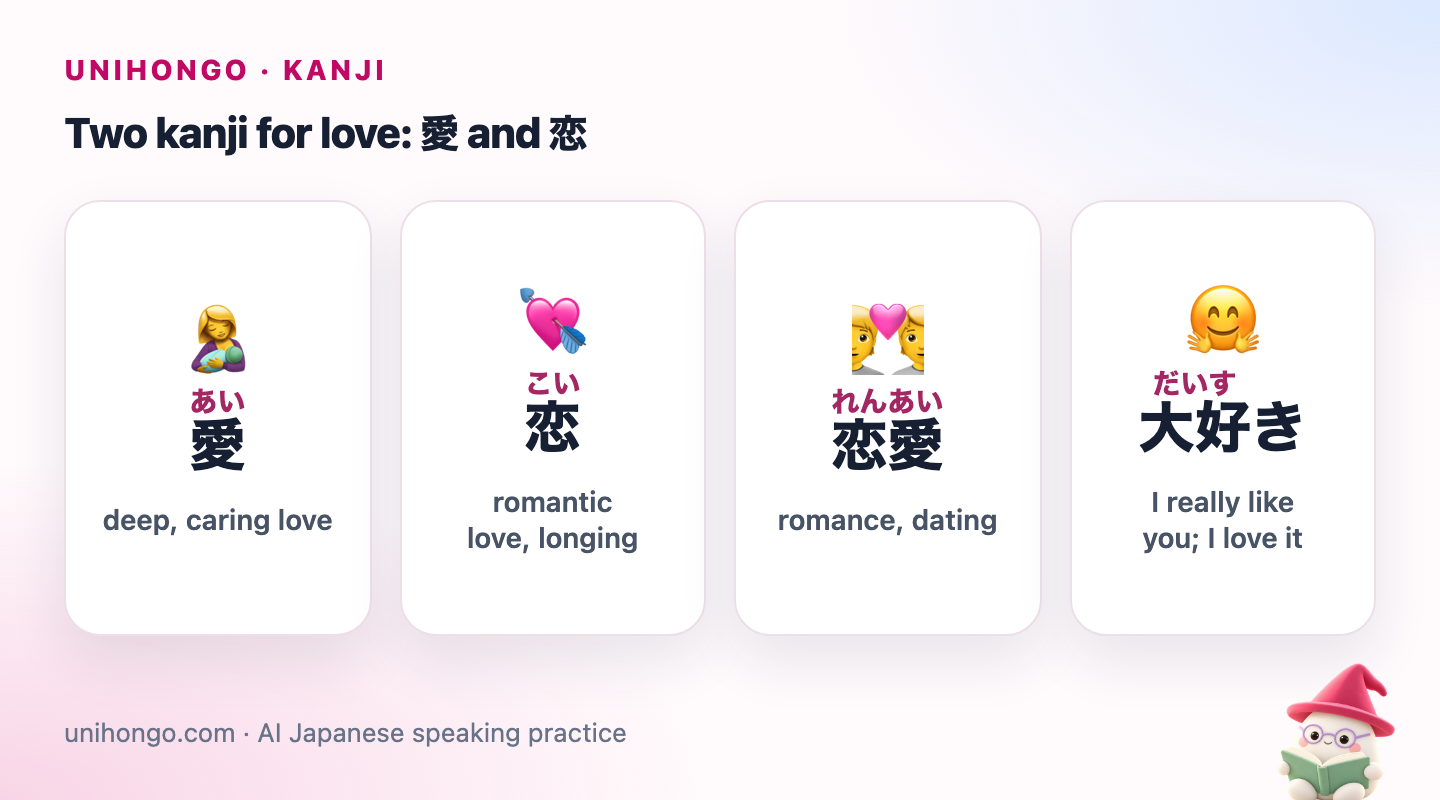
| Japanese | Romaji | Meaning |
|---|---|---|
| 愛 | ai | deep, caring love |
| 恋 | koi | romantic love, longing |
| 恋愛 | ren'ai | romance, dating |
| 大好き | daisuki | I really like you; I love it |
A popular piece of kanji wordplay in Japan contrasts the two by where the heart sits. In 恋 the heart is at the bottom, so 恋 is 下心 (shitagokoro, a hidden motive); in 愛 the heart is in the middle, so 愛 is 真心 (magokoro, a sincere heart). It is a joke, not etymology, but it captures the general direction: 恋 is about how someone makes you feel, 愛 is about what you feel for them.
Readings, strokes and the heart inside
Both characters contain 心, heart. In 愛 it sits in the middle, under a cover; in 恋 it is at the bottom. Remembering this is the easiest way to tell them apart from look-alikes.
| Japanese | Romaji | Meaning |
|---|---|---|
| 恋は下心、愛は真心。 | Koi wa shitagokoro, ai wa magokoro. | Wordplay: koi has a hidden motive, ai a sincere heart. |
| Item | 愛 | 恋 |
|---|---|---|
| Main meaning | Love, affection, care | Romantic love, longing |
| On'yomi (Chinese reading) | ai | ren |
| Kun'yomi (native reading) | None in the official list | koi, ko(u), koi(shii) |
| Stroke count | 13 | 10 |
| Parts | 爫 claw, 冖 cover, 心 heart, 夂 walking feet | 亦 top, 心 heart |
| Simplified Chinese | 爱 (no heart) | 恋 (same shape) |
愛 has only one reading in the official list of everyday kanji: ai. You may see it with the readings いと in 愛しい (itoshii, dear, beloved) or め in 愛でる (mederu, to admire tenderly) in songs and literature, but in ordinary text ai is what you need.
恋 is a simplified Japanese form of an older, more complex character, 戀. Its top part, 亦, takes six strokes and 心 adds four; for reading and writing, just remember that 恋 keeps its heart at the bottom.
Everyday words with 愛
愛 builds words for affection of every kind, not only romantic. Some of them are among the most common words in Japanese.
| Japanese | Romaji | Meaning |
|---|---|---|
| これは私の愛用のカメラです。 | Kore wa watashi no aiyō no kamera desu. | This is my much-loved camera. |
| 子どもへの愛情は深いです。 | Kodomo e no aijō wa fukai desu. | A parent's love for their child runs deep. |
Words such as 愛犬, 愛用 and 愛読書 use 愛 to mean beloved or favourite. They are a natural, everyday way to talk about what you love without any romance: 愛用のカメラ is my trusty, much-loved camera. You will see 愛用 a lot in shopping and reviews, where people describe a product they have used happily for years.
可愛い is an interesting case. The word kawaii is native Japanese, and the kanji were chosen afterwards for their meaning (lovable). Most people write it かわいい in hiragana.
Everyday words with 恋
恋 builds the vocabulary of crushes, dating and heartbreak. These words are common in conversation, dramas and pop songs.
| Japanese | Romaji | Meaning |
|---|---|---|
| 恋人 | koibito | boyfriend or girlfriend, partner |
| 初恋 | hatsukoi | first love |
| 失恋 | shitsuren | heartbreak, being rejected |
| 恋しい | koishii | to miss someone or something dearly |
| 恋する | koi suru | to be in love, to fall for someone |
| 恋バナ | koibana | love talk, chat about crushes (casual) |
| 片思い | kataomoi | one-sided love (no 恋 in it) |
恋しい is useful even without romance. 日本の食べ物が恋しい means I miss Japanese food. It expresses a longing for something absent, which is the heart of 恋.
Notice that 片思い, one-sided love, does not use 恋 at all; it uses 思い, thought or feeling. Not every love word contains a love kanji. 好き itself is written with 女 and 子, and many of the most romantic lines in Japanese, such as 会いたい (I want to see you), contain no love kanji at all.
Mini dialogue: a friend notices you are in love
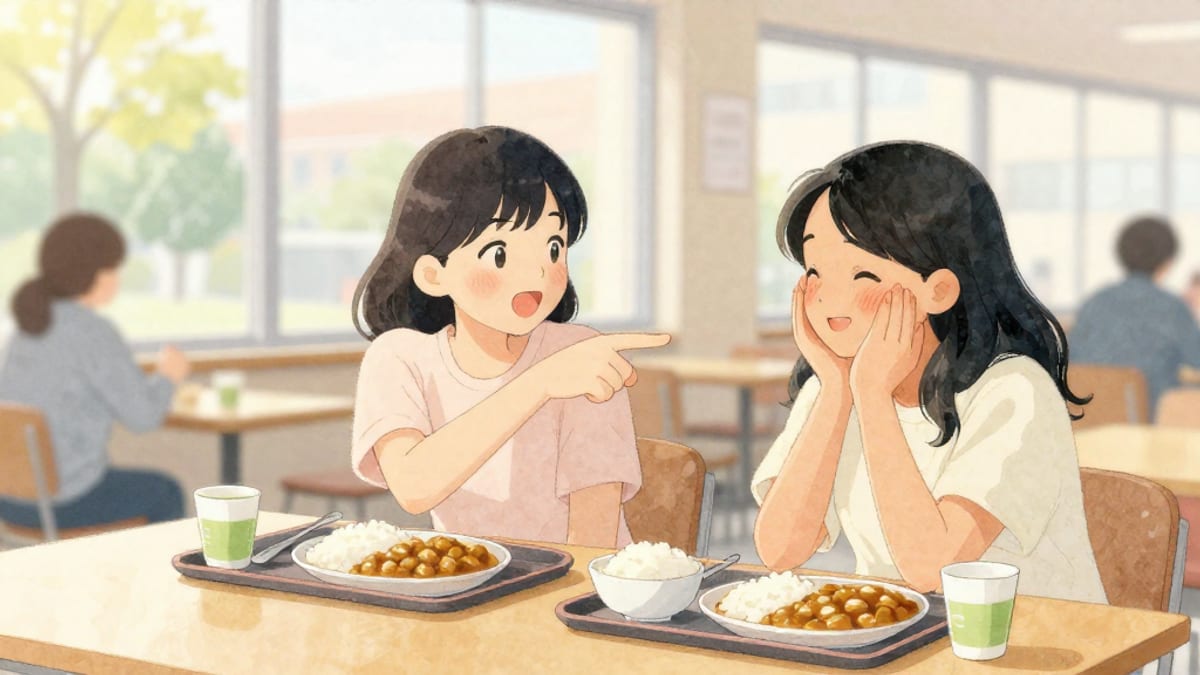
Between close friends, conversations about love are casual and full of hints. This is how two friends might talk over lunch.
| Japanese | Romaji | Meaning |
|---|---|---|
| 最近、恋してる? | Saikin, koi shiteru? | Mio: Are you in love these days? (casual) |
| え、わかる? | E, wakaru? | Priya: What, can you tell? |
| 顔に書いてあるよ。 | Kao ni kaite aru yo. | Mio: It's written all over your face. |
| 実は、好きな人ができたんだ。 | Jitsu wa, suki na hito ga dekita n da. | Priya: Actually, there's someone I like. |
| いいなあ。告白するの? | Ii nā. Kokuhaku suru no? | Mio: Lucky you. Are you going to tell them? |
| まだ片思いだから、様子を見る。 | Mada kataomoi dakara, yōsu o miru. | Priya: It's still one-sided, so I'll wait and see. |
Look-alikes, writing tips and common mistakes
Two look-alikes cause real trouble. 恋 (love) and 変 (hen, change, strange) share the same top; only the bottom differs: 心 in 恋, 夂 in 変. A card saying 変 instead of 恋 tells someone they are weird. 愛 and 受 (ju, to receive) share the 爫 and 冖 top; 受 ends in 又 instead of 心 and 夂.
How to write 愛: start with the three dots and the long stroke of 爫 at the top, then the cover 冖, then 心 in the middle, and finish with 夂 sweeping out at the bottom. Keep 心 small so that the final sweep has room.
| Japanese | Romaji | Meaning |
|---|---|---|
| 恋 | koi | love (heart at the bottom) |
| 変 | hen | change, strange (look-alike) |
| 受 | ju | receive (look-alike of 愛) |
- Saying 愛してる casually. It sounds like a line from a film; 大好き is the everyday word between partners.
- Using 恋 for family. Love for parents, children or friends is 愛 or 大切, never 恋.
- Calling a crush 恋人. 恋人 is someone you are already dating; a crush is 好きな人.
- Writing 恋 with 夂 at the bottom. That turns it into 変.
愛 or 恋 for a tattoo or design
For a design, 愛 is the safer and more common choice. It reads as warm, lasting love and works for family, a partner or a general message of love. 恋 alone suggests romance and longing, sometimes something fleeting or unrequited; it can be lovely in a poem but may not be the message you want on your skin for life.
A single kanji is a symbol; a word is a statement. Many people find 愛情 (affection) or 家族愛 (kazokuai, love of family) more personal than 愛 alone. Check which form your design uses: Japanese and traditional Chinese write 愛, but simplified Chinese writes 爱, which a Japanese reader will notice at once.
Before inking, ask a native speaker to check the characters, the stroke shapes and the font, and bring a clean printed version to the artist so nothing is copied from a phone screen by eye.
| Japanese | Romaji | Meaning |
|---|---|---|
| 家族愛 | kazokuai | love of family |
| 愛情 | aijō | affection, tender love |
Sort 愛 and 恋 with Mocchi, then say them aloud
- Ask Mocchi, Unihongo's study assistant: Give me ten situations and ask whether 愛 or 恋 fits. Mocchi explains each answer and notes which ones you get wrong.
- Paste a line from a Japanese love song and type /explain. Mocchi breaks it into words, names the grammar and shows where 恋 or 愛 sits in the meaning.
- When it feels clear, open AI Sensei, pick Sakura-sensei and ask her to play a friend asking about your love life, in casual Japanese. The session report afterwards lists the words you used and any corrections.