
Two kanji for beginning, at a glance
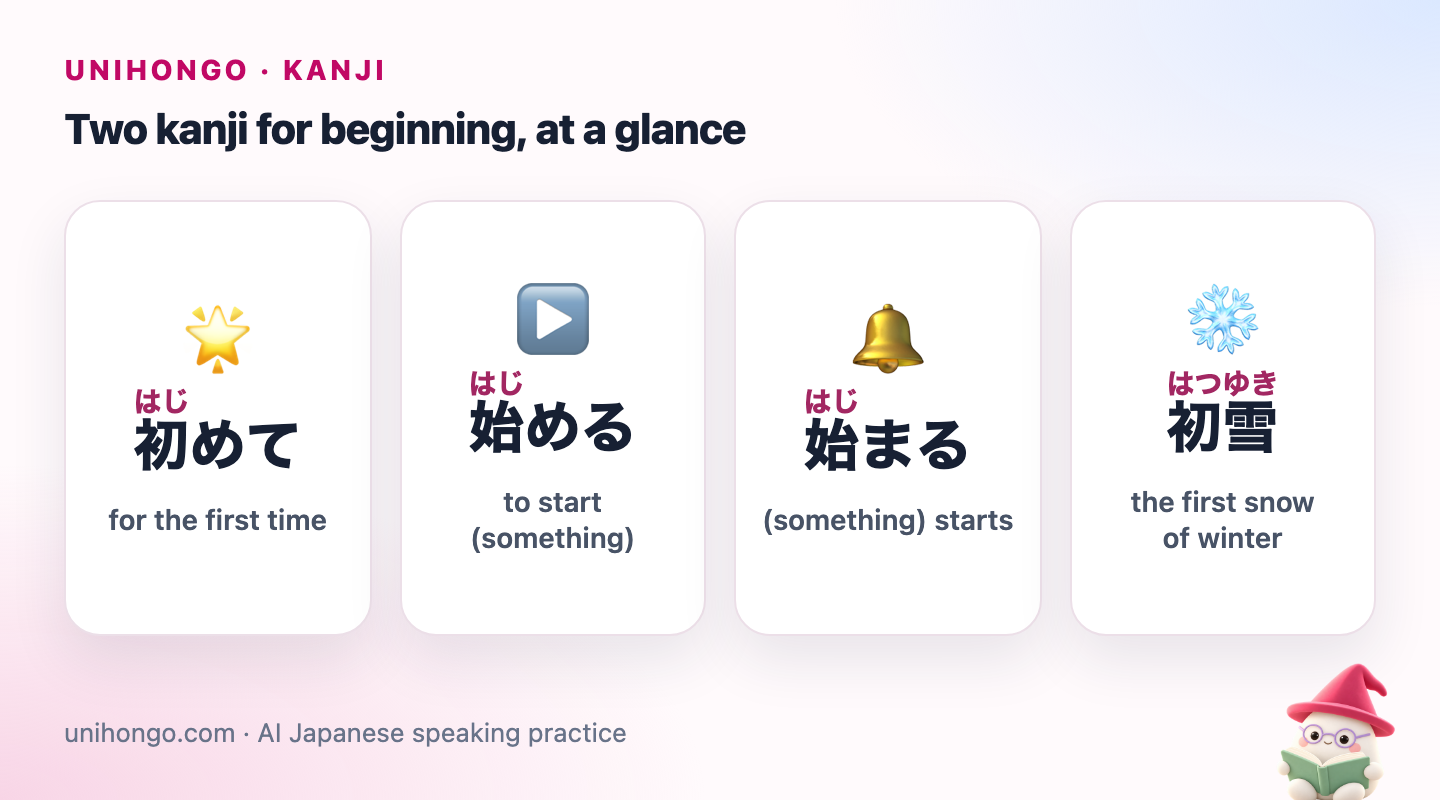
These four words show the whole idea. The first and last use 初, the kanji of firsts. The middle two use 始, the kanji of starting, in its two verb forms: one where you start something, and one where something starts by itself.
| Japanese | Romaji | Meaning |
|---|---|---|
| 初めて | hajimete | for the first time |
| 始める | hajimeru | to start (something) |
| 始まる | hajimaru | (something) starts |
| 初雪 | hatsuyuki | the first snow of winter |
Readings, strokes and parts of 始 and 初
始 has eight strokes: 女 (woman) on the left and 台 (a stand, a platform) on the right, the same right side as 治 (to heal, to govern). 初 has seven strokes: the clothing radical 衤 on the left and 刀 (sword, blade) on the right. It is traditionally explained as cutting cloth with a blade, the first step in making clothes, which is a memorable picture for a kanji of firsts.
始 has one on'yomi, shi, and the verb readings hajimeru and hajimaru. 初 has more readings than you might expect, including hatsu, which turns up in many season and New Year words.
| Kanji | Reading type | Reading | Example |
|---|---|---|---|
| 始 | on'yomi | shi | 開始, kaishi, start; 始発, shihatsu, first train |
| 始 | kun'yomi | hajime(ru), hajima(ru) | 始める, hajimeru; 始まる, hajimaru |
| 初 | on'yomi | sho | 最初, saisho; 初心者, shoshinsha, beginner |
| 初 | kun'yomi | hajime, hajime(te) | 初め, hajime; 初めて, hajimete |
| 初 | kun'yomi | hatsu | 初雪, hatsuyuki; 初恋, hatsukoi, first love |
| 初 | kun'yomi (rarer) | ui, some | 初々しい, uiuishii; 書き初め, kakizome |
Sixteen words of starts and firsts
The first group uses 始 for starts of all kinds, from trains to school terms. The second uses 初 for firsts, beginners and the earliest part of something.
| Japanese | Romaji | Meaning |
|---|---|---|
| 開始 | kaishi | a start, commencement (formal) |
| 始発 | shihatsu | the first train of the day |
| 始業式 | shigyōshiki | the opening ceremony of a school term |
| 年末年始 | nenmatsu nenshi | the New Year holidays |
| 仕事始め | shigoto hajime | the first workday of the year |
| 最初 | saisho | the first, the beginning |
| 初心者 | shoshinsha | a beginner |
| 初日 | shonichi | the first day (of an event) |
| 初対面 | shotaimen | meeting for the first time |
| 初恋 | hatsukoi | first love |
| 初耳 | hatsumimi | news to me |
| 月の初め | tsuki no hajime | the beginning of the month |
| 初々しい | uiuishii | fresh and innocent, new |
| それは初耳です。 | Sore wa hatsumimi desu. | That's news to me. (polite) |
| 最初は難しかった。 | Saisho wa muzukashikatta. | It was hard at first. (casual) |
| 何時に始まりますか? | Nanji ni hajimarimasu ka? | What time does it start? (polite) |
Hatsumimi, first ears, is a lovely word: something you are hearing for the first time. Sore, hatsumimi! is a natural reaction when a friend shares surprising news. Shihatsu, the first train, matters if you are out late; many people wait for it after a night out. And uiuishii describes the fresh, slightly nervous charm of someone new, such as a new employee in a crisp suit in April.
初めて or 始めて? A simple test
Both are read hajimete, and both are correct Japanese, but they are different words. 初めて is an adverb meaning for the first time. 始めて is the te-form of the verb 始める, to start, used to link to what comes next. The test: if you can translate it as for the first time, write 初めて. If it means started and then, or since starting, write 始めて.
The same split applies to hajime. 初め is the first part of a period of time: tsuki no hajime, the start of the month. 始め is the start of an activity: shigoto hajime, the first workday of the year. Newspapers and dictionaries broadly follow this split, but even native writers hesitate sometimes, and many simply write はじめ in hiragana.
| Japanese | Romaji | Meaning |
|---|---|---|
| 日本は初めてです。 | Nihon wa hajimete desu. | It's my first time in Japan. |
| ピアノを始めて一年になります。 | Piano o hajimete ichi-nen ni narimasu. | It's been a year since I started piano. |
| はじめまして。 | Hajimemashite. | Nice to meet you. |
| Form | Meaning | Example sentence |
|---|---|---|
| 初めて | for the first time | Nihon wa hajimete desu, it's my first time in Japan |
| 始めて | started (te-form of 始める) | piano o hajimete, ichi-nen ni narimasu |
| 初め | the early part of a period | rokugatsu no hajime, early June |
| 始め | the start of an activity | shigoto hajime, the first workday of the year |
Hajimemashite, the greeting for meeting someone new, is about a first meeting, so when kanji are used it is 初めまして. Most people write it in hiragana anyway, and that is the safest choice in emails and messages. 始めまして, with the kanji of starting, is generally considered a mistake.
Dialogue: your first pottery lesson
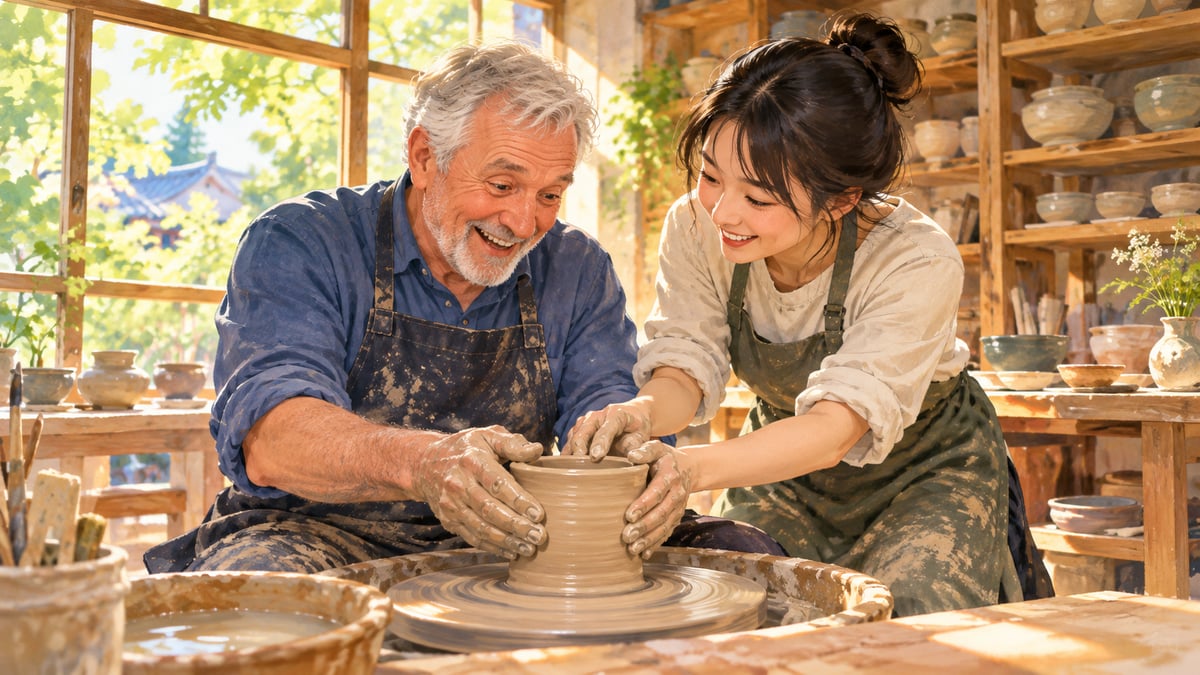
Trying a craft class, such as pottery, is a popular weekend activity in Japan, and it is full of first-time phrases. Here the instructor speaks politely and kindly; you answer politely. Listen for 初めて, 始める and 最初 in one short conversation.
| Japanese | Romaji | Meaning |
|---|---|---|
| 陶芸は初めてですか? | Tōgei wa hajimete desu ka? | Instructor: Is this your first time doing pottery? |
| はい、初めてです。よろしくお願いします。 | Hai, hajimete desu. Yoroshiku onegai shimasu. | You: Yes, my first time. Thank you in advance. |
| じゃあ、土をこねるところから始めましょう。 | Jā, tsuchi o koneru tokoro kara hajimemashō. | Instructor: Let's start by kneading the clay. |
| 初心者でも作れますか? | Shoshinsha demo tsukuremasu ka? | You: Can a beginner really make something? |
| 大丈夫ですよ。最初はみんな下手ですから。 | Daijōbu desu yo. Saisho wa minna heta desu kara. | Instructor: Sure. Everyone is clumsy at first. |
| あ、形になってきた! | A, katachi ni natte kita! | You: Oh, it's taking shape! |
| 初めての作品、楽しみですね。 | Hajimete no sakuhin, tanoshimi desu ne. | Instructor: I can't wait to see your first piece. |
A season of firsts: New Year hatsu words
The Japanese New Year is full of firsts, all written with 初. People talk about their first shrine visit, the first dream of the year and the first sunrise. Customs vary by family and region, but these words are widely known and come up in New Year conversations, cards and news.
| Japanese | Romaji | Meaning |
|---|---|---|
| 初詣 | hatsumōde | the first shrine visit of the year |
| 初夢 | hatsuyume | the first dream of the year |
| 初日の出 | hatsuhinode | the first sunrise of the year |
| 書き初め | kakizome | the first calligraphy of the year |
| 初売り | hatsuuri | the first sale of the year |
Kakizome uses the rare reading some, and is a school tradition in many areas, where children write a lucky word with a brush in early January. Hatsuuri, the first sale, is when many shops reopen after the holidays, often with lucky bags called fukubukuro. Nenmatsu nenshi, from the end of one year to the start of the next, is the phrase you will see on notices about holiday closing days.
初心 and other beginnings in tattoos and designs
New beginnings are a popular theme for tattoos, journals and logos. A single kanji can feel unfinished, though, so a short word usually works better.
- A lone 始 or 初 reads like half a word. Japanese readers will wonder what is starting or what is first.
- 初心 (shoshin), the beginner's mind or original intention, is a widely recognised word and a thoughtful choice. The saying 初心忘るべからず (shoshin wasuru bekarazu) means never forget your beginner's spirit.
- For a fresh start, 出発 (shuppatsu, departure, setting out) or 再出発 (saishuppatsu, a new start) are clear and positive.
- Chinese uses both kanji too, but the Japanese reading-based difference between 初めて and 始めて does not exist in Chinese, so a phrase that looks right in one language may read oddly in the other.
- Ask a native speaker to check the characters and style, and make sure the left side of 初 has the extra stroke described below.
Look-alikes: 衤 versus 礻, and 始 versus 治
The most common writing mistake with 初 is using the wrong left side. The clothing radical 衤 has five strokes, with an extra short stroke at the bottom right. The altar radical 礻, seen in 社 (shrine, company) and 神 (god), has only four. 初 always takes the clothing radical. 始 can be confused with 治, which has the water radical on the left instead of 女.
| Japanese | Romaji | Meaning |
|---|---|---|
| 会社 | kaisha | a company |
| 服 | fuku | clothes |
| 治る | naoru | to get better, to heal |
| 台風 | taifū | a typhoon |
- Writing 始めて when you mean for the first time. Use 初めて.
- Saying hajimaru with o. It is X ga hajimaru, but X o hajimeru.
- Reading 初日 as hatsuhi. For the first day of an event it is shonichi.
- Writing 初 with the altar radical 礻. It needs the clothing radical 衤.
Send Mocchi your 初めて sentences for correction
The fastest way to fix the 初めて and 始めて mix-up is to write. Sign in and send Mocchi five sentences of your own with /correct, such as your first trip to Japan or when you started learning Japanese. Mocchi corrects the kanji, explains each fix and remembers which pattern tripped you up, so a later /review picks up from there.
Then train word order with Sentence Builder in the quick games: putting chunks like piano o, hajimete and ichi-nen ni narimasu in the right order makes the te-form use of 始めて feel natural.