
The kanji for hope at a glance
希望 is the main word. The other three cards show the words around it: 望み for what you hope for, 願い for a wish you ask for, and 期待 for the hopes you place on someone or something. Together they cover most of what English means by hope.
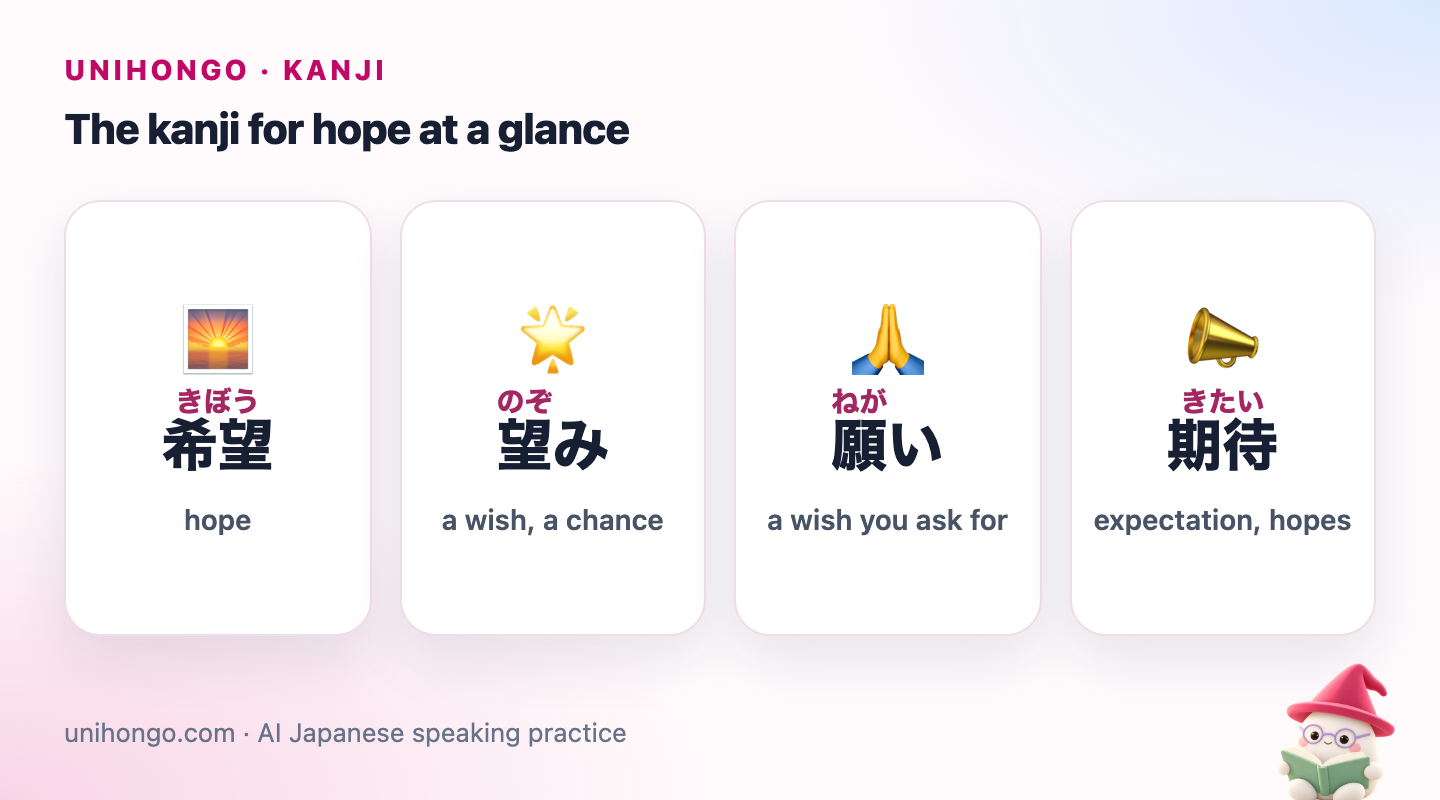
| Japanese | Romaji | Meaning |
|---|---|---|
| 希望 | kibō | hope |
| 望み | nozomi | a wish, a chance |
| 願い | negai | a wish you ask for |
| 期待 | kitai | expectation, hopes |
Readings, strokes and parts
| Kanji | Strokes | On'yomi | Kun'yomi | Core meaning |
|---|---|---|---|---|
| 希 | 7 | ki, ke | mare (rare) | hope, rare |
| 望 | 11 | bō, mō | nozomu | hope, wish, look out over |
| 願 | 19 | gan | negau | wish, request, pray |
希 has seven strokes. It looks like 布 (nuno, cloth) with two crossing strokes on top, which is a handy way to remember its shape. Its old kun reading mare, rare, survives in words like 希少 (kishō, scarce), which shows that 希 has two sides: hope and rarity.
望 has eleven strokes in three parts: 亡 at the top left, 月 (moon) at the top right and 王 at the bottom. 望 also means to look out over, as in 展望 (tenbō, a view, an outlook), and the old word 望月 (mochizuki) means full moon. The reading mō appears in 本望 (honmō, a long-cherished wish).
願 has 19 strokes and is worth learning by sight before writing it. You see it every day in お願いします.
Everyday words and names with 希 and 望
| Japanese | Romaji | Meaning |
|---|---|---|
| 希望を持つ | kibō o motsu | to have hope |
| 希望を捨てない | kibō o sutenai | to never give up hope |
| 第一希望 | dai ichi kibō | first choice |
| 希望日 | kibōbi | preferred date |
| 希望者 | kibōsha | applicant, anyone interested |
| 望む | nozomu | to wish for, to desire |
| 志望校 | shibōkō | the school you are aiming for |
| 失望 | shitsubō | disappointment |
| 絶望 | zetsubō | despair |
| 展望 | tenbō | view, outlook |
| 願い事 | negaigoto | a wish (at a shrine, on a star) |
| 希少 | kishō | rare, scarce |
| 希美 | Nozomi | hope and beauty · girl |
| 望 | Nozomu | to hope · boy |
| 美希 | Miki | beauty and hope · girl |
第一希望 and 希望日 show the practical side of 希望. You will meet it on application forms, in job interviews and at hotel counters, where it simply means what you would prefer. It is polite and neutral, not emotional.
The last three rows are names. Nozomi is a girl's name meaning hope or wish, and Nozomu is a related boy's name. They can be written with 希 or 望, with combinations like 希美, or in hiragana, and 希 also appears in names such as Miki. The same sound can be written with other kanji, so always ask how someone writes their name. The fastest service on the Tōkaidō Shinkansen between Tokyo and Osaka is called のぞみ, written in hiragana, and its name comes from the same word.
希望, 望み, 願い or 期待: which hope is which
| Japanese | Romaji | Meaning |
|---|---|---|
| まだ望みはあります。 | Mada nozomi wa arimasu. | There's still hope. |
| 一つだけ願いがあります。 | Hitotsu dake negai ga arimasu. | I have just one wish. |
| みんなが期待しています。 | Minna ga kitai shite imasu. | Everyone has high hopes for you. |
| 窓側の席を希望します。 | Madogawa no seki o kibō shimasu. | I'd prefer a window seat. (formal) |
| Word | Feeling | Typical use | Register |
|---|---|---|---|
| 希望 | Hope; preference | Hope for the future; preferred date or seat | Neutral to formal |
| 望み | A wish; chances | Her one wish; there's still a chance | Neutral |
| 願い | A wish you ask for | A wish at a shrine, a favour asked of someone | Warm, personal |
| 期待 | Expectation, hopes on someone | Fans' hopes, high expectations | Neutral |
期待 can feel heavy. 期待しているよ said to a junior colleague is encouraging, but it also carries pressure. For a gentle wish for someone, ~といいね is kinder.
願い also hides inside one of the most useful words in Japanese: お願いします. When you say it, you are literally making a request, a small wish addressed to the listener. That is why it works for ordering food, asking a favour and ending a business email: each one is a polite wish.
How to say I hope in conversation
Learners often translate I hope as 希望します, but Japanese speakers rarely say that about the weather or a friend's exam. In conversation, hope is a pattern, not a noun.
| Japanese | Romaji | Meaning |
|---|---|---|
| 明日晴れるといいな。 | Ashita hareru to ii na. | I hope it's sunny tomorrow. (casual) |
| 試験、うまくいくといいですね。 | Shiken, umaku iku to ii desu ne. | I hope your exam goes well. (polite) |
| 合格しますように。 | Gōkaku shimasu yō ni. | May I pass. (a wish or prayer) |
| また会えるのを楽しみにしています。 | Mata aeru no o tanoshimi ni shite imasu. | I hope to see you again; I look forward to it. |
~ように is the pattern of wishes and prayers, which is why you hear it at shrines and on New Year cards. For hopes about meeting someone again, Japanese prefers 楽しみにしています, I look forward to it, which sounds warm and natural.
Mini dialogue: talking about your hopes with a mentor
Hope words come up when people ask about your future. Here a student talks with an older mentor at a café about what comes next.
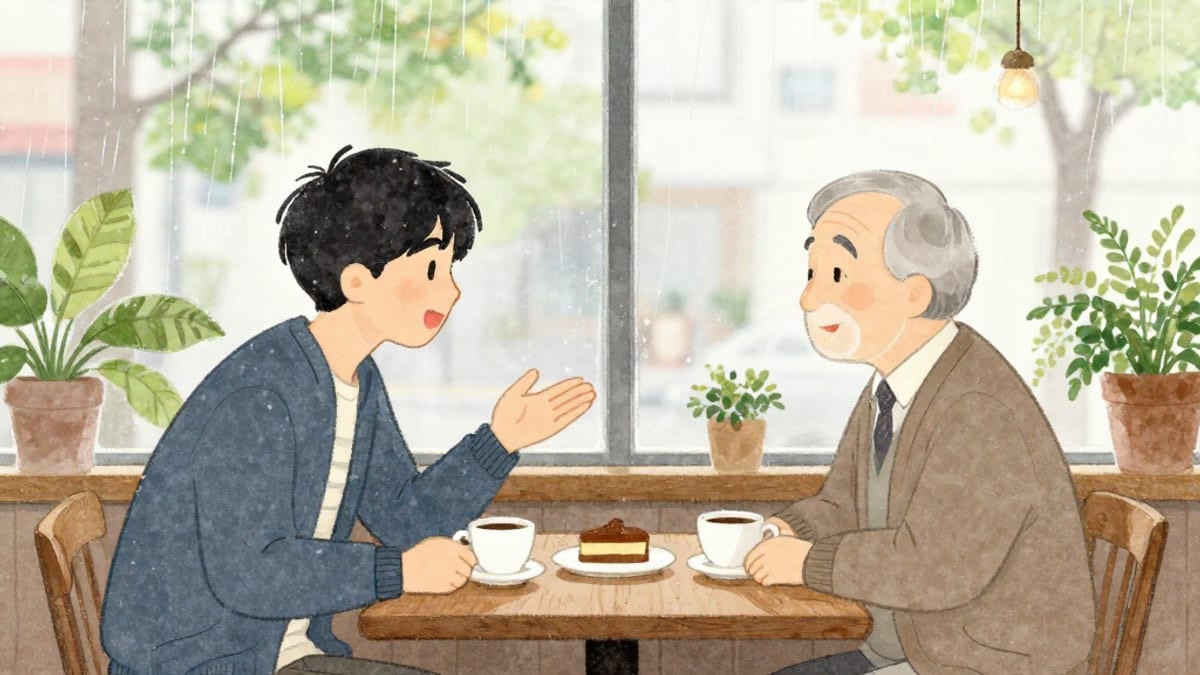
| Japanese | Romaji | Meaning |
|---|---|---|
| 将来の希望はありますか。 | Shōrai no kibō wa arimasu ka. | Mentor: Do you have hopes for the future? |
| 日本で働くのが夢です。 | Nihon de hataraku no ga yume desu. | You: My dream is to work in Japan. |
| 第一希望の会社は? | Dai ichi kibō no kaisha wa? | Mentor: Which company is your first choice? |
| まだ決めていませんが、希望を持っています。 | Mada kimete imasen ga, kibō o motte imasu. | You: I haven't decided, but I'm hopeful. |
| うまくいくといいですね。 | Umaku iku to ii desu ne. | Mentor: I hope it goes well for you. |
希望 or 望 as a tattoo or design
希望 is a clear, positive word that reads well in a design. The meaning is the same in Chinese, where 希望 is also an everyday verb for I hope, so the word works in both languages. On its own, 望 reads as wish or desire, and 希 alone can look like rare, so a single character carries less meaning than the word.
If you want something more personal, 願い (wish) is warm, and 希望の光 (kibō no hikari, a light of hope) is a natural phrase. Before inking, ask a native speaker to check the characters, the stroke shapes and the font.
| Japanese | Romaji | Meaning |
|---|---|---|
| 希望の光 | kibō no hikari | a light of hope |
Turn hope words into a ten-minute Mocchi session
- Ask Mocchi: Quiz me on kibō, nozomi, negai and kitai, five questions in context. Mocchi checks each answer and explains the ones you miss.
- Write I hope it doesn't rain on Saturday in Japanese and send it with /correct; Mocchi shows you ~といいな and remembers if you reach for 希望します again.
- Use /create-flashcards for the twelve words above, picking a photo for each, then review them with /review-flashcards so the hard ones return sooner.
Common mistakes and how to write 希
- Saying 晴れを希望します about the weather. Say 晴れるといいな.
- Using 願い for a chance of success. 望み is the word for chances: 望みは薄い.
- Reading 失望 as losing hope in general. It is disappointment in someone or something; despair is 絶望.
- Confusing 希 with 布, which lacks the crossing strokes on top, or 望 with 聖 (holy), which also ends in 王.