
The kanji for gratitude at a glance
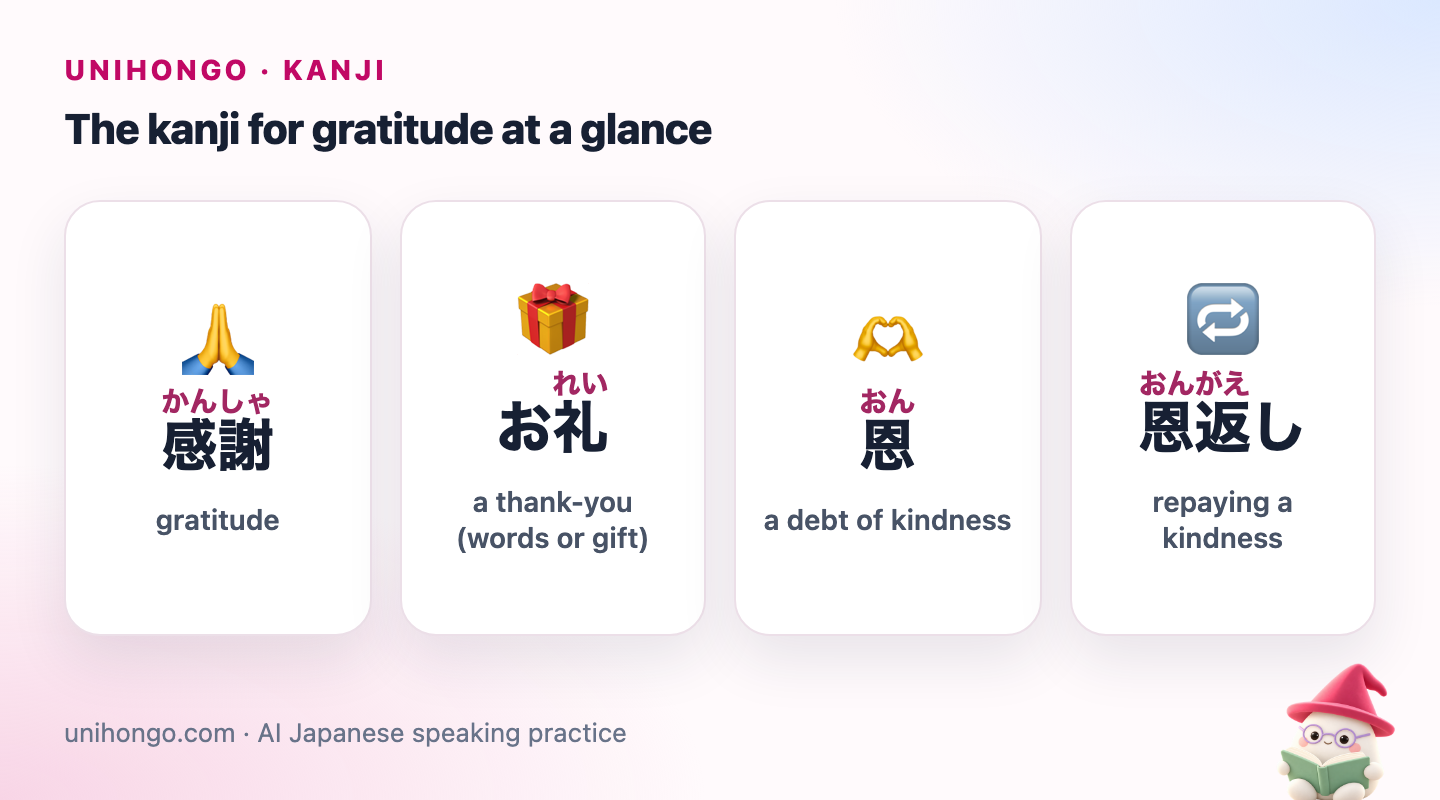
The four cards below show the four gratitude words worth knowing. 感謝 is the feeling of gratitude. お礼 is the thank-you you give. 恩 is the kindness you have received and owe, and 恩返し is repaying it.
| Japanese | Romaji | Meaning |
|---|---|---|
| 感謝 | kansha | gratitude |
| お礼 | orei | a thank-you (words or gift) |
| 恩 | on | a debt of kindness |
| 恩返し | ongaeshi | repaying a kindness |
Readings, strokes and parts
| Kanji | Strokes | On'yomi | Kun'yomi | Core meaning |
|---|---|---|---|---|
| 感 | 13 | kan | none in common use | feeling, emotion, sense |
| 謝 | 17 | sha | ayamaru | thank, apologise, decline |
| 恩 | 10 | on | none in common use | kindness, favour, debt of gratitude |
| 礼 | 5 | rei, rai | none in common use | thanks, bow, etiquette |
感 has 13 strokes, with 心 (heart) at the bottom, which suits a kanji about feeling. 謝 has 17 strokes: 言 (speech) on the left and 射 (to shoot) on the right. A handy memory aid: words sent toward someone.
恩 has 10 strokes: 因 (cause) over 心 (heart). 礼 has only five strokes: the radical 礻, linked to rituals, and a single hooked stroke. You will see 礼 in 失礼します, excuse me, every day.
Everyday words with 感, 謝, 恩 and 礼
| Japanese | Romaji | Meaning |
|---|---|---|
| 感謝の気持ち | kansha no kimochi | feelings of gratitude |
| 感謝状 | kanshajō | certificate of appreciation |
| 謝る | ayamaru | to apologise |
| 謝罪 | shazai | formal apology |
| 謝礼 | sharei | fee, honorarium, reward |
| お礼状 | oreijō | thank-you letter |
| お礼の品 | orei no shina | thank-you gift |
| 失礼 | shitsurei | rudeness; excuse me |
| 礼儀 | reigi | manners, courtesy |
| 恩人 | onjin | someone you owe a great deal to |
| 恩師 | onshi | a respected former teacher |
| 感動 | kandō | being deeply moved |
Notice how 謝 points two ways: 感謝 (thanks) and 謝罪 (apology). 謝礼 is the money or gift paid to thank someone, such as a speaker's fee or a reward for returning a lost item. 恩師 is a lovely word for the teacher who changed your life.
Japan has a national holiday for gratitude: 勤労感謝の日 (Kinrō Kansha no Hi, Labour Thanksgiving Day) on 23 November, a day to thank people for their work.
Which thank-you fits the moment
| Japanese | Romaji | Meaning |
|---|---|---|
| ありがとう、助かった! | Arigatō, tasukatta! | Thanks, you saved me! (casual) |
| 本当にお世話になりました。 | Hontō ni osewa ni narimashita. | Thank you so much for everything. |
| 心から感謝しております。 | Kokoro kara kansha shite orimasu. | I am sincerely grateful. (formal) |
| 感謝の気持ちを込めて。 | Kansha no kimochi o komete. | With gratitude. (on a gift card) |
| この恩は忘れません。 | Kono on wa wasuremasen. | I will never forget this kindness. |
| Expression | Feeling | Typical moment | Register |
|---|---|---|---|
| ありがとう | Thanks | A friend passes you the salt | Casual |
| ありがとうございます | Thank you | Shops, coworkers, strangers | Polite |
| すみません | Thanks, sorry for the trouble | Someone holds a door or picks up your pen | Polite, everyday |
| お世話になりました | Thank you for everything | Leaving a job, a homestay, a hospital | Polite |
| 感謝しております | I am grateful | Speeches, formal letters, business emails | Formal, humble |
When not to use 感謝: 感謝します said to a friend for a small favour sounds stiff and slightly odd, as if you were reading a speech. Keep it for big moments, written messages and formal talk. Also note that customs vary; some families and workplaces expect a small return gift for kindness, others do not.
A folk tale, names and a look-alike
恩返し is the theme of a well-known Japanese folk tale, 鶴の恩返し (The Crane's Return of a Favour). A man saves a crane, and later a mysterious young woman comes to weave beautiful cloth for him, on the condition that he never watches her work. Children learn it early, and the word 恩返し often appears in sports interviews, when a player wants to repay a coach or a hometown.
礼 appears in girls' names such as Reiko (礼子) and Ayaka (礼華), where it suggests courtesy and grace. Gratitude kanji are otherwise rare in names.
| Japanese | Romaji | Meaning |
|---|---|---|
| 鶴の恩返し | tsuru no ongaeshi | The Crane's Return of a Favour |
| 恩返しがしたいです。 | Ongaeshi ga shitai desu. | I want to repay your kindness. |
| 礼子 | Reiko | courtesy · girl |
The look-alike to watch is 感 and 惑 (madou, to be puzzled, as in 迷惑, trouble). Both have 心 at the bottom; 感 has 咸 on top, 惑 has 或. Mixing them up turns gratitude into nuisance, so it is worth a second look.
Mini dialogue: thanking colleagues before you leave
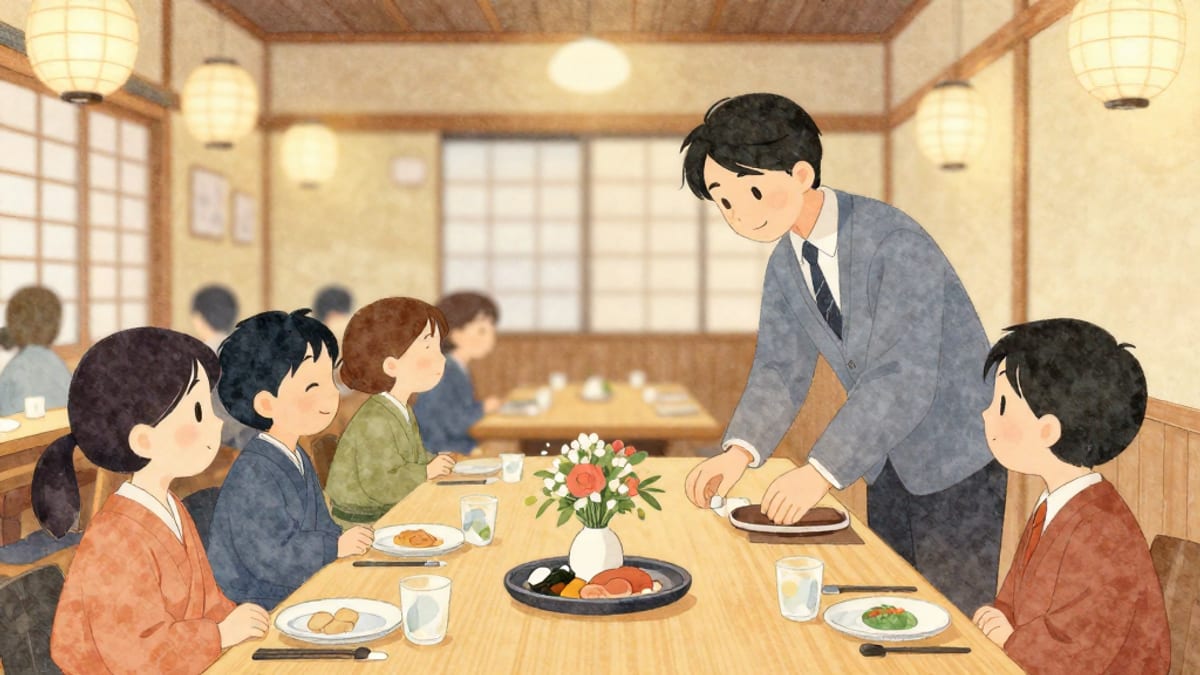
One of the most important gratitude moments in Japan is leaving a job or a team. A short, sincere speech is expected at many farewell parties, and these lines are the core of it.
| Japanese | Romaji | Meaning |
|---|---|---|
| 皆さん、本当にお世話になりました。 | Minasan, hontō ni osewa ni narimashita. | You: Everyone, thank you so much for everything. |
| いつも助けていただいて、感謝しています。 | Itsumo tasukete itadaite, kansha shite imasu. | You: I'm grateful for all your help. |
| こちらこそ、ありがとう。 | Kochira koso, arigatō. | Colleague: No, thank you. |
| また遊びに来てね。 | Mata asobi ni kite ne. | Colleague: Come and visit again. |
| はい、ぜひ。お元気で。 | Hai, zehi. Ogenki de. | You: I'd love to. Take care. |
Farewell speeches in Japan are usually short: thank everyone, mention one specific memory or kindness, apologise lightly for any trouble you caused, and end with a wish for everyone's health or success. The light apology, ご迷惑をおかけしました, may sound odd in English, but it is a normal and gracious part of a goodbye.
感謝 as a tattoo or design
感謝 is a good design word: clear, positive and natural to Japanese readers. Avoid 謝 alone, because many people will read it as apology. 恩 alone reads as a debt of kindness, which can feel heavy, and お礼 is too everyday for a design.
In Chinese, gratitude is written 感谢 with a simplified second character, and 谢谢 is thank you. If you want the Japanese form, make sure your design uses 謝, with 言 on the left, not 讠. For a softer look, many Japanese designs simply use ありがとう in hiragana. Ask a native speaker to check the characters and the font before inking.
Polish your thank-you with Mocchi and the pronunciation coach
- Write a short thank-you message to someone in Japan and send it to Mocchi with /correct. Mocchi fixes the Japanese, explains whether 感謝 or ありがとう fits the person, and remembers the politeness slips you make.
- Leaving soon? Ask Mocchi with /adjust-plan to fit a few days of farewell-speech practice into your plan, so the speech is ready in time.
- Try the pronunciation coach on long vowels, the sound that makes ありがとう sound natural: listen at slow speed, record yourself and check your rhythm score.
Common mistakes and how to write 謝
- Saying 感謝します to a friend for small help. Say ありがとう or 助かった.
- Thinking 謝る means to thank. It means to apologise; to thank is お礼を言う.
- Forgetting that すみません can be thanks. When someone does you a small favour, すみません、ありがとうございます is very natural.
- Using the Chinese form 谢 in a Japanese design.