

Learning and teaching: 学 校 生 先 教 室
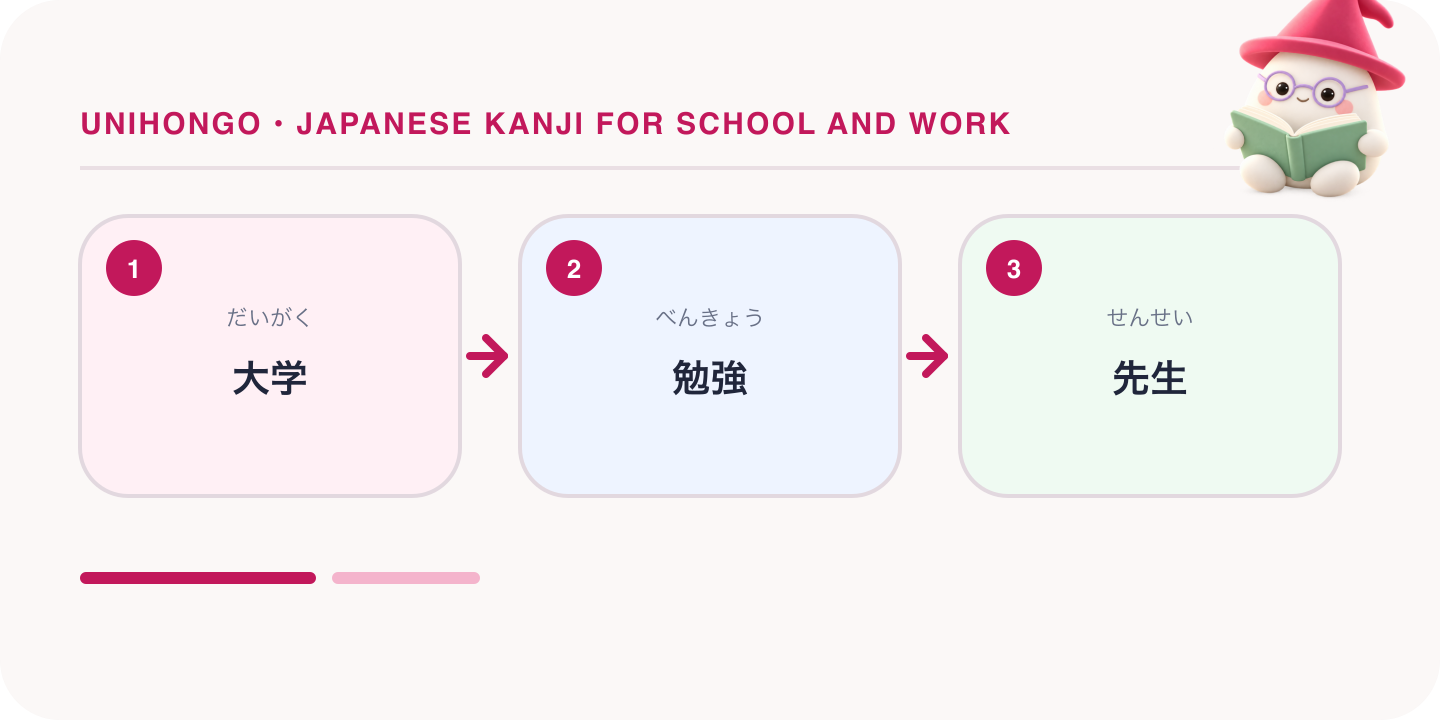
These six kanji build nearly every word you meet in a school. 学 is study: gakkō, gakusei, daigaku, and the verb manabu. 校 is the school as a building or institution and never stands alone. 生 is the character to watch, because it has more readings than almost any other: sei in gakusei and sensei, nama meaning raw on a menu, umareru to be born, ikiru to live, and haeru for plants growing.
先 is ahead or before, and 先生 sensei combines it with 生 to mean someone born before you. 教 is teach, oshieru, and it gives you 教室 kyōshitsu, classroom, and 教科書 kyōkasho, textbook. 室 is a room in the formal sense: kyōshitsu, 会議室 kaigishitsu, meeting room, and 事務室 jimushitsu, the office.
| Japanese | Romaji | Meaning |
|---|---|---|
| 大学で日本語を勉強しています。 | Daigaku de nihongo o benkyō shite imasu. | I am studying Japanese at university. |
| 先生に質問してもいいですか。 | Sensei ni shitsumon shite mo ii desu ka. | May I ask the teacher a question? |
| 教室は三階です。 | Kyōshitsu wa sangai desu. | The classroom is on the third floor. |
| 漢字を教えてください。 | Kanji o oshiete kudasai. | Please teach me kanji. |
| 私は学生です。 | Watashi wa gakusei desu. | I am a student. |
| Kanji | Reading | Meaning |
|---|---|---|
| 学 | gaku, mana(bu) | study; gakkō (school), daigaku (university) |
| 校 | kō | school; gakkō, kōchō (head teacher), kōsha (school building) |
| 生 | sei, shō, i(kiru), u(mareru), nama | life, student; gakusei, sensei, umareru (be born) |
| 先 | sen, saki | ahead, previous; sensei, senshū (last week), saki ni (first) |
| 教 | kyō, oshi(eru) | teach; kyōshitsu (classroom), kyōkasho (textbook) |
| 室 | shitsu | room; kyōshitsu, kaigishitsu (meeting room) |
| 勉 | ben | effort; benkyō (study) |
| 強 | kyō, tsuyo(i) | strong; benkyō, tsuyoi (strong) |
| 試 | shi, tame(su) | try; shiken (exam), tamesu (try out) |
| 験 | ken | test; shiken, keiken (experience), jikken (experiment) |
Effort and exams: 勉 強 試 験
勉強 benkyō is one of the first words every learner says, and it is worth knowing that neither character means study on its own. 勉 is exertion and 強 is strength, so benkyō is literally forcing yourself, which anyone who has sat through a kanji test will recognise. 強 on its own is tsuyoi, strong, and it turns up in 強い風, strong wind, and 強調, emphasis.
試験 shiken is an examination, and both characters carry the idea of testing. 試 is tamesu, to try out, as in 試着 shichaku, trying on clothes, and 試食 shishoku, a food sample. 験 never stands alone but appears in 経験 keiken, experience, and 実験 jikken, an experiment. On exam notices you will also see 受験 juken, sitting an exam, and 合格 gōkaku, passing.
| Japanese | Romaji | Meaning |
|---|---|---|
| 来週、日本語の試験があります。 | Raishū, nihongo no shiken ga arimasu. | I have a Japanese exam next week. |
| 毎晩二時間勉強しています。 | Maiban nijikan benkyō shite imasu. | I study for two hours every evening. |
| このシャツを試着してもいいですか。 | Kono shatsu o shichaku shite mo ii desu ka. | May I try this shirt on? |
| 試験に合格しました。 | Shiken ni gōkaku shimashita. | I passed the exam. |
| 接客の経験があります。 | Sekkyaku no keiken ga arimasu. | I have experience in customer service. |
Company and society: 会 社 員
会 is meeting or gathering. It is kai in 会社 kaisha, company, 会議 kaigi, meeting, and 会話 kaiwa, conversation, and the verb au, to meet, in everyday speech. 社 originally meant a shrine and the community around it, and it survives in 神社 jinja as well as in 会社 and 社会 shakai, society. Swap the two characters and you swap the meaning: kaisha is the company, shakai is society.
員 is a member of a group, and it is the ending on almost every job title: 社員 shain, company employee; 店員 ten'in, shop assistant; 駅員 ekiin, station staff; 会員 kaiin, member of a club. 正社員 seishain is a permanent employee, and the word appears on job listings alongside 契約社員 keiyaku shain, contract employee, and アルバイト for part-time work.
| Japanese | Romaji | Meaning |
|---|---|---|
| 私は貿易会社の社員です。 | Watashi wa bōeki-gaisha no shain desu. | I am an employee of a trading company. |
| 会議は十時から会議室で行います。 | Kaigi wa jūji kara kaigishitsu de okonaimasu. | The meeting will be held in the meeting room from ten. |
| 駅員に聞いてみましょう。 | Ekiin ni kiite mimashō. | Let's ask the station staff. |
| 正社員として働いています。 | Seishain to shite hataraite imasu. | I work as a permanent employee. |
| 社会人になって三年目です。 | Shakaijin ni natte sannenme desu. | This is my third year as a working adult. |
Work and working: 仕 事 働
仕事 shigoto is the noun for work, a job or a task, and it is one of the most useful words in the language. 仕 alone means to serve, and it appears in 仕方 shikata, way of doing, as in shikata ga nai, it cannot be helped. 事 is a thing or matter, koto, and it is everywhere: 事務所 jimusho, office; 大事 daiji, important; 食事 shokuji, a meal; 火事 kaji, a fire.
働 is the verb hataraku, to work, and it is a kanji invented in Japan, a person radical beside 動 move: a person in motion. 労働 rōdō is labour, and 共働き tomobataraki describes a couple who both work. When a form asks 職業, shokugyō, occupation, the answer is a job title, whereas 仕事 is the work itself.
| Japanese | Romaji | Meaning |
|---|---|---|
| 仕事は何をしていますか。 | Shigoto wa nani o shite imasu ka. | What do you do for work? |
| 銀行で働いています。 | Ginkō de hataraite imasu. | I work at a bank. |
| 今日は仕事が多くて大変です。 | Kyō wa shigoto ga ōkute taihen desu. | There is a lot of work today and it is tough. |
| 事務所は駅の近くにあります。 | Jimusho wa eki no chikaku ni arimasu. | The office is near the station. |
| 仕方がないですね。 | Shikata ga nai desu ne. | It cannot be helped, can it. |
| Kanji | Reading | Meaning |
|---|---|---|
| 会 | kai, a(u) | meet; kaisha (company), kaigi (meeting), au (meet) |
| 社 | sha, yashiro | company, shrine; kaisha, shakai (society), jinja |
| 仕 | shi, tsuka(eru) | serve; shigoto (work), shikata (method) |
| 事 | ji, koto | matter; shigoto, jimusho (office), daiji (important) |
| 働 | dō, hatara(ku) | work; hataraku, rōdō (labour) |
| 員 | in | member; shain (employee), ten'in (shop staff), kaiin (member) |
Words on timetables and business cards
Two documents put these kanji in front of you constantly: the school timetable, 時間割 jikanwari, and the business card, 名刺 meishi. A timetable lists subjects by period, and a business card follows a fixed layout that is easy to read once you know the anchor words.
| Japanese | Romaji | Meaning |
|---|---|---|
| 名刺を頂戴してもよろしいですか。 | Meishi o chōdai shite mo yoroshii desu ka. | May I have your business card? |
| 営業部の田中と申します。 | Eigyōbu no Tanaka to mōshimasu. | I am Tanaka from the sales department. |
| 三限は休講です。 | Sangen wa kyūkō desu. | Third period is cancelled. |
- 時間割 jikanwari: timetable; periods are 一限, 二限 or 一時限, 二時限
- 国語 kokugo Japanese, 数学 sūgaku maths, 英語 eigo English, 理科 rika science, 社会 shakai social studies, 体育 taiiku PE
- 授業 jugyō lesson, 休講 kyūkō cancelled class, 補講 hokō make-up class, 休み時間 yasumi jikan break
- 株式会社 kabushiki-gaisha joint-stock company, often shortened to (株) on a card
- 部 bu department, 課 ka section, 部長 buchō department head, 課長 kachō section head, 係長 kakarichō team leader
- 代表取締役 daihyō torishimariyaku representative director, 社長 shachō company president
- 営業部 eigyōbu sales, 人事部 jinjibu human resources, 総務部 sōmubu general affairs, 経理部 keiribu accounting
- 名刺 meishi business card, 名刺交換 meishi kōkan the exchange itself
Read a card top to bottom: company, department, title, name. The person's name is in the largest type, and a card often gives furigana for a name with an unusual reading. Hold it with both hands, read it, and say the name with -san before putting it away.
Look-alike kanji and reading traps
Several of these characters share a side with a common neighbour, and a few compounds flip their reading when the order changes. These are the ones worth checking.
| Japanese | Romaji | Meaning |
|---|---|---|
| 教と数は右側が同じです。 | Kyō to sū wa migigawa ga onaji desu. | Teach and number have the same right-hand side. |
| 会社と社会は順番が逆です。 | Kaisha to shakai wa junban ga gyaku desu. | Company and society are in reverse order. |
- 教 teach and 数 number: same right side; 教 has 孝 on the left, 数 has 米 and 女
- 仕 serve and 任 duty: both have the person radical; 仕 has 士, 任 has 壬 with a longer middle stroke
- 験 test and 検 inspect: horse radical for 験, tree radical for 検 as in 検査, inspection
- 室 room and 屋 shop or roof: 室 has the roof radical on top, 屋 has the corpse radical, as in 本屋
- 先 ahead and 光 light: 先 has the cattle-like top, 光 has the small three-stroke top
- 生 has half a dozen readings: sei in 学生, nama on menus, u in 生まれる, i in 生きる, jō in 誕生日
- 会社 kaisha and 社会 shakai, 事情 jijō circumstances and 情事 jōji a love affair: word order changes everything
A three-week study plan
Sixteen kanji in three groups fit neatly into three weeks at ten to fifteen minutes a day. The goal is to read a timetable and a business card without hesitation, and to introduce your school or workplace out loud.
- Week 1: 学 校 生 先 教 室. Write each ten times, learn two compounds each, and read the subject names on a real or sample timetable
- Week 2: 勉 強 試 験 会 社. Write six sentences about your studies and exams, then flip 会社 and 社会 aloud until the readings feel different
- Week 3: 仕 事 働 員. Draft your own business card in kanji with a department and title, and read it to someone
- Every day: five minutes in Unihongo's free learning games on this set, then a one-minute spoken introduction of your school or company
At the end of the third week, collect three real cards or photos of cards and read them cold. If you can name the company, department and title of each, you have what you need for the first week in a Japanese workplace.