
Learn Your First Kanji With Mocchi Through Useful Words

Learn a first kanji inside a useful word rather than trying to memorize all its readings at once. Ask Mocchi to connect the character's shape, the reading of one familiar word, and a short sentence you can understand.

Mocchi connects a beginner kanji to a familiar Japanese word and a short sentence using it
What you need to know

Learn Your First Kanji With Mocchi Through Useful Words

Kanji can look like an endless collection of symbols when each character arrives with a long reading list. A word-based first lesson is more manageable. You still notice the character, but you learn how it behaves in an actual piece of vocabulary. Then you check separate skills: recognizing the shape, reading the word, understanding its meaning, and using it in a simple message. Mocchi can help you choose a small set suited to your current level and goal.

Start with one useful word for each new character.

Treat a word's reading as contextual information.

Check shape, reading, meaning, and use separately.

Add another reading through another real word later.

Choose a word connected to your current Japanese

Start with a word you have a reason to recognize, such as one from a greeting, a simple introduction, or your present lesson. Tell Mocchi the word and your approximate level. A familiar meaning reduces the number of new elements you need to hold at once and makes the character easier to connect with actual reading.

Avoid turning the first encounter into an attempt to master the character completely. You can learn something useful about it today without covering every reading, compound, and special use. A small successful word-based lesson leaves a clear point from which to expand later.

Use the word to establish the reading

日本語 gives a beginner a useful word connected directly to studying Japanese. Learn its reading as a word and notice the characters inside it. The presence of 日 does not mean the same sound will appear in every other word containing that character. Ask Mocchi to keep the reading attached to the word, then compare another example when it becomes relevant.
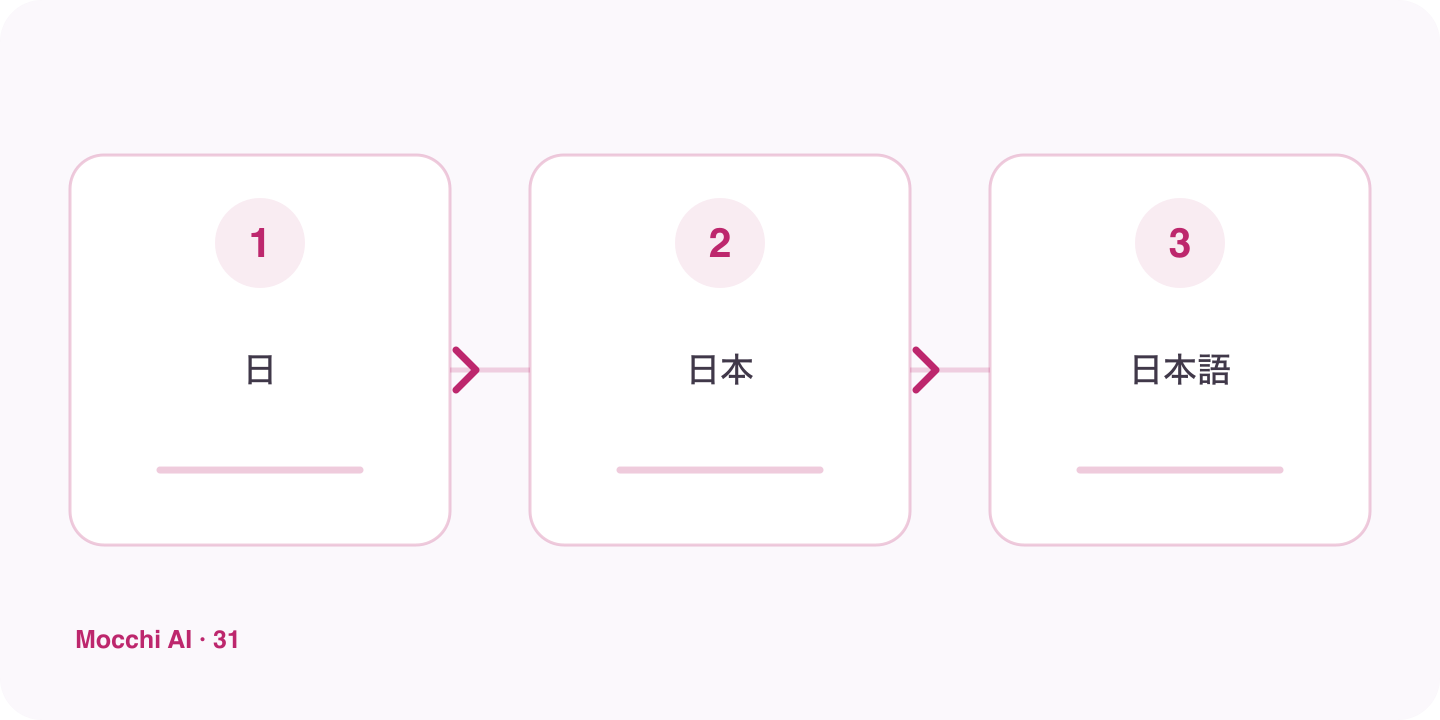
The character 日 appears in a word, gains a reading from that word, and is understood in a sentence
A word gives the character a reading and context; the sentence gives the word a job.
JapaneseRomajiMeaning
日本語を勉強しています。Nihongo o benkyō shite imasu.I am studying Japanese.
日本語の本を読みます。Nihongo no hon o yomimasu.I read a Japanese-language book.

Check recognition and recall in different ways

Looking at a character and recognizing a familiar explanation is different from reading the word without a hint. Ask for a brief reading check, then a meaning question in a sentence. If you can identify the shape but not retrieve the word's sound, target that link directly instead of spending the whole session copying the same character again.

Make a changed sentence with familiar grammar

Use the new word in a short message you can control. Change the object or activity while keeping the grammar simple. Ask Mocchi to check whether the word fits the intended meaning. This turns the word into a usable part of your Japanese rather than an isolated flashcard whose answer you only recognize in one layout.

Add a second word as a comparison, not a surprise

When the character appears in another useful word, learn that word's reading and compare it with the first. Keep both examples in your notes with their meanings. Over time, the set becomes a practical reading history rather than a list of sounds disconnected from vocabulary. Mocchi can help revisit the words that remain difficult, while your own attempts reveal whether the weak link is shape, sound, meaning, or use.

Key points

A practical way to improve

Choose one beginner kanji from a word you want to read. Ask Mocchi for the word's reading and a short sentence with familiar grammar. Read the word without the explanation, state its meaning, and use it in a changed sentence. At a later session, learn a second useful word containing the character and compare the reading rather than assuming the first reading applies everywhere.

  1. 1

    Choose one clear goal

    Focus each session on a situation or skill you can actually use.

  2. 2

    Practice actively

    Say complete answers aloud instead of only reading or recognizing Japanese.

  3. 3

    Review and repeat

    Keep useful corrections and revisit the same skill until it feels natural.

FAQ

Frequently asked questions

Do I need every reading before using a kanji?

No. Begin with readings in useful words and add others when you meet them. A long isolated list can be harder to retain and may not tell you which reading belongs in the word you are trying to understand.

Does recognizing a character mean I can read every compound?

No. Recognizing the shape is one part of kanji knowledge. The reading and meaning of an unfamiliar word still need to be learned or checked in context.

Should I write the character by hand?

Handwriting can be a useful separate goal. Decide whether today's task is recognition, reading, or writing, and practice the relevant action rather than assuming that success in one automatically proves the others.

Give a new kanji a useful first word

Use Mocchi to connect the character to something you can read and understand today.