
魂, 霊 and 心 at a glance
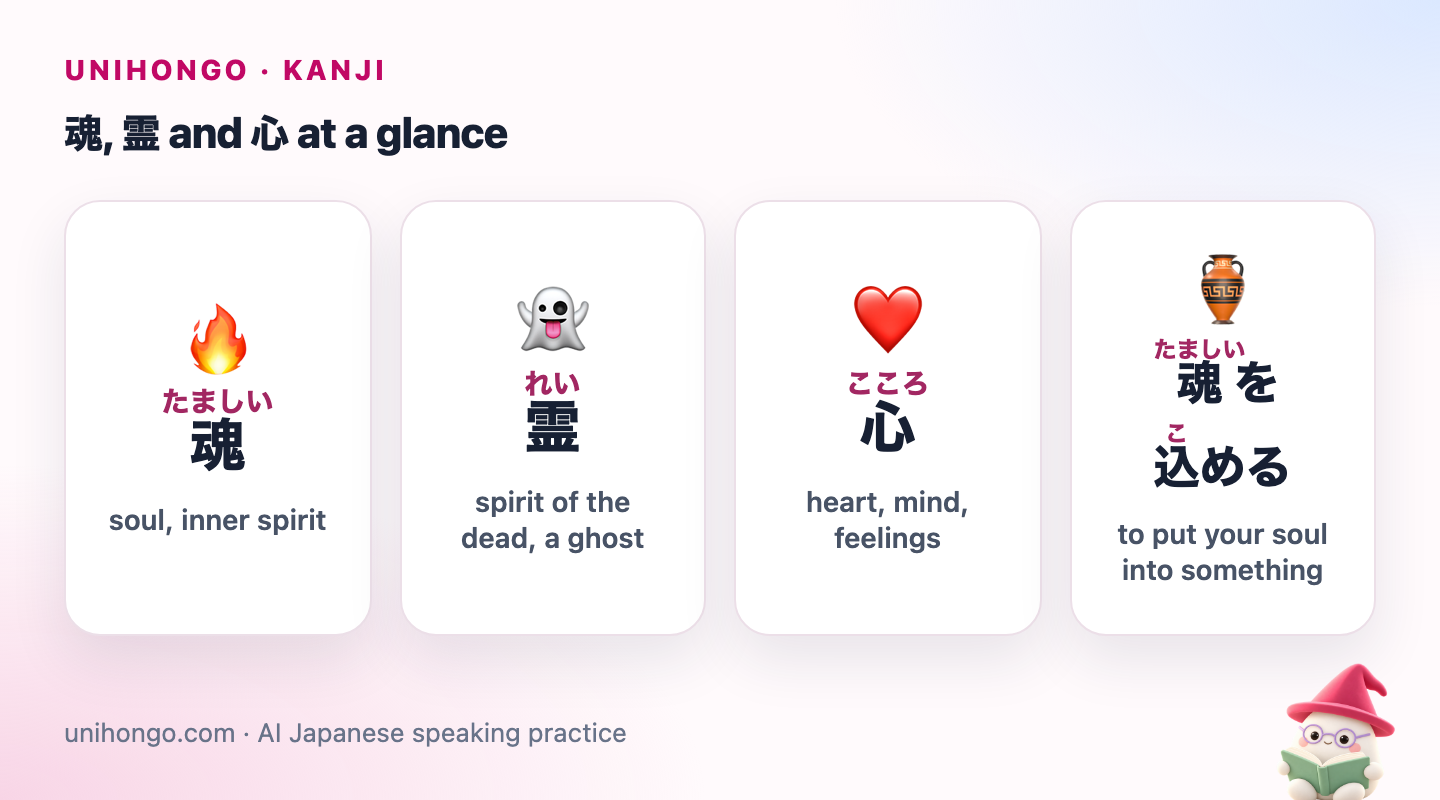
Think of the three kanji as three places where a soul can live. 魂 is the burning core inside you. 霊 is a spirit that has left the body or belongs to the unseen world. 心 is the heart you feel with every day. These four rows are the words most learners need first.
| Japanese | Romaji | Meaning |
|---|---|---|
| 魂 | tamashii | soul, inner spirit |
| 霊 | rei | spirit of the dead, a ghost |
| 心 | kokoro | heart, mind, feelings |
| 魂を込める | tamashii o komeru | to put your soul into something |
Readings, strokes and the parts of 魂
魂 has fourteen strokes. On the left is 云, which is usually explained as the sound part; on the right is 鬼, the kanji for oni, which in old Chinese thought also meant the spirit of a dead person. That is why 鬼 appears in several kanji about spirits. The modern Japanese meaning of 鬼, an ogre or demon, came later, and in 魂 the part simply marks the spirit world.
| Kanji | On'yomi | Kun'yomi | Strokes | Core idea |
|---|---|---|---|---|
| 魂 | kon | tamashii | 14 | The vital spirit inside a person |
| 霊 | rei, ryō | tama | 15 | Spirits of the dead, spiritual power |
| 心 | shin | kokoro | 4 | Heart, mind, feelings |
Both 魂 and 霊 also have the old kun'yomi tama, which you will meet in compounds such as 言霊, kotodama, the belief that words have spiritual power, and in literary or religious language. In everyday speech, tamashii, rei and kokoro are the readings you need.
霊 has the rain radical 雨 on top. It is usually explained as rain prayers and spiritual power; treat that as background rather than a memory story you must rely on.
Choosing between 魂, 霊 and 心
The table shows which kanji suits which English idea of soul. When in doubt, ask whether you are talking about passion and effort, about the dead and the unseen, or about feelings. Most heartfelt messages want 心, most passionate slogans want 魂, and 霊 is for ghosts, ancestors and spiritual matters.
| Japanese | Romaji | Meaning |
|---|---|---|
| 心を込めて作りました。 | Kokoro o komete tsukurimashita. | I made it with all my heart. |
| 魂を込めて歌いました。 | Tamashii o komete utaimashita. | I sang with all my soul. |
| 心からありがとう。 | Kokoro kara arigatō. | Thank you from the bottom of my heart. |
| この家には霊がいるらしい。 | Kono ie ni wa rei ga iru rashii. | Apparently there's a spirit in this house. |
| You want to say | Best choice | Why |
|---|---|---|
| Put your heart and soul into it | 魂 or 心 | 魂を込める sounds intense; 心を込める sounds warm |
| Thank you from the bottom of my heart | 心 | 心から, kokoro kara, is the natural phrase |
| A ghost, a spirit of the dead | 霊 | 幽霊, 霊魂: the unseen world |
| Fighting spirit | 魂 | 闘魂: passion, will |
| Soul music | ソウル | Genres use the loanword |
Notice that 心を込めて is the safe, gentle option for gifts, cards and cooking. 魂を込めて is stronger and fits artists, athletes and craftspeople, or a joking friend describing their homemade curry.
Words and proverbs built on 魂
Compounds with 魂 are mostly about spirit and drive. Two proverbs are worth learning because people really use them. 三つ子の魂百まで, the soul of a three-year-old lasts until a hundred, means character formed in early childhood stays for life. 一寸の虫にも五分の魂, even a one-inch insect has a half-inch soul, means even the small and weak have pride and should not be looked down on.
| Japanese | Romaji | Meaning |
|---|---|---|
| 闘魂 | tōkon | fighting spirit |
| 商魂 | shōkon | commercial spirit, a drive to sell |
| 鎮魂 | chinkon | repose of souls; requiem |
| 霊魂 | reikon | the soul, as opposed to the body |
| 三つ子の魂百まで | Mitsugo no tamashii hyaku made. | Childhood character lasts a lifetime. |
| 一寸の虫にも五分の魂 | Issun no mushi ni mo gobu no tamashii. | Even the smallest have their pride. |
| 魂が抜けたような顔 | tamashii ga nuketa yō na kao | a dazed, lifeless look |
| 商魂たくましいですね。 | Shōkon takumashii desu ne. | They really know how to sell, don't they. |
魂胆, kontan, deserves a warning. It does not mean spirit and courage, although both kanji look heroic. It means a hidden motive or scheme, usually suspicious: 何か魂胆があるな, nanika kontan ga aru na, he's up to something.
大和魂 needs care too. It once meant Japanese practical wisdom, but it was used as a wartime slogan, and today some people use it proudly in sports while others find it uncomfortable. As a learner, recognise it rather than use it.
霊 and the spirits of the dead: Obon, ghosts and respect
霊 is the kanji you meet around the dead. During Obon, in summer, many families welcome the spirits of their ancestors home and send them off again a few days later; the details differ a lot by region and family. Ghost stories in summer, haunted houses at festivals and television specials about ghosts all use 霊 words. Some people take these things seriously and others enjoy them as entertainment, so follow the tone of the person you are talking to.
When someone has lost a family member, avoid playful ghost words entirely. Polite condolences use set phrases such as ご冥福をお祈りします, but these belong to formal occasions; if you are unsure, a simple, sincere word of sympathy in plain Japanese is better than a misused formula.
| Japanese | Romaji | Meaning |
|---|---|---|
| 幽霊 | yūrei | a ghost |
| 霊感 | reikan | a sixth sense for spirits |
| 心霊写真 | shinrei shashin | a 'ghost photo', a spooky snapshot |
| ご冥福をお祈りします。 | Gomeifuku o oinori shimasu. | May they rest in peace. (formal condolence) |
| 霊感はありますか。 | Reikan wa arimasu ka. | Do you have a sixth sense for spirits? |
Soul in a Japanese workshop
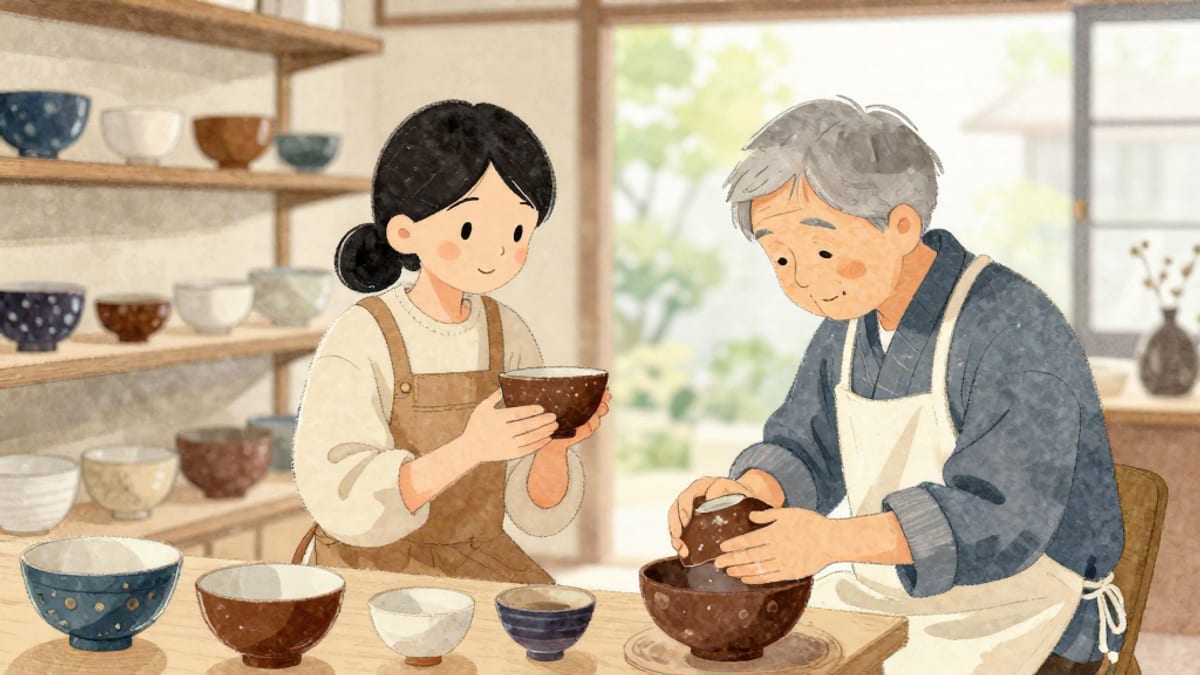
You are most likely to hear 魂 in conversations about craft and performance: a potter talking about a bowl, a chef about a broth, a musician about a song. Praising the spirit in someone's work is one of the warmest compliments you can give, and the phrases below sound natural in a studio, a workshop or after a concert.
| Japanese | Romaji | Meaning |
|---|---|---|
| この器、魂がこもっていますね。 | Kono utsuwa, tamashii ga komotte imasu ne. | You: This bowl really has soul in it. |
| ありがとうございます。一つ一つ心を込めて作っています。 | Arigatō gozaimasu. Hitotsu hitotsu kokoro o komete tsukutte imasu. | Potter: Thank you. I make each one with care. |
| 何年ぐらい作っていらっしゃるんですか。 | Nannen gurai tsukutte irassharu n desu ka. | You: How many years have you been making them? (respectful) |
| もう四十年になります。 | Mō yonjūnen ni narimasu. | Potter: It's been forty years now. |
Look-alikes, mistakes and how to write 魂
The part 鬼 appears in several kanji, and learners mix them up. 魅, charm, as in 魅力, miryoku, attraction, uses the same 鬼 with a different partner. 塊, katamari, a lump, has the earth radical. 鬼 alone is the oni of folk tales and the setsubun bean-throwing.
| Japanese | Romaji | Meaning |
|---|---|---|
| 鬼 | oni | ogre, demon |
| 魅力 | miryoku | charm, appeal |
| 塊 | katamari | a lump, a mass |
- Writing 霊 in a thank-you card when you mean heart. Use 心.
- Using 魂胆 to praise courage. It means a hidden motive.
- Reading 魂 as kon on its own. Alone it is tamashii.
- Saying tamashi with a short final vowel. The long ii matters.
To write 魂, start with 云 on the left: two horizontals and the small angled stroke with its dot. Then 鬼: the short slanting stroke, the box with its inner lines, the left-falling stroke, the long stroke that bends right and hooks up, and the small 厶 shape at the end. Keep 云 narrow; 鬼 takes most of the width.
魂 as a tattoo: spirit, oni and better words
魂 is a popular tattoo kanji because the meaning is strong and the shape is striking. It is worth knowing two things first. The right side is 鬼, oni, and some Japanese viewers will see the demon before the soul. And in Chinese, 魂 also carries strong associations with the spirits of the dead, as in ghost stories.
A word often expresses your idea more precisely. 闘魂, fighting spirit, is energetic and common in sports. 心, heart, is simpler and softer. 魂を込めて, with all my soul, is a phrase rather than a word, which some people like as a motto. Avoid 大和魂 unless you understand its history and how it may read to others. Whatever you choose, have a native speaker check it before inking.
Sort 魂, 霊 and 心 with Mocchi, then polish your long vowels
Ask Mocchi: Explain when to use 魂, 霊 and 心, then give me five sentences to sort. Mocchi explains each choice and remembers which situations you got wrong, so they turn up again in a later /review.
Long vowels decide whether you sound natural here: tamashii, not tamashi, and the long ō in words such as tōkon and shōkon. The pronunciation coach has drills for long vowels: Mocchi picks a sound to work on, you listen at slow speed, record yourself and get a tip on accuracy and rhythm.