
王 at a glance: king, queen, prince and kingdom
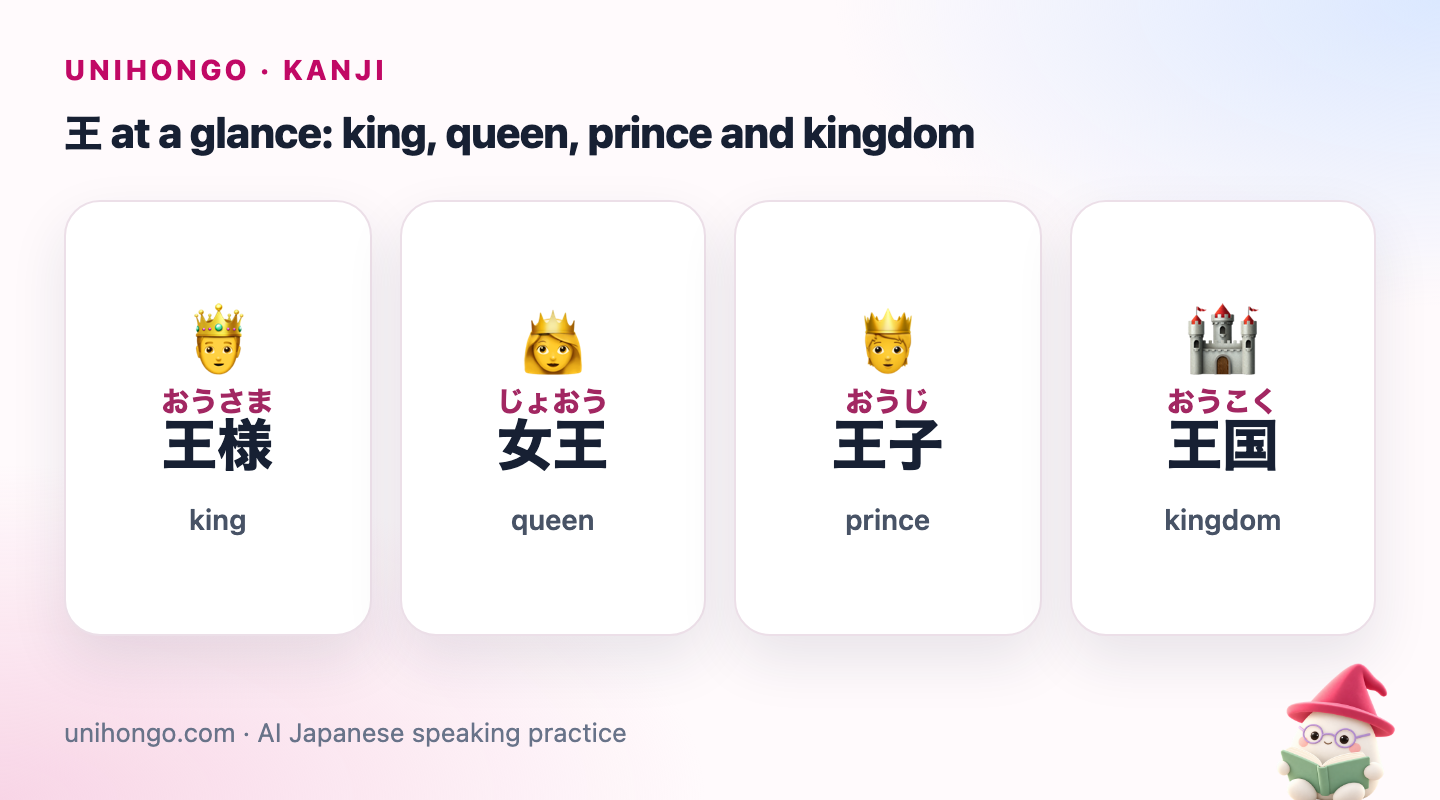
The four cards give you the royal set. 王様 is the friendly, everyday word for a king, the one used in fairy tales, children's games and conversation. 女王 is a queen, 王子 a prince, and 王国 a kingdom, which in modern Japanese also describes any place where something rules, as in a kingdom of cats.
Notice the honorific 様 in 王様. It shows respect, much like Your Majesty, and it is part of the normal word; 王 on its own sounds formal or literary.
| Japanese | Romaji | Meaning |
|---|---|---|
| 王様 | ōsama | king |
| 女王 | joō | queen |
| 王子 | ōji | prince |
| 王国 | ōkoku | kingdom |
The reading, strokes and shape of 王
| Kanji | Strokes | On'yomi | Kun'yomi | Core meaning |
|---|---|---|---|---|
| 王 | 4 | ō | none in common use | king, ruler, the best of a group |
| 皇 | 9 | kō, ō | none in common use | emperor, imperial |
王 has four strokes: three horizontal lines joined by one vertical. An old Chinese explanation says the three lines stand for heaven, people and earth, and the vertical line is the ruler who connects them. Many modern scholars think the character began as a picture of a ceremonial axe, a symbol of power. Either story helps you remember it; neither is needed to use it.
王 has a single common reading, ō, and in compounds this long vowel sometimes joins with the sound before it. 親王 (shinnō, an imperial prince) is a classic example: the n of shin and ō merge into nō. In ordinary words such as 王様 and 王子, the reading stays a simple ō.
皇, emperor, is 白 on top of 王. It is the kanji of 天皇 and 皇室, and you will meet it in news about the imperial family and in place names such as 皇居.
Royal words: kings, queens and princes
These words are used for royalty in other countries, in history, in fairy tales and in fiction. In news about real royal families, the formal 国王 is common; in stories and games, 王様 is the normal word.
| Japanese | Romaji | Meaning |
|---|---|---|
| 国王 | kokuō | king, monarch (formal, news) |
| 王女 | ōjo | princess, a king's daughter |
| お姫様 | ohimesama | princess (fairy tales) |
| 王子様 | ōjisama | prince; Prince Charming |
| 王冠 | ōkan | crown |
| 王座 | ōza | throne; a title or top position |
| 王室 | ōshitsu | royal family (of another country) |
| 裸の王様 | hadaka no ōsama | the emperor's new clothes |
王子様 often means Prince Charming: 白馬の王子様, the prince on a white horse, is the ideal partner of fairy tales and romantic comedies, usually mentioned with a smile. 裸の王様, literally the naked king, is the Japanese name of the story known in English as The Emperor's New Clothes, and people use it for a leader whom nobody dares to criticise.
王室 is used for royal families abroad. For Japan's own imperial family, the word is 皇室 (kōshitsu), with 皇.
王 beyond royalty: champions, classics and shogi
Much of the time, 王 in modern Japanese has nothing to do with crowns. It marks the best of a group, the standard way of doing something, or the most important piece in a board game.
| Japanese | Romaji | Meaning |
|---|---|---|
| 王者 | ōja | champion, reigning king |
| 得点王 | tokuten'ō | top scorer of a season |
| 三冠王 | sankan'ō | triple crown winner |
| 百獣の王 | hyakujū no ō | king of beasts, the lion |
| 王道 | ōdō | the classic, standard way |
| 王道のストーリーが好きです。 | Ōdō no sutōrī ga suki desu. | I like classic, tried-and-true stories. |
| 王手 | ōte | check (in shogi) |
| 王様ゲーム | ōsama gēmu | the king game (party game) |
王道 is one of the most useful words here. It describes the standard, much-loved version of something: 王道の味, a classic flavour; 王道の観光ルート, the classic sightseeing route. It is a compliment, not a criticism, unlike the English word predictable.
Sports media love -王 titles: 得点王 (top scorer), ホームラン王 (home run king), 三冠王 (triple crown). 王様ゲーム is a party game in which whoever draws the king's stick gives orders to the others, sometimes embarrassing ones; it is well known, but you are never obliged to join.
Why the Japanese emperor is 天皇, not 王
Japan has a monarchy, but its head is an emperor, not a king, and Japanese is careful about the words. The emperor is 天皇 (tennō), the empress 皇后 (kōgō), the imperial family 皇室 (kōshitsu) and its members 皇族 (kōzoku). The heir to the throne has the title 皇太子 (kōtaishi), crown prince.
In polite conversation, people usually say 天皇陛下 (tennō heika), His Majesty the Emperor, and use honorific language when talking about the imperial family. Using 王 for the emperor, or calling him 王様, is simply wrong, and it can sound disrespectful.
| Japanese | Romaji | Meaning |
|---|---|---|
| 天皇 | tennō | the Emperor of Japan |
| 天皇陛下 | tennō heika | His Majesty the Emperor |
| 皇居 | kōkyo | the Imperial Palace |
| 皇室 | kōshitsu | the Imperial Family |
The reading tennō is another example of sounds joining: 天 (ten) and 皇 (ō) merge into tennō, just as in 親王. You will see 皇居 on maps of central Tokyo, where the palace grounds and the East Gardens are a popular place for a walk.
Mini dialogue: a game of shogi with a neighbour
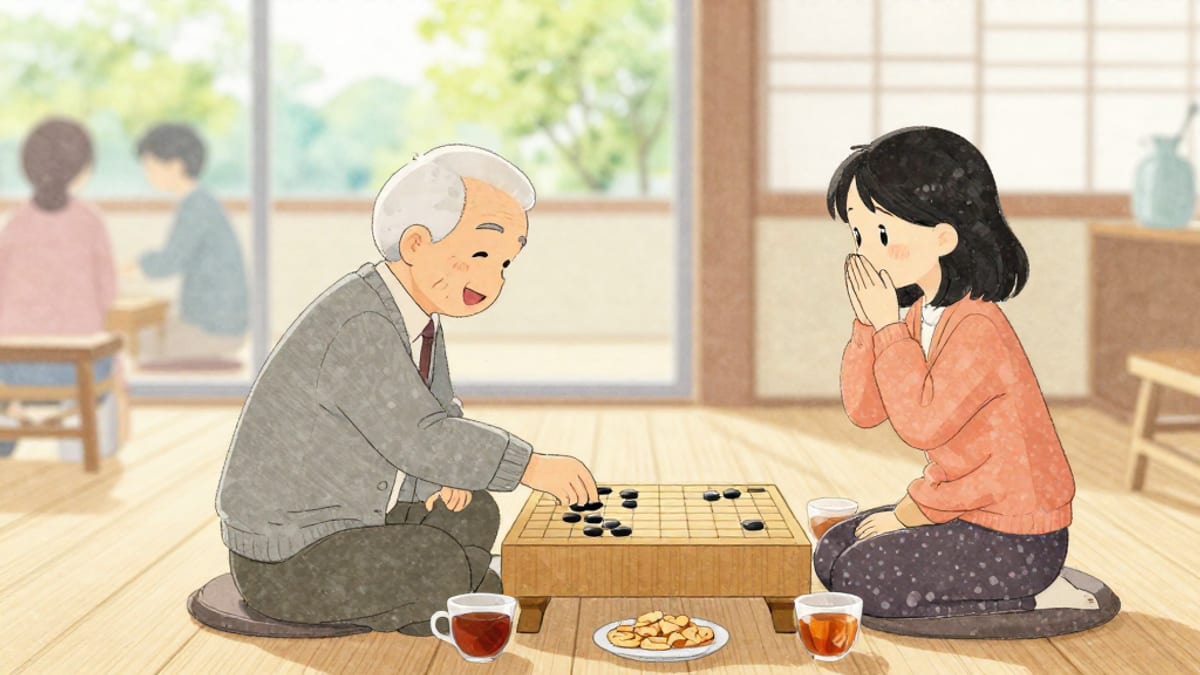
Shogi, Japanese chess, is played in community centres, parks and online, and older players are often happy to teach a beginner. Here an older neighbour teaches you. He speaks casually and kindly; you answer politely.
| Japanese | Romaji | Meaning |
|---|---|---|
| この駒は何ですか。 | Kono koma wa nan desu ka. | You: What's this piece? |
| それが王将。一番大事な駒だよ。 | Sore ga ōshō. Ichiban daiji na koma da yo. | Neighbour: That's the king. The most important piece. |
| これが逃げられなくなったら負けですか。 | Kore ga nigerarenaku nattara make desu ka. | You: Do I lose if it can't escape? |
| そう、それが詰み。じゃあ…はい、王手! | Sō, sore ga tsumi. Jā… hai, ōte! | Neighbour: Right, that's checkmate. So… there, check! |
| えっ、もう王手ですか。 | E, mō ōte desu ka. | You: What, check already? |
| 大丈夫、逃げ道はあるよ。 | Daijōbu, nigemichi wa aru yo. | Neighbour: Don't worry, there's a way out. |
駒 (koma) is the word for a game piece. 逃げ道, an escape route, is built on 道, the kanji for way, and it is also used outside games for a way out of a difficult situation.
王 as a tattoo or design
王 is clear and strong, but think about how it reads. With only four strokes, it looks very simple to Japanese eyes, a bit like the word king printed on a playing card. Some readers may also take it for part of a larger kanji, since 王-like shapes appear inside many characters.
In Chinese, the character is written the same way, but it is also one of the most common family names, Wang. To a Chinese reader, 王 alone may look like a surname as much as a title, which surprises many people who choose it for its meaning. In Japanese given names, 王 is rare.
A word usually says more. 王者 (champion) suggests someone at the top of their field, 百獣の王 (king of beasts) has a bold, playful image, and 王道 (the classic way) suits a person who loves tradition. Before you ink or print anything, ask a native speaker to check the exact characters, the stroke shapes and the font.
Crown your look-alike kanji with Mocchi
- Ask Mocchi for /kanji 玉, then ask: How do I tell 王, 玉, 主 and 皇 apart at a glance? You get the parts and a quick example word for each.
- Follow with /quiz 王 and its look-alikes. Mocchi asks one question at a time, explains every miss and remembers which pair you confuse.
- If look-alikes are a weak point in general, ask Mocchi to add a short look-alike kanji slot to your study plan with /adjust-plan, so they come back every few days.
- For the vowels, make flashcards of ōsama, joō, ōji and ōjo and play them in Listen & Pick, where hearing the difference between jo and jō is the whole game.
Common mistakes and how to write 王
- Confusing 王 with 玉 (tama, ball, jewel). 玉 is 王 with a dot at the bottom right; it appears in お年玉 (otoshidama, New Year money) and 玉ねぎ (tamanegi, onion).
- Confusing 王 with 主 (shu, nushi, master, main). 主 has a dot on top, as in 主人 (shujin) and 主婦 (shufu).
- Thinking the left side of 現, 球 and 理 is king. It looks like 王, but it is a squeezed form of 玉, jewel; that is why these kanji relate to jewels, polish and order.
- Reading 女王 as jōō. The standard reading is joō.
- Calling Japan's emperor 王様. He is 天皇, and in polite speech 天皇陛下.