

Station, line and train
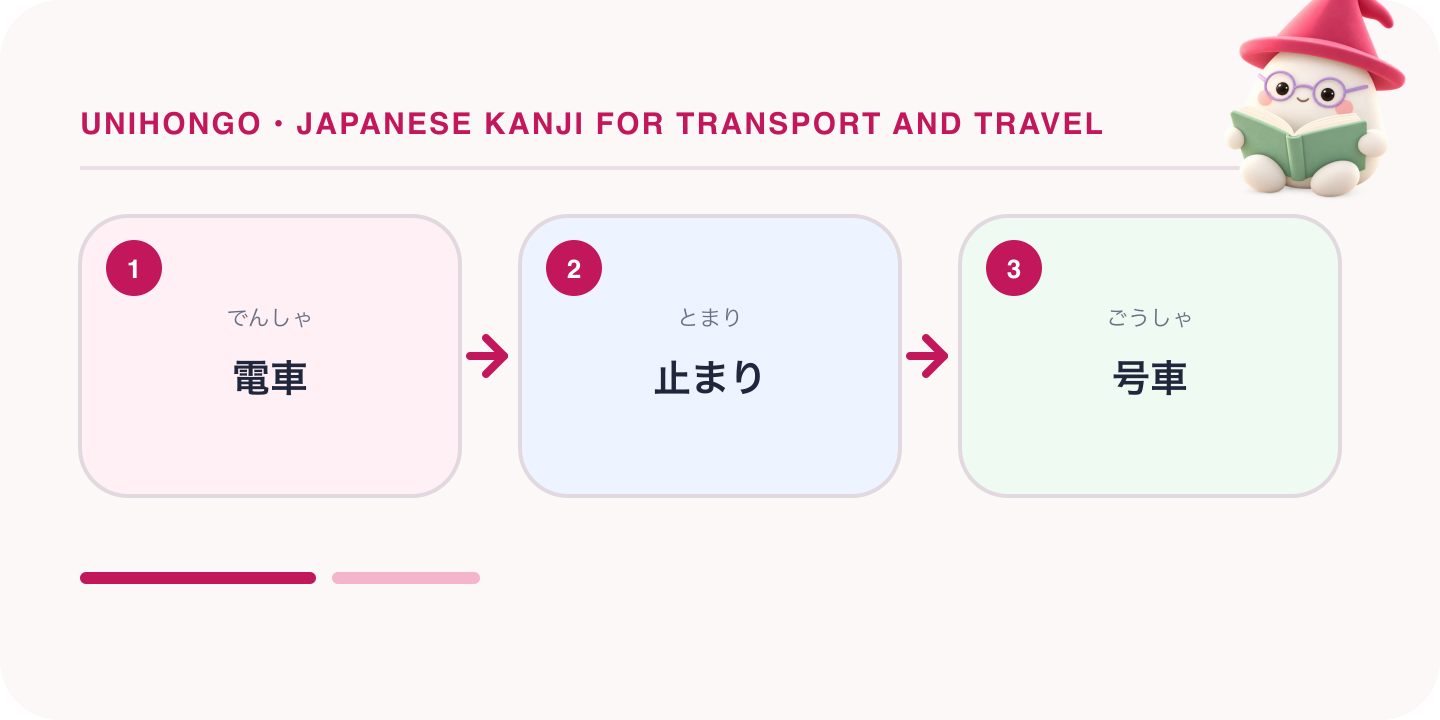
駅, eki, is a station and has only an on reading in everyday use. Every station name ends with it on the sign, and 駅員, ekiin, is the staff member you look for when something goes wrong. 線, sen, is a line, both a railway line and a thread, and it names every route: 山手線, Yamanote-sen, 中央線, Chūō-sen, and on the platform 番線, bansen, the numbered track. 電, den, is electricity, and 車, kuruma or sha, is a vehicle, so 電車, densha, is an electric train, the word for almost any local train, while 列車, ressha, is the formal word on boards and announcements.
番, ban, is a number in a sequence, and 号, gō, is a numbered item, so the two divide the platform between them. 三番線, sanban-sen, is platform three; 五号車, gogōsha, is car five, painted on the platform floor where that car stops. 号 also names trains: のぞみ三号, Nozomi sangō, is the third Nozomi service of the day. 番号, bangō, is a number in general, so 座席番号, zaseki bangō, is the seat number on a reserved ticket.
| Japanese | Romaji | Meaning |
|---|---|---|
| この電車は新宿駅に止まりますか。 | Kono densha wa Shinjuku-eki ni tomarimasu ka. | Does this train stop at Shinjuku Station? |
| 山手線は何番線ですか。 | Yamanote-sen wa nanban-sen desu ka. | Which platform is the Yamanote Line? |
| 三号車の座席です。 | Sangōsha no zaseki desu. | It is a seat in car three. |
| 駅員に聞いてみましょう。 | Ekiin ni kiite mimashō. | Let's ask a station worker. |
Train types from slowest to fastest
The train-type kanji decide whether your train stops where you need it. 各, kaku, means each, and 停, tei, means to stop, so 各停, kakutei, short for 各駅停車, kakueki teisha, stops at every station. 快, kai, is pleasant or brisk, and 速, soku or hayai, is fast, so 快速, kaisoku, is a rapid service that skips some stations. 急, kyū or isogu, is urgent, and 急行, kyūkō, is an express. 特, toku, is special, and 特急, tokkyū, is a limited express, the fastest category on most private lines and often one that needs an extra 特急券.
Between these sit combinations each railway invents for itself: 準急, junkyū, semi-express; 通勤快速, tsūkin kaisoku, commuter rapid; 新快速, shinkaisoku, special rapid. Once you know 各, 快, 急 and 特 you can rank any train you see. Faster is not always better: if your station is small, only a 各停 stops there.
| Japanese | Romaji | Meaning |
|---|---|---|
| 各駅停車にお乗りください。 | Kakueki teisha ni o-nori kudasai. | Please take the local train. |
| 快速はこの駅に止まりません。 | Kaisoku wa kono eki ni tomarimasen. | The rapid does not stop at this station. |
| 特急は特急券が必要です。 | Tokkyū wa tokkyūken ga hitsuyō desu. | The limited express needs a limited express ticket. |
| 次の急行は何時ですか。 | Tsugi no kyūkō wa nanji desu ka. | What time is the next express? |
Station and train-type kanji at a glance
The first table gathers the station and train-type kanji with the compound you will most often read on a board or sign.
| Kanji | Reading | Meaning |
|---|---|---|
| 駅 | on: eki | Station; 駅員 ekiin, station staff |
| 線 | on: sen | Line; 山手線 Yamanote-sen |
| 電 | on: den | Electricity; 電車 densha, train |
| 車 | on: sha; kun: kuruma | Vehicle; 号車 gōsha, car number |
| 番 | on: ban | Number in sequence; 番線 bansen, platform |
| 号 | on: gō | Numbered item; 五号車 gogōsha, car five |
| 各 | on: kaku; kun: onoono | Each; 各停 kakutei, local train |
| 停 | on: tei | Stop; 停車 teisha, stopping |
| 快 | on: kai | Brisk, pleasant; 快速 kaisoku, rapid |
| 速 | on: soku; kun: haya(i) | Fast; 新快速 shinkaisoku, special rapid |
| 急 | on: kyū; kun: iso(gu) | Urgent; 急行 kyūkō, express |
| 特 | on: toku | Special; 特急 tokkyū, limited express |
Almost every word here uses on readings, because railway vocabulary is built from Chinese-style compounds. The kun readings you will hear are kuruma for a car on the road and hayai for fast.
Getting on, getting off and changing
Three kanji cover the whole journey. 乗, noru, is to get on, on reading jō, in 乗車, jōsha, boarding, and 乗り場, noriba, a boarding point, the word above bus stops and taxi ranks. 降, oriru, is to get off, on reading kō, in 降車, kōsha, alighting; the same kanji is read furu when rain falls, so 降車口, kōshaguchi, is the exit for getting off and 降水, kōsui, is precipitation. 換, kaeru, is to exchange, on reading kan, and 乗り換え, norikae, is a transfer, while 両替, ryōgae, uses a different kanji for changing money.
On buses you will see 乗車口, jōshaguchi, and 降車口, kōshaguchi, marked on the doors. 乗り越し, norikoshi, is riding past your paid station, and the 乗り越し精算機, norikoshi seisanki, is the fare adjustment machine by the gates that fixes it. 乗り換え口, norikae-guchi, is the passage to another line.
| Japanese | Romaji | Meaning |
|---|---|---|
| 東京駅で乗り換えてください。 | Tōkyō-eki de norikaete kudasai. | Please change at Tokyo Station. |
| 次の駅で降ります。 | Tsugi no eki de orimasu. | I am getting off at the next station. |
| バス乗り場は南口です。 | Basu noriba wa minami-guchi desu. | The bus stop is at the south exit. |
| 乗り越したので精算します。 | Norikoshita node seisan shimasu. | I rode past my station, so I will pay the difference. |
Tickets, fares, departures and arrivals
券, ken, is a ticket or voucher: 乗車券, jōshaken, the basic fare ticket; 特急券, tokkyūken, the limited express supplement; 指定席券, shiteisekiken, the reserved seat ticket; and 券売機, kenbaiki, the ticket machine. 料, ryō, is a fee, and 料金, ryōkin, is the fare, while 運賃, unchin, is the formal word on fare charts. 発, hatsu, is departure and 着, chaku or tsuku, is arrival, and these two kanji sit after every time on a board or ticket. 空, sora or kū, is sky and empty, and 港, minato or kō, is a harbour, so 空港, kūkō, is an airport and 港, on its own, is the ferry port.
| Japanese | Romaji | Meaning |
|---|---|---|
| 十時八分発の特急に乗ります。 | Jūji happun hatsu no tokkyū ni norimasu. | I am taking the limited express departing at 10:08. |
| 指定席券を買いたいです。 | Shiteisekiken o kaitai desu. | I want to buy a reserved seat ticket. |
| 空港行きの電車はどれですか。 | Kūkō-yuki no densha wa dore desu ka. | Which train goes to the airport? |
| 終電は何時ですか。 | Shūden wa nanji desu ka. | What time is the last train? |
| この列車は遅延しています。 | Kono ressha wa chien shite imasu. | This train is delayed. |
| Kanji | Reading | Meaning |
|---|---|---|
| 乗 | on: jō; kun: no(ru) | Ride, board; 乗り場 noriba, boarding point |
| 降 | on: kō; kun: o(riru), fu(ru) | Get off, fall; 降車 kōsha, alighting |
| 換 | on: kan; kun: ka(eru) | Exchange; 乗り換え norikae, transfer |
| 券 | on: ken | Ticket; 券売機 kenbaiki, ticket machine |
| 料 | on: ryō | Fee; 料金 ryōkin, fare |
| 発 | on: hatsu | Depart; 始発 shihatsu, first train |
| 着 | on: chaku; kun: tsu(ku), ki(ru) | Arrive, wear; 到着 tōchaku, arrival |
| 空 | on: kū; kun: sora, a(ku), kara | Sky, empty; 空席 kūseki, empty seat |
| 港 | on: kō; kun: minato | Harbour; 空港 kūkō, airport |
On the board, each line reads time, 発 or 着, train type, destination and 番線. A Shinkansen ticket adds 指定席, shiteiseki, reserved seat, or 自由席, jiyūseki, unreserved seat. 終電, shūden, is the last train and 始発, shihatsu, the first; 運休, unkyū, is a cancelled service and 遅延, chien, a delay. Fares and supplements vary by line and distance, so check the fare chart above the machine rather than assuming a price.
Where you meet these kanji every day
Transport kanji surround you from the ticket machine to the seat, so one commute is a full review.
- Departure boards: time with 発, train type, destination with 行き, 番線, and 遅延 or 運休 when things go wrong
- Platform signs: 番線, 号車 on the floor, 乗車口 and the stopping chart with 各停, 快速, 急行, 特急
- Ticket machines: 券売機, 乗車券, 特急券, 指定席, 自由席, 料金 and 精算 for fare adjustment
- Tickets and IC card screens: 発, 着, 号車, 座席番号, 乗換 and 残高 for card balance
- Bus stops and taxis: 乗り場, 降車口, 空車 on a free taxi, 満車 on a full car park
- Airports and ports: 空港, 港, 到着 arrivals, 出発 departures, 搭乗口 boarding gate
Your transfer app uses the same kanji as the board, so switching it to Japanese for a week gives you a self-checking textbook.
Look-alike kanji to watch
特 and 持, to hold, share the right side, and only the left radical differs: cow for special, hand for hold. 持ち込み, mochikomi, carry-on items, sits next to 特急 on Shinkansen notices, so read the radical. 急 and 息, breath, both have 心 at the bottom, but 急 has a hook on top. 各 and 名, name, share the top; 各 has 口 below a wider top, and 名 is the character on your ticket for your name.
停 and 亭 differ by the person radical on the left, and 亭 appears in restaurant names. 降 and 陸, land, share the left radical, and 陸 appears at airports in 着陸, chakuriku, landing, so look at the right half. 券 and 巻, to roll, share the top, but 券 ends in 刀, a knife, since tickets were cut, while 巻 ends in a curl. 発 and 登, to climb, share the top; 登 has 豆 below and appears in 登山口, tozan-guchi, at mountain stations. 空 and 突, to thrust, both have the cave roof, but 空 has 工 underneath and 突 has 大.
| Japanese | Romaji | Meaning |
|---|---|---|
| 特急と持ち込みは違う字です。 | Tokkyū to mochikomi wa chigau ji desu. | Limited express and carry-on use different characters. |
| 着陸と到着はどちらも着です。 | Chakuriku to tōchaku wa dochira mo chaku desu. | Landing and arrival both use the kanji chaku. |
| 券の下は刀です。 | Ken no shita wa katana desu. | The bottom of the ticket kanji is a sword. |
A one-week study plan for transport kanji
Learn these kanji on the platform. Write each character once by hand, say the reading and photograph one board or sign that uses it.
- Day 1: 駅, 線, 電, 車, 番, 号. Read your home station sign and find the platform and car numbers.
- Day 2: 各, 停, 快, 速, 急, 特. Read the stopping chart and rank the train types.
- Day 3: 乗, 降, 換. Find 乗り場, 降車口 and 乗り換え on one journey.
- Day 4: 券, 料. Read the fare chart and every button on a ticket machine.
- Day 5: 発, 着, 空, 港. Read a full departure board line aloud with the time.
- Day 6: Look-alike pairs. Write 特 and 持, 券 and 巻, 発 and 登 side by side.
- Day 7: Review all 21 with Unihongo's free learning games, then plan a trip with a transfer using only Japanese signs.
For the spoken side, the related post on Japanese train station phrases covers what to say at the ticket window and on the platform. This post gives you the reading that means you rarely need to ask.