
Earth, ground or soil? Start with four words
Before learning the kanji one by one, it helps to see how Japanese divides the idea. These four words cover the planet, the ground you walk on, the soil you dig and the shaking of the ground that everyone in Japan learns to talk about. Notice that 地 is read chi in one and ji in two others.
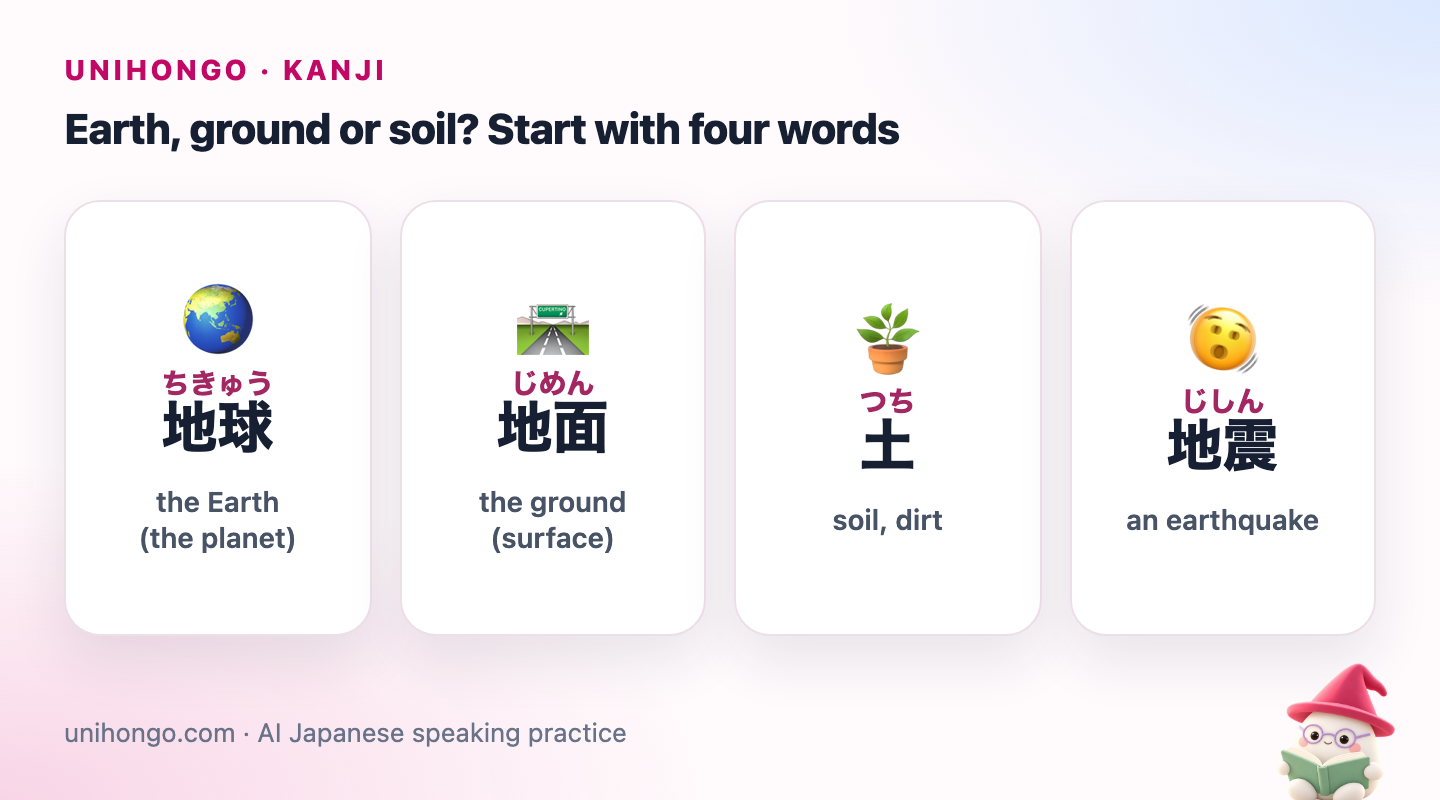
| Japanese | Romaji | Meaning |
|---|---|---|
| 地球 | chikyū | the Earth (the planet) |
| 地面 | jimen | the ground (surface) |
| 土 | tsuchi | soil, dirt |
| 地震 | jishin | an earthquake |
Readings and the 土 inside 地
土 has three strokes: a short horizontal, a vertical and a longer horizontal at the bottom. It is usually explained as a picture of a mound of earth on the ground. 地 has six strokes and is built from 土 on the left and 也 on the right. When 土 sits on the left of a kanji it is called tsuchihen, and it often signals ground, walls or places, as in 場 (place), 坂 (slope) and 城 (castle).
地 has two readings, chi and ji, with no reliable rule for which one a word uses. 土 has a native reading, tsuchi, and two on'yomi, do and to.
| Kanji | Reading type | Reading | Example |
|---|---|---|---|
| 地 | on'yomi | chi | 地図, chizu, map; 地下, chika, underground |
| 地 | on'yomi | ji | 地震, jishin; 地元, jimoto, hometown |
| 土 | kun'yomi | tsuchi | 土, tsuchi, soil |
| 土 | on'yomi | do | 土曜日, doyōbi, Saturday; 粘土, nendo, clay |
| 土 | on'yomi | to | 土地, tochi, land, a plot |
Sixteen everyday words with 地 and 土
These words cover travel, home, weather and personality. The 地 group is large and useful; the 土 group includes a word for pouring rain and the famous word for a souvenir.
| Japanese | Romaji | Meaning |
|---|---|---|
| 地図 | chizu | a map |
| 地下鉄 | chikatetsu | the subway, the metro |
| 地元 | jimoto | one's hometown, the local area |
| 地域 | chiiki | a region, a community |
| 地方 | chihō | a region; the provinces |
| 地味 | jimi | plain, low-key |
| 生地 | kiji | fabric; dough |
| 意地悪 | ijiwaru | mean, spiteful |
| 土地 | tochi | land, a plot of land |
| 土曜日 | doyōbi | Saturday |
| 粘土 | nendo | clay |
| 土鍋 | donabe | a clay pot for cooking |
| 土足 | dosoku | with shoes on (indoors) |
| 土砂降り | doshaburi | pouring rain |
| お土産 | omiyage | a souvenir, a small gift |
| 地元はどこですか? | Jimoto wa doko desu ka? | Where are you from? (polite) |
Jimi is a good example of 地 meaning the base layer: a jimi outfit is plain and understated, the opposite of hade, flashy. It is not an insult in itself, but saying someone is jimi about their looks can sting, so use it for clothes and colours rather than people. Dosoku appears on signs at the entrance of homes, temples and some restaurants: dosoku kinshi means please take your shoes off. And omiyage is a special reading that you simply learn as a whole word.
地, 土 or 地球? A side-by-side guide
Here is how the three compare. The biggest learner mistake is using chikyū whenever English says earth, for example for the soil in a garden or the ground after it rains. Chikyū is only the planet.
| Japanese | Romaji | Meaning |
|---|---|---|
| 地面が濡れている。 | Jimen ga nurete iru. | The ground is wet. |
| 土を掘る。 | Tsuchi o horu. | To dig the soil. |
| 地球にやさしい | chikyū ni yasashii | eco-friendly, kind to the planet |
| 地球温暖化 | chikyū ondanka | global warming |
| Point | 地 (chi, ji) | 土 (tsuchi, do) | 地球 (chikyū) |
|---|---|---|---|
| Core idea | ground, land, place | soil, dirt, clay | the planet Earth |
| You can | stand on it, map it | dig it, plant in it | live on it, protect it |
| Typical words | 地図, 地面, 地元 | 土, 粘土, 土鍋 | 地球温暖化, global warming |
| Used alone | rarely | yes: tsuchi | yes: chikyū |
Chikyū ni yasashii, kind to the Earth, is the everyday phrase for eco-friendly, and you will see it in advertising for everything from shopping bags to cars. It is a fixed phrase, so learn it as one piece.
Earth among the elements
In traditional East Asian thought, earth is one of the five phases or elements: wood, fire, earth, metal and water, written 木火土金水. Here earth is 土, and you can see the whole set in the Japanese weekday names: 土曜日 is Saturday, the earth day. A different, Buddhist-influenced set of five elements is 地水火風空 (chi, sui, ka, fū, kū): earth, water, fire, wind and void. It appears in some temple architecture, such as the five-part stone pagodas seen in many graveyards.
In games, anime and fantasy novels, earth magic may be written with either 土 or 地, depending on the creator, so both are correct in that world.
| Japanese | Romaji | Meaning |
|---|---|---|
| 大地 | daichi | the great earth, the land |
| 天地 | tenchi | heaven and earth |
In the vegetable garden: a short dialogue
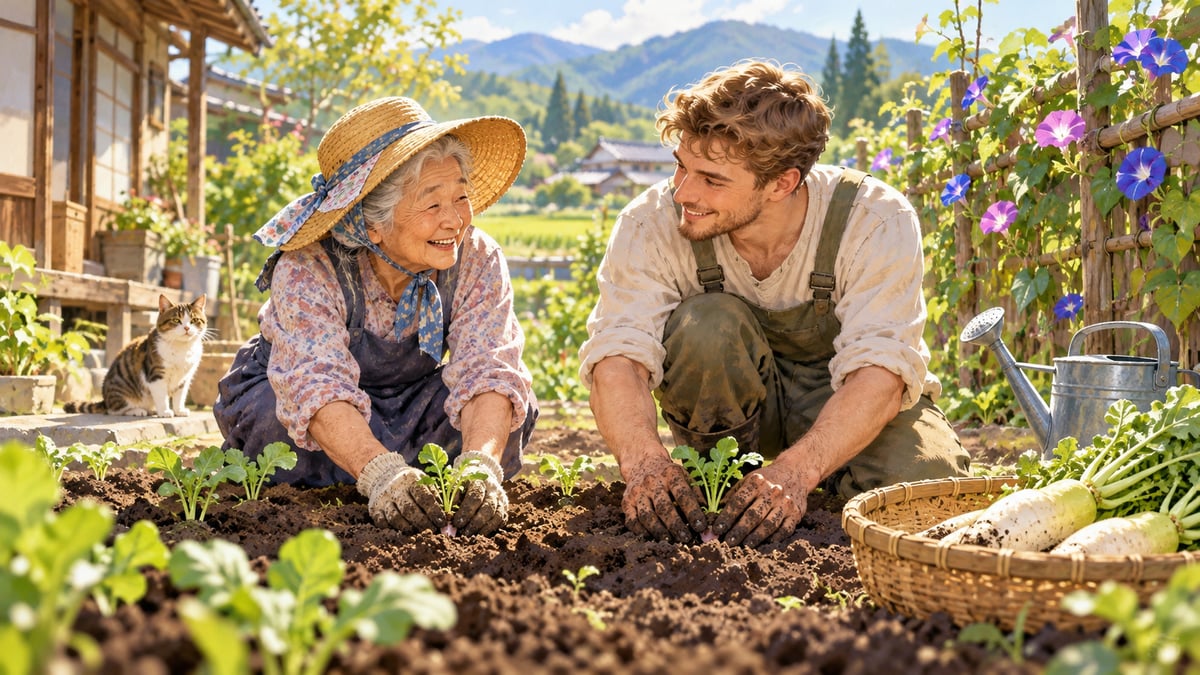
Many families in Japan grow vegetables in a backyard plot or a rented allotment, and helping out is a lovely way to practise Japanese with an older neighbour or host family. Here, you speak politely to an elderly woman who speaks gently and casually to you.
| Japanese | Romaji | Meaning |
|---|---|---|
| この土、ふかふかですね。 | Kono tsuchi, fukafuka desu ne. | You: This soil is so soft and fluffy. |
| 毎年、肥料を混ぜてるからね。 | Maitoshi, hiryō o mazeteru kara ne. | Neighbour: I mix in fertiliser every year. |
| ここに何を植えるんですか? | Koko ni nani o ueru n desu ka? | You: What are you planting here? |
| 大根よ。地元の名物なの。 | Daikon yo. Jimoto no meibutsu na no. | Neighbour: Daikon. It's a local speciality. |
| 手が土だらけになっちゃった。 | Te ga tsuchidarake ni nacchatta. | You: My hands are covered in soil. |
| あとで一緒にお茶にしましょう。 | Ato de issho ni ocha ni shimashō. | Neighbour: Let's have tea together later. |
Earth tattoos and designs: 地, 土, 地球 or 大地?
Earth is a natural theme for tattoos, outdoor brands and nature projects. Each kanji carries a different feeling, and one of them has a surprising meaning in Chinese.
- A lone 土 reads as soil or dirt, and as Saturday. Many Japanese readers would find it plain or puzzling.
- A lone 地 feels incomplete, because it rarely stands alone in modern Japanese.
- 地球 is clear but scientific, like the word planet. 大地 (daichi, the great earth) is warmer and more poetic, and it is also a common boy's name.
- Chinese and Japanese differ with 土: in Chinese slang, 土 can also mean unfashionable or rustic, which a Chinese reader may notice.
- Ask a native speaker to check the characters and style, and make sure 土 has not become 士 by accident.
Look-alikes: 土 and 士, 地 and 池
土 and 士 are almost identical. In 土 (soil) the bottom horizontal is longer; in 士 (shi, a gentleman, a samurai, or a qualified professional) the top horizontal is longer. 士 appears in 武士 (bushi, samurai warrior) and in job titles such as 弁護士 (bengoshi, lawyer). On the 地 side, swap 土 for the water radical and you get 池 (ike, a pond); swap it for the person radical and you get 他 (ta, other).
| Japanese | Romaji | Meaning |
|---|---|---|
| 武士 | bushi | a samurai warrior |
| 弁護士 | bengoshi | a lawyer |
| 池 | ike | a pond |
| その他 | sono ta | others, and so on |
- Using chikyū for garden soil. Soil is tsuchi.
- Reading 地震 as chishin. It is jishin.
- Reading お土産 as odosan. It is omiyage, a special reading.
- Writing 土 with a long top line. That makes 士.
Let Mocchi test your 地 and 土 instincts
- Sign in and ask Mocchi: Give me eight English sentences with earth, ground or soil and make me pick 地, 土 or 地球. Mocchi explains each answer and remembers which ones you get wrong.
- Type /kanji 地 when the chi and ji readings blur, and ask for a short /quiz on just that.
- Ask Mocchi to turn the words you missed into flashcards, then run them in Vocabulary Dash, the 3D word runner, until jishin, jimoto and tochi come to you without thinking.