
The kanji for peace at a glance
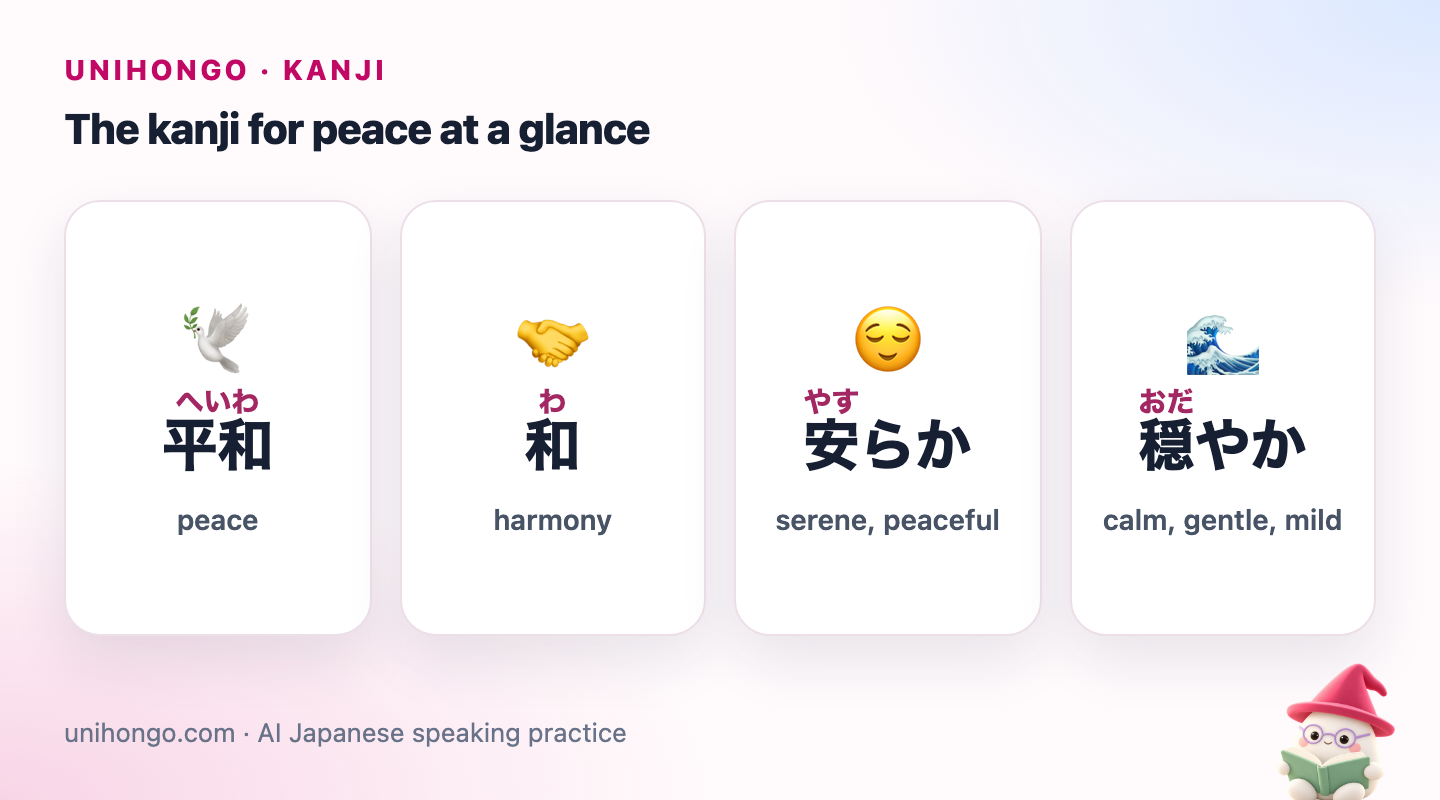
平和 is the word you need most of the time. Its two kanji each add something: 平 means flat, level and calm, and 和 means harmony and gentleness. Together they describe a world without conflict. The other two cards below are for the quiet, personal kind of peace.
| Japanese | Romaji | Meaning |
|---|---|---|
| 平和 | heiwa | peace |
| 和 | wa | harmony |
| 安らか | yasuraka | serene, peaceful |
| 穏やか | odayaka | calm, gentle, mild |
Readings, strokes and parts
| Kanji | Strokes | On'yomi | Kun'yomi | Core meaning |
|---|---|---|---|---|
| 平 | 5 | hei, byō | taira, hira | flat, level, calm, ordinary |
| 和 | 8 | wa, o | yawaragu, yawarageru, nagomu, nagoyaka | harmony, softness, Japan |
| 安 | 6 | an | yasui, yasuraka | safe, at ease, cheap |
| 穏 | 16 | on | odayaka | calm, quiet, mild |
平 has five strokes and is simple and symmetrical. The reading byō appears in 平等 (byōdō, equality), a word that often stands next to 平和 in speeches.
和 is made of 禾 (a grain plant) on the left and 口 (mouth) on the right. A popular memory aid is grain for every mouth, which feels like peace, but treat it as a mnemonic rather than a proven origin. The rare reading o appears in 和尚 (oshō, a Buddhist priest).
Everyday words with 平 and 和
| Japanese | Romaji | Meaning |
|---|---|---|
| 世界平和 | sekai heiwa | world peace |
| 平和な毎日 | heiwa na mainichi | peaceful everyday life |
| 平日 | heijitsu | weekday |
| 平気 | heiki | fine, unbothered |
| 平等 | byōdō | equality |
| 平穏 | heion | tranquillity, uneventful calm |
| 和食 | washoku | Japanese food |
| 和室 | washitsu | Japanese-style tatami room |
| 調和 | chōwa | harmony, balance |
| 和やか | nagoyaka | friendly, relaxed (atmosphere) |
| 和む | nagomu | to soften, to be soothed |
| 令和 | Reiwa | Japan's current era name |
Notice how ordinary these words are. 平日 (weekday) and 平気 (I'm fine, it doesn't bother me) use 平 for level and normal, not for peace. 和 shows up every day in 和食 and 和室. The era name 令和 began in 2019, so it appears on forms and calendars all over Japan.
Peace of a country vs peace of mind
English uses one word for both. Japanese prefers different words, and mixing them up is the most common mistake with this topic.
| Japanese | Romaji | Meaning |
|---|---|---|
| 世界が平和になってほしいです。 | Sekai ga heiwa ni natte hoshii desu. | I want the world to be at peace. |
| 声を聞いて安心しました。 | Koe o kiite anshin shimashita. | I felt relieved to hear your voice. |
| 海を見ると心が穏やかになります。 | Umi o miru to kokoro ga odayaka ni narimasu. | Looking at the sea calms my heart. |
| 和やかな雰囲気でした。 | Nagoyaka na fun'iki deshita. | It was a warm, friendly atmosphere. |
| Word | Kind of peace | Typical use | Avoid for |
|---|---|---|---|
| 平和 | No war or conflict | World peace, a peaceful town or era | Your personal calm, in casual talk |
| 安心 | Feeling safe, relieved | Hearing good news, a trusted place | Peace between countries |
| 心の安らぎ | Inner peace, comfort | Music, nature, a pet, a hot bath | Political topics |
| 穏やか | Calm, mild, gentle | A person, the sea, the weather, a day | Very formal statements about peace |
| 和やか | Warm, friendly mood | A meeting, a party, a family meal | A person on their own |
安らか has a special use to know: 安らかにお眠りください (may you rest in peace) is said or written for the dead. It is a gentle, respectful word, but in that set phrase it belongs to funerals, so avoid it as a casual wish.
Names, set phrases and look-alikes
和 is common in names, read kazu or nodoka among other readings. 平 appears in boys' names read hei, and Taira is a historical family name. As always, the same sound can be written with other kanji, and families choose kanji for meaning, sound and look.
| Japanese | Romaji | Meaning |
|---|---|---|
| 和也 | Kazuya | harmony · boy |
| 和 | Nodoka | calm, harmony · girl |
| 康平 | Kōhei | healthy and calm · boy |
| 和を以て貴しとなす | wa o motte tōtoshi to nasu | harmony is to be valued (classical saying) |
The last line is a classical saying traditionally linked to the Seventeen-Article Constitution attributed to Prince Shōtoku. You will see it in history lessons and speeches, not in conversation.
Two look-alikes catch learners. 和 and 私 (watashi, I) both have 禾 on the left; 和 has 口 on the right, 私 has ム. And 平 and 半 (han, half) look close: 平 starts with a horizontal line and keeps its two short dots between the lines, while 半 puts the two dots on top, above both lines.
Mini dialogue: a calm morning at a temple garden
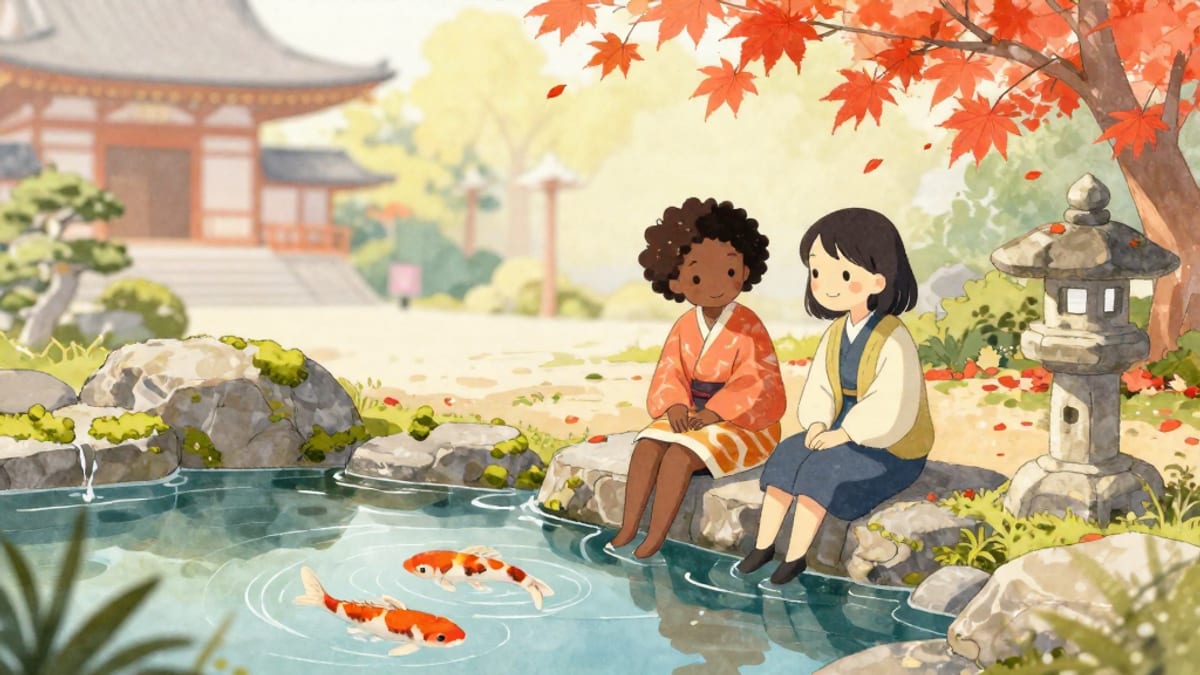
Peace words often appear when you describe how a place makes you feel. Here a visitor and a Japanese friend chat quietly in a temple garden.
| Japanese | Romaji | Meaning |
|---|---|---|
| ここ、静かで落ち着くね。 | Koko, shizuka de ochitsuku ne. | Friend: It's so quiet and calming here. |
| 本当。心が穏やかになる。 | Hontō. Kokoro ga odayaka ni naru. | You: It really is. My heart feels calm. |
| 毎日忙しいから、安らぎが必要だよね。 | Mainichi isogashii kara, yasuragi ga hitsuyō da yo ne. | Friend: We're busy every day, so we need some peace. |
| 平和な朝だね。 | Heiwa na asa da ne. | You: What a peaceful morning. |
和 or 平和 as a tattoo or design
和 is beautiful and popular, but it has several meanings: harmony, peace, softness, and Japan or Japanese style. On a T-shirt in Japan, 和 can read like Japanese style, the way restaurants use it. On a tattoo, many readers will understand harmony, but not everyone will think of peace.
平和 is unmistakable: it means peace. If you want inner peace, consider 安らぎ (peace, comfort) or 穏やか (calm), which describe a state of mind. Remember that Chinese uses 和平 for peace, so a design copied from a Chinese source may reverse the characters. Choose the language on purpose, and ask a native speaker to check the characters and the design before inking.
In Hiroshima and Nagasaki, 平和 carries a special weight. Hiroshima has the Peace Memorial Park, 平和記念公園, and Nagasaki has its Peace Park, 平和公園, and both cities hold memorial ceremonies every August. If you visit, 平和 feels less like an abstract word and more like a promise, which is worth remembering if you choose it as a design.
Learn 平和 and its quiet cousins with Mocchi
Type /explain 海を見ると心が穏やかになります into Mocchi. It splits the sentence into parts, names the particles と and が, explains なります, and gives you the meaning. Then ask Mocchi for three more sentences with 安心, 和やか and 平和, and Mocchi keeps note of which words you hesitated over for your next review.
Finish with Sentence Builder in the games section, where you put Japanese chunks in order. Calm words like these often sit in longer sentences, and rebuilding them helps you feel where 心が and になる go.
Common mistakes and how to write 和
- Saying 私は平和です for I am at peace. Say 心が穏やかです or 落ち着いています.
- Using 和平 for peace in general. In Japanese it means a peace settlement between parties at war.
- Reading 平気 as peaceful. It means fine or unbothered: 平気だよ, I'm fine.
- Writing 私 when you mean 和: check the right side, 口 or ム.