
Eternity in Japanese: the words you need
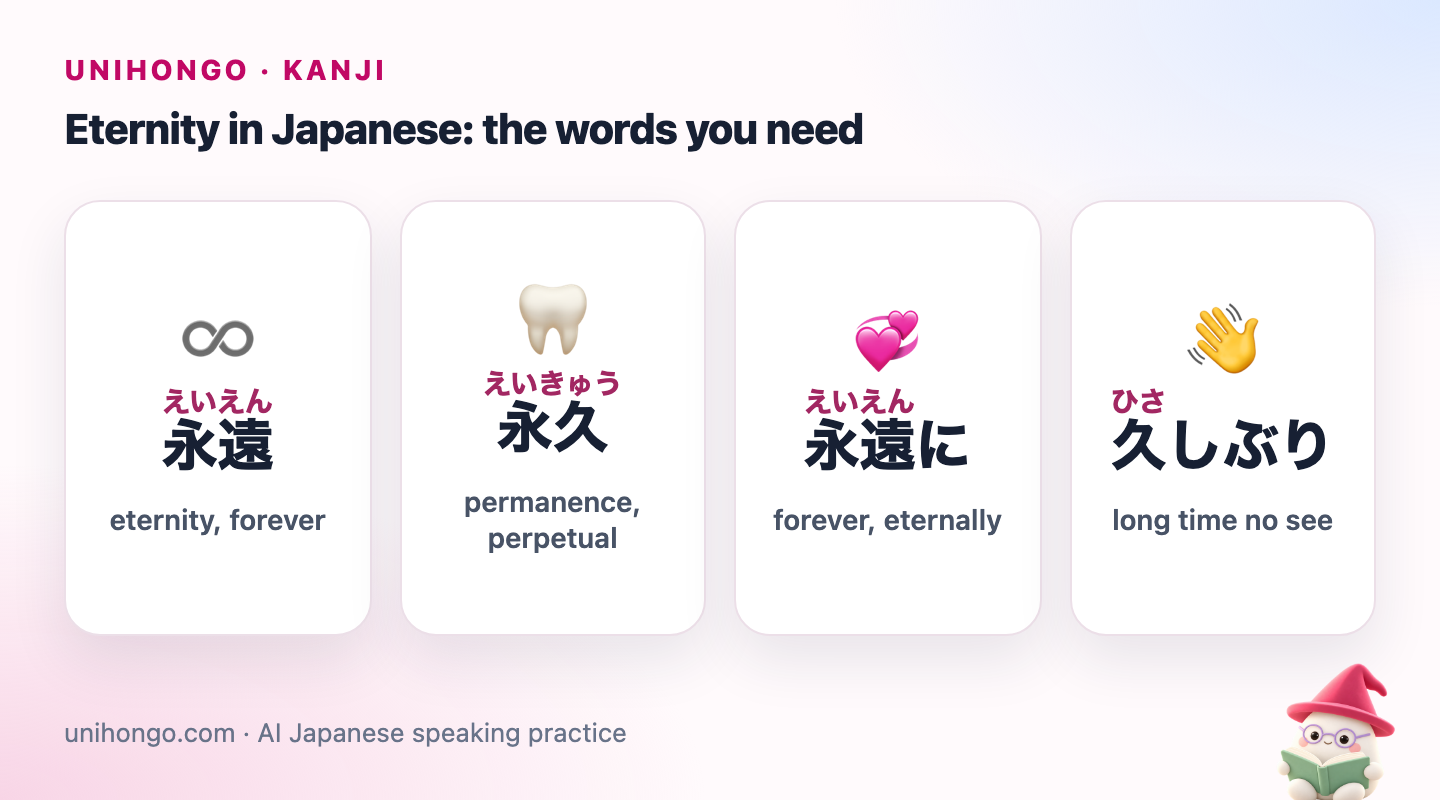
Japanese has two formal words for forever, 永遠 and 永久, and two everyday ones, ずっと and いつまでも. The kanji 久 also appears in the very common 久しぶり, which is about a long time, not eternity, but shares the idea of length. The cards below show the four to learn first.
| Japanese | Romaji | Meaning |
|---|---|---|
| 永遠 | eien | eternity, forever |
| 永久 | eikyū | permanence, perpetual |
| 永遠に | eien ni | forever, eternally |
| 久しぶり | hisashiburi | long time no see |
If you want one rule: 永遠 is for feelings, 永久 is for things, and ずっと is for conversation. The rule has exceptions, because poets and songwriters use both words freely, but it will keep your own Japanese natural. When in doubt in a chat, choose ずっと: it can never sound too dramatic.
Readings, strokes and parts of 永, 遠 and 久
永 is a small kanji with a big reputation. Its shape is usually explained as flowing water, a river that runs on and on, which fits the meaning of something lasting. Its native reading appears in 永い (nagai), a literary spelling of long used for long spans of time, such as 永い眠り, eternal sleep. In ordinary writing, people use 長い.
遠 combines 辶, the movement radical, with 袁, and means far: 遠い (tōi), far away. The rare reading on appears in 久遠 (kuon), eternity in Buddhist language. 久 is just three strokes and means a long time; you see it in 久しぶり and in 永久.
| Japanese | Romaji | Meaning |
|---|---|---|
| 遠い | tōi | far away |
| 永い | nagai | long-lasting (literary spelling) |
| 久遠 | kuon | eternity (Buddhist, literary) |
| Kanji | Readings | Strokes | Core idea |
|---|---|---|---|
| 永 | ei; naga(i) | 5 | Long-lasting, eternal |
| 遠 | en, on; tō(i) | 13 | Far, distant |
| 久 | kyū, ku; hisa(shii) | 3 | A long time |
Everyday words with 永, 遠 and 久
Most of these words are practical rather than poetic. They show that the idea of lasting a long time runs through ordinary Japanese, from visas to sports.
| Japanese | Romaji | Meaning |
|---|---|---|
| 永住 | eijū | permanent residence |
| 永久歯 | eikyūshi | permanent teeth |
| 永久保存 | eikyū hozon | keep forever, permanent storage |
| 永眠 | eimin | eternal sleep, passing away (formal) |
| 遠足 | ensoku | a school trip, an outing |
| 遠慮 | enryo | holding back, reserve |
| 永遠の愛 | eien no ai | eternal love |
| 持久力 | jikyūryoku | stamina, endurance |
| 耐久性 | taikyūsei | durability |
| お久しぶりです | ohisashiburi desu | long time no see (polite) |
永住 is the word on the residence status many foreign residents hope for: 永住権 (eijūken), permanent residency. It is a good example of 永 in practical life.
遠慮 is a surprise: its kanji suggest thinking far ahead, but in daily life it means holding back out of consideration. 遠慮しないで means don't hold back, help yourself.
永眠 is a formal, respectful word for death, used in notices and announcements. Use it carefully; in conversation, 亡くなる (nakunaru, to pass away) is more common.
ずっと and いつまでも: forever in plain Japanese
In a song, 永遠に is beautiful. In a conversation, it can sound like a line from a drama. Japanese speakers usually express forever with simple words, and learners who use them sound much more natural.
| Japanese | Romaji | Meaning |
|---|---|---|
| ずっと友達だよ。 | Zutto tomodachi da yo. | We'll always be friends. (casual) |
| いつまでもお元気で。 | Itsumademo ogenki de. | Stay well always. (warm farewell) |
| ずっと一緒にいてね。 | Zutto issho ni ite ne. | Stay with me forever. (casual, intimate) |
| この思い出は永遠に忘れない。 | Kono omoide wa eien ni wasurenai. | I will never forget this memory. |
いつまでもお元気で is a lovely line when saying goodbye to someone older, such as a host family or a retiring colleague. It wishes them good health for as long as can be.
ずっと has a second, very common meaning: all along, the whole time, or by far. ずっと待っていた means I was waiting the whole time, and こっちのほうがずっといい means this one is far better. So ずっと is not only a word for forever; it is one of the most useful adverbs in everyday Japanese, and learning it well pays off quickly.
Mini dialogue: meeting an old friend
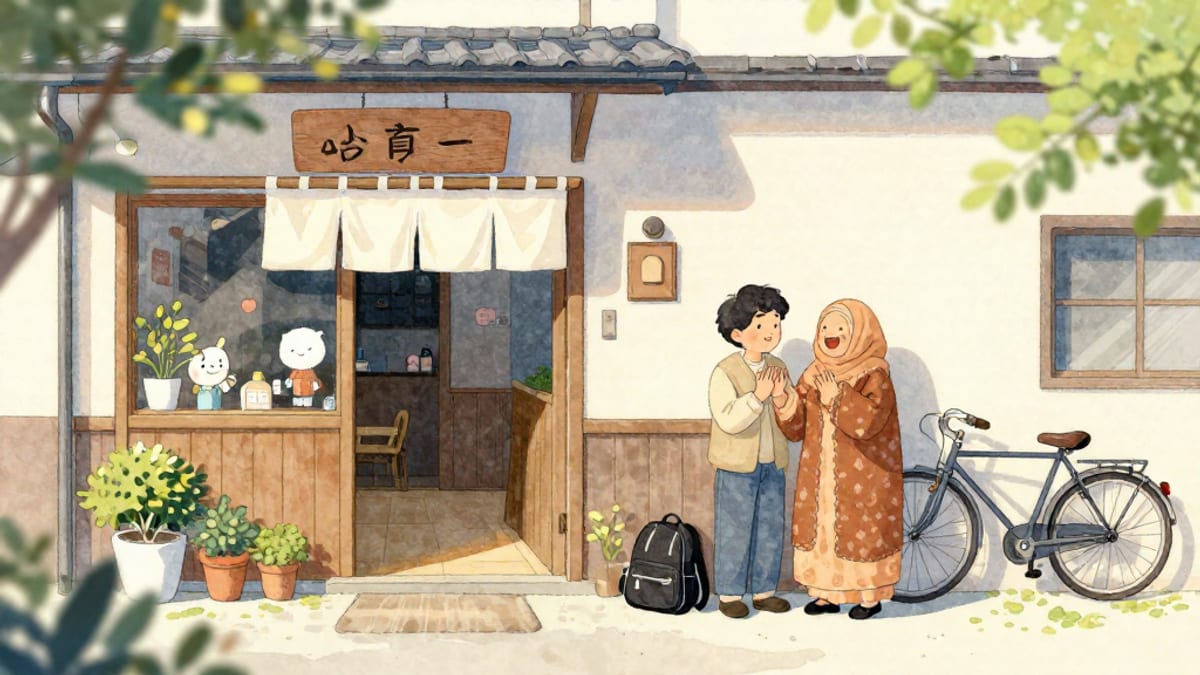
久しぶり is the most frequent use of these kanji in real life. Here two friends meet after several years.
| Japanese | Romaji | Meaning |
|---|---|---|
| わあ、久しぶり! | Wā, hisashiburi! | Yūta: Wow, long time no see! |
| 本当に久しぶりだね。五年ぶり? | Hontō ni hisashiburi da ne. Gonen buri? | Karim: It really has been. Five years? |
| 全然変わらないね。 | Zenzen kawaranai ne. | Yūta: You haven't changed at all. |
| そっちこそ。ずっと会いたかったよ。 | Sotchi koso. Zutto aitakatta yo. | Karim: Neither have you. I've wanted to see you for ages. |
| これからも、ずっと友達でいようね。 | Kore kara mo, zutto tomodachi de iyō ne. | Yūta: Let's always stay friends. |
The calligraphy kanji, look-alikes and common mistakes
永 is famous in Japanese and Chinese calligraphy because of a teaching method called 永字八法 (eiji happō), the eight principles of 永. The idea is that this one character contains the basic types of brush stroke, such as the dot, the horizontal, the hook and the sweeps, so practising it trains them all. Many calligraphy classes start with 永 for this reason.
Look-alikes: 永 is close to 水 (water) and 氷 (ice). 水 has no dot on top, 氷 has a dot on the left, and 永 has a dot on top and a slightly different left side. When you write 永, start with the dot at the top and finish with the long sweep to the lower right; five strokes in all, with the central hook standing straight like a spine.
| Japanese | Romaji | Meaning |
|---|---|---|
| 永 | ei | eternal (dot on top) |
| 氷 | kōri | ice (dot on the left) |
| 水 | mizu | water (no dot) |
| 永字八法 | eiji happō | the eight principles of 永 (calligraphy) |
- Saying 永遠に友達 in casual chat. It sounds dramatic; ずっと友達 is natural.
- Using 永久 for love. 永久の愛 is understood but sounds like a warranty; 永遠の愛 fits better.
- Saying 久しぶり to a teacher or boss. Use お久しぶりです.
- Reading 遠足 as tōashi. It is ensoku.
Eternity kanji as a tattoo, ring or design
永遠 is a real word, easy to read and positive, and it is popular for engravings inside rings and on keepsakes, sometimes with a name or date. As a tattoo it is clear and romantic, with a slightly poetic feel that some people love and others find sentimental.
永 alone is a beautiful, simple character, loved by calligraphers, but alone it means long-lasting rather than eternity, so it can look like part of a word. 永久 sounds technical, closer to permanent. In Chinese, the word for eternity is usually written 永远 in simplified script, so 永遠 with 遠 looks Japanese or traditional Chinese.
In Japanese names, 永遠 is sometimes used as a given name read Towa, so readers may also see it as a name. Before inking or engraving, ask a native speaker to check the characters and the design, and give the artist a clean, checked image.
| Japanese | Romaji | Meaning |
|---|---|---|
| 永遠 | Towa | eternity · unisex name |
| 久美子 | Kumiko | long-lasting beauty · girl |
Turn 永, 遠 and 久 into a week of reviews
Type /create-flashcards to Mocchi, Unihongo's study assistant, with the words from this post: 永遠, 永久, 永住, 遠慮, 遠足 and 久しぶり. Pick a photo for each card, perhaps a horizon for 永遠 and a hug for 久しぶり, then review them with /review-flashcards over the week. Cards you find hard, like 遠慮 and 遠足, come back sooner.
If you have a study plan with Mocchi, ask it to add these words to this week's tasks with /adjust-plan. Mocchi folds them into your daily steps, and a later quiz checks whether 永遠 and ずっと have settled in.