
The kanji for freedom at a glance
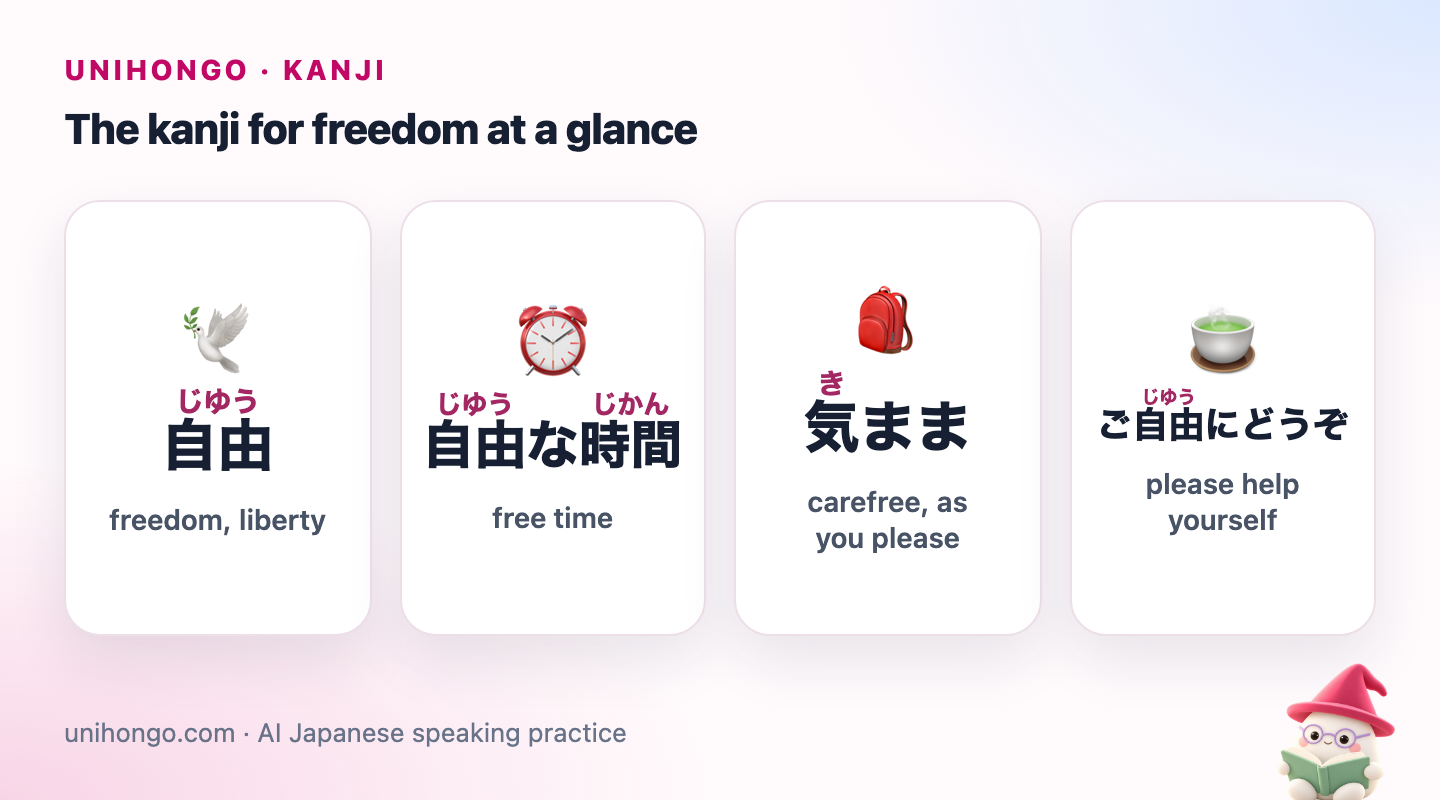
自由 is the word. The other cards show how it lives in daily Japanese: as the adjective 自由な (free), in the carefree word 気まま, and in ご自由にどうぞ, the friendliest freedom of all, which you hear whenever something is offered.
| Japanese | Romaji | Meaning |
|---|---|---|
| 自由 | jiyū | freedom, liberty |
| 自由な時間 | jiyū na jikan | free time |
| 気まま | kimama | carefree, as you please |
| ご自由にどうぞ | go-jiyū ni dōzo | please help yourself |
Readings, strokes and parts
| Kanji | Strokes | On'yomi | Kun'yomi | Core meaning |
|---|---|---|---|---|
| 自 | 6 | ji, shi | mizukara | self, oneself, naturally |
| 由 | 5 | yu, yū, yui | yoshi | reason, cause, by way of |
自 has six strokes. It is traditionally explained as a picture of a nose, which is why it appears inside 鼻 (hana, nose); in Japan people point to their nose when they mean me, which makes a neat memory hook. As a word part it means self: 自分 (oneself), 自信 (self-confidence), 自転車 (bicycle, a self-turning vehicle).
由 has five strokes and looks like 田 (rice field) with the middle line poking out at the top. On its own it means reason or by way of, as in 理由 (reason) and 経由 (via). So 自由 is, loosely, from oneself: acting from your own will.
Everyday words with 自 and 由
| Japanese | Romaji | Meaning |
|---|---|---|
| 自由席 | jiyūseki | unreserved seat (on trains) |
| 指定席 | shiteiseki | reserved seat |
| 自由行動 | jiyū kōdō | free time on a tour |
| 自由研究 | jiyū kenkyū | a school summer project |
| 不自由 | fujiyū | inconvenience; impaired |
| 自由自在 | jiyū jizai | freely, at will |
| 言論の自由 | genron no jiyū | freedom of speech |
| 理由 | riyū | reason |
| 経由 | keiyu | via, by way of |
| 自分 | jibun | oneself |
| 自然 | shizen | nature; natural |
| 自転車 | jitensha | bicycle |
自由席 and 指定席 matter on the Shinkansen and limited express trains: unreserved cars are first come, first served. 自由行動 is the free time on a group tour. 不自由 means inconvenience, as in 不自由はありませんか (is there anything you are missing?), and it is also used, politely, for physical impairment, as in 目が不自由な方, people with impaired sight.
自由, 気まま, 勝手 or のびのび
| Japanese | Romaji | Meaning |
|---|---|---|
| 週末は自由な時間が多いです。 | Shūmatsu wa jiyū na jikan ga ōi desu. | I have a lot of free time at weekends. |
| 気ままな一人旅がしたいです。 | Kimama na hitoritabi ga shitai desu. | I want to go on a carefree solo trip. |
| 勝手に使わないで。 | Katte ni tsukawanaide. | Don't use it without asking. (casual) |
| 子どもがのびのび遊んでいます。 | Kodomo ga nobinobi asonde imasu. | The children are playing freely. |
| 日本語を自由自在に話したい。 | Nihongo o jiyū jizai ni hanashitai. | I want to speak Japanese freely. |
| Word | Kind of freedom | Typical use | Tone |
|---|---|---|---|
| 自由 | Freedom, liberty, free choice | Rights, free time, choosing freely | Neutral, positive |
| 気まま | Carefree, following your mood | A solo trip, a relaxed lifestyle | Positive, can be self-indulgent |
| 勝手 | Doing as you like without asking | Using someone's things, deciding alone | Usually a complaint |
| のびのび | Relaxed, free to grow | Children playing, a calm workplace | Warm, positive |
| 自在 | At will, with skill | Using a tool or a language freely | Neutral, a little formal |
When not to use them: 自由にしてください means do as you like, which can sound cold if a friend asks for advice; どちらでもいいよ (either is fine) is softer. 勝手 is not freedom in a positive sense; 勝手な人 is a selfish person. And 気まま about a coworker can sound like a criticism, so keep it for travel and lifestyle.
Names and look-alikes
自由 itself is not used as a name, but 由 is very common in girls' names, read yu or yui. 自 rarely appears in names. As always, the same name can be written with many different kanji.
| Japanese | Romaji | Meaning |
|---|---|---|
| 由衣 | Yui | robe; 由 chosen for its sound · girl |
| 由美 | Yumi | beauty; 由 chosen for its sound · girl |
| 真由 | Mayu | truth; 由 chosen for its sound · girl |
In names, 由 is chosen mostly for its sound, so the glosses above are loose. Two look-alike sets matter. 由, 田, 甲 and 申 differ only in where the vertical line pokes out: 田 has none, 由 pokes out at the top, 甲 at the bottom and 申 at both ends. And 自, 目 (eye) and 白 (white) are close: 自 is 目 with a short stroke on top, while 白 is shorter, with only one inner line.
Mini dialogue: ご自由にどうぞ at a guesthouse
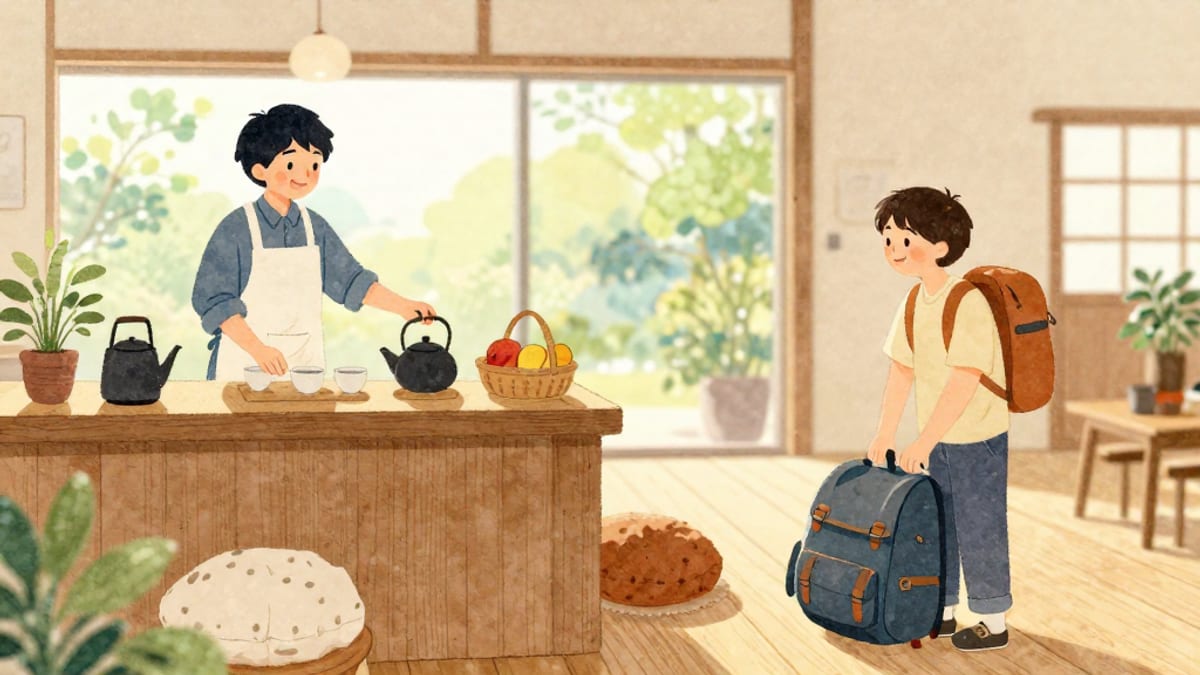
The freedom phrase you will hear most is an invitation. Here a guesthouse host shows a guest around the shared lounge.
| Japanese | Romaji | Meaning |
|---|---|---|
| お茶とコーヒーはご自由にどうぞ。 | Ocha to kōhī wa go-jiyū ni dōzo. | Host: Please help yourself to tea and coffee. |
| ありがとうございます。何時まで使えますか。 | Arigatō gozaimasu. Nanji made tsukaemasu ka. | You: Thank you. Until what time can I use it? |
| 夜十時までです。自由に使ってくださいね。 | Yoru jūji made desu. Jiyū ni tsukatte kudasai ne. | Host: Until ten at night. Feel free to use it. |
| 明日は自由行動なので、ゆっくりします。 | Ashita wa jiyū kōdō na node, yukkuri shimasu. | You: Tomorrow is my free day, so I'll take it easy. |
As a guest, ご自由にどうぞ means you really can help yourself; there is no need to ask again or politely refuse first. The natural reply is simply ありがとうございます, or いただきます as you take food or a drink. You will also see the phrase in shops beside samples and pamphlets, where it works like the English free, take one.
自由 as a tattoo or design
自由 is one of the safer kanji words for a design: it is clear, common and positive, and it means freedom in Chinese too. It may look a little like a slogan to Japanese readers, because it appears in political and advertising language, but no one will misread it.
The one real mistake is 由 alone. Some designs present 由 as the kanji for freedom, but on its own it means reason, cause or by way of. If you want a gentler, more personal feeling, consider 気まま (carefree) or のびのび (free and relaxed), usually written in kana. Ask a native speaker to check the characters and the font before inking.
A Mocchi routine for freedom words
- Ask Mocchi: Explain the difference between jiyū, kimama, katte and nobinobi, then give me a situation for each. Mocchi explains and checks your answers.
- Use /vocab to practise train words like 自由席, 指定席 and 経由; Mocchi keeps track of which ones you hesitate on and brings them back later.
- Make flashcards from the words with /create-flashcards and play them in Listen & Pick, so you can catch 自由席 in a fast station announcement.
Common mistakes and how to write 由
- Using 由 alone to mean freedom. It means reason or cause; freedom is 自由.
- Saying 自由な人 as praise when you mean easygoing. It can sound like someone who ignores rules; おおらかな人 (an easygoing person) is kinder.
- Confusing 勝手 with 自由. 勝手に means without asking, and it is usually a complaint.
- Writing 申 or 甲 when you mean 由: the vertical pokes out only at the top.