
誠 at a glance: sincerity in four words
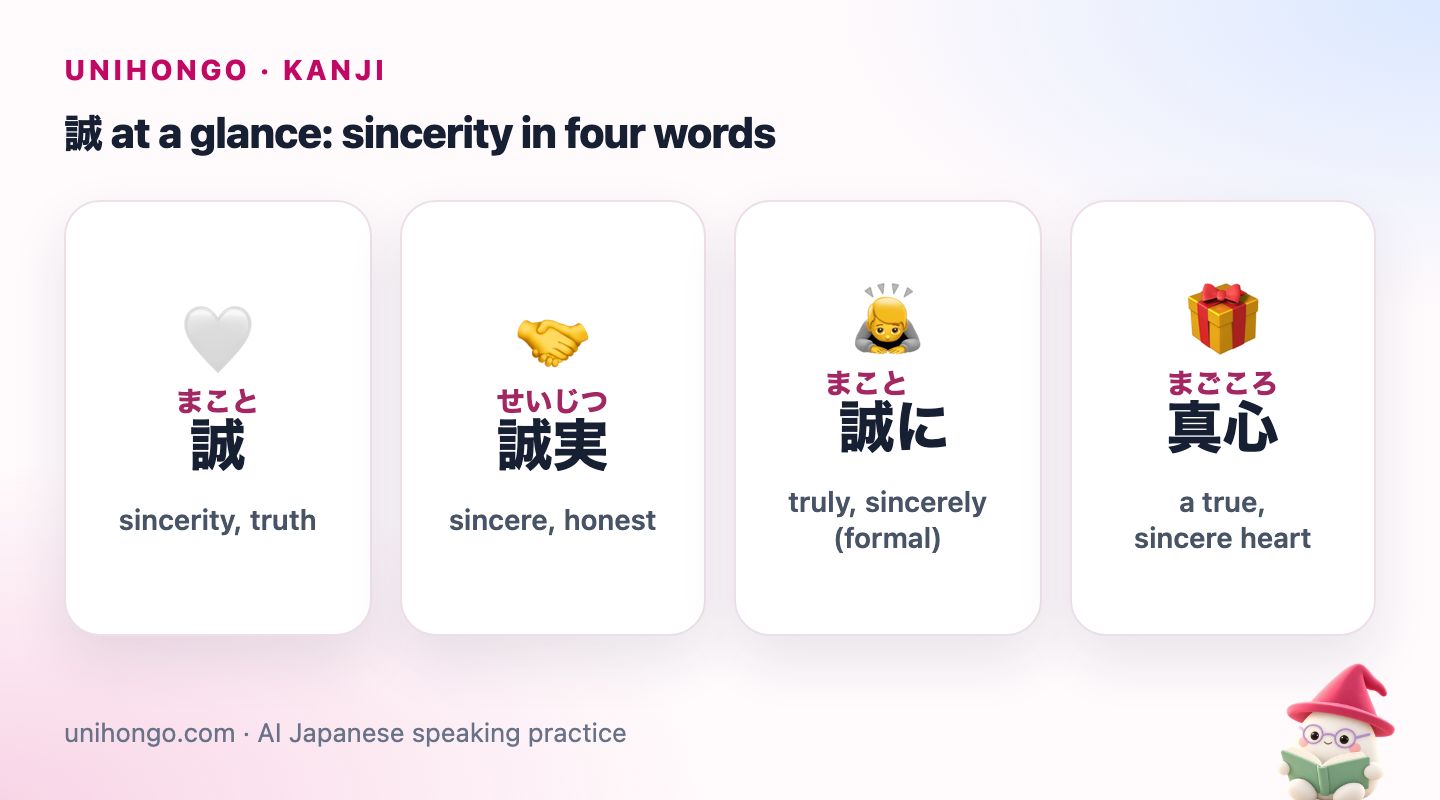
The four core words split neatly by situation. 誠 on its own is an ideal, a value you might see on a banner or in a name. 誠実 is how you describe a real person. 誠に is how you speak sincerely in formal Japanese. 真心 is the soft, everyday word for doing something from the heart.
If you are a learner, 誠実 and 誠に are the two you will use soonest: one to describe people, the other when you need your politest apology or thanks.
| Japanese | Romaji | Meaning |
|---|---|---|
| 誠 | makoto | sincerity, truth |
| 誠実 | seijitsu | sincere, honest |
| 誠に | makoto ni | truly, sincerely (formal) |
| 真心 | magokoro | a true, sincere heart |
Readings, strokes and the parts of 誠
| Kanji | Strokes | On'yomi | Kun'yomi | Core meaning |
|---|---|---|---|---|
| 誠 | 13 | sei | makoto | sincerity, truth, loyalty |
| 真 | 10 | shin | ma, makoto (in names) | true, real, genuine |
誠 has 13 strokes: seven for the speech radical 言 on the left and six for 成 (to become, to be completed) on the right. 成 is also read sei, so it gives 誠 its sound. Many teachers offer a memory picture: words (言) that are fulfilled (成), saying something and making it true. It is a helpful image of sincerity, though it should be taken as a memory aid rather than a strict history.
真, true or genuine, is the partner kanji. It gives 真心 (magokoro, sincere heart), 真面目 (majime, serious) and 真実 (shinjitsu, the truth). In personal names, both 誠 and 真 can be read Makoto, which is one reason the name is so flexible.
Everyday words built on 誠
Words with 誠 tend to appear in serious contexts: describing character, discussing how a company handled a problem or making a formal promise. They are not stiff, though; 誠実 is a common compliment in daily life.
| Japanese | Romaji | Meaning |
|---|---|---|
| 誠意 | seii | good faith, sincerity shown in action |
| 誠心誠意 | seishin seii | with all one's heart, wholeheartedly |
| 不誠実 | fuseijitsu | insincere, dishonest |
| 忠誠 | chūsei | loyalty, allegiance |
| 彼はとても誠実な人です。 | Kare wa totemo seijitsu na hito desu. | He's a very sincere, honest person. |
| 誠意を見せてください。 | Seii o misete kudasai. | Please show some good faith. |
| 誠心誠意対応いたします。 | Seishin seii taiō itashimasu. | We will respond with complete sincerity. (humble) |
誠意 is often about action, not words. When a customer says 誠意を見せてください, they want a concrete response, such as a replacement, a refund or a visit, not just another apology. 誠心誠意 is a set phrase that companies and public figures use in formal promises; you will hear it at press conferences and read it in apology letters.
In dating and friendship, 誠実な人 is one of the most common answers to the question what kind of person do you like? It means someone who keeps their word and does not play games.
誠に in formal apologies and thanks
誠に is the formal end of a scale of truly words. Choosing the right one for the situation matters more than knowing the most formal one, because 誠に in a casual chat sounds as odd as a press release.
| Japanese | Romaji | Meaning |
|---|---|---|
| 誠に申し訳ございません。 | Makoto ni mōshiwake gozaimasen. | I am truly sorry. (very formal) |
| 誠にありがとうございました。 | Makoto ni arigatō gozaimashita. | Thank you very much indeed. (very formal) |
| 誠に恐れ入りますが… | Makoto ni osoreirimasu ga… | I'm very sorry to trouble you, but… |
| 誠に残念ながら… | Makoto ni zannen nagara… | Very regrettably… (formal letters) |
| Word | Register | Where it fits | Typical partner phrase |
|---|---|---|---|
| 本当に | Everyday | Friends, family, most conversations | 本当にごめん, 本当にありがとう |
| 大変 | Polite, business | Colleagues, managers, shops | 大変申し訳ありません |
| 誠に | Very formal | Clients, customers, letters, announcements | 誠に申し訳ございません |
You will hear 誠に in station and airport announcements when trains are delayed, from shop staff after a mistake and in formal emails. For a learner, it is most useful in writing and with customers; with your own manager, 大変申し訳ありません is usually enough, and with friends 本当にごめん sounds sincere and natural.
誠実, 真面目, 正直 or 素直: choosing the right sincerity word
English uses sincere, honest, serious and genuine loosely, but these Japanese words each describe a different side of a person. Mixing them up can turn a compliment into something odd.
| Japanese | Romaji | Meaning |
|---|---|---|
| 真心を込めて作りました。 | Magokoro o komete tsukurimashita. | I made it with all my heart. |
| 正直に言うと、ちょっと不安です。 | Shōjiki ni iu to, chotto fuan desu. | To be honest, I'm a bit worried. |
| 素直に謝ったほうがいいよ。 | Sunao ni ayamatta hō ga ii yo. | You should just apologise honestly. (casual) |
| 彼女は真面目すぎるくらいです。 | Kanojo wa majime sugiru kurai desu. | She's almost too serious. |
| Word | Reading | Core idea | Watch out |
|---|---|---|---|
| 誠実 | seijitsu | Honest and faithful toward others | Almost always a compliment |
| 真面目 | majime | Serious, diligent, follows rules | Can suggest too serious or boring |
| 正直 | shōjiki | Truthful, tells it straight | 正直に言うと means to be honest |
| 素直 | sunao | Open, accepts advice, not stubborn | Often said about children or juniors |
真心を込めて, putting your true heart into something, is a lovely phrase for gifts, food and handmade things, and you will see it in shop slogans for home cooking and crafts. It is warmer and less formal than anything with 誠.
Mini dialogue: apologising to your manager
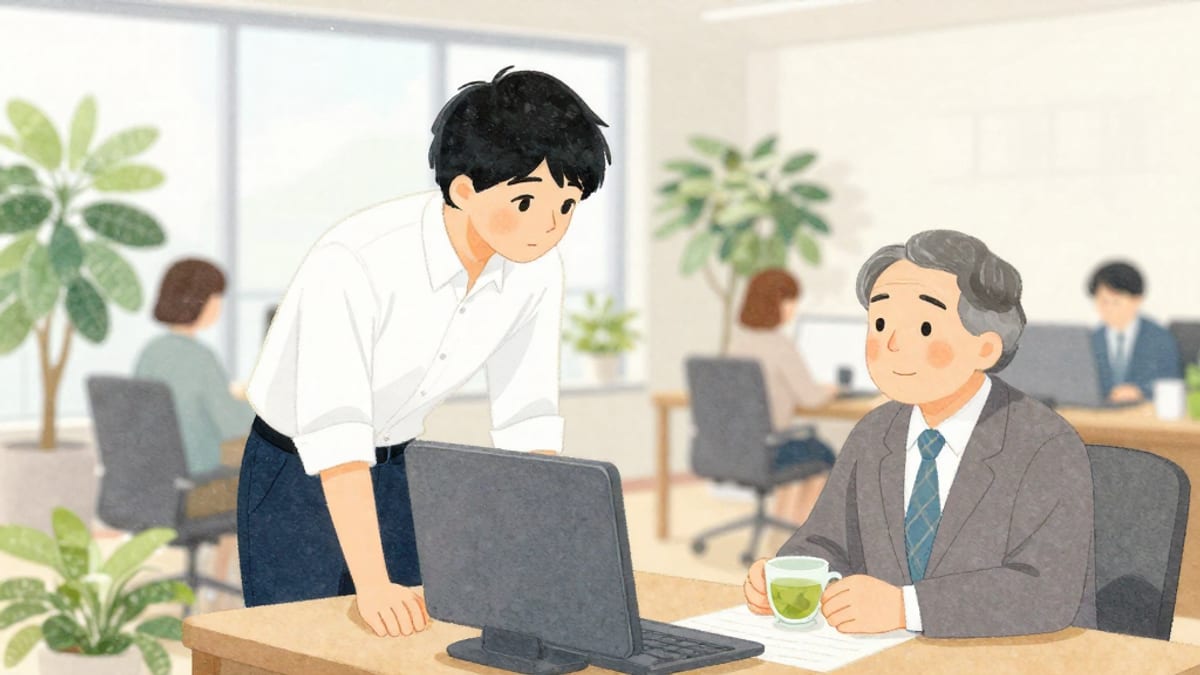
You sent a client the wrong file and need to tell your manager. In a Japanese office, a clear apology, an explanation without excuses and a plan to fix it show 誠意. The register is polite business Japanese.
| Japanese | Romaji | Meaning |
|---|---|---|
| 課長、少しよろしいでしょうか。 | Kachō, sukoshi yoroshii deshō ka. | You: Excuse me, do you have a moment? |
| どうしましたか。 | Dō shimashita ka. | Manager: What's the matter? |
| お客様に間違ったファイルを送ってしまいました。 | Okyakusama ni machigatta fairu o okutte shimaimashita. | You: I sent the client the wrong file. |
| 大変申し訳ありません。すぐに正しいものを送ります。 | Taihen mōshiwake arimasen. Sugu ni tadashii mono o okurimasu. | You: I'm very sorry. I'll send the right one now. |
| わかりました。先方にも一言謝っておいてください。 | Wakarimashita. Senpō ni mo hitokoto ayamatte oite kudasai. | Manager: All right. Apologise to them briefly too. |
| はい。今後は送る前に必ず確認します。 | Hai. Kongo wa okuru mae ni kanarazu kakunin shimasu. | You: Yes. From now on I'll always check first. |
In the email to the client, this is where 誠に belongs: 誠に申し訳ございません。正しいファイルを再送いたします. The promise at the end of the dialogue, 今後は必ず確認します, is the part that shows 誠意 most, because it turns the apology into action.
誠 in names, history and design
Makoto is a classic Japanese name, mostly given to boys and occasionally to girls, and it can be written 誠, 真, 信 and other ways. 誠 also appears in names read with sei, such as 誠一 (Seiichi) and 誠也 (Seiya). Families choose it for its meaning: a child who will be honest and true.
For history fans, 誠 is linked to the Shinsengumi, a police force in Kyoto at the end of the Edo period, whose banner showed this single character. It appears on souvenirs in Kyoto and in many dramas and anime about the period, so a Japanese reader may think of them when seeing 誠 alone.
As a design, 誠 reads clearly as sincerity, truth or loyalty and looks balanced. Simplified Chinese writes it 诚, so check that a design is the Japanese form if that is what you want. A word such as 誠実 or 真心 can feel more personal and less historical. Before you ink or print anything, ask a native speaker to check the exact characters, the stroke shapes and the font.
| Japanese | Romaji | Meaning |
|---|---|---|
| 誠 | Makoto | sincerity, truth · mostly boy |
| 誠一 | Seiichi | sincere, first son · boy |
Practise a sincere apology with Mocchi and AI Sensei
- Draft a short apology email in Japanese and send it to Mocchi with /correct. Mocchi fixes the keigo, explains whether 誠に or 大変 fits better and remembers the polite forms you got wrong.
- Ask Mocchi a follow-up such as: Is 誠意を見せる something I can say to a friend? You get a clear answer on register, not just a translation.
- Then say it out loud. In AI Sensei, ask Yamada-sensei to play your manager and to stay in polite business Japanese while you apologise, explain and promise a fix.
- Read the session report afterwards: it lists your corrections, so you can see whether your apology sounded sincere or only formal.
Common mistakes and how to write 誠
- Confusing 誠 with 城 (shiro, castle). Both have 成 on the right; 誠 has the speech radical 言 and 城 has the earth radical 土.
- Using 誠に with friends. 誠にありがとう sounds like a speech; say 本当にありがとう.
- Calling someone 真面目 as a pure compliment. It can mean diligent, but also too serious; 誠実 is the safer praise for character.
- Mixing 誠意 and 誠実. 誠実 describes a person (誠実な人); 誠意 is the good faith they show (誠意を見せる).
- Forgetting the dot on 成. The last stroke of 成, and so of 誠, is a small dot at the top right.