
Read the notice with participation in mind
Ask Mocchi for a short fictional notice that matches your reading level. Identify when and where participants meet. Then separate those details from the place where the activity happens.
Mark anything the notice does not settle. A useful reading result includes recognizing the question you still need to ask. Do not infer every detail from the event title.
Choose words for the role you will discuss
Use /vocab for a small set of relevant words. Ask /kanji about a complete written expression whose reading is unfamiliar. Return to the notice and explain what the term tells you.
Create a flashcard for a word you expect to use again, with enough context to preserve its meaning. After recalling it, say one sentence about the fictional activity.
| Japanese | Romaji | Meaning |
|---|---|---|
| 集合場所 | Shūgō basho | Meeting point |
| 持ち物 | Mochimono | Things to bring |
Ask about the action, not only the event name
Draft a question about what you will do. Ask Mocchi whether the wording identifies the information gap. An event name can be familiar while the actual responsibility remains unclear.
Use a short /quiz with changed notices. Match each question with information the notice provides, then identify which question needs an organizer’s reply.
| Japanese | Romaji | Meaning |
|---|---|---|
| 何を持っていけばいいですか。 | Nani o motte ikeba ii desu ka. | What should I bring? |
Clarify the role with AI Sensei
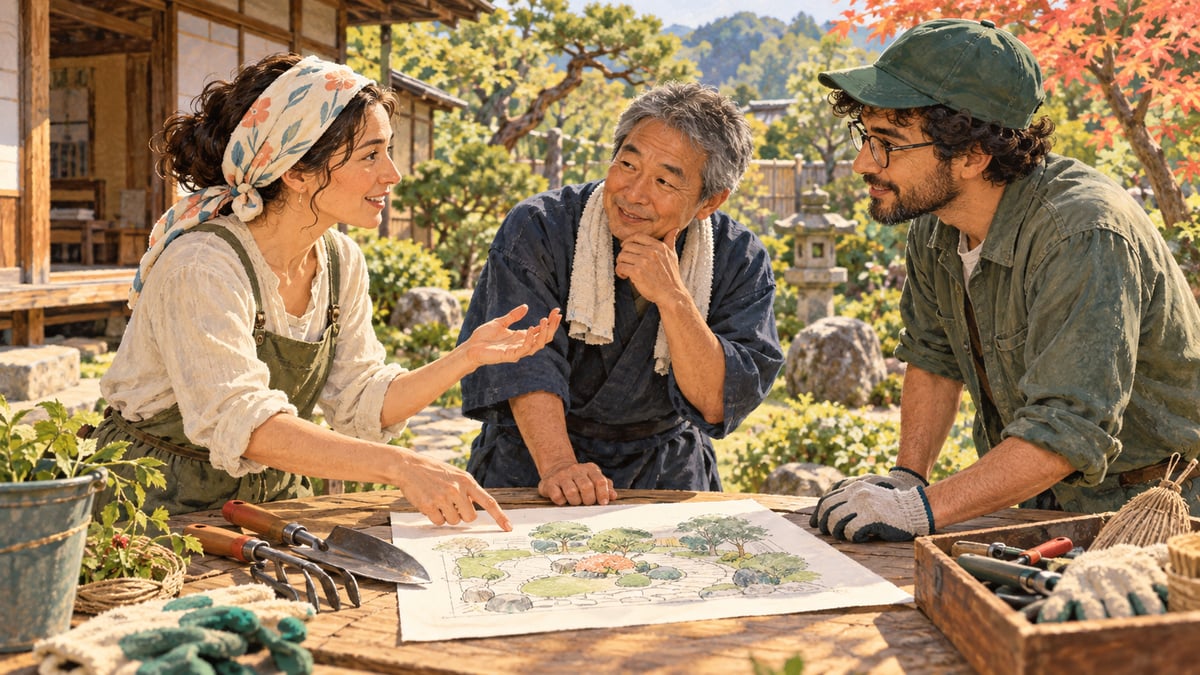
Prepare a suitable everyday exchange using /kaiwa. In AI Sensei, ask about the activity and listen to the task you are given. Repeat the important action in your own words.
If the task involves an unfamiliar object, ask what it means before agreeing that you understand. Confirm the meeting point and supplies after the reply.
| Japanese | Romaji | Meaning |
|---|---|---|
| 私は何をすればいいですか。 | Watashi wa nani o sureba ii desu ka. | What should I do? |
Review the point that affected participation
If you remembered the supplies but confused the location, target the location distinction. If the notice was clear but the spoken task was difficult, practise a short question-and-answer sequence.
Bring the example to Mocchi and ask for a focused review. Keep the parts you could already use and change the detail that needs another attempt.
Transfer the routine to another shared activity
Try a fictional community garden or book donation event. Read, identify the gap, ask and confirm. New details check whether the skill transfers beyond one memorized notice.
Unihongo connects these activities around the same purpose: Mocchi helps you prepare and understand, study tools support recall, and AI Sensei gives you a place to use the language in an exchange.