
Reduce the menu to a decision you can manage
Choose two options and identify the main difference. A small comparison lets you focus on meaning without needing to decode an entire menu. Tell Mocchi your level and ask for a brief fictional example with vocabulary you can mostly understand.
Before requesting a translation, say what you think each option contains. Mark the uncertain part rather than treating a partial understanding as complete. This gives the reading task a concrete purpose: choosing between two possibilities.
| Japanese | Romaji | Meaning |
|---|---|---|
| 魚の定食 | Sakana no teishoku | Fish set meal |
| 肉の定食 | Niku no teishoku | Meat set meal |
Learn the words as complete useful expressions
Use /vocab for the dish words and /kanji when a character or reading is unclear. Check 定食 as teishoku in the expression you are studying. Connect the word with the menu context instead of collecting unrelated readings and meanings.
Save a few useful items for later flashcard practice if they fit your goals. Then recall the distinction without looking at the translation. Being able to label the two options is a foundation, but you still need to understand the description and ask about missing details.
Use a short quiz to separate text from assumptions
Ask Mocchi to give two short menu descriptions and a question about each. Answer only from the information provided. If rice is not mentioned, identify that as unknown rather than guessing from the name of the dish.
A useful explanation points to the words that support the answer. Ask which detail in the text determines the choice, then try a changed example. This makes the quiz a comprehension check instead of a test of what you expect restaurants generally to serve.
Ask what is included during AI Sensei practice
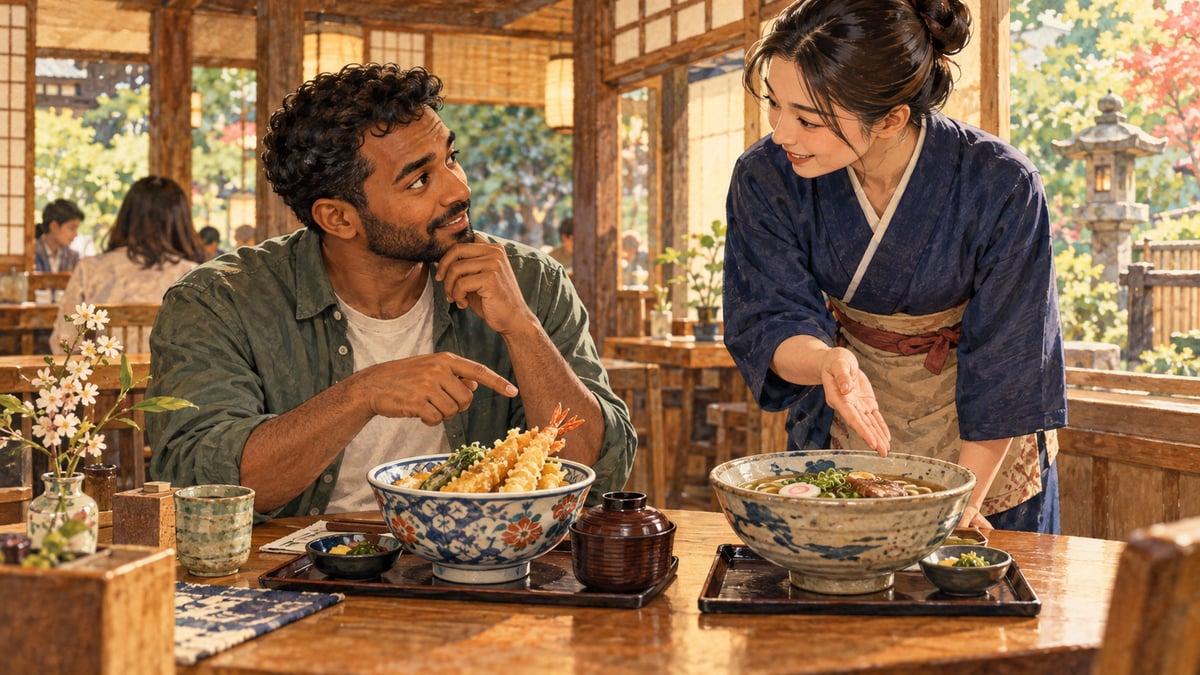
Prepare a restaurant topic with /kaiwa. Ask about the detail the menu did not settle, listen to the reply and then make a choice. Keep the original description closed so the answer needs attention. You are practising a decision, not just pronouncing the name of a dish.
If the answer contains another unfamiliar word, ask a clarification before ordering. A short clear exchange can be enough: identify the choice, ask the question and respond based on what you understood.
| Japanese | Romaji | Meaning |
|---|---|---|
| ご飯は付いていますか。 | Gohan wa tsuite imasu ka. | Does it come with rice? |
| 魚の定食をお願いします。 | Sakana no teishoku o onegai shimasu. | I will have the fish set meal, please. |
Choose review from the part that affected your decision
If the main dish words were difficult, return to vocabulary recall. If you recognized the words but misread what was included, review the sentence. If the written meaning was clear but the spoken answer was not, practise a short listening-and-confirmation exchange.
Mocchi can help turn that observation into a focused task. A relevant flashcard, /quiz or /review can support the next attempt. Avoid expanding the menu simply because more food vocabulary is available.
Repeat with a different pair of options
Use two new fictional meals or ask about a different included item. Keep the process stable while changing the information: read, compare, identify the gap, ask and decide. Try doing it without reopening the earlier model.
The routine shows how a comprehensive platform supports an ordinary decision across skills. Mocchi helps with the text and the study choices, review tools support retrieval, and AI Sensei gives the language a place in a voiced exchange.