
Begin with the information gap in the viewing
You want to know where storage is located and what space can be used. Tell Mocchi that purpose before requesting a general apartment vocabulary list. The goal helps you choose useful words and keeps the first exercise manageable.
Use a simple fictional room and one or two objects. A complicated floor plan can add many unrelated details before you have practised a clear question.
| Japanese | Romaji | Meaning |
|---|---|---|
| 収納スペースはどこですか。 | Shūnō supēsu wa doko desu ka. | Where is the storage space? |
Connect the words with the room description
Ask /vocab about the small set of room words you need. Use /kanji when the written form or reading is unclear, and check the complete expression rather than guessing from a familiar character. Then identify the word in a short room description.
Save a useful vocabulary card if it supports later practice. Recall the word from a picture or plain description, then place it in a sentence. This connects the item with something you can ask during the viewing.
| Japanese | Romaji | Meaning |
|---|---|---|
| 棚 | Tana | Shelf |
| 収納 | Shūnō | Storage |
Read a simple plan without inventing missing features
Ask Mocchi for a brief fictional description and identify the position of the cupboard or shelf. If the description does not state whether an object is included, leave that question open. A drawing can show a location without establishing every practical detail.
Use a short /quiz that changes one position or reference. Explain the words that support your answer, then identify a question you would ask about information that is missing.
Ask and clarify during AI Sensei conversation
Prepare a suitable everyday conversation with /kaiwa and explain the fictional viewing context. Ask AI Sensei about the storage space, then use a clear reference when asking about the shelf. Keep the complete written description closed while listening to the answer.
If the reply refers to another object, clarify which one you mean. A useful exchange makes the reference shared rather than relying on a vague this or that.
| Japanese | Romaji | Meaning |
|---|---|---|
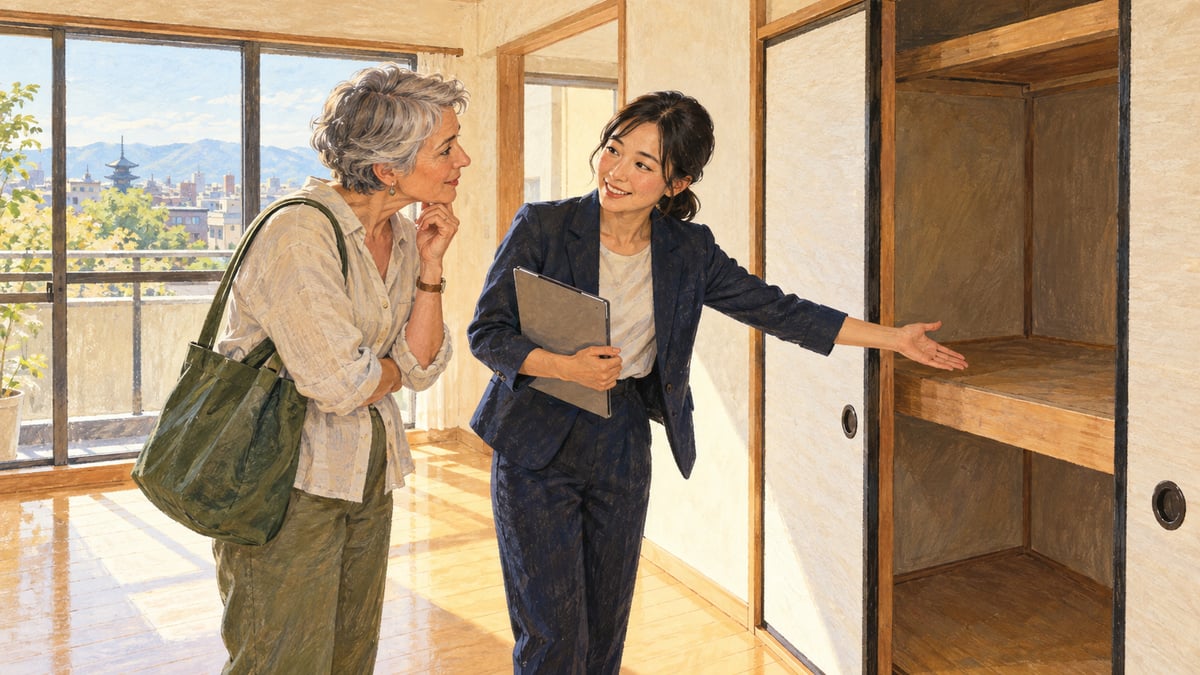
| この棚は使えますか。 | Kono tana wa tsukaemasu ka. | Can I use this shelf? |
| こちらの棚ですか。 | Kochira no tana desu ka. | Do you mean this shelf here? |
Review the relation that remained unclear
After the exchange, identify whether the vocabulary, location expression or object reference caused difficulty. Ask Mocchi about the exact example. If you understood the word but pointed to the wrong object, another definition may not solve the problem.
Use a changed description or a short focused review to practise the relation. This lets the next activity respond to the result instead of repeating every room word equally.
Transfer the skill to a new room
Try a fictional office, classroom or shared hobby room. Ask about a specific space and confirm which object the reply describes. Remove the earlier model so the new details require attention.
The connected path brings reading, vocabulary and spoken clarification together. Mocchi organizes and explains the task, review tools support recall, and AI Sensei gives you a place to use the language in an exchange.