

Begin with an action rather than a broad fandom
'I like music' leaves many possible lessons open. 'I want to describe the song I listened to yesterday' gives the tutor a task, a time frame, and a likely grammar target. The same is true for games: explaining a rule, describing a character, and arranging a time to play are different communicative activities. Choose one of them before asking for vocabulary so the words have a job to do.
You can use fictional or invented details when you prefer not to discuss personal habits. A made-up recipe or imaginary team still provides a coherent scene. The tutor needs enough context to make the language meaningful, not a complete account of your private life.
A cooking example can teach more than food words
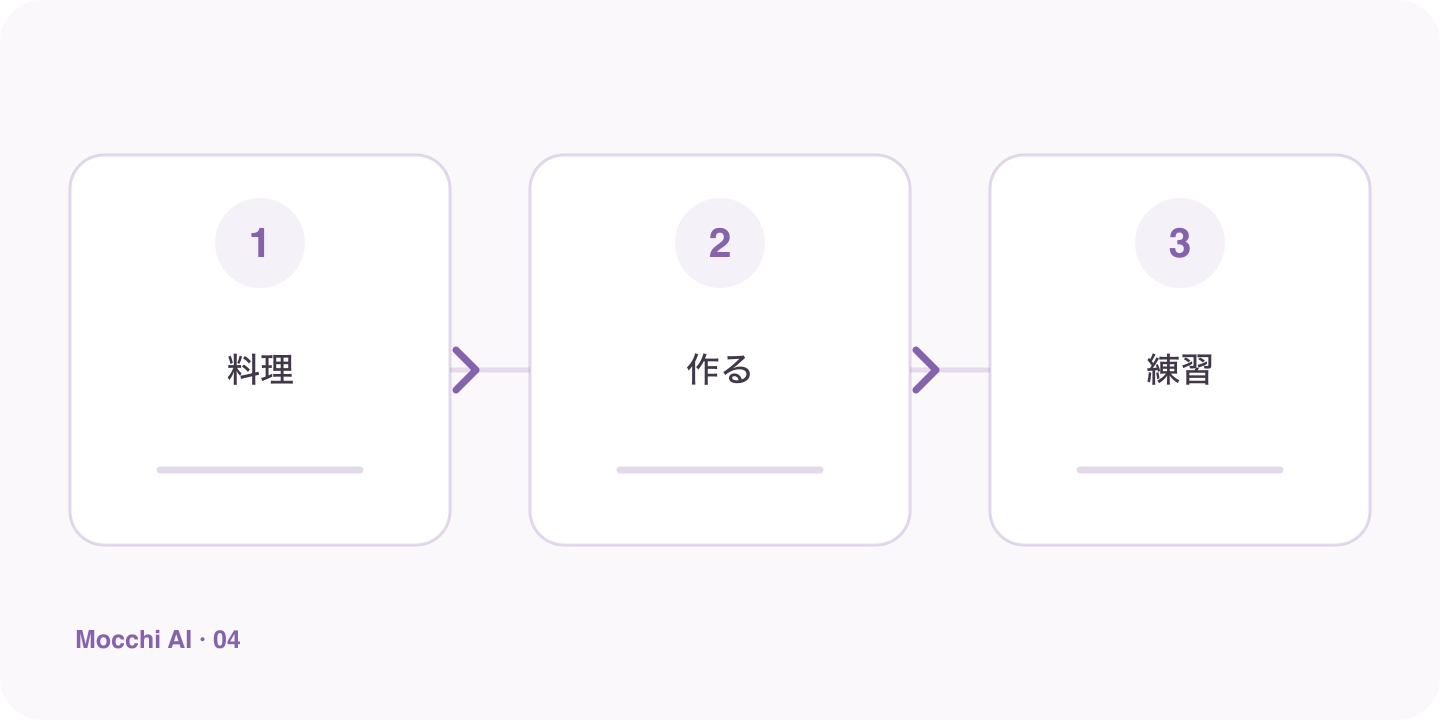
Consider 野菜を切って、スープを作ります: 'I cut the vegetables and make soup.' The sentence links two actions with the te-form. You can first practice that sequence with ingredients you recognize, then use the same structure for a morning routine. This keeps the hobby example useful while showing that the grammatical connection is broader than cooking.
| Japanese | Romaji | Meaning |
|---|---|---|
| 野菜を切って、スープを作ります。 | Yasai o kitte, sūpu o tsukurimasu. | I cut the vegetables and make soup. |
| 朝ご飯を食べて、学校に行きます。 | Asagohan o tabete, gakkō ni ikimasu. | I eat breakfast and go to school. |
Limit new words so the pattern stays visible
An exercise becomes difficult to interpret when every noun, verb, and connector is new. Ask for a small set of familiar or clearly explained words around one new pattern. If you are practicing sequencing, you do not also need rare ingredient names and an unfamiliar cooking method. Reducing the vocabulary load makes it easier to notice whether your difficulty comes from the grammar or the topic.
Ask for a response, not a page of recommendations
Recommendations can help you find material, but browsing a list of shows or games is different from practicing Japanese. End the request with something you will do: choose between two expressions, answer a short question, summarize a simple instruction, or write a new sentence. A response gives Mocchi evidence to work with and gives you a concrete result to review later.
Use a transfer check to keep learning broad
After the enjoyable example, change the setting while keeping the language decision. A comparison between two game characters might become a comparison between two places to visit. A cooking sequence might become getting ready for work. If you cannot carry the pattern into the second scene, ask for one smaller contrast and try again. The goal is flexible Japanese, with your interest making the first step more inviting.