
Japanese Language Practice: Agree on a Rain Plan for a Picnic

A backup plan is useful only when people know when it applies. This Japanese project separates the main picnic plan from the rain alternative. You will state a condition, propose another activity and confirm the rule for deciding.

What you need to know

Japanese Language Practice: Agree on a Rain Plan for a Picnic

The fictional group meets in the park if the weather is fine and at a café if it rains. The meeting time remains two. This is language practice, not a weather forecast or a real café booking.

Name the main plan.

State the condition for changing it.

Keep unchanged details clear.

Confirm how the alternative applies.

Keep the main plan separate

Write park at two as the first arrangement. The backup is not a second event everyone must attend. It replaces the location only under the stated condition.

State the condition explicitly

Use a simple if-rain expression. Ask Mocchi to explain the conditional at your level if needed, then make a fresh example before memorizing it.

JapaneseRomajiMeaning
雨なら、カフェで会いましょう。Ame nara, kafe de aimashō.If it rains, let us meet at the café.

Identify the unchanged time

The location changes but the time remains two. This is the answer check for the first version. Do not infer a later start simply because the activity changes.

Confirm the alternative clearly

Repeat enough information to show agreement. If the fictional café has not been identified, ask which one rather than invent a name or address.
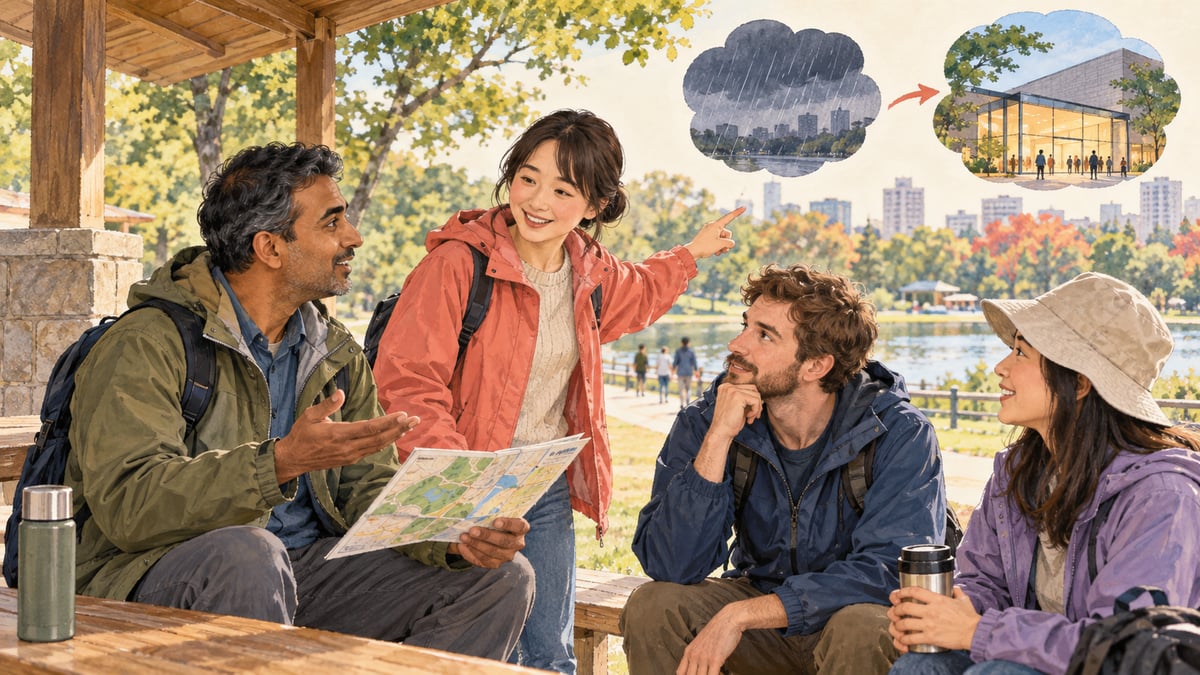
A small group of friends discusses a backup outing near a park shelter
A backup plan connects a condition with a specific alternative.
JapaneseRomajiMeaning
時間は二時のままですね。Jikan wa niji no mama desu ne.The time stays two o’clock, then.

Change one part of the backup

Now the café plan begins at three. In a suitable AI Sensei exchange, explain the updated condition and time. The old confirmation no longer fits, so listen and revise.

Choose the next practice from the misunderstanding

If the condition was unclear, practise a short contrast. If the time was missed, focus on changed and unchanged details. Mocchi and AI Sensei can support those linked tasks; compare current plan access around the routine you intend to continue.

Key points

A practical way to improve

Write the park plan and rain alternative, both at two. Answer whether the time changes. Then make a new version in which the rain plan starts later and update the confirmation.

  1. 1

    Choose one clear goal

    Focus each session on a situation or skill you can actually use.

  2. 2

    Practice actively

    Say complete answers aloud instead of only reading or recognizing Japanese.

  3. 3

    Review and repeat

    Keep useful corrections and revisit the same skill until it feels natural.

FAQ

Frequently asked questions

Is this a weather forecast?

No. The weather conditions are fictional exercise details.

Does the first rain plan change the time?

No. Both versions begin at two.

Does this reserve the café?

No. It only practises the language of agreeing on an alternative.

Agree on the plan and its alternative

Make the condition and unchanged details easy to understand.