
Choose an action that can be described simply
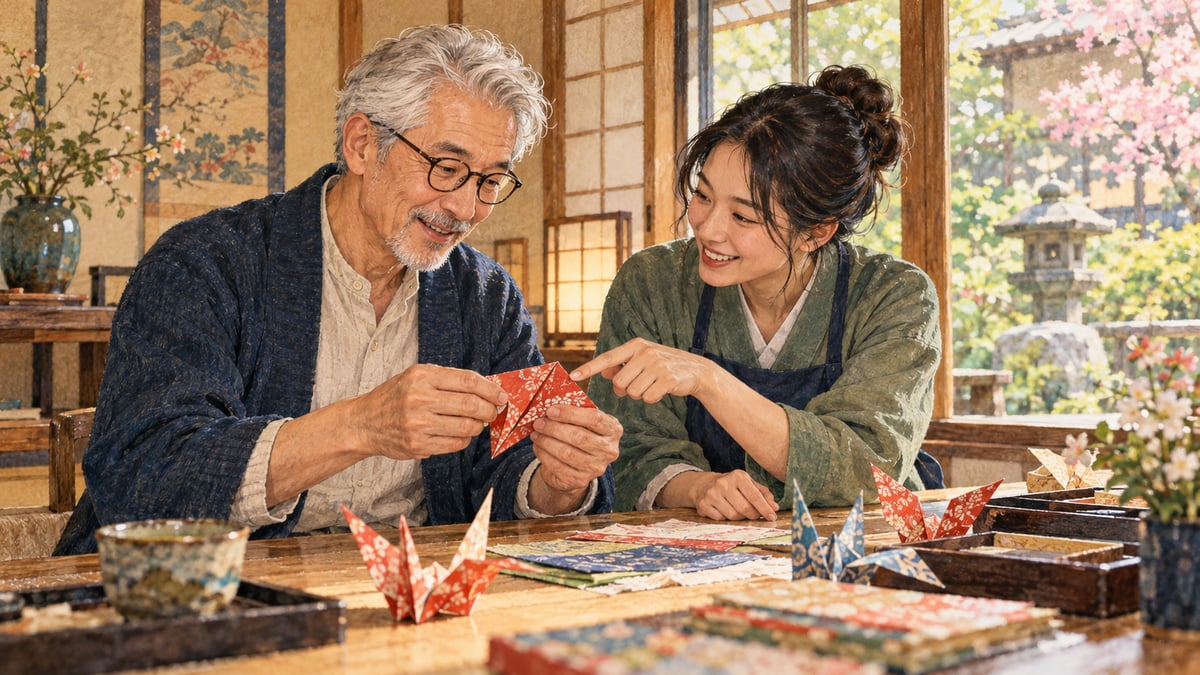
Tell Mocchi that you want a short paper-folding language task. Begin with a clear action such as folding a square sheet in half, rather than a complete complex model.
Read the instruction and explain the intended result in plain words. Knowing what should happen helps you judge whether a revised sentence preserves the meaning.
Learn the verb in the instruction
Use /vocab for the relevant action or direction. Ask /kanji about a complete-word reading if needed. Then return the word to the instruction and identify what it tells the listener to do.
Save a useful example as a flashcard if recall is difficult. After revealing the answer, produce a new short instruction with the same verb.
| Japanese | Romaji | Meaning |
|---|---|---|
| 折る | Oru | To fold |
| 半分 | Hanbun | Half |
Check action, direction and order separately
Draft a simple explanation and ask Mocchi whether each detail matches the intended action. If the direction changes, the result may change even when the verb stays correct.
Use /quiz to identify which instruction matches a described action or which of two steps comes first. Explain your choice instead of relying only on a familiar word.
| Japanese | Romaji | Meaning |
|---|---|---|
| 紙を半分に折ってください。 | Kami o hanbun ni otte kudasai. | Please fold the paper in half. |
Give a short explanation to AI Sensei
Prepare a suitable hobby conversation through /kaiwa. In AI Sensei, explain one step and pause for the listener’s question. Describe the action clearly without assuming a spoken exchange can inspect the real object.
If asked which direction, clarify that point. Avoid restarting every instruction when only one detail needs attention.
| Japanese | Romaji | Meaning |
|---|---|---|
| 上から下に折ってください。 | Ue kara shita ni otte kudasai. | Please fold from top to bottom. |
Review the detail that changed the meaning
If you remembered the verb but reversed the direction, focus review on the relationship between the two ends. If the written instruction was clear but hard to say, practise producing it without the full model.
Bring the difficult turn to Mocchi and ask for another short example. Change the action or direction so the answer requires understanding.
Transfer the explanation to another simple process
Explain a short drawing or craft step next time. Keep the habit of naming the action, giving the relevant direction and responding to a clarification.
Mocchi supports preparation, vocabulary and quizzes check the language, and AI Sensei gives the explanation an interactive purpose. The next task can then reflect what the exchange revealed.