
Read for the decision you are trying to make
You want to know whether a class is suitable and what you need to prepare. Ask Mocchi for a brief fictional listing with mostly familiar language. Identify the activity, time and any explicit participation information before requesting a full explanation.
Mark the detail that remains unclear. A useful reading task can end with a question rather than a complete answer if the text does not provide the information you need.
| Japanese | Romaji | Meaning |
|---|---|---|
| 陶芸教室 | Tōgei kyōshitsu | Pottery class |
Choose vocabulary that supports participation
Use /vocab for a small hobby-related set and /kanji when a complete-word reading is unfamiliar. Connect the words with the listing or the question you want to ask. Avoid collecting a large specialist vocabulary list before you can make the inquiry.
Save a few useful items for flashcards if you expect to revisit them. Then recall a word inside a sentence, so the review supports a message rather than only an isolated label.
Ask about beginner participation clearly
Draft the question yourself and tell Mocchi the meaning you intend. Ask whether it fits an inquiry to an organizer. A short suitable sentence is enough; you do not need elaborate wording that makes the question harder to understand.
Use a small quiz with changed listings. Decide whether beginner participation is stated, excluded or left unknown. Explain the clue in the text before choosing your next question.
| Japanese | Romaji | Meaning |
|---|---|---|
| 初心者でも参加できますか。 | Shoshinsha demo sanka dekimasu ka. | Can beginners participate too? |
Ask a practical follow-up in AI Sensei conversation
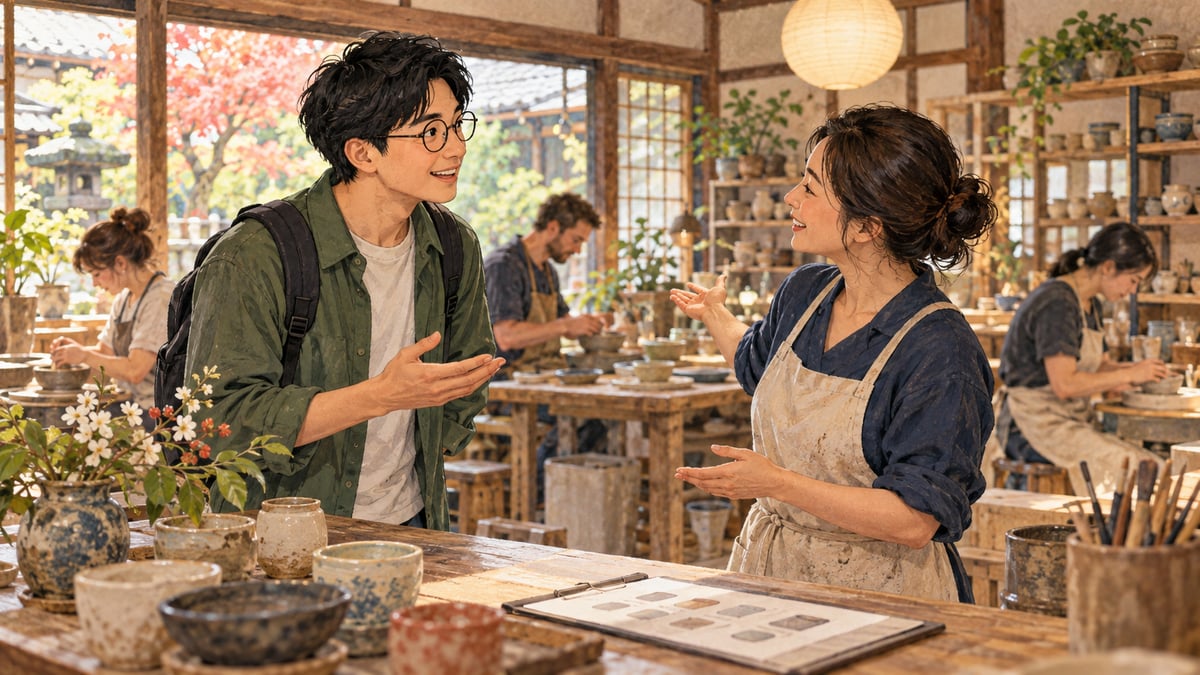
Prepare a suitable hobby or everyday exchange through /kaiwa. In AI Sensei, ask about joining, listen to the reply and ask what to bring if participation is possible. Keep the written listing closed while speaking.
If the answer contains an unfamiliar supply word, clarify it. The follow-up should respond to the information you received rather than continue through a fixed list regardless of the answer.
| Japanese | Romaji | Meaning |
|---|---|---|
| 何を持っていけばいいですか。 | Nani o motte ikeba ii desu ka. | What should I bring? |
| 予約が必要ですか。 | Yoyaku ga hitsuyō desu ka. | Is a reservation necessary? |
Review the point that affected your next step
After the exchange, identify whether the listing, eligibility answer or supply question was difficult. Bring that example to Mocchi. A word may need retrieval practice, while a misunderstood reply may need a shorter listening-and-response task.
Keep successful parts of the inquiry and change only the target that needs work. This makes review feel connected with participating in an activity rather than starting another general Japanese lesson.
Try another activity with the same inquiry skills
Use a fictional cooking, photography or craft class later. Read the description, identify the missing information, ask and respond. New details help check whether the inquiry skill transfers beyond the pottery example.
The connected platform supports several skills around a personal interest. Mocchi helps organize and explain, vocabulary and quizzes support understanding, and AI Sensei gives you a place to use the questions in a voiced exchange.