
Ask Mocchi for Japanese Feedback That You Can Actually Use

Good Japanese feedback is specific enough to act on and small enough to remember. Tell Mocchi whether you want a brief correction, a detailed explanation, or one important point at a time, then use the feedback in a new answer.

Mocchi highlights one Japanese correction, explains its reason, and invites the learner to try another sentence
What you need to know

Ask Mocchi for Japanese Feedback That You Can Actually Use

A corrected sentence can look impressive while teaching very little if the tutor changes every word and you do not understand why. Start by stating the purpose of your message and the kind of help you want. A diary entry, a short work request, and a practice sentence may need different priorities. Choose the feedback style that helps you notice a decision, preserve your meaning, and produce another example rather than simply collecting polished rewrites.

State the intention and audience before asking for edits.

Separate actual errors from optional style changes.

Choose a manageable number of corrections.

Use one correction in a new sentence without copying.

Decide what the feedback is trying to improve

Before submitting a sentence, name the audience and purpose. Are you describing yesterday, asking a teacher for help, or sending a casual message to a friend? Grammatical accuracy, politeness, and natural phrasing overlap, but they are not the same question. An edit that makes a sentence more formal may be optional for one context and important for another. Context helps the tutor explain that difference.

You can also state a temporary priority. If you are practicing past tense, ask Mocchi to correct tense errors first and save minor stylistic improvements for later. This does not mean that other changes are unimportant; it gives the lesson a clear focus so you can judge what you learned.

A small tense correction can become a useful contrast

Suppose you write 昨日、映画を見ます when you mean that you watched a film yesterday. The time expression points to a completed past event, so 見ました fits this simple report. Ask for the reason, then change the activity: yesterday you read a book or met a friend. Producing the changed sentence shows more than recognizing the tutor's corrected version.
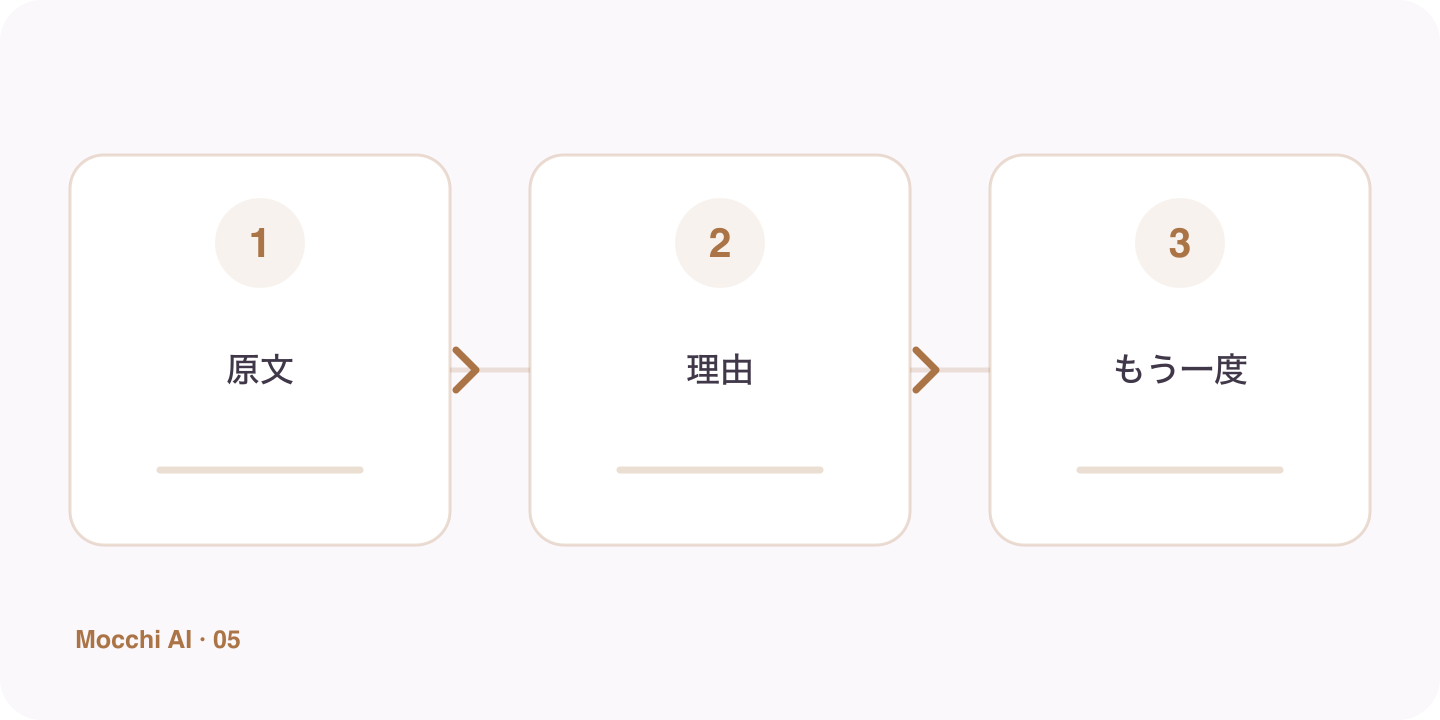
One correction is connected to its reason and a new sentence rather than a long list of simultaneous edits
Useful feedback keeps the original intention, explains one important decision, and creates a chance to try again.
JapaneseRomajiMeaning
昨日、映画を見ました。Kinō, eiga o mimashita.I watched a film yesterday.
昨日、本を読みました。Kinō, hon o yomimashita.I read a book yesterday.

Separate an error from a stylistic alternative

A correction should tell you whether the original wording was wrong, unclear in context, or simply less preferred. Ask Mocchi to label that distinction in plain language. Otherwise, you may mistakenly learn that every alternative wording is forbidden. When two forms are both possible, request a short example of the context that favors each one instead of memorizing one rewritten sentence as the only acceptable answer.

Choose a feedback size you can process

If a paragraph produces many comments, start with the repeated problem or the change that affects meaning most. Work through one example and try again before opening the next explanation. A learner who already understands the grammar may prefer a concise correction; someone encountering the pattern for the first time may need a slower contrast. Tell Mocchi which situation applies rather than assuming that one feedback format should fit every task.

Check whether the correction transfers

Finish with an answer you create without copying the corrected sentence. Change the subject, time, object, or situation while keeping the same grammatical decision. If you make the same error, ask for a simpler prompt and name the clue you missed. Save that clue for review. This closes the loop between receiving feedback and developing control of the language, which is the part that matters outside the chat.

Key points

A practical way to improve

Write three short Japanese sentences about an ordinary day. Ask Mocchi to keep your meaning and explain only the most important correction first. Restate the reason in your own words, then write a fourth sentence that uses the same point in another context. After checking that sentence, decide whether you are ready for the next correction or should practice the first one again.

  1. 1

    Choose one clear goal

    Focus each session on a situation or skill you can actually use.

  2. 2

    Practice actively

    Say complete answers aloud instead of only reading or recognizing Japanese.

  3. 3

    Review and repeat

    Keep useful corrections and revisit the same skill until it feels natural.

FAQ

Frequently asked questions

Is detailed feedback always better than a short correction?

No. Detail is useful when it answers a question you can understand and apply. If a long explanation hides the main decision, ask for one short contrast and an exercise instead of more terminology.

Can I ask Mocchi to be gentle without avoiding corrections?

Yes. Ask for encouraging wording and honest correction, with one priority at a time. A supportive tone and accurate feedback are compatible; the useful distinction is how the correction is presented and practiced.

What should I do if an edit changes what I meant?

Restate the original intention and explain which part of the rewrite feels different. Ask for a corrected version that preserves that intention, then compare the two versions before treating the new wording as your answer.

Turn one correction into something you can use

Tell Mocchi how much feedback you want, then practice the reason behind the first change.