
Give Mocchi a Travel Goal That Produces Useful Japanese

A useful travel goal names an exchange you want to handle, not just a destination. Tell Mocchi where the conversation happens, what you need to achieve, and what usually becomes difficult after your first Japanese sentence.

Mocchi connects an ordinary travel situation to a Japanese request and a follow-up response
What you need to know

Give Mocchi a Travel Goal That Produces Useful Japanese

Memorizing a request can help you begin, but the other person may ask a follow-up you did not prepare for. A restaurant exchange might involve party size, a reservation, or a choice of seating. Keep the first practice narrow enough for your level and include a polite way to ask for repetition. The aim is to handle a small interaction with support, not to memorize a script that works only when the reply arrives exactly as expected.

Choose one situation and one practical outcome.

Prepare likely follow-ups as well as the first request.

Include a simple phrase for asking for help.

Use invented details instead of sharing private travel records.

Replace a destination with a communicative task

'I am going to Japan' supplies context but does not tell a tutor which exchange matters most. 'I want to ask whether a café has a seat available' is more actionable. It identifies a setting, a request, and a likely response. Give Mocchi that small task, your approximate level, and the point where you usually lose confidence, such as numbers or an unexpected question.

You can prepare several situations over time without combining them into a single oversized lesson. Finishing one exchange creates a clearer result than receiving a long phrase list for every possible event on a trip. Keep a short record of the situations you can now attempt and the ones that still need help.

Prepare a request and a way to repair understanding

すみません、もう一度お願いします means 'Excuse me, once more, please.' It is useful when a reply arrives before you have processed it. Pair it with a concrete request such as これをお願いします, 'This one, please,' when pointing to an item is appropriate. Practice the repair phrase as part of the exchange so asking for help feels like an available action rather than a failure.
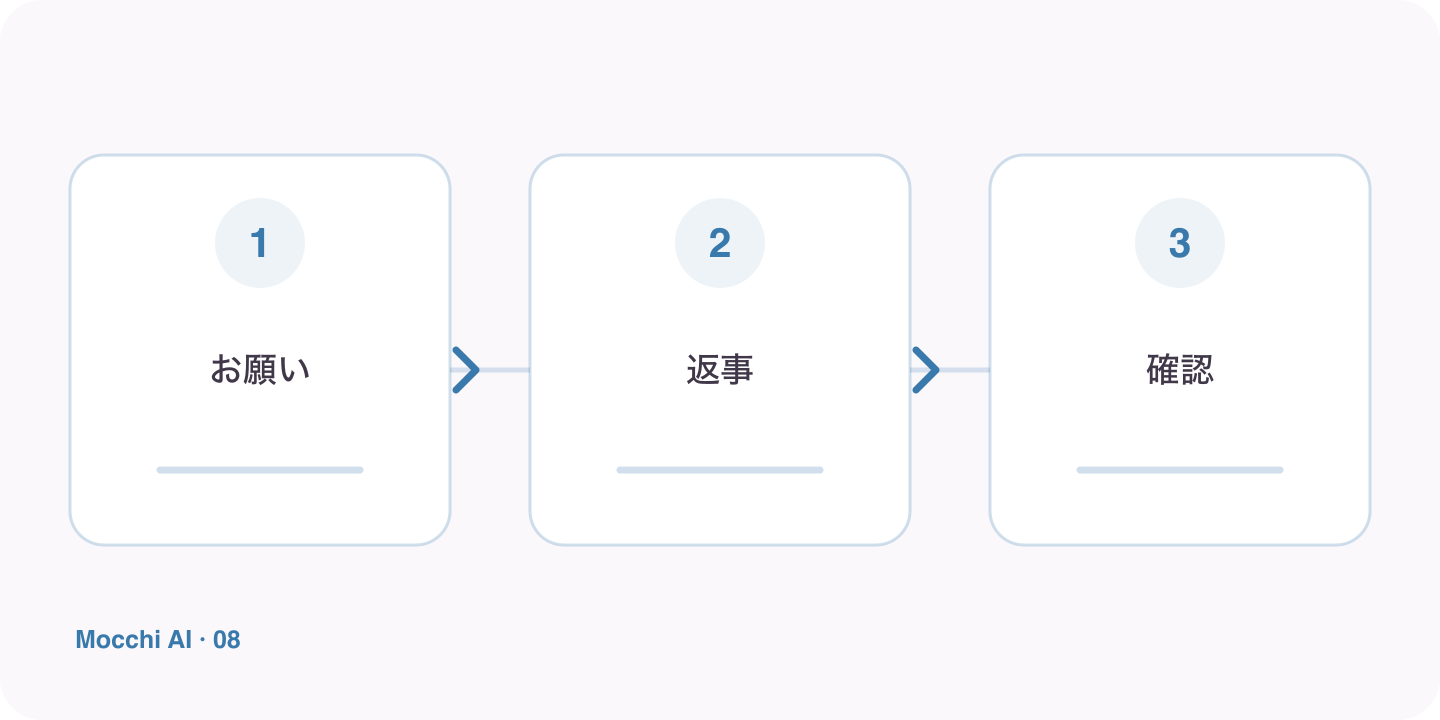
A travel situation leads to a first request, an expected reply, and a clarification phrase
Prepare the exchange around the request, not only a sentence you plan to deliver.
JapaneseRomajiMeaning
これをお願いします。Kore o onegaishimasu.This one, please.
すみません、もう一度お願いします。Sumimasen, mō ichido onegaishimasu.Excuse me, once more, please.

Make the follow-up the center of the exercise

After learning the first line, ask Mocchi what the other person might need to know next. Keep the answer options few and understandable at first. Once you can respond, vary the question or the detail being requested. This develops a flexible response to the situation instead of relying on a single rehearsed sequence that becomes fragile as soon as something changes.

Move prepared language into spoken practice

Use the chat to clarify meaning and choose a few expressions, then open AI Sensei or a suitable Roleplay mission for a spoken exchange. The practice mode matters: selecting a written answer and retrieving a spoken reply are different tasks. Afterward, return to Mocchi with one phrase you could not understand or produce. That specific difficulty gives the next review a useful purpose.

Install a convenient starting point before you travel

Unihongo is available as a PWA that you can add through a supported browser, giving you a Home Screen or desktop entry without searching an app store. Open the installed app before relying on it and check that you can sign in. Installation makes access more convenient; it does not make AI lessons work without internet or replace the practical backup of a map, written note, or saved phrase you can consult when disconnected.

Key points

A practical way to improve

Choose a café order, hotel check-in, or request for directions. Tell Mocchi what you want to accomplish and ask for two likely follow-up questions at your level. Practice your first request, answer one follow-up, and use a clarification phrase when you miss something. Then change one detail, such as the item or time, so the exercise becomes a decision rather than a memorized performance.

  1. 1

    Choose one clear goal

    Focus each session on a situation or skill you can actually use.

  2. 2

    Practice actively

    Say complete answers aloud instead of only reading or recognizing Japanese.

  3. 3

    Review and repeat

    Keep useful corrections and revisit the same skill until it feels natural.

FAQ

Frequently asked questions

Should I tell Mocchi my exact itinerary?

Usually a general situation is enough. You can practice a hotel check-in with an invented reservation name and date. Avoid sharing booking references, addresses, or other private travel details when they do not affect the language task.

Can I practice speaking directly in this planning chat?

Mocchi can help prepare language and offer pronunciation activities. For an extended spoken exchange, use Unihongo's AI Sensei or Roleplay, then bring any difficult phrases back for explanation and review.

What if the real reply is more difficult than the practice?

Prepare a repair phrase, ask for repetition or simpler wording, and use written support when needed. Practice increases readiness, but it cannot guarantee that every real conversation will follow the same vocabulary or sequence.

Prepare one exchange you will actually use

Ask Mocchi for a short travel task, then carry the useful phrases into AI Sensei or Roleplay for spoken practice.