
Describe the change with fictional dates
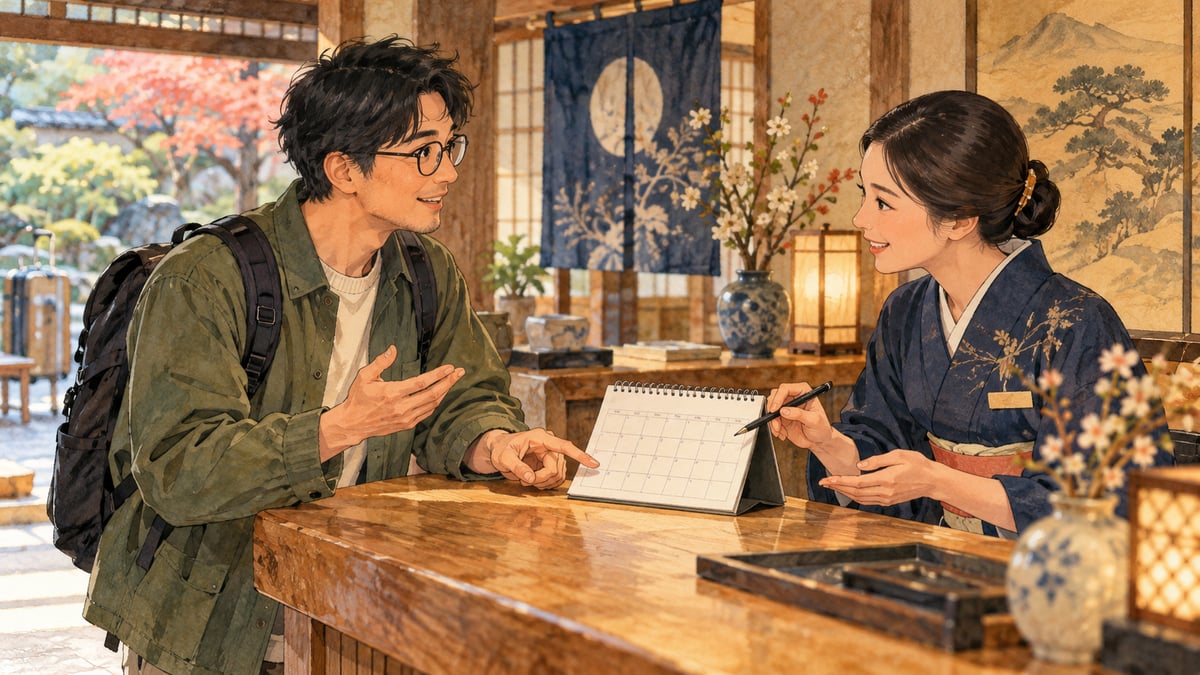
Start with a simple practice booking and the extra night you want. Keep the current arrangement separate from the new request. Tell Mocchi which part you need help expressing: the additional night, the date or the question about availability.
Use invented details so you can change the exercise freely. You do not need a real reservation number or personal booking information for the language task. The goal is to understand the structure of the exchange and the information the reply must provide.
| Japanese | Romaji | Meaning |
|---|---|---|
| もう一泊したいのですが。 | Mō ippaku shitai no desu ga. | I would like to stay one more night. |
Learn the small word set that supports the request
Ask /vocab about a focused hotel-stay topic and /kanji about a character in a useful word when needed. Confirm 一泊 as ippaku and understand how it contributes to the request. Add only the words that affect the change you are practising.
Save suitable vocabulary for later recall if you expect to use it again. Then say the request without looking at the reading. If the vocabulary is clear but forming the request remains difficult, ask for a sentence explanation rather than expanding the word list.
| Japanese | Romaji | Meaning |
|---|---|---|
| 一泊 | Ippaku | One night’s stay |
| 同じ部屋 | Onaji heya | The same room |
Read a short reply before assuming the result
Ask Mocchi for two short fictional replies: one where another night is possible and one where the room is unavailable. Identify which information settles the request and which details still need a follow-up. Explain the difference in your own words.
Use a small /quiz to check a changed reply. A familiar room word does not by itself mean the extension was accepted. Read the whole message and look for the expression that states possibility or the alternative being offered.
Ask a follow-up during AI Sensei roleplay
Prepare a hotel topic with /kaiwa and use AI Sensei for the spoken exchange. Make the request, listen to the availability answer and ask whether the same room can be used if that detail matters. Keep the complete script closed so a changed reply requires a real decision.
If the requested option is unavailable, acknowledge that answer before asking about another possibility. The task is not to force the same outcome every time; it is to understand the reply and respond clearly.
| Japanese | Romaji | Meaning |
|---|---|---|
| 同じ部屋に泊まれますか。 | Onaji heya ni tomaremasu ka. | Can I stay in the same room? |
| 確認をお願いします。 | Kakunin o onegai shimasu. | Please confirm it. |
Review the detail that caused uncertainty
After the roleplay, record one difficult turn. Perhaps the request was clear but a date in the answer was not. Or you understood the availability but could not ask about the room. Give that example to Mocchi and choose a focused next task.
A vocabulary card can support an unfamiliar item, a quiz can check a distinction and /review can revisit a recurring weak point. Connecting the tools around the same hotel task keeps the study practical and makes the next conversation easier to prepare.
Try a changed request and check the whole exchange
Change the fictional dates or ask about a different length of stay at an appropriate level. Make the request, understand the answer and confirm the outcome without reopening the old model. This checks the communication sequence rather than one memorized sentence.
The exercise brings reading, vocabulary, grammar, listening and spoken response together. Mocchi helps with planning and explanation; Unihongo’s review tools support retrieval; AI Sensei provides a setting for using the language. Keep actual booking facts with the hotel while using the platform to prepare the conversation.