
Choose a subject that gives the invitation a purpose
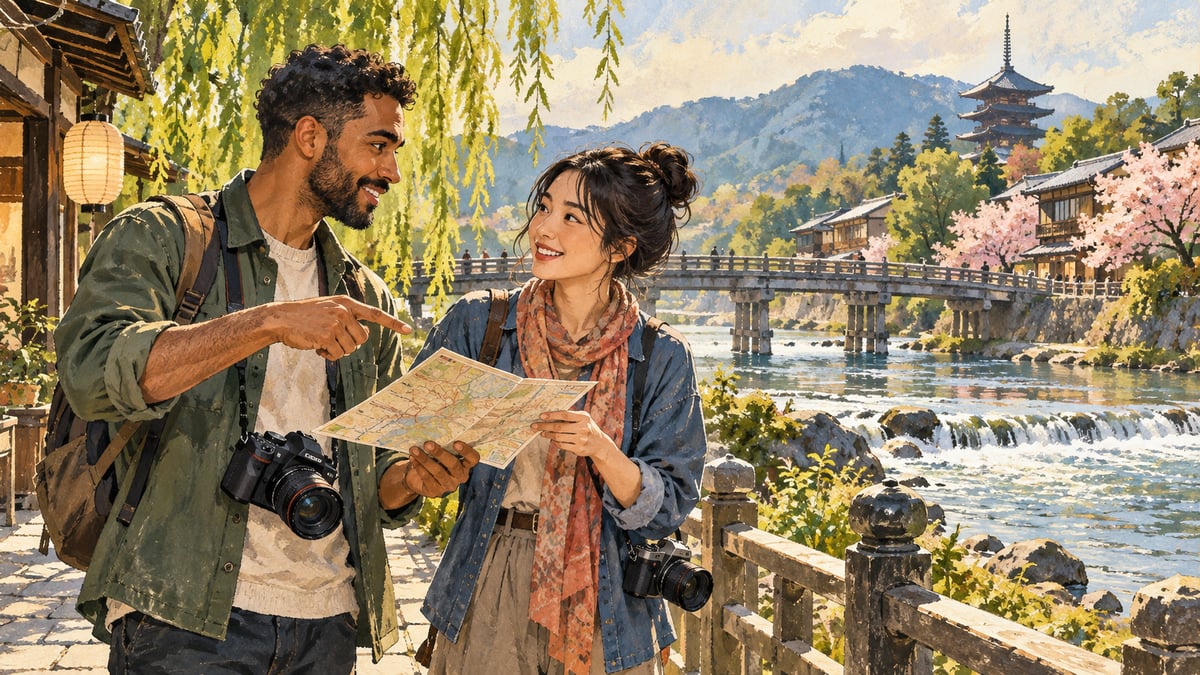
Tell Mocchi whether you want to photograph buildings, flowers or a street scene. That interest can shape a small vocabulary set and give you a reason to suggest a location. You do not need to learn a long list of camera terms first.
Set a manageable communication goal: invite a friend, suggest a place and agree on a time. Use fictional details so you can change them freely during practice.
Draft the invitation in your own words
Attempt one or two sentences before requesting a model. Ask Mocchi whether the wording expresses the activity you intend and fits a friendly invitation. Compare a correction with your original meaning.
Read the improved sentence, close it and write another invitation with a different subject. This connects writing support with an ability you can use again.
| Japanese | Romaji | Meaning |
|---|---|---|
| 一緒に写真を撮りに行きませんか。 | Issho ni shashin o tori ni ikimasen ka. | Would you like to go take photos together? |
Prepare the small details that make an invitation usable
A friendly suggestion still needs a meeting arrangement. Study the relevant place or time expression with /vocab, and use /kanji when the written word is unclear. Save a useful card only if you expect to need it again.
Ask for a short quiz that distinguishes the activity location from the meeting point. Explain which detail answers each question. This helps prevent a correct word from being used for the wrong part of the plan.
| Japanese | Romaji | Meaning |
|---|---|---|
| 公園の入口で会いましょう。 | Kōen no iriguchi de aimashō. | Let us meet at the park entrance. |
Respond to another suggestion in AI Sensei
Prepare a suitable hobby conversation through /kaiwa. In AI Sensei, make the invitation and listen to the answer. If the friend suggests a later time, respond to that suggestion before confirming anything.
Keep the full script closed. A small note with the activity and place is enough support while you practise understanding and producing the exchange.
| Japanese | Romaji | Meaning |
|---|---|---|
| 午後二時はどうですか。 | Gogo niji wa dō desu ka. | How about two in the afternoon? |
| では、二時に入口で会いましょう。 | Dewa, niji ni iriguchi de aimashō. | Then let us meet at the entrance at two. |
Use the result to choose the next review
If you could invite smoothly but missed the time change, practise that listening-and-response step. If a place word disappeared from memory, use a card and then put it back into the meeting sentence.
Mocchi can help turn the difficult point into a short follow-up. The goal is a clearer next conversation, not repeating the entire lesson after one uncertain word.
Try an invitation for another interest
Suggest visiting a bookshop or taking a sketching walk next time. Keep the process of inviting, considering a reply and confirming shared details. The new interest changes the useful vocabulary.
This is how a personalized learning plan becomes concrete: one interest connects writing, word study, comprehension and AI Sensei conversation, then the result informs a focused review.