
Practise Japanese: Continue After a One-Word Answer

A short answer does not always end a conversation. It can give you one detail to explore. This workshop helps you ask a relevant follow-up after hearing a hobby, while avoiding a rapid list of unrelated questions.

What you need to know

Practise Japanese: Continue After a One-Word Answer

A fictional conversation partner answers reading when asked about hobbies. You can ask what they read or when they usually read. The goal is a connected exchange, not making the other speaker answer indefinitely.

Use the detail in the answer.

Ask one question at a time.

Respond to the next answer.

Recognize a natural stopping point.

Notice the opening the answer gives

Reading provides a topic but leaves many details unknown. Choose one you would genuinely need to understand the hobby. Do not jump to an unrelated prepared question simply because it is familiar.

Ask about one detail

A question about the kind of books is a manageable next turn. Ask Mocchi for a simpler version if the wording exceeds your level.

JapaneseRomajiMeaning
どんな本を読みますか。Donna hon o yomimasu ka.What kinds of books do you read?

Acknowledge the answer before moving on

If the reply is novels, respond to that information. You might share a brief preference or ask about one favorite. Avoid asking the same category question again as if the reply had not happened.

JapaneseRomajiMeaning
小説が好きなんですね。Shōsetsu ga suki nan desu ne.So you like novels.

Choose whether to extend or close

A clear exchange need not become an interview. One relevant question and acknowledgment can complete this exercise. A polite close is preferable to forcing another question with no purpose.
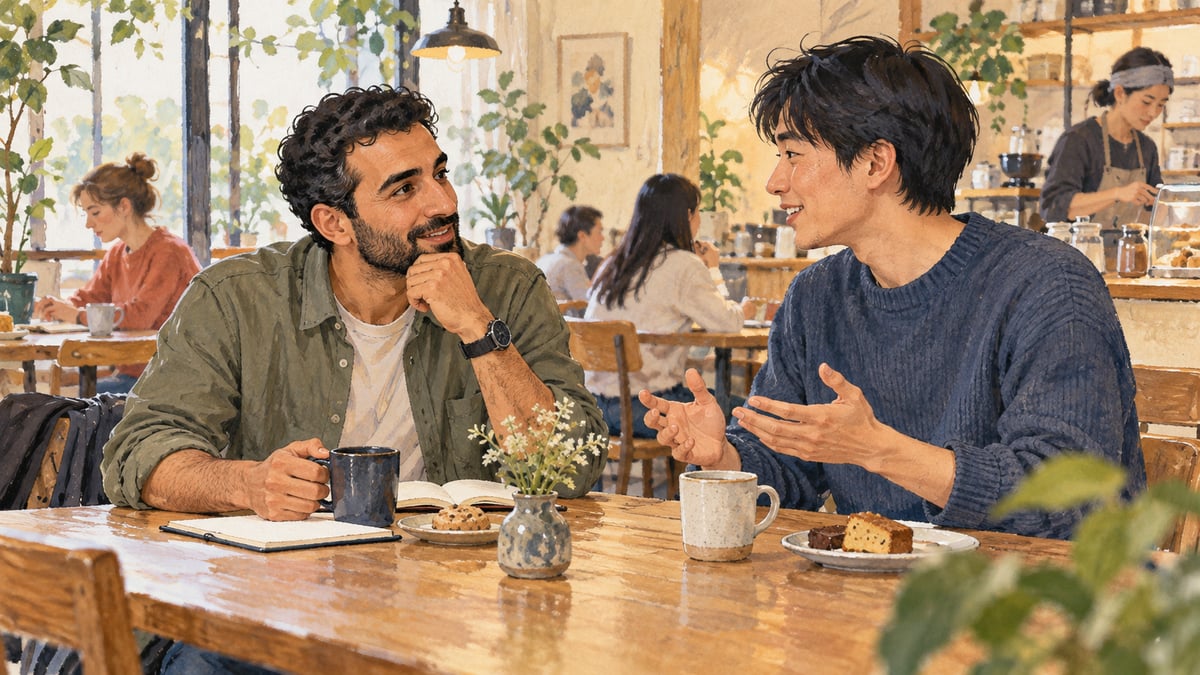
Two friends continue a relaxed conversation with an interested follow-up question
A connected follow-up uses what the other person actually said.

Adapt to a different hobby

If the answer is cooking, the book question no longer fits. In a suitable AI Sensei session, let the answer vary so the exercise requires listening. Choose a question about dishes or cooking occasions instead.

Review the connection between turns

Ask Mocchi whether your follow-up matched the previous answer. Use a short transcript excerpt with fictional details if needed. Ongoing AI Sensei practice can provide more varied replies; compare current access and usage limits with your intended routine.

Key points

A practical way to improve

Respond to the answer reading with one relevant question. Acknowledge the reply before asking anything else. Try a second version where the hobby is cooking and adapt the follow-up.

  1. 1

    Choose one clear goal

    Focus each session on a situation or skill you can actually use.

  2. 2

    Practice actively

    Say complete answers aloud instead of only reading or recognizing Japanese.

  3. 3

    Review and repeat

    Keep useful corrections and revisit the same skill until it feels natural.

FAQ

Frequently asked questions

Must every answer lead to another question?

No. An acknowledgment or a natural close can be appropriate.

What makes a follow-up relevant?

It develops a detail the other speaker just supplied.

Should I memorize a list of questions?

Prepare a few possibilities, but choose from the actual reply.

Build one more useful turn

Listen to a short answer and follow its meaning.