
Recognize what a visible cue lets you do
Look at りんご and identify its meaning. You may recognize it quickly, especially beside a picture. That is useful knowledge, but the written word and image both support your response. Notice which information you actually needed to answer.
Ask Mocchi about the item if the reading or meaning is unclear. Keep the example ordinary and connected with a situation you might discuss. A clear foundation makes the later checks more informative: you can then tell whether the difficulty is retrieving something familiar or learning a new item.
| Japanese | Romaji | Meaning |
|---|---|---|
| りんご | Ringo | Apple |
Remove the answer and retrieve the word
Turn the card over or use a picture without the Japanese label. Try producing the word before revealing it. If the answer disappears, you have found a recall target. /review-flashcards can help you revisit selected vocabulary, but the learning action still depends on your attempt before checking.
Keep the cue specific enough that the intended answer is clear. A vague instruction such as say something about food is not the same as retrieving one word. Once the item is available, broaden the task by asking what you want to communicate with it.
Put the word into a sentence with a purpose
Write a short sentence expressing a preference or request. Ask Mocchi whether it conveys your intended meaning. The word may be easy while the surrounding pattern is unfamiliar. That result suggests a sentence-level explanation or quiz rather than simply adding more cards.
After feedback, change one detail and produce another sentence. You might use a different fruit or ask a question instead of making a statement. Keep the changes small enough that you can explain what happened, then move into an exchange when the sentence is manageable.
| Japanese | Romaji | Meaning |
|---|---|---|
| りんごが好きです。 | Ringo ga suki desu. | I like apples. |
| りんごを二つください。 | Ringo o futatsu kudasai. | Two apples, please. |
Respond when someone else chooses the next turn
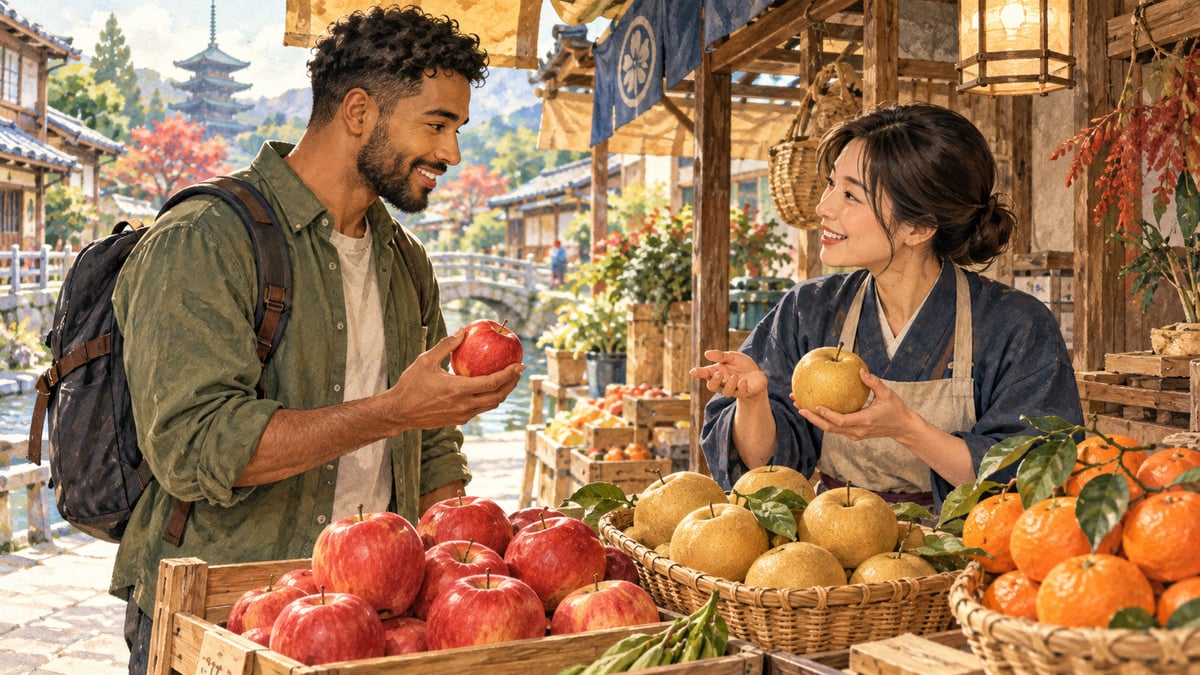
Prepare a suitable AI Sensei shopping or food conversation with /kaiwa. During the exchange, listen to the question before answering. You may need to identify the item, choose a quantity or react to an alternative. The reply comes from the situation rather than a single visible flashcard cue.
This stage adds listening and decision-making to retrieval. If you pause, identify what you were trying to decide. A clarification can help you continue and reveal the actual gap. Avoid treating every hesitation as proof that you have forgotten the word.
| Japanese | Romaji | Meaning |
|---|---|---|
| いくつ要りますか。 | Ikutsu irimasu ka. | How many do you need? |
| 二つお願いします。 | Futatsu onegai shimasu. | Two, please. |
Choose practice for the stage that needs it
If recognition is uncertain, revisit the item’s meaning and reading. If recall is weak, use a clear cue and produce the word before checking. If the sentence is difficult, work on its pattern. If the exchange is difficult, practise understanding a likely turn and choosing a relevant answer.
Mocchi can help organize the result into a focused task. A short quiz or /review may address a recurring distinction, while another AI Sensei exchange can check spoken use. The tools support different stages of the same vocabulary goal.
Check again with a new but related example
Return later with a different everyday item or a new question. Remove the previous model and notice how much support you need. Can you retrieve the word, express the message and respond to the next turn? Describe the result in those concrete terms.
A connected platform does not make every stage identical. It gives you a practical way to move among them and choose the help that fits. Recognition, recall and response can then become parts of one learning path instead of separate scores that seem to contradict each other.