
Four words, one sound rule
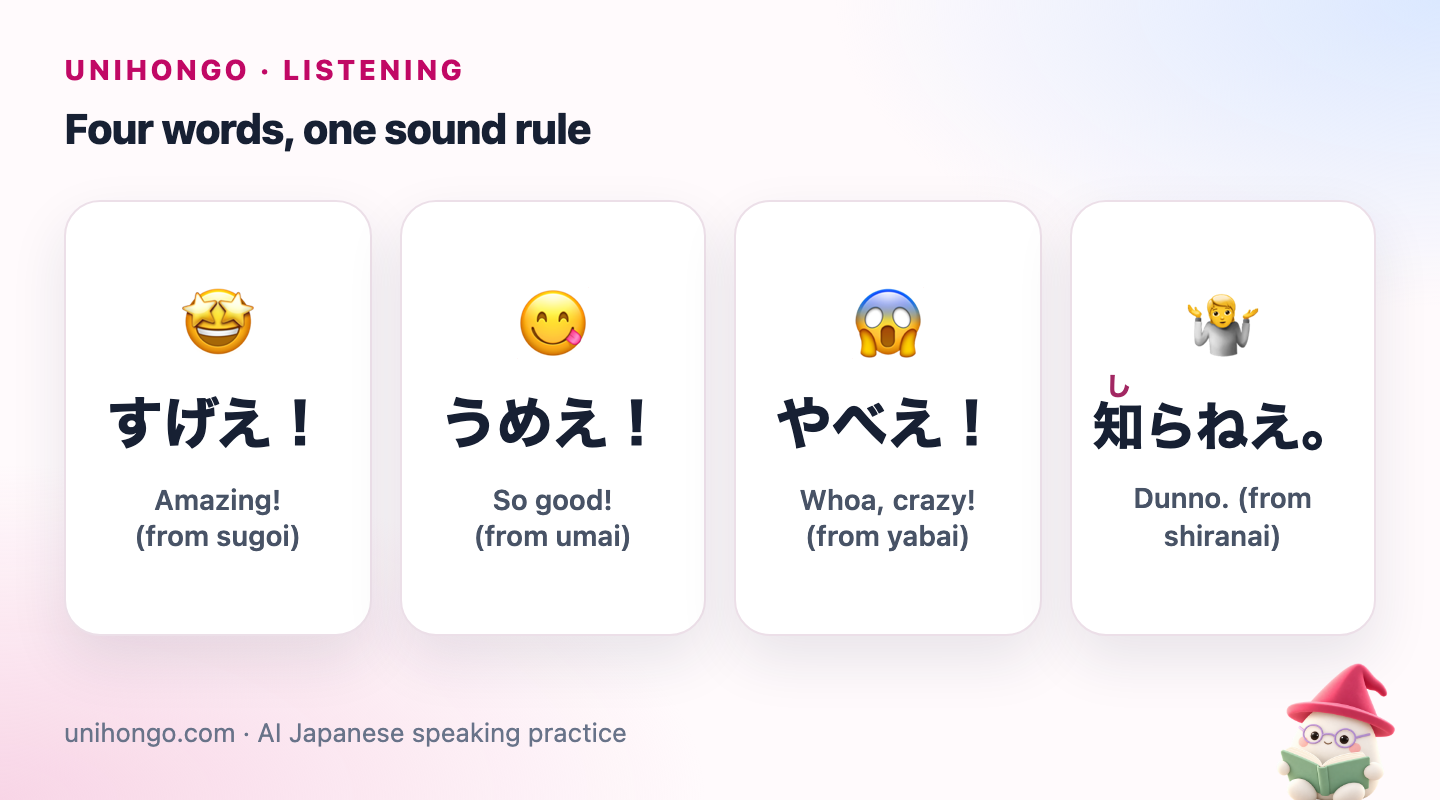
Here are four of the most common fused words. Each is a normal word you probably know, pronounced in a rough, relaxed way. Learn to hear the original inside each one.
| Japanese | Romaji | Meaning |
|---|---|---|
| すげえ! | Sugē! | Amazing! (from sugoi) |
| うめえ! | Umē! | So good! (from umai) |
| やべえ! | Yabē! | Whoa, crazy! (from yabai) |
| 知らねえ。 | Shiranē. | Dunno. (from shiranai) |
The rule: ai and oi become ē
When a word ends in ai or oi, rough speech can merge the two vowels into one long ē. This mostly affects i-adjectives (umai, sugoi, itai) and the negative ending nai (shiranai, wakaranai). The ē is long: two beats, just like the ai or oi it replaces.
In writing, people show it with a small or full e plus a long mark: すげえ, すげー, すげぇ. In messages the long dash version is most common.
| Japanese | Romaji | Meaning |
|---|---|---|
| いてえ! | Itē! | Ouch! (from itai) |
| ひでえな。 | Hidē na. | That's harsh. (from hidoi) |
| うるせえ! | Urusē! | Shut up! (from urusai, rough) |
| おもしれえ! | Omoshirē! | That's hilarious! (from omoshiroi) |
| Pattern | Standard | Rough | Meaning |
|---|---|---|---|
| ai becomes ē | umai | umē | delicious, skilful |
| ai becomes ē | itai | itē | ouch, it hurts |
| ai becomes ē | urusai | urusē | shut up, so noisy |
| oi becomes ē | sugoi | sugē | amazing |
| oi becomes ē | hidoi | hidē | awful, so mean |
| oi becomes ē | omoshiroi | omoshirē | hilarious |
| nai becomes nē | shiranai | shiranē | I don't know |
| nai becomes nē | ja nai | ja nē | isn't, it's not |
The smaller cousins: ui, ae and n
The same relaxed style changes a few other sounds. Ui can become a long ī: samui (cold) turns into samī, and warui (bad, sorry) into warī. The ae in omae (you, rough) becomes omē. And the ra-row before nai often turns into n, so wakaranai becomes wakannai, and then, with fusion, wakannē.
Teme (てめえ), from temae, is a very aggressive word for you that appears in fights in films and manga. Recognise it and never use it: in real life it is an insult.
| Japanese | Romaji | Meaning |
|---|---|---|
| さみい。 | Samī. | It's freezing. (from samui) |
| わりい、遅れた。 | Warī, okureta. | Sorry, I'm late. (from warui) |
| わかんねえ。 | Wakannē. | No idea. (from wakaranai) |
| そうじゃねえよ。 | Sō ja nē yo. | That's not it. (from ja nai) |
Who talks like this, and where
This style is strongly associated with young men in relaxed company: teammates, gamers, old school friends. Manga and anime use it to signal a tough, energetic or delinquent character, which exaggerates it. Many women also say sugē or yabē in a moment of excitement, but it is generally heard as rough and masculine. Something similar exists in several regional dialects, and it is part of the stereotype of the brash, old-Tokyo voice in period dramas.
Where you hear it matters as much as who says it. At a sports bar, in a group chat or on a game stream, it is normal. The same person will switch to sugoi desu ne a moment later when the waiter arrives. Japanese speakers move between styles constantly, and fusion is one of the clearest markers of the most relaxed end.
- Common: sports viewing, games, nights out with close friends, manga dialogue.
- Unusual: classrooms, shops, offices, family gatherings with elders.
- Never: job interviews, customer service, speaking to anyone senior to you.
Why learners should recognise it before using it
Fused forms are easy to understand once you know the rule, but they are hard to use well. With a slight foreign accent, a carefully pronounced yabē can sound aggressive rather than playful, or like a line copied from an anime. Mixing fused forms with polite endings, such as sugē desu, sounds odd, because the two belong to opposite ends of the style range.
A safer way to sound lively is the clipped exclamation: the adjective with its final i cut off and a small catch, written with a small tsu. Sugo! (すごっ), uma! (うまっ) and ita! (いたっ) are used by almost everyone, men and women, and sound energetic without sounding rough.
| Japanese | Romaji | Meaning |
|---|---|---|
| すごいね! | Sugoi ne! | That's amazing! (neutral casual) |
| おいしい! | Oishii! | Delicious! (neutral) |
| すごいですね。 | Sugoi desu ne. | That's amazing. (polite) |
Fusion in writing: messages, manga and subtitles
Fused forms are spoken style, but you will meet them in writing all the time, because messages, manga and game chat imitate speech. The long ē is usually written with a long dash (すげー, やべー, うめー), sometimes with a small e (すげぇ) or a full e (すげえ). All three spellings mean the same thing; the dash is the most common in messages.
Manga add their own exaggeration: extra dashes, small tsu at the end, or the fused form in a big bold font to show a shout. Japanese subtitles on variety shows often keep the fused forms exactly as spoken, which makes them good listening practice: watch the mouth, read the line, and replay it in standard form in your head.
Do not be surprised to see yabē in a message about something that is not dramatic at all. Like yabai, it has drifted from dangerous toward simply wow, and young people use it for anything from a delicious cake to a late train.
| Japanese | Romaji | Meaning |
|---|---|---|
| やべー、寝坊した。 | Yabē, nebō shita. | Oh no, I overslept. |
| このケーキ、マジでうめー。 | Kono kēki, maji de umē. | This cake is seriously good. |
| わかんねー。 | Wakannē. | No clue. |
Scenario: decoding a football night
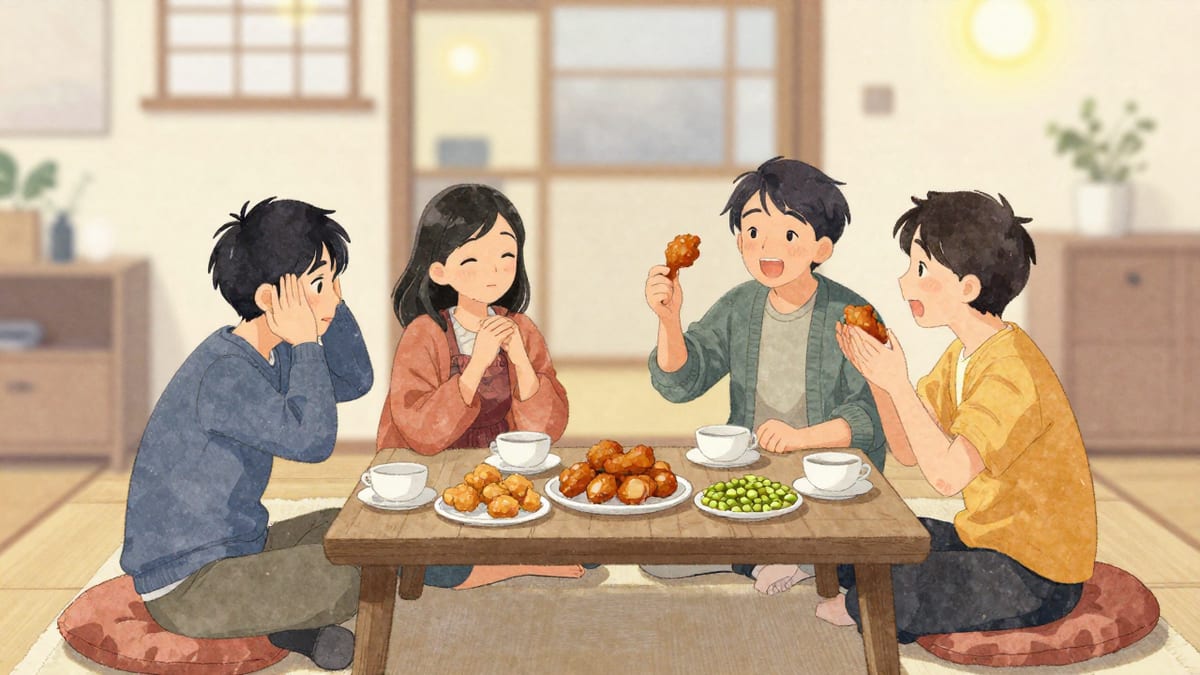
You are watching a football match at your friend Daiki's flat with three of his university friends. The room gets loud fast. Here is what you hear, and what each line means in standard Japanese.
| Japanese | Romaji | Meaning |
|---|---|---|
| やべえ、入った! | Yabē, haitta! | Daiki: Whoa, it went in! (yabai) |
| 今のシュート、すげえ! | Ima no shūto, sugē! | Friend: That shot was amazing! (sugoi) |
| このから揚げ、うめえな。 | Kono karaage, umē na. | Friend: This fried chicken is great. (umai) |
| いてえ!テーブルに足ぶつけた。 | Itē! Tēburu ni ashi butsuketa. | Daiki: Ow! I hit my foot on the table. (itai) |
| 本当にすごいね! | Hontō ni sugoi ne! | You: That was really amazing! |
| 次の試合、いつ?知らねえ。 | Tsugi no shiai, itsu? Shiranē. | Friend: When's the next game? Dunno. (shiranai) |
Notice that you can stay in neutral casual Japanese the whole evening and fit in perfectly. Nobody expects a guest to shout yabē, and a warm hontō ni sugoi ne is always welcome.
Common mistakes
- Fusing words that do not end in ai, oi or ui: kirei and ii never change.
- Combining fusion with desu or masu: sugē desu sounds strange.
- Saying the ē too short: sugē needs the full length of the original oi.
- Using urusē or teme as a joke with people you do not know well: both can start a real argument.
- Assuming yabē is always bad: like yabai, it can mean terrible or incredible.