
What seichi junrei means
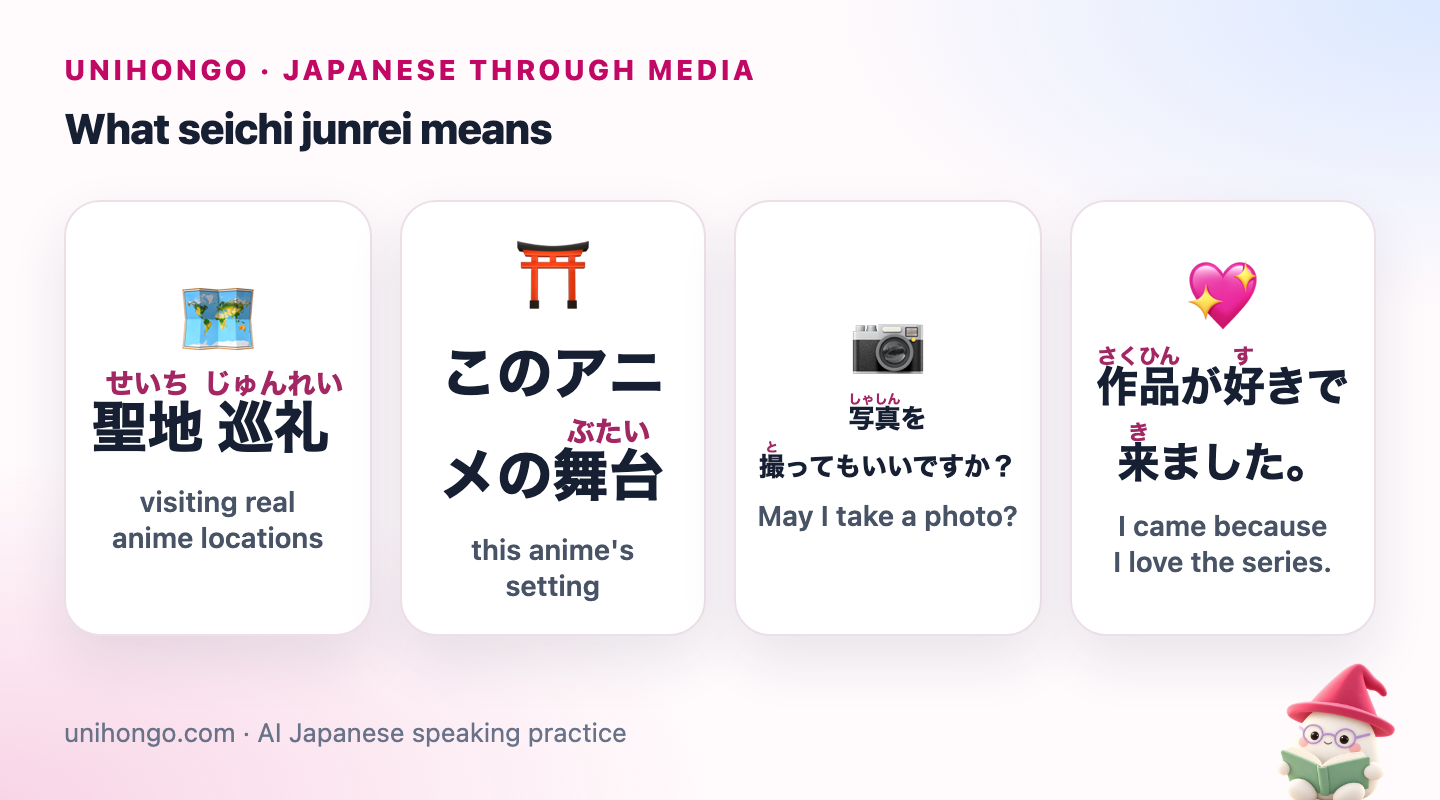
Seichi (聖地) means a holy place and junrei (巡礼) means pilgrimage. Used together they once referred only to religious journeys, but today most Japanese people hear seichi junrei and think of fans visiting real places from anime, manga, films and games. The phrase is a little playful: fans treat these spots with the devotion of pilgrims. These four lines are the heart of any pilgrimage.
| Japanese | Romaji | Meaning |
|---|---|---|
| 聖地巡礼 | seichi junrei | visiting real anime locations |
| このアニメの舞台 | kono anime no butai | this anime's setting |
| 写真を撮ってもいいですか? | Shashin o totte mo ii desu ka? | May I take a photo? |
| 作品が好きで来ました。 | Sakuhin ga suki de kimashita. | I came because I love the series. |
Sakuhin (作品) means a work, as in a work of art. Fans use it for the series they love because it sounds more respectful than anime alone, and it covers manga and films too.
Pilgrimage vocabulary fans actually use
| Japanese | Romaji | Meaning |
|---|---|---|
| このシーンと同じアングルで撮りたいです。 | Kono shīn to onaji anguru de toritai desu. | I want to shoot from the same angle as this scene. |
| ここが第一話の場所ですね。 | Koko ga dai-ichi-wa no basho desu ne. | This is the place from episode one, isn't it? |
| Word | Meaning | Example use |
|---|---|---|
| seichi | pilgrimage spot | Kono hashi wa seichi desu. This bridge is a pilgrimage spot. |
| butai | setting of a story | Kono machi ga butai desu. This town is the setting. |
| moderu-chi | real place that inspired a scene | The model for the school in episode one |
| roke-chi | filming location (live action) | For dramas and films, not anime |
| junrei-sha | pilgrim, visiting fan | Used in news and by locals |
| hikaku shashin | comparison photo | A photo matched to an anime frame |
Many fans take a comparison photo: they hold up a still from the anime and photograph the same view from the same angle. You will hear onaji anguru, the same angle, a lot.
Asking locals politely
Locals in pilgrimage towns are often used to fans, but they are not tour guides. Start every question with sumimasen, use desu and masu, and keep it short. Ending with ka or ka ne makes a question soft.
| Japanese | Romaji | Meaning |
|---|---|---|
| すみません、この辺りがアニメの舞台ですか? | Sumimasen, kono atari ga anime no butai desu ka? | Excuse me, is this area the anime's setting? |
| ファンの方が多いですか? | Fan no kata ga ōi desu ka? | Do many fans come here? |
| あの神社はどう行けばいいですか? | Ano jinja wa dō ikeba ii desu ka? | How do I get to that shrine? |
| ここで写真を撮っても大丈夫ですか? | Koko de shashin o totte mo daijōbu desu ka? | Is it all right to take photos here? |
Notice fan no kata rather than fan no hito. Kata is the polite word for person, and using it about other fans shows respect to the person you are asking.
If someone looks busy, apologise and move on: oisogashii tokoro, sumimasen deshita, sorry to bother you when you are busy.
Photo etiquette that keeps fans welcome
Most pilgrimage spots are ordinary places. A quiet residential street in an anime may have local people walking to work, and a school that inspired a scene is a real school. Customs and rules vary by town, and some local governments and tourism offices publish manners guides for fans. These are widely shared guidelines.
| Japanese | Romaji | Meaning |
|---|---|---|
| 人が写らないように撮ります。 | Hito ga utsuranai yō ni torimasu. | I'll take it so no people are in the shot. |
| 中で撮影はできますか? | Naka de satsuei wa dekimasu ka? | Is photography allowed inside? |
- Do not photograph people's houses, gardens or residents. Frame the street, the sky or the landmark.
- Never take photos of students or school grounds, and do not enter schools.
- Do not stand in the road, on railway crossings or in front of shop entrances for a shot.
- Keep quiet early in the morning and late at night in residential areas.
- Ask before taking photos inside shops, cafés and shrines' private areas.
- Buy something at local shops. Spending money is the clearest way to thank a town.
At the shop: a conversation with the owner
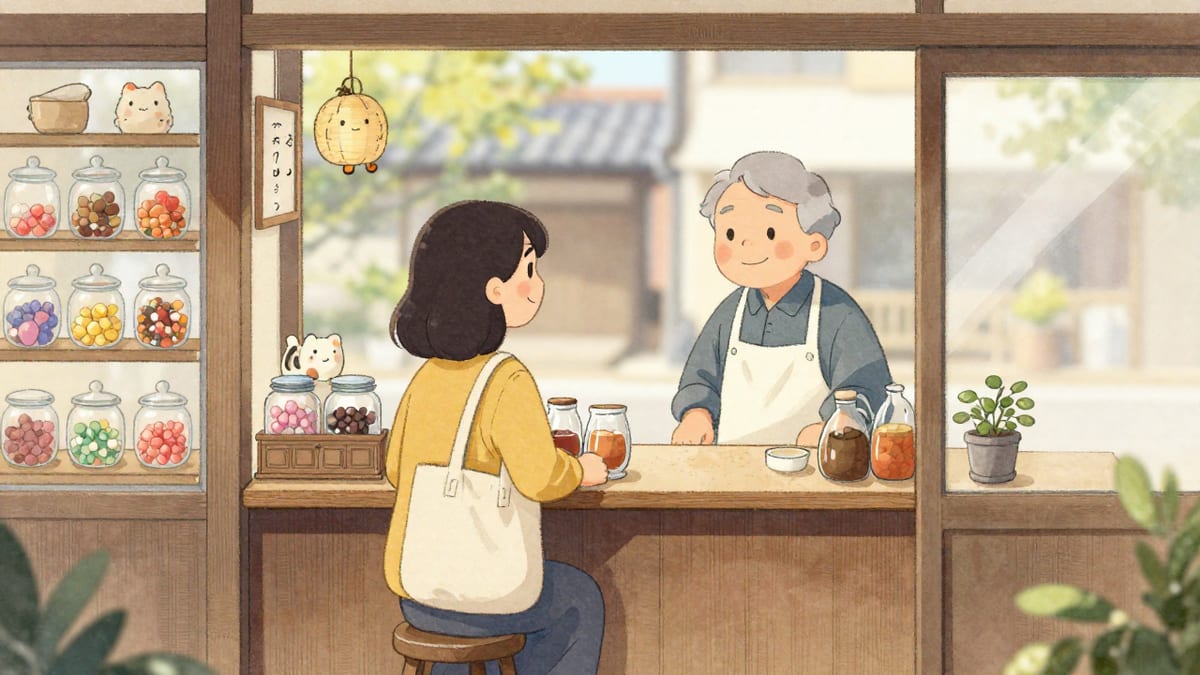
Here is the kind of exchange that makes a trip memorable: a fan visiting a small shop on a street that an anime made famous. The fan uses polite speech throughout, explains why they came, and asks before taking photos.
| Japanese | Romaji | Meaning |
|---|---|---|
| すみません、このお店、アニメに出てきますよね。 | Sumimasen, kono omise, anime ni dete kimasu yo ne. | Fan: Excuse me, this shop appears in the anime, right? |
| ええ、そうなんですよ。 | Ē, sō nan desu yo. | Owner: Yes, that's right. |
| 作品が好きで、アメリカから来ました。 | Sakuhin ga suki de, Amerika kara kimashita. | Fan: I love the series, so I came from America. |
| わざわざ遠くから、ありがとうございます。 | Wazawaza tōku kara, arigatō gozaimasu. | Owner: All that way? Thank you so much. |
| ファンの方はよく来ますか? | Fan no kata wa yoku kimasu ka? | Fan: Do fans come often? |
| 週末はけっこう来ますよ。 | Shūmatsu wa kekkō kimasu yo. | Owner: Quite a few come at weekends. |
| 店内の写真を撮ってもいいですか? | Tennai no shashin o totte mo ii desu ka? | Fan: May I take photos inside the shop? |
| どうぞ。ほかのお客さんは写さないでね。 | Dōzo. Hoka no okyakusan wa utsusanaide ne. | Owner: Go ahead. Just keep other customers out. |
Wazawaza means going to special trouble, and in wazawaza tōku kara it expresses gratitude that you made the effort. You can use it yourself when someone does something for you: wazawaza arigatō gozaimasu.
Getting there: tourist offices, buses and local shops
Many pilgrimage spots are outside big cities, where buses are infrequent and nobody speaks much English. A little planning Japanese goes a long way. In towns that have become popular with fans, the local tourist information centre, the kankō annaijo (観光案内所), may have maps of locations or know which places welcome visitors; this varies a lot from town to town, so ask rather than assume.
Local shops are also part of the trip. Some areas sell collaboration goods or snacks linked to the series, and even where they do not, buying a local speciality is a natural way to thank the town and to start a conversation.
| Japanese | Romaji | Meaning |
|---|---|---|
| 観光案内所はどこですか? | Kankō annaijo wa doko desu ka? | Where is the tourist information centre? |
| ここから歩いて行けますか? | Koko kara aruite ikemasu ka? | Can I walk there from here? |
| バスは何分おきに来ますか? | Basu wa nanpun oki ni kimasu ka? | How often does the bus come? |
| ファン向けの地図はありますか? | Fan muke no chizu wa arimasu ka? | Do you have a map for fans? |
| この町のおすすめのお土産は何ですか? | Kono machi no osusume no omiyage wa nan desu ka? | What souvenir from this town do you recommend? |
Check the last bus before you set off. In rural areas the final bus can leave early in the evening, and asking saishū basu wa nanji desu ka, what time is the last bus, can save you a long walk.
Small talk with other fans
At famous spots you will often meet other fans doing the same thing. A friendly comment about the scene breaks the ice. Start politely, and switch to casual only if the other person does.
| Japanese | Romaji | Meaning |
|---|---|---|
| あのシーンの場所、ここですよね。 | Ano shīn no basho, koko desu yo ne. | This is the place from that scene, right? |
| どのキャラが好きですか? | Dono kyara ga suki desu ka? | Which character do you like? |
| 巡礼、何回目ですか? | Junrei, nankaime desu ka? | How many times have you made this trip? |
| 写真、撮りましょうか? | Shashin, torimashō ka? | Shall I take a photo of you? |
Offering to take someone's photo is a natural, kind way to start chatting. Kyara is the everyday short form of kyarakutā, character.
Common mistakes on a pilgrimage
- Using casual Japanese with shop owners and residents. Stay with desu and masu unless they clearly invite you to relax.
- Assuming everyone knows the anime. Many locals, especially older people, may not. Ask if this place appears in it rather than assuming.
- Calling the location by the anime's name. If the town is renamed in the story, use the real name with locals.
- Saying seichi to people who are not fans. With general locals, say anime no butai, which everyone understands.