
Four lines for any film conversation
A conversation about films usually moves through four steps: someone asks what you have watched, you protect or ask about spoilers, you describe and judge the film, and you recommend it or not. These four lines cover the whole arc.
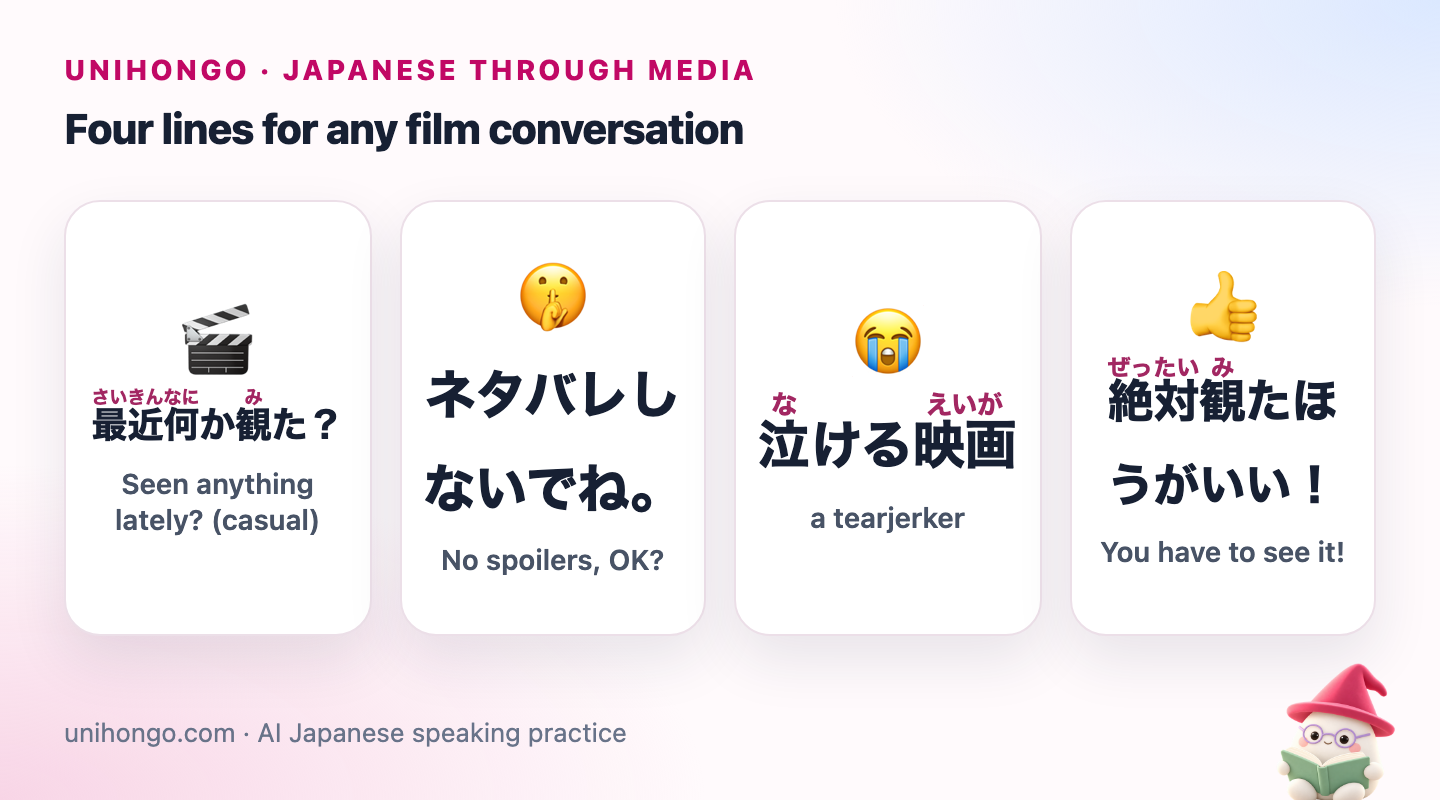
| Japanese | Romaji | Meaning |
|---|---|---|
| 最近何か観た? | Saikin nanika mita? | Seen anything lately? (casual) |
| ネタバレしないでね。 | Netabare shinaide ne. | No spoilers, OK? |
| 泣ける映画 | nakeru eiga | a tearjerker |
| 絶対観たほうがいい! | Zettai mita hō ga ii! | You have to see it! |
Nakeru is the potential form of naku, to cry, so a nakeru eiga is literally a film you can cry at. It is a compliment: the story is moving. Similarly, waraeru eiga is a film that really makes you laugh.
Asking and answering: what did you watch?
Open with a question about the recent past, then follow up on how and where the person watched. With a coworker or someone older, use the polite versions.
| Japanese | Romaji | Meaning |
|---|---|---|
| 最近、何か映画を観ましたか? | Saikin, nanika eiga o mimashita ka? | Have you seen any films recently? (polite) |
| 週末に映画館で観てきました。 | Shūmatsu ni eigakan de mite kimashita. | I went and saw one at the cinema at the weekend. |
| 配信で観ました。 | Haishin de mimashita. | I watched it on streaming. |
| 字幕で観た?吹き替え? | Jimaku de mita? Fukikae? | Did you watch it subtitled or dubbed? |
| どんな映画? | Donna eiga? | What kind of film is it? (casual) |
Mite kimashita (watched and came back) suggests you made a trip to the cinema. Japan has a strong dubbing culture as well as subtitles, so jimaku ha (subtitle person) versus fukikae ha (dubbing person) is a common light debate.
Describing genre and plot in one line
Resist the temptation to retell the whole story. Japanese speakers usually give the genre and a one-line premise, often with ...to iu hanashi, a story where... Keep the verb in the plain form before to iu.
| Japanese | Romaji | Meaning |
|---|---|---|
| 高校生が過去にタイムスリップする話です。 | Kōkōsei ga kako ni taimusurippu suru hanashi desu. | It's about a high schooler who slips back in time. |
| 家族のきずなを描いた映画です。 | Kazoku no kizuna o egaita eiga desu. | It's a film about family bonds. |
| 主人公が田舎の町に引っ越すんだ。 | Shujinkō ga inaka no machi ni hikkosu n da. | The main character moves to a country town. |
| Japanese | Meaning | Note |
|---|---|---|
| hōga | Japanese film | Opposite of yōga, foreign film |
| anime eiga | animated feature | Very popular in Japanese cinemas |
| ren'ai mono | romance | Also rabu sutōrī |
| horā | horror | Summer is a popular time for horror |
| komedī | comedy | Also owarai kei, comedy-type |
| sasupensu | thriller | Literally suspense |
Giving a verdict, from rave to so-so
Your verdict is what the other person really wants to hear. Give it with one reason. The table of nuance below matters: Japanese speakers tend to soften negative opinions, especially if they do not yet know what the other person thought.
| Japanese | Romaji | Meaning |
|---|---|---|
| ラストがよかった。 | Rasuto ga yokatta. | The ending was great. |
| 映像がすごくきれいだった。 | Eizō ga sugoku kirei datta. | The visuals were beautiful. |
| 最後、鳥肌が立った。 | Saigo, torihada ga tatta. | I got goosebumps at the end. |
| 伏線の回収がすごかった。 | Fukusen no kaishū ga sugokatta. | The way it paid off the foreshadowing was amazing. |
| うーん、ちょっと微妙だった。 | Ūn, chotto bimyō datta. | Hmm, it was kind of so-so. |
| 期待しすぎたかも。 | Kitai shisugita kamo. | Maybe I expected too much. |
| Verdict | Strength | When to use |
|---|---|---|
| saikō datta | Very positive | You loved it |
| omoshirokatta | Positive | Safe, everyday praise |
| mā mā datta | Neutral | It was OK |
| bimyō datta | Soft negative | Not great, said gently |
| tsumaranakatta | Strong negative | Only with close friends |
Bimyō literally means subtle or delicate, but in conversation it almost always means not quite good. Learners sometimes use it as a compliment; avoid that.
Spoiler etiquette: netabare
Netabare (ネタバレ) combines neta, the material or trick of a story, with bare, being exposed. Many Japanese fans are careful about spoilers, especially for new releases, and online reviews often carry a netabare ari (contains spoilers) label. Ask before you reveal anything beyond the premise.
| Japanese | Romaji | Meaning |
|---|---|---|
| ネタバレしてもいい? | Netabare shite mo ii? | Can I spoil it? (casual) |
| まだ観てないから、言わないで! | Mada mitenai kara, iwanaide! | I haven't seen it yet, so don't tell me! |
| ここからネタバレだけど、大丈夫? | Koko kara netabare da kedo, daijōbu? | Spoilers from here. Is that OK? |
| ネタバレになるので、言えません。 | Netabare ni naru node, iemasen. | I can't say; it would be a spoiler. (polite) |
Actors, music and the original story
Once the verdict is out, conversations about films usually move to the details: who starred in it, how the music was, and whether it was based on a manga or novel. Japan adapts a great many manga, novels and anime into films, so the question of the original, the gensaku (原作), comes up all the time. Fans often have strong views on whether the adaptation was faithful.
These lines let you keep the conversation going after the first exchange. Notice that umakatta (was skilful) is used for acting, while yokatta (was good) works for almost anything.
| Japanese | Romaji | Meaning |
|---|---|---|
| 主演は誰? | Shuen wa dare? | Who's the lead? (casual) |
| 演技がすごくうまかった。 | Engi ga sugoku umakatta. | The acting was really good. |
| 音楽が頭から離れない。 | Ongaku ga atama kara hanarenai. | I can't get the music out of my head. |
| 原作を読んでから観ました。 | Gensaku o yonde kara mimashita. | I read the original before watching it. |
| 原作のほうが好きかな。 | Gensaku no hō ga suki ka na. | I think I prefer the original. |
| 大きい画面で観てよかった。 | Ōkii gamen de mite yokatta. | I'm glad I saw it on a big screen. |
If you prefer the original, say so gently with ka na, especially if your friend loved the film. Gensaku no hō ga zettai ii, the original is definitely better, is a fighting statement among fans.
Learner mistake: saying actor names in English word order or pronunciation. Japanese speakers say family name first for Japanese actors and use katakana pronunciation for foreign ones, so a famous Hollywood name may sound unfamiliar at first. If you cannot follow, ask dare no koto? (who do you mean?) and keep going.
Mini dialogue: so, how was the film?
Here is a full casual exchange between two friends on Monday morning. Notice how the speaker gives a one-line premise, a verdict with a reason, checks before spoiling, and ends with a recommendation.
| Japanese | Romaji | Meaning |
|---|---|---|
| 週末、何してた? | Shūmatsu, nani shiteta? | Friend: What did you do at the weekend? |
| 映画観てきた。泣ける映画だったよ。 | Eiga mite kita. Nakeru eiga datta yo. | You: I went to see a film. A real tearjerker. |
| へえ、どんな話? | Hē, donna hanashi? | Friend: Oh, what's it about? |
| おじいさんと犬の話なんだけど、ラストがよかった。 | Ojīsan to inu no hanashi nan da kedo, rasuto ga yokatta. | You: It's about an old man and a dog. The ending was great. |
| あ、ネタバレしないでね。 | A, netabare shinaide ne. | Friend: Oh, no spoilers, OK? |
| 大丈夫、言わない。絶対観たほうがいいよ。 | Daijōbu, iwanai. Zettai mita hō ga ii yo. | You: Don't worry, I won't. You have to see it. |
Recommending without pushing
Zettai mita hō ga ii is enthusiastic and natural with friends, but with a senior colleague it can sound pushy. Make the recommendation about the other person's tastes instead, and leave them free to decline.
| Japanese | Romaji | Meaning |
|---|---|---|
| ホラーが好きなら、きっと気に入ると思います。 | Horā ga suki nara, kitto ki ni iru to omoimasu. | If you like horror, I think you'll love it. |
| よかったら、ぜひ観てみてください。 | Yokattara, zehi mite mite kudasai. | If you like, please do give it a watch. |
| 映画館で観るのがおすすめです。 | Eigakan de miru no ga osusume desu. | I recommend seeing it at the cinema. |
- Mistake: retelling every scene. Give the premise and one highlight, then let the other person ask.
- Mistake: tsumaranakatta to someone who might love the film. Start with bimyō or watashi ni wa awanakatta.
- Mistake: forgetting the follow-up. Ask back with the person's name and -san wa?, or saikin nanika mimashita ka?