
What a shokurepo is
Shokurepo is a classic segment on Japanese daytime and evening TV. A celebrity or announcer visits a restaurant or market, tastes the speciality, and describes it so vividly that viewers at home can almost taste it too. Being good at it is a recognised skill, and people praise someone as shokurepo ga umai, good at food reports. These four lines show the style.
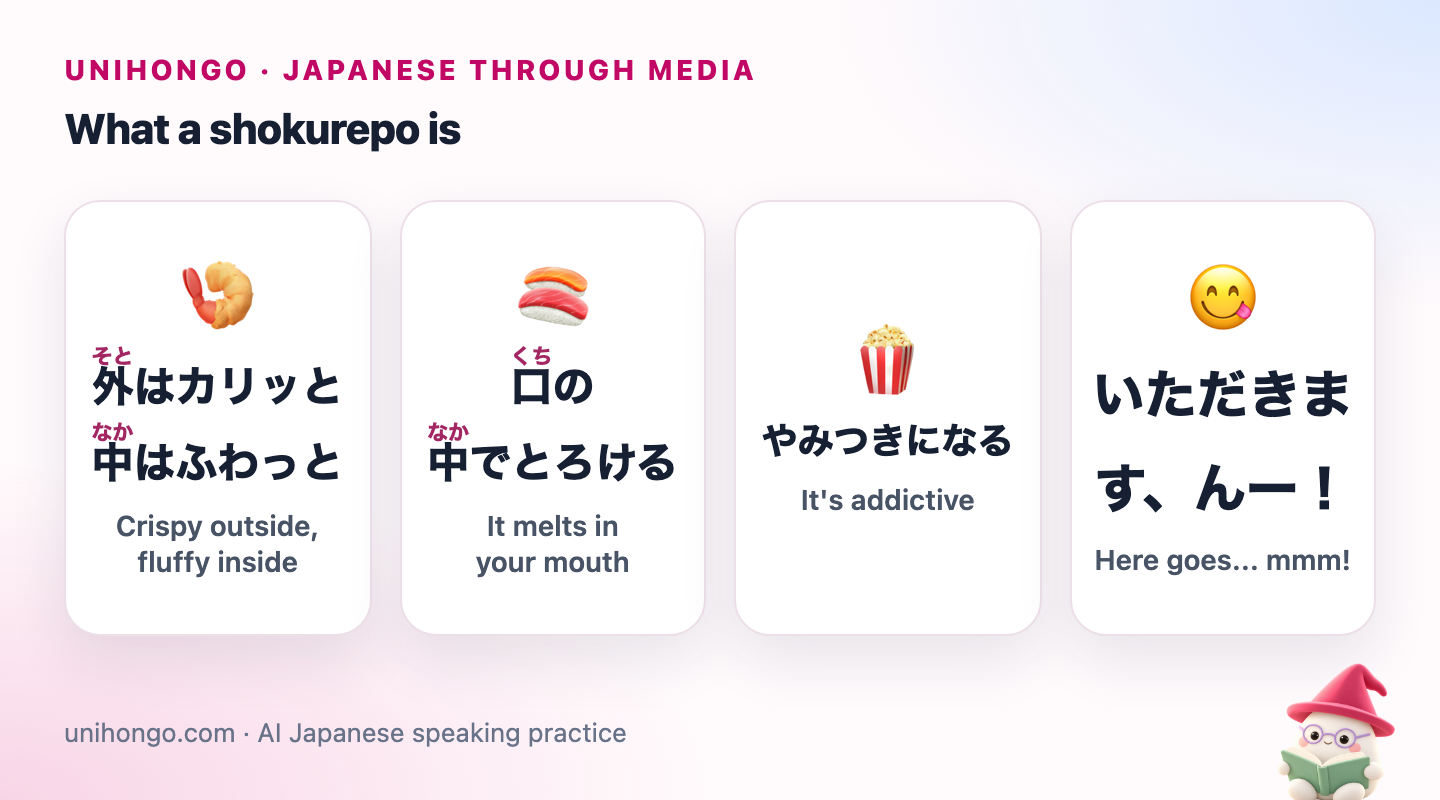
| Japanese | Romaji | Meaning |
|---|---|---|
| 外はカリッと中はふわっと | Soto wa karitto naka wa fuwatto | Crispy outside, fluffy inside |
| 口の中でとろける | Kuchi no naka de torokeru | It melts in your mouth |
| やみつきになる | Yamitsuki ni naru | It's addictive |
| いただきます、んー! | Itadakimasu, n! | Here goes... mmm! |
These are spoken constantly on TV, and many viewers joke about them as clichés. That is good news for you: they are clichés because everyone understands them instantly.
The reporter's formula in five steps
Most food reports follow the same arc. Learn it once and you can apply it to ramen, cake or a convenience-store rice ball.
| Step | Japanese focus | What you comment on |
|---|---|---|
| 1. The look | mitame | Colour, shine, size, steam |
| 2. The smell | kaori | Broth, butter, grilled aroma |
| 3. The first bite | hitokuchime | Your instant reaction |
| 4. Texture and taste | shokkan to aji | Crisp, soft, sweet, rich, light |
| 5. The verdict | matome | Who should try it and why |
Keep each step short. On TV, a whole report may last under a minute, and the reaction to the first bite is the heart of it.
Steps one and two: the look and the smell
Before eating, reporters admire the dish. This builds anticipation and gives you easy, polite lines to use when someone serves you food.
| Japanese | Romaji | Meaning |
|---|---|---|
| 見てください、このツヤ! | Mite kudasai, kono tsuya! | Look at this shine! |
| 湯気がすごいですね。 | Yuge ga sugoi desu ne. | Look at all that steam. |
| ボリュームがすごい! | Boryūmu ga sugoi! | What a huge portion! |
| いい香りがします。 | Ii kaori ga shimasu. | It smells wonderful. |
| だしの香りがふわっと来ますね。 | Dashi no kaori ga fuwatto kimasu ne. | The aroma of the broth wafts up. |
Kaori is used for pleasant smells. Nioi can be neutral or unpleasant, so avoid saying nioi ga suru about someone's cooking; say ii nioi or, better, ii kaori.
Step three: the first bite
This is the moment of the report. The reporter says itadakimasu, takes a bite, and lets a sound escape before any words: n!, or a wide-eyed pause. Then comes the first comment. Notice how many of these reactions are casual, even when the reporter speaks politely elsewhere.
| Japanese | Romaji | Meaning |
|---|---|---|
| では、いただきます。 | Dewa, itadakimasu. | Well then, let me try it. |
| んー!おいしい! | N! Oishii! | Mmm! Delicious! |
| うわ、これはすごい。 | Uwa, kore wa sugoi. | Wow, this is amazing. |
| 想像以上です! | Sōzō ijō desu! | It's better than I imagined! |
Step four: texture and taste
Here is where you explain why the food is good. A useful structure is A wa B, C wa D: soto wa karitto, naka wa fuwatto, outside crisp, inside fluffy. Contrasts make descriptions memorable. Texture words, called shokkan (食感), are often onomatopoeia; our eating onomatopoeia guide lists them in depth, so here are the reporter-style sentences built around them.
| Japanese | Romaji | Meaning |
|---|---|---|
| 外はカリッと、中はジューシーです。 | Soto wa karitto, naka wa jūshī desu. | Crisp outside and juicy inside. |
| 肉汁があふれてきます。 | Nikujū ga afurete kimasu. | The juices are pouring out. |
| あっさりしているのに、コクがあります。 | Assari shite iru noni, koku ga arimasu. | It's light, yet it has depth. |
| 甘さがちょうどいいです。 | Amasa ga chōdo ii desu. | The sweetness is just right. |
| 口の中でとろけます。 | Kuchi no naka de torokemasu. | It melts in my mouth. |
When not to use them: torokeru suits fatty tuna, soft beef, cheese or rich desserts, not a crunchy salad. Karitto describes a crisp surface, such as fried chicken or toast. Koku is depth or richness of flavour, usually praised in broth, curry and coffee. Mixing these up is the most common learner mistake in food descriptions.
Step five: the verdict
Finish by summing up who should eat it or what it makes you want to do. These lines work at the end of a TV report, a social media post, or a thank-you to whoever cooked.
| Japanese | Romaji | Meaning |
|---|---|---|
| これはやみつきになりますね。 | Kore wa yamitsuki ni narimasu ne. | This is seriously addictive. |
| ご飯が進みます! | Gohan ga susumimasu! | It makes you want to eat more rice! |
| 何個でも食べられそう。 | Nanko demo taberaresō. | I feel like I could eat any number of these. |
| ぜひ食べに来てください。 | Zehi tabe ni kite kudasai. | Please come and try it. |
Gohan ga susumu, literally the rice advances, praises a dish so flavourful that you keep eating rice with it. It suits savoury side dishes, not sweets.
Off camera: the polite version at someone's table
TV reporters exaggerate for the camera, and that is part of the fun. At a real dinner, at a friend's home or with a client, you want the same structure in a calmer, more polite form. Look, comment on one detail, compliment the cook, and ask a question. Asking how something was made is itself a compliment in Japan, because it shows you want to taste it again.
Skip the theatrical n! and the big gestures here. A quiet smile and one specific sentence are more convincing than three superlatives, and they make the cook feel genuinely appreciated.
| Japanese | Romaji | Meaning |
|---|---|---|
| わあ、きれいですね。 | Wā, kirei desu ne. | Oh, it looks beautiful. |
| 優しい味がしますね。 | Yasashii aji ga shimasu ne. | It has a gentle, comforting taste. |
| この味付け、どうやって作るんですか? | Kono ajitsuke, dō yatte tsukuru n desu ka? | How do you make this seasoning? |
| お料理、本当にお上手ですね。 | Oryōri, hontō ni ojōzu desu ne. | You're a really wonderful cook. |
| もう少しいただいてもいいですか? | Mō sukoshi itadaite mo ii desu ka? | May I have a little more? |
Yasashii aji, a gentle taste, is high praise for home cooking: not too salty, not too strong, made with care. It is a lovely phrase to know, because it praises the cook rather than just the food.
When not to use reporter lines: yamitsuki ni naru and gohan ga susumu are fine at a casual table, but at a formal dinner they can sound like you are performing. Stay with oishii desu plus one detail, and save the big reactions for friends.
A model food report: your lunch, live
Here is a full report on an ordinary lunch, a bowl of oyakodon (chicken and egg on rice), using all five steps. Read it aloud in a bright, slightly theatrical voice, then rewrite it for whatever you eat today.

| Japanese | Romaji | Meaning |
|---|---|---|
| 今日のお昼は親子丼です。 | Kyō no ohiru wa oyakodon desu. | Today's lunch is oyakodon. |
| 卵がふわふわで、ツヤツヤですね。 | Tamago ga fuwafuwa de, tsuyatsuya desu ne. | The egg is fluffy and glossy. |
| だしの甘い香りがします。 | Dashi no amai kaori ga shimasu. | There's a sweet smell of broth. |
| いただきます。んー! | Itadakimasu. N! | Here goes. Mmm! |
| 鶏肉がやわらかくて、味がしみています。 | Toriniku ga yawarakakute, aji ga shimite imasu. | The chicken is tender and full of flavour. |
| これは、ご飯が進みますね! | Kore wa, gohan ga susumimasu ne! | This makes you want to eat more rice! |
- Aji ga shimite iru means the flavour has soaked in, a high compliment for simmered dishes.
- Use desu and masu if you are reporting to someone; switch to casual if you are chatting with a friend.
- Avoid yabai as your only comment. It is common among young people, but a report needs at least one reason.