
At the door: four key lines
Most visits to a Japanese home start with the same short exchange in the genkan. These four lines cover the moment you arrive.
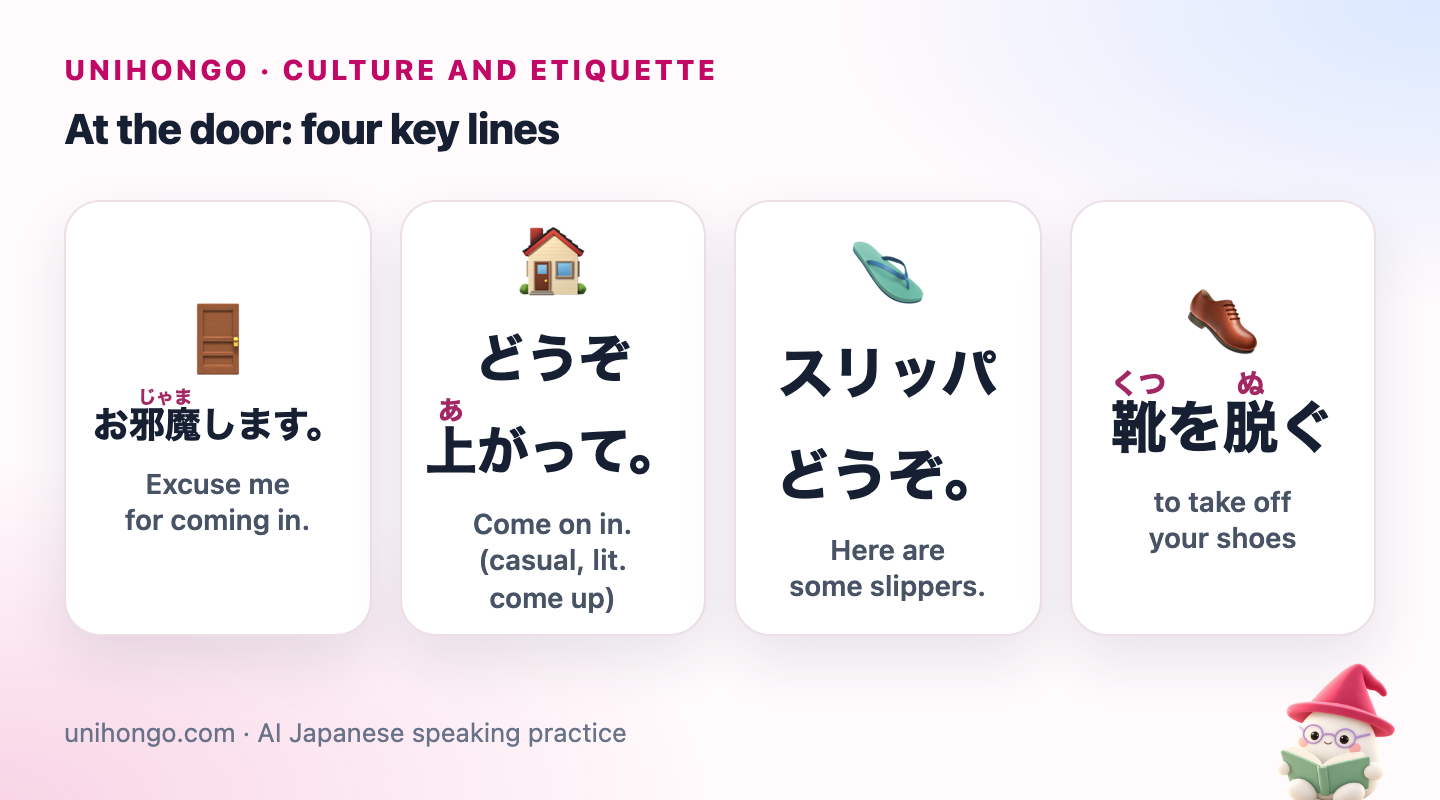
| Japanese | Romaji | Meaning |
|---|---|---|
| お邪魔します。 | Ojama shimasu. | Excuse me for coming in. |
| どうぞ上がって。 | Dōzo agatte. | Come on in. (casual, lit. come up) |
| スリッパどうぞ。 | Surippa dōzo. | Here are some slippers. |
| 靴を脱ぐ | kutsu o nugu | to take off your shoes |
Ojama shimasu literally means I will disturb you. It is not an apology so much as a polite acknowledgement that you are entering someone's private space. You will also hear shitsurei shimasu in more formal visits, such as to a teacher's home or an office.
Why the genkan exists
People explain the genkan in several ways, and they usually overlap. Like many customs, it grew over a long time, and different explanations matter more in different households.
| Japanese | Romaji | Meaning |
|---|---|---|
| 土足禁止 | dosoku kinshi | No outdoor shoes (sign) |
| 畳 | tatami | tatami mat |
| 家の中 | ie no naka | inside the house |
- Clean floors. Shoes carry dust, mud and rain from the street, and keeping them at the door keeps the house cleaner.
- Floors for living. Traditional homes had tatami mats, which are woven straw, and people sat, ate and slept on the floor. Shoes would damage tatami and make the floor feel dirty.
- Climate. Japan's wet seasons and humid summers mean muddy streets, and a raised floor kept the house drier.
- Inside and outside. The step up marks the line between the outside world and the family's own space, an idea Japanese expresses with uchi, inside, and soto, outside.
- A place for short visits. Neighbours, delivery staff and salespeople often talk with you in the genkan without coming up, which keeps the house private.
Why Japanese says come up, not come in
Because the floor of the home is higher than the genkan, entering is literally stepping up. That is why the verb agaru, to go up, means to come into someone's home. A host says dōzo agatte kudasai, and a friend might say agatte, agatte, come in, come in. The same verb appears when someone chats at the door and says they will not come in: genkan de shitsurei shimasu, I'll stay in the entrance, excuse me.
| Japanese | Romaji | Meaning |
|---|---|---|
| どうぞお上がりください。 | Dōzo oagari kudasai. | Please come in. (very polite) |
| ちょっと上がっていく? | Chotto agatte iku? | Want to come in for a bit? (casual) |
| ここで失礼します。 | Koko de shitsurei shimasu. | I'll say goodbye here. (not coming in) |
Step by step: entering a Japanese home
The exact routine varies between families, but this order works almost everywhere. The key is that your socks never touch the genkan floor, which counts as outside.
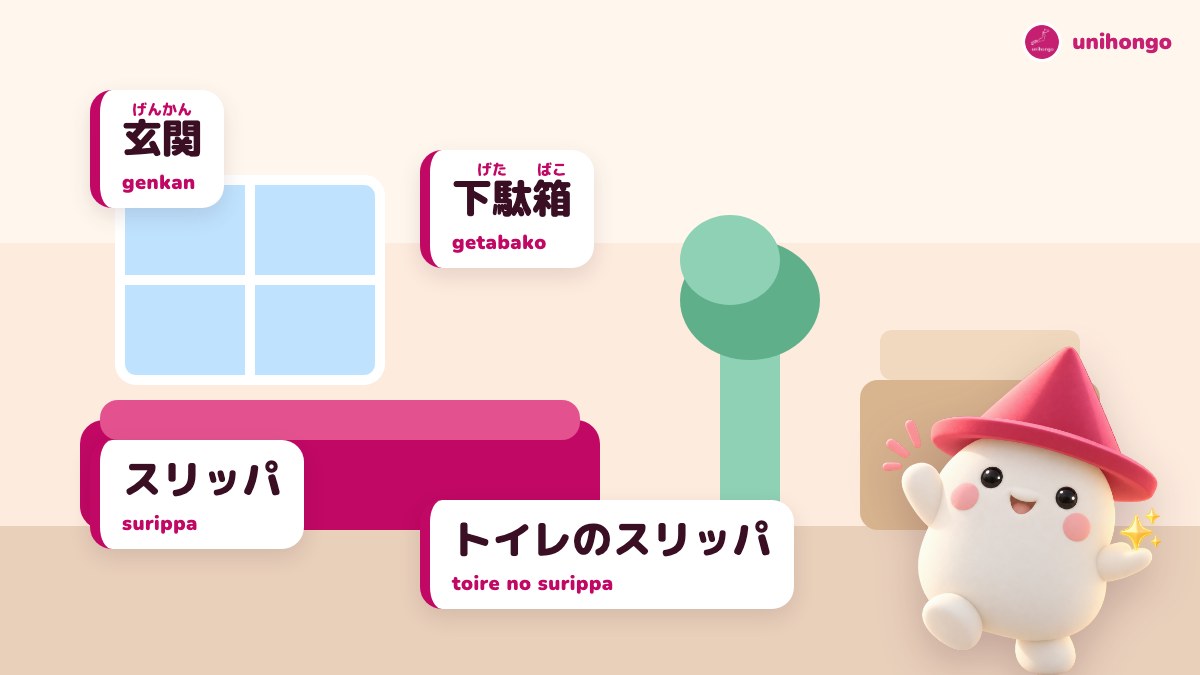
| Japanese | Romaji | Meaning |
|---|---|---|
| 下駄箱 | getabako | shoe cupboard |
| 靴をそろえる | kutsu o soroeru | to line up your shoes neatly |
| トイレのスリッパ | toire no surippa | toilet slippers |
| 靴のままで大丈夫ですよ。 | Kutsu no mama de daijōbu desu yo. | You can keep your shoes on. (sometimes heard) |
- Say ojama shimasu as you enter the genkan.
- Step out of your shoes and onto the raised floor, facing into the house.
- Kneel or crouch and turn your shoes so the toes point toward the door, placed to one side. Many hosts do not mind if you skip this, and some will do it for you, but it is a polite habit.
- Put on the slippers if they are offered.
- Take the slippers off before stepping onto tatami.
- Use the toilet slippers only in the toilet, and leave them there facing the door for the next person.
Your own genkan: deliveries and visitors
If you live in Japan, your genkan becomes the place where you handle deliveries, meter readings and neighbours. Delivery staff usually hand over parcels at the door and do not step up. If you need to sign or stamp something, it happens right there. Keeping a pen near the door is a small, very Japanese habit.
| Japanese | Romaji | Meaning |
|---|---|---|
| はい、今行きます。 | Hai, ima ikimasu. | Coming! (answering the door) |
| ハンコかサインをお願いします。 | Hanko ka sain o onegai shimasu. | Courier: A stamp or a signature, please. |
| ご苦労さまです。 | Gokurōsama desu. | Thank you for your work. (to a courier) |
| お邪魔しました。 | Ojama shimashita. | Thanks for having me. (leaving) |
Gokurōsama desu is often said to delivery workers, but some people feel it sounds like speaking down, because it is traditionally used from a higher position to a lower one. A simple arigatō gozaimasu is always safe.
Leaving: shoes back on and the goodbye
Leaving works in reverse. Hosts often walk you to the genkan and say goodbye there, sometimes waiting until you are out of sight. Step down into your shoes, using the shoehorn if one is offered, then turn and say ojama shimashita with a small bow. The host may answer with a warm invitation to come again.
Apartments, guesthouses and ryokan follow the same idea. In a ryokan, staff may take your shoes at the entrance and store them for you; in a small apartment, the genkan may be one square of tiles, but shoes still stay there.
| Japanese | Romaji | Meaning |
|---|---|---|
| 靴べら、使ってください。 | Kutsubera, tsukatte kudasai. | Host: Use the shoehorn. |
| 今日はありがとうございました。 | Kyō wa arigatō gozaimashita. | Thank you for today. |
| また来てね。 | Mata kite ne. | Host: Come again. (casual) |
| 気をつけて帰ってね。 | Ki o tsukete kaette ne. | Host: Get home safely. (casual) |
Mistakes visitors make
- Stepping onto the genkan tiles in socks after taking shoes off. It brings outside dirt back inside.
- Wearing slippers onto tatami. Leave them at the edge of the tatami room.
- Walking out of the toilet in toilet slippers. It is a classic mistake, and everyone will notice.
- Wearing socks with holes. You will be in socks in front of your hosts, so check before you go.
- Assuming every Japanese building works the same way. Some clinics, schools, temples and restaurants also ask you to remove your shoes, but many shops and offices do not; look for a step, a shoe rack or a dosoku kinshi sign.
Practise the visit before you ring the bell
Visiting a Japanese home is a mix of words and movements, so practise both. Ask Mocchi to /explain the sentence dōzo oagari kudasai and to list the other phrases a host might say before dinner; Mocchi remembers which polite forms you find hard and returns to them in your next review.
Then speak it: in AI Sensei, ask Haru-sensei to play a host who welcomes you at the door, shows you where to put your shoes and offers slippers. Respond out loud, ask where the toilet is, and say goodbye with ojama shimashita at the end.