
The four lines of a polite train nap
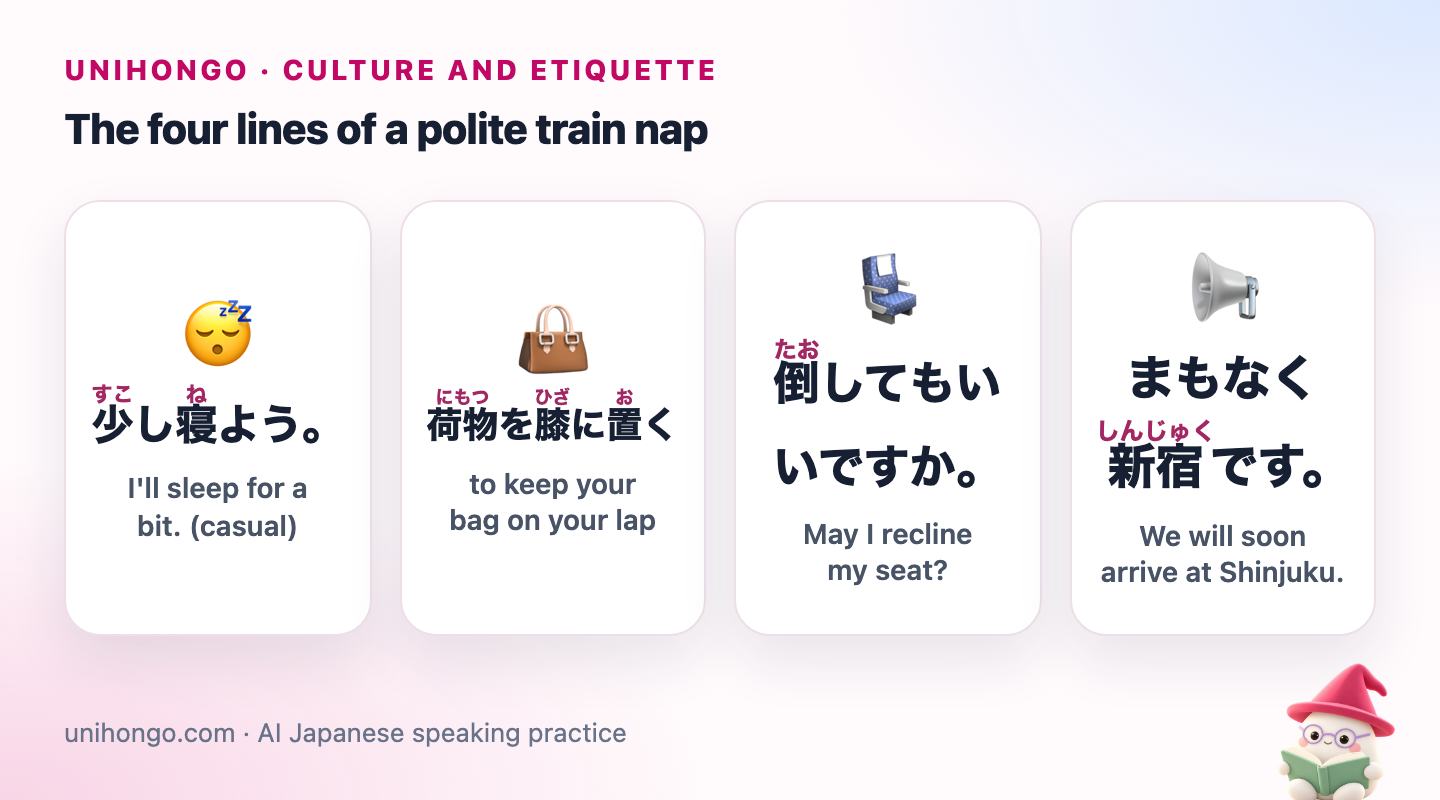
A polite nap on a Japanese train comes down to four things: deciding to sleep, keeping your bag under control, asking before you recline on long-distance trains and catching the announcement before your stop. These lines cover all four.
| Japanese | Romaji | Meaning |
|---|---|---|
| 少し寝よう。 | Sukoshi neyō. | I'll sleep for a bit. (casual) |
| 荷物を膝に置く | nimotsu o hiza ni oku | to keep your bag on your lap |
| 倒してもいいですか。 | Taoshite mo ii desu ka. | May I recline my seat? |
| まもなく新宿です。 | Mamonaku Shinjuku desu. | We will soon arrive at Shinjuku. |
Why people doze on trains: the short version
Researchers and journalists who have looked at Japan's public napping usually point to a mix of practical and social reasons. None explains everything, and plenty of Japanese people never sleep on trains.
| Japanese | Romaji | Meaning |
|---|---|---|
| 通勤が長いんです。 | Tsūkin ga nagai n desu. | My commute is long. |
| 電車の中だとよく眠れる。 | Densha no naka da to yoku nemureru. | I sleep well on trains. (casual) |
| 寝不足です。 | Nebusoku desu. | I haven't had enough sleep. |
- Long commutes. In big cities, an hour or more each way is common for many workers and students.
- Short nights. Busy work and school schedules leave many people tired.
- A calm ride. Trains are smooth, mostly quiet, and stops are announced clearly.
- A feeling of safety. Many people feel comfortable closing their eyes in public.
- Acceptance. Dozing in public is not seen as lazy or embarrassing; some people even read it as a sign of hard work.
Commuter trains: where and how to nap
On commuter trains, the long bench seats along the walls are where most people doze. Sit upright, keep your knees together and your bag on your lap rather than on the seat beside you, and do not stretch your legs into the aisle. If your head drifts onto your neighbour, apologise briefly when you notice; people are usually understanding.
Avoid priority seats if you plan to sleep, because you need to be awake to offer the seat to someone who needs it. And when the train is packed, sleeping while standing and holding a strap is risky; most people only do it leaning against a door they know will not open.
| Japanese | Romaji | Meaning |
|---|---|---|
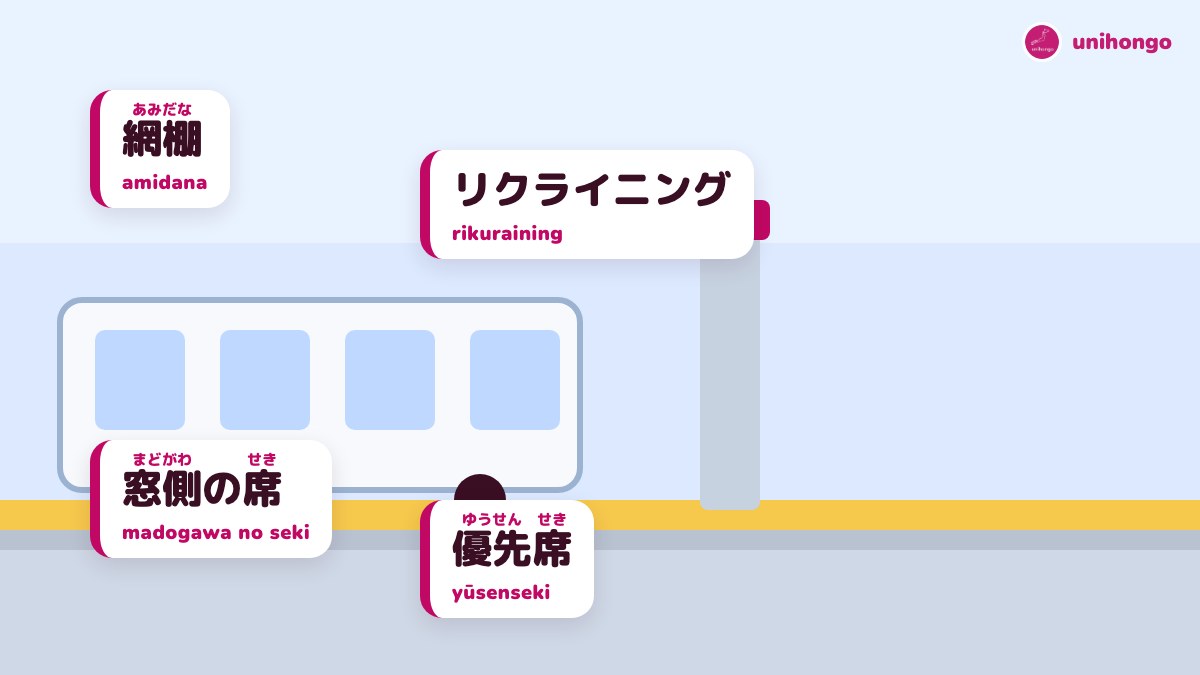
| 優先席 | yūsenseki | priority seat |
| あ、すみません。寄りかかっちゃって。 | A, sumimasen. Yorikakatchatte. | Oh, sorry. I was leaning on you. |
| どうぞ、座ってください。 | Dōzo, suwatte kudasai. | Please, have a seat. |
| 反対側のドアが開きます。 | Hantaigawa no doa ga hirakimasu. | Announcer: Doors on the other side will open. |
Shinkansen and limited express trains
On long-distance trains, sleeping is completely normal and many people nap the whole way. The etiquette is mostly about the seat. Reclining is allowed, but it is polite to glance back, ask briefly and lower the seat slowly, especially when the person behind is eating or using a laptop. Put large bags in the overhead rack or the luggage area, not in the aisle.
If you have the aisle seat and the person at the window is asleep when they need to get out, they will usually wake you with a sumimasen. If you are at the window and your neighbour is asleep, a quiet apology for disturbing their rest is the kind way to pass.
| Japanese | Romaji | Meaning |
|---|---|---|
| シートを倒してもいいですか。 | Shīto o taoshite mo ii desu ka. | May I put my seat back? |
| どうぞ。 | Dōzo. | Go ahead. |
| お休みのところすみません。 | Oyasumi no tokoro sumimasen. | Sorry to disturb your rest. |
| 通していただけますか。 | Tōshite itadakemasu ka. | Could you let me through? (polite) |
| 網棚に荷物を載せる | amidana ni nimotsu o noseru | to put your bag on the overhead rack |
Overnight buses and late trains
Overnight highway buses are designed for sleeping, with curtains, dimmed lights and quiet rules. Phone calls are not allowed, and bus companies have their own rules about reclining and lights, so follow the driver's announcements. Late-night trains are different: they can be crowded and noisy, and people sometimes doze through their stop and miss the last train, so set a vibrating alarm before you close your eyes.
| Japanese | Romaji | Meaning |
|---|---|---|
| アラームをかけておく | arāmu o kakete oku | to set an alarm in advance |
| 消灯します。 | Shōtō shimasu. | Driver: Lights will now go out. |
| 次は終点です。 | Tsugi wa shūten desu. | The next stop is the last stop. |
| 降りる駅を過ぎちゃった。 | Oriru eki o sugichatta. | I went past my stop. (casual) |
Safety and good sense
| Japanese | Romaji | Meaning |
|---|---|---|
| 忘れ物をしました。 | Wasuremono o shimashita. | I left something on the train. |
| 何両目に乗っていましたか。 | Nanryōme ni notte imashita ka. | Staff: Which car were you in? |
- Keep your phone and wallet in an inner pocket or a closed bag on your lap, not in an outer pocket.
- Do not leave a bag on the seat or the rack and fall asleep without an eye on it near your stop.
- Late at night, and after drinking, be more careful; this is when people miss stops or lose things.
- If you lose something, the station staff or the railway company's lost property office can often help.
- If you feel unwell, tell station staff or press the emergency button; staff are trained to help.
Quiet manners around sleeping passengers
Because so many people doze, Japanese trains are generally quiet places, and that quiet is part of what makes napping possible. Phone calls in the carriage are discouraged on most lines, phones are usually set to silent, and conversations are kept low. On commuter trains, eating a full meal is uncommon, though a drink is fine; on the shinkansen and limited express trains, eating a bento at your seat is completely normal.
If you travel with friends or children, keeping your voices down is the single most helpful thing you can do for the people sleeping around you. Headphones should not leak sound, and if you need to take a call, step into the area between carriages.
| Japanese | Romaji | Meaning |
|---|---|---|
| マナーモードにする | manā mōdo ni suru | to set your phone to silent |
| 車内での通話はご遠慮ください。 | Shanai de no tsūwa wa goenryo kudasai. | Announcer: Please refrain from phone calls. |
| ちょっと声が大きいよ。 | Chotto koe ga ōkii yo. | You're a bit loud. (casual, to a friend) |
| デッキで電話してくるね。 | Dekki de denwa shite kuru ne. | I'll take the call between cars. (casual) |
Learner mistakes on sleepy journeys
- Mixing up noru, to get on, and oriru, to get off. Tsugi de orimasu means I'm getting off at the next stop.
- Saying neru, to go to bed, when you mean dozing. For a short nap on a train, people also say utouto suru or sukoshi nemuru.
- Reclining fully and suddenly on the shinkansen. Ask, then lower slowly.
- Spreading out on a bench seat. Keep your bag and legs within your own space.
- Missing mamonaku. It comes just before the station name, so it is your cue to wake up.
Wake up to your stop, in Japanese
The words that matter most on a train are the ones you hear half asleep. Ask Mocchi for /vocab train announcements, and Mocchi will build a short list of the lines you heard in this post, quiz you on them and keep track of the ones you miss; turn the hardest ones into a deck with /create-flashcards.
Then play Listen & Pick on the games page with those cards, so that mamonaku, tsugi wa and shūten become sounds your brain reacts to even when your eyes are closed.