
Four sentences that cover most situations
Every allergy conversation starts with the same building blocks. Arerugī ga arimasu says that you have one. Putting a noun in front names the cause: tamago arerugī (egg allergy), soba arerugī (buckwheat allergy). For medicine, add no: kusuri no arerugī.
The fourth line below is the one learners forget: how serious it is. In a restaurant or a doctor's office, seriousness changes what people do.
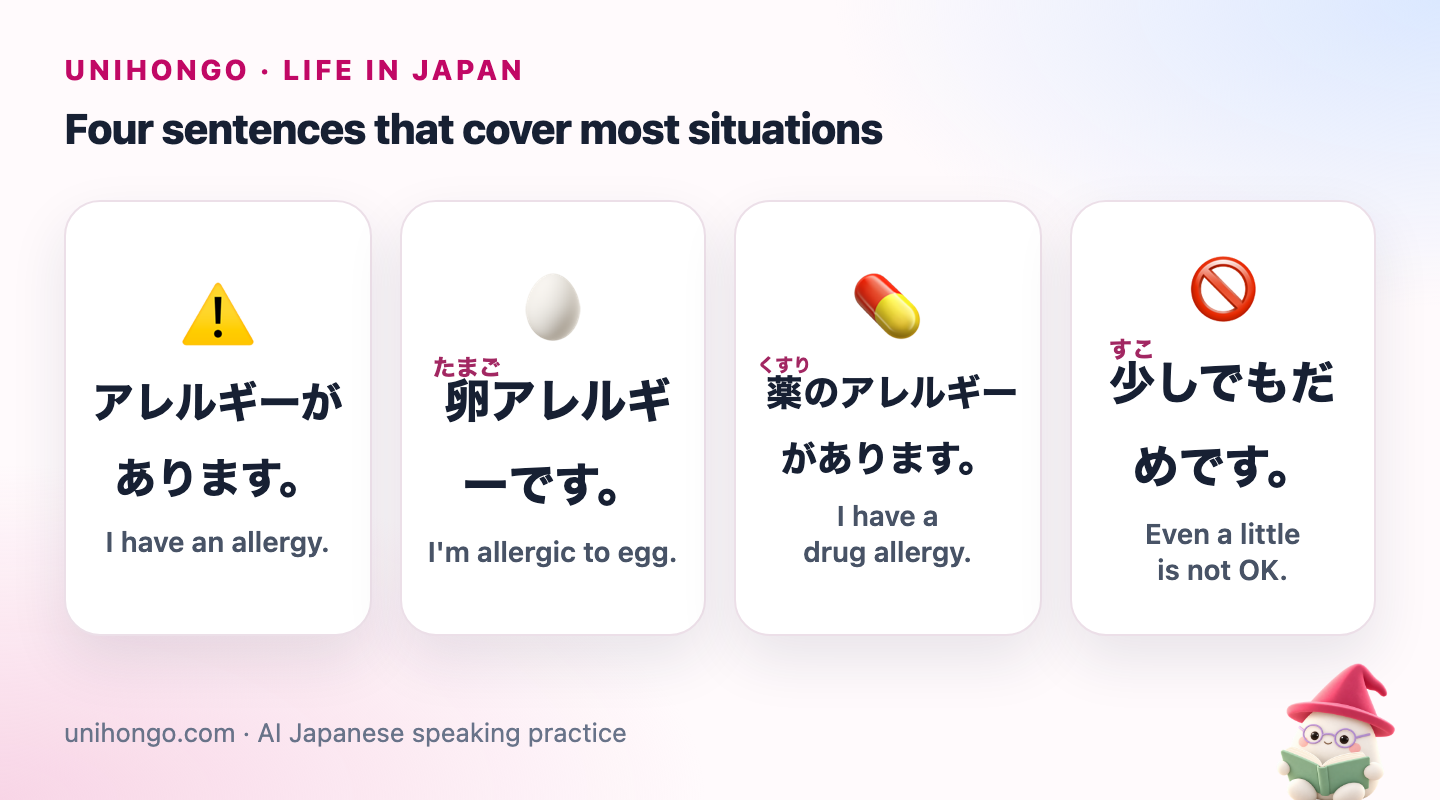
| Japanese | Romaji | Meaning |
|---|---|---|
| アレルギーがあります。 | Arerugī ga arimasu. | I have an allergy. |
| 卵アレルギーです。 | Tamago arerugī desu. | I'm allergic to egg. |
| 薬のアレルギーがあります。 | Kusuri no arerugī ga arimasu. | I have a drug allergy. |
| 少しでもだめです。 | Sukoshi demo dame desu. | Even a little is not OK. |
| 食べると息が苦しくなります。 | Taberu to iki ga kurushiku narimasu. | When I eat it, I can't breathe well. |
Naming the allergen and the reaction
Use the plain noun for the food or substance. The list below covers the allergens you see most on Japanese labels, plus two non-food ones that matter at clinics. Then describe the reaction in simple terms: hives, swelling, itching, trouble breathing. Doctors and staff want the reaction, because it tells them how careful to be.
| Japanese | Romaji | Meaning |
|---|---|---|
| 小麦 | komugi | wheat |
| 乳製品 | nyūseihin | dairy products |
| そば | soba | buckwheat |
| 落花生 | rakkasei | peanuts (written on labels) |
| えびとかに | ebi to kani | shrimp and crab |
| 金属 | kinzoku | metal (for dental work, jewellery) |
| じんましんが出ます。 | Jinmashin ga demasu. | I get hives. |
| 口の中がかゆくなります。 | Kuchi no naka ga kayuku narimasu. | The inside of my mouth gets itchy. |
| アナフィラキシーを起こしたことがあります。 | Anafirakishī o okoshita koto ga arimasu. | I've had anaphylaxis before. |
| 自己注射薬を持っています。 | Jiko chūshayaku o motte imasu. | I carry an adrenaline auto-injector. |
In speech, peanuts are usually pīnattsu; rakkasei is the word printed on labels, so know both. Many people also say the brand name of their auto-injector, which staff generally recognise.
At the clinic: drug allergies and your history
Before prescribing, a doctor or the clinic questionnaire asks about drug allergies, often next to a question about current medicine. If you have ever reacted to a medicine, name it if you know it, say what happened and roughly when. If you do not know the name, say that, and show any document you have; a photo of an old prescription label can help.
Pharmacists in Japan often ask again when they hand over medicine, and many keep a record in your okusuri techō (お薬手帳), the small medicine notebook. Writing your drug allergy inside its cover is a simple habit that helps every future visit.
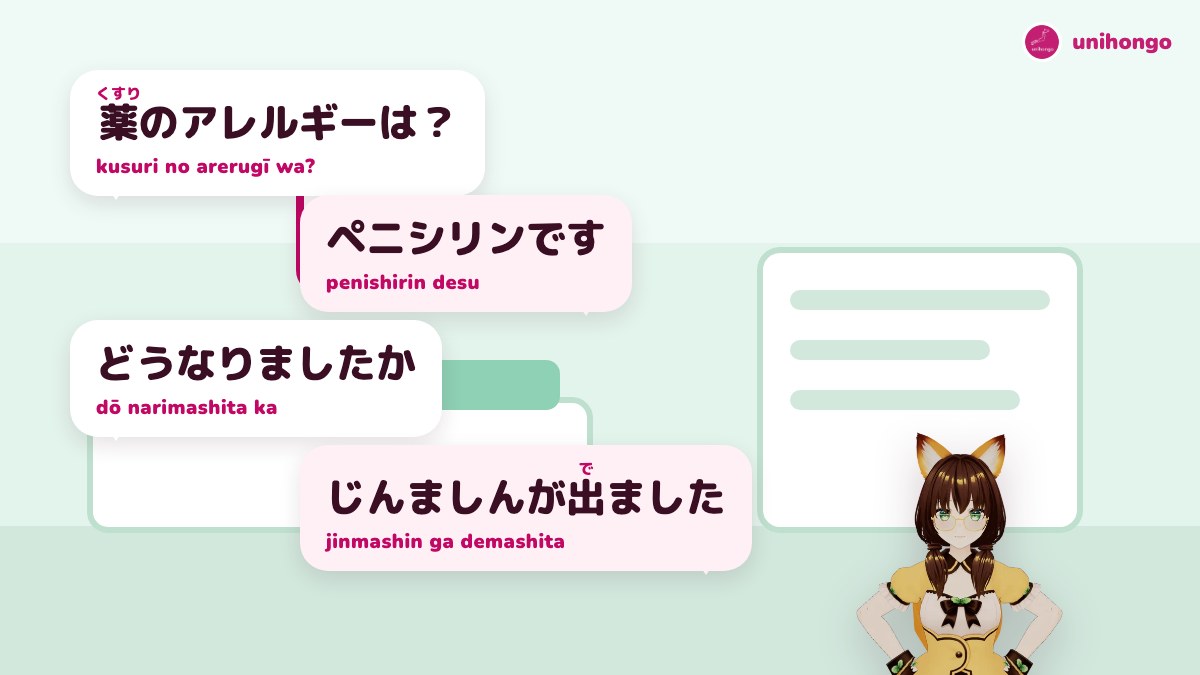
| Japanese | Romaji | Meaning |
|---|---|---|
| 薬のアレルギーはありますか。 | Kusuri no arerugī wa arimasu ka. | Doctor: Do you have any drug allergies? |
| ペニシリンでじんましんが出ました。 | Penishirin de jinmashin ga demashita. | You: Penicillin gave me hives. |
| いつごろですか。 | Itsugoro desu ka. | Doctor: Roughly when was that? |
| 五年ぐらい前です。 | Gonen gurai mae desu. | You: About five years ago. |
| 薬の名前は分かりません。 | Kusuri no namae wa wakarimasen. | You: I don't know the name of the drug. |
| これが前の処方箋の写真です。 | Kore ga mae no shohōsen no shashin desu. | You: This is a photo of the old prescription. |
| では、別の薬にしましょう。 | Dewa, betsu no kusuri ni shimashō. | Doctor: Then let's use a different medicine. |
Hay fever season: the words everyone uses
From around February, kafunshō (hay fever) becomes daily small talk in much of Japan. Weather reports include pollen forecasts, colleagues compare symptoms, and masks and eye drops sell fast. Cedar pollen, sugi, is the classic trigger, followed in many areas by cypress, hinoki. Timing and severity vary by region and year.
These phrases work at a pharmacy, at a clinic, or simply when a coworker asks why your eyes are red.
| Japanese | Romaji | Meaning |
|---|---|---|
| 花粉症です。 | Kafunshō desu. | I have hay fever. |
| くしゃみと鼻水が止まりません。 | Kushami to hanamizu ga tomarimasen. | I can't stop sneezing and my nose is running. |
| 今日は花粉がすごいですね。 | Kyō wa kafun ga sugoi desu ne. | The pollen is terrible today, isn't it. |
| 眠くならない薬はありますか。 | Nemuku naranai kusuri wa arimasu ka. | Is there a medicine that won't make me drowsy? |
| スギ花粉がひどい時期です。 | Sugi kafun ga hidoi jiki desu. | It's the worst time for cedar pollen. |
Reading アレルギー表示 on packaged food
Packaged food sold in Japan lists allergens as part of the ingredients. A common format is a bracket at the end of the list: (一部に小麦・卵・乳成分を含む), which means contains, in part, wheat, egg and milk components. Some products list the allergen after each ingredient instead, and many add a separate box or a note about shared factory lines.
The rules distinguish between allergens that must be labelled and a longer list that is only recommended. The required list is short and has been expanded over the years, so check the current list from the Consumer Affairs Agency if you rely on it. Products made and sold on the spot, such as bread from an in-store bakery or a restaurant meal, are generally outside these rules.
| Japanese | Romaji | Meaning |
|---|---|---|
| 一部に小麦・卵を含む | ichibu ni komugi, tamago o fukumu | contains wheat and egg (in part) |
| 乳成分 | nyū seibun | milk components |
| 原材料名 | genzairyō mei | ingredients (label heading) |
| これに卵は入っていますか。 | Kore ni tamago wa haitte imasu ka. | Does this contain egg? |
| What you see | What it means | What to do |
|---|---|---|
| 一部に…を含む | Contains these allergens in part | Check whether your allergen is in the list |
| 同じ工場で…を含む製品を製造 | Made in a factory that also handles them | A cross-contact warning; decide by your own risk |
| Allergen not listed | Not a required item, or genuinely absent | For non-required allergens, ask the maker |
| No label at all | Often made in store | Ask staff, and be cautious |
Restaurants: the short version
Other guides cover restaurant allergies in depth, so here is the minimum. Say the allergen first, say it is an allergy and not a preference, and ask about hidden sources, such as dashi, sauces and shared frying oil. If the answer sounds unsure, it is reasonable to choose something simpler or leave politely.
| Japanese | Romaji | Meaning |
|---|---|---|
| そばアレルギーがあります。 | Soba arerugī ga arimasu. | I have a buckwheat allergy. |
| 同じ油で揚げていますか。 | Onaji abura de agete imasu ka. | Do you fry it in the same oil? |
| アレルギー表はありますか。 | Arerugī hyō wa arimasu ka. | Do you have an allergen chart? |
| 分からなければ大丈夫です。 | Wakaranakereba daijōbu desu. | If you're not sure, that's fine, I'll skip it. |
Common learner mistakes
- Saying kirai desu (I dislike it) or nigate desu when you mean an allergy. Staff hear a preference and may not check the kitchen carefully.
- Naming a category such as nuts or seafood. Japanese labels and staff think in specific items: rakkasei, kurumi, ebi, kani. Name the exact item.
- Forgetting that soy sauce contains wheat. Shōyu usually contains komugi, which matters for a wheat allergy.
- Assuming no label means no allergen. Food made in store may simply be unlabelled.
- Not telling the dentist about a metal allergy. Kinzoku arerugī ga arimasu takes two seconds and matters for fillings.
Turn your allergy into words you can say quickly
Write your allergy statement in English and ask Mocchi to Help me say this clearly in polite Japanese for a doctor and for a restaurant. Mocchi gives you both versions, explains why the wording differs, and remembers your allergy, so later practice can include it. Then make a card with /create-flashcards for each allergen word you need to recognise on labels.
When you are ready to say it out loud, pick Sakura-sensei in AI Sensei and the dietary needs topic, and ask Sakura-sensei to play a server who is not sure about the ingredients. Practise staying clear and polite when the answer is vague.