
Omiyage in four words
Omiyage talk uses a small set of words that appear on every box and in every conversation about it. Learn these four first.
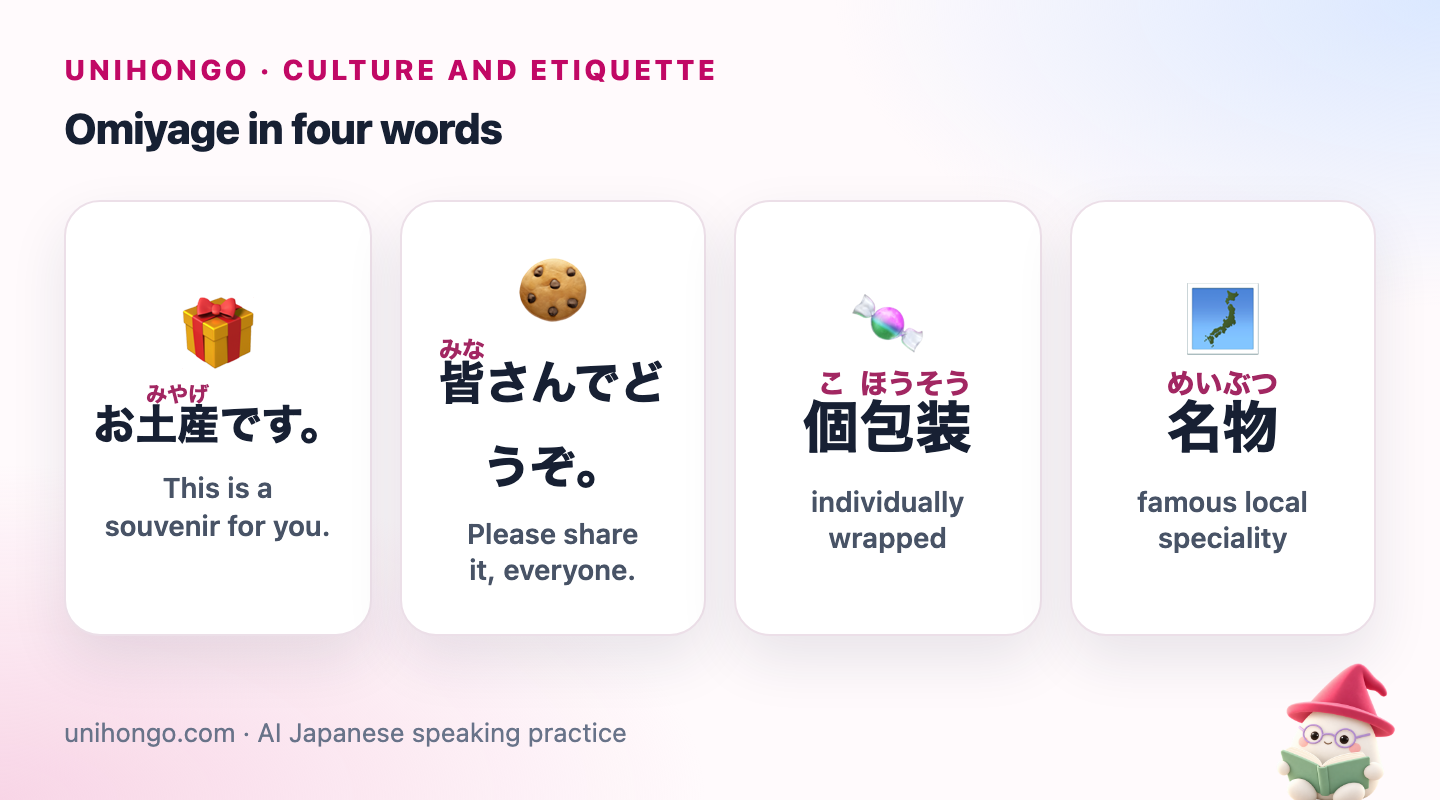
| Japanese | Romaji | Meaning |
|---|---|---|
| お土産です。 | Omiyage desu. | This is a souvenir for you. |
| 皆さんでどうぞ。 | Minasan de dōzo. | Please share it, everyone. |
| 個包装 | kohōsō | individually wrapped |
| 名物 | meibutsu | famous local speciality |
Why omiyage matters: the reasons people give
Ask Japanese friends why they buy omiyage and you will hear several answers. Most people give a mix of these.
| Japanese | Romaji | Meaning |
|---|---|---|
| 休みの間、ありがとうございました。 | Yasumi no aida, arigatō gozaimashita. | Thank you for covering while I was off. |
| ご迷惑をおかけしました。 | Gomeiwaku o okake shimashita. | Sorry for the extra trouble. |
- Thanks for covering. When you take time off, colleagues handle your work, and omiyage says thank you and sorry for the bother.
- Sharing the trip. Local sweets let people taste a little of where you went and give everyone something to chat about.
- Keeping relationships smooth. Small regular gifts are part of maintaining good ties with neighbours, relatives and coworkers.
- Habit and expectation. In many workplaces it is simply what people do, and coming back empty-handed can feel awkward.
A common historical explanation links omiyage to old pilgrimages, especially to the Ise Shrine. Villagers often pooled money to send a representative, who brought back charms and local goods for everyone who had contributed. Historians describe the details in different ways, but the idea of bringing something back for the people who stayed behind fits modern omiyage well.
What makes a good omiyage
Station and airport shops are full of boxes designed for exactly this purpose, and they share a few features. Keep them in mind whether you are buying in Japan or bringing something from abroad.
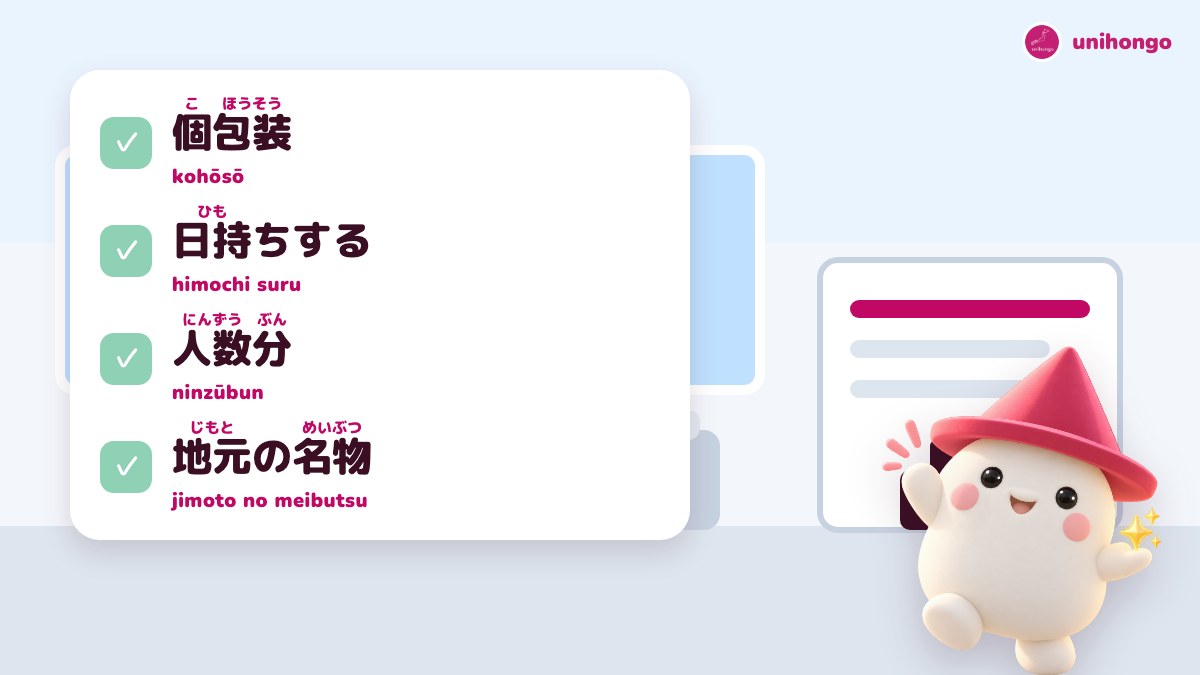
| Japanese | Romaji | Meaning |
|---|---|---|
| 日持ちしますか。 | Himochi shimasu ka. | Does it keep for a while? |
| 何個入りですか。 | Nanko iri desu ka. | How many are in the box? |
| 賞味期限はいつまでですか。 | Shōmi kigen wa itsu made desu ka. | When is the best-before date? |
| 地域限定 | chiiki gentei | only sold in this region |
| 紙袋をもう一枚いただけますか。 | Kamibukuro o mō ichimai itadakemasu ka. | Could I have an extra paper bag? |
- Individually wrapped, so people can take one and eat it later at their desk.
- Keeps well for at least a week or two, because not everyone is in the office every day.
- Enough pieces for everyone, with a few spare; counting heads before you buy is normal.
- Clearly from the place you visited, ideally with the place name on the box.
- Not too expensive. A modest price keeps the gift light for the receivers.
Bringing omiyage to Japan from abroad
If you are visiting a host family, a language exchange partner or new colleagues, bringing something from your home country is a kind gesture and a great conversation starter. The same principles apply: easy to share, typical of your home, not too costly. Biscuits, chocolates, tea, coffee and local sweets travel well. Check customs rules for food, especially meat and fresh produce, and keep the box in your hand luggage so it arrives intact.
When you hand it over, a few words about it make it special: what it is, where it comes from, how people eat it at home. That turns a box of biscuits into a little introduction to your country.
| Japanese | Romaji | Meaning |
|---|---|---|
| 私の国のお菓子です。 | Watashi no kuni no okashi desu. | These are sweets from my country. |
| 地元で有名なんです。 | Jimoto de yūmei nan desu. | It's famous where I'm from. |
| お口に合うといいんですが。 | Okuchi ni au to ii n desu ga. | I hope you like it. |
| よかったら、どうぞ。 | Yokattara, dōzo. | Here, if you'd like it. |
You may hear the old phrase tsumaranai mono desu ga, it's nothing much, but. It is still used, especially by older people, though many people now find it overly modest and prefer okuchi ni au to ii n desu ga or a simple yokattara dōzo.
Temiyage: a gift when you visit
Omiyage is brought back from a trip, but there is a close relative you need even without travelling: temiyage, a small gift you bring when you visit someone's home or call on a business contact. A box of sweets from a well-known shop, fruit, or something from your home country all work. Many people buy it near the place they are visiting so it is fresh, though some hosts prefer something from your own area because it is more personal.
Hand it over after the greetings, usually once you are inside, taking it out of the shop bag first; the bag is then folded and kept or offered to the host to use.
| Japanese | Romaji | Meaning |
|---|---|---|
| 手土産 | temiyage | a small gift you bring on a visit |
| ささやかですが…。 | Sasayaka desu ga…. | It's only something small, but… |
| 皆さんで召し上がってください。 | Minasan de meshiagatte kudasai. | Please enjoy it together. (polite) |
Things that are usually avoided
- Very expensive gifts, which can create pressure to give something of equal value back.
- Food that spoils quickly or needs a fridge, for a shared office box.
- Large single items that cannot be divided among a group.
- Sets of four, for some older or traditional people, because shi, four, sounds like death. Many people do not mind, but it is easy to avoid.
- Strong-smelling food for an office, since it will sit on a shared desk.
Giving and receiving: a short exchange
At work, many people leave the box in a shared space with a note, or hand it to the nearest colleague and announce it. With a host family or a friend, hand it over with both hands, usually after the first greetings rather than at the door the moment you arrive.
| Japanese | Romaji | Meaning |
|---|---|---|
| これ、旅行のお土産です。皆さんでどうぞ。 | Kore, ryokō no omiyage desu. Minasan de dōzo. | You: A souvenir from my trip. Please share. |
| わあ、ありがとうございます。どこに行ったんですか。 | Wā, arigatō gozaimasu. Doko ni itta n desu ka. | Coworker: Oh, thank you. Where did you go? |
| 北海道です。 | Hokkaidō desu. | You: Hokkaido. |
| 気を遣わなくていいのに。 | Ki o tsukawanakute ii noni. | Host: You didn't have to. (warm, casual) |
| ありがたくいただきます。 | Arigataku itadakimasu. | I'll gratefully accept it. |
When someone brings omiyage to your office
If you work in a Japanese office, you will be on the receiving end often. The box usually sits on a shared table or is passed around. Take one piece, thank the person who brought it, and ask a question about their trip. Saying gochisōsama deshita after eating it is a nice touch, and the trip is an easy topic for a few minutes of small talk.
| Japanese | Romaji | Meaning |
|---|---|---|
| お土産、いただきます。 | Omiyage, itadakimasu. | Thanks, I'll have one of the souvenirs. |
| 旅行、どうでしたか。 | Ryokō, dō deshita ka. | How was your trip? |
| ごちそうさまでした。おいしかったです。 | Gochisōsama deshita. Oishikatta desu. | Thanks, it was delicious. |
Rehearse the hand-over
Omiyage conversations are short, but they always lead to questions: where did you go, what is this, how do you eat it. Ask Mocchi to help you prepare: try /kaiwa giving omiyage from my home town, and Mocchi will suggest a speaking scene and point out two or three words you will need to describe your gift.
Then open AI Sensei, pick Sakura-sensei and ask the Sensei to play your host mother on the day you arrive. Hand over your omiyage, explain where it is from, and answer the family's questions about your home; the session report will show which descriptions came out naturally and which need another try.