
What thirty days can do, and the plan week by week
Start with the honest version, because it decides what you study. In a month of twenty-minute days you can make about sixty phrases automatic, learn to hear the replies they usually get, and learn to read one script plus a handful of signs. You cannot learn to understand a stranger's full sentence, hold a conversation about anything you did not prepare, or read a newspaper. The good news is that a trip needs the first list and not the second.
Here is what a traveller with this month behind them does on an ordinary day: greets the hotel staff, buys a coffee and specifies hot, buys a train ticket or taps a card and finds the right platform, orders lunch by pointing and asks for the bill, asks a passer-by where the station is and understands the pointing that comes back, says thank you in the right form, and handles a lost item or a wrong train with two phrases and a calm face. That is the target. Everything in the plan serves it, and everything that does not serve it is postponed.
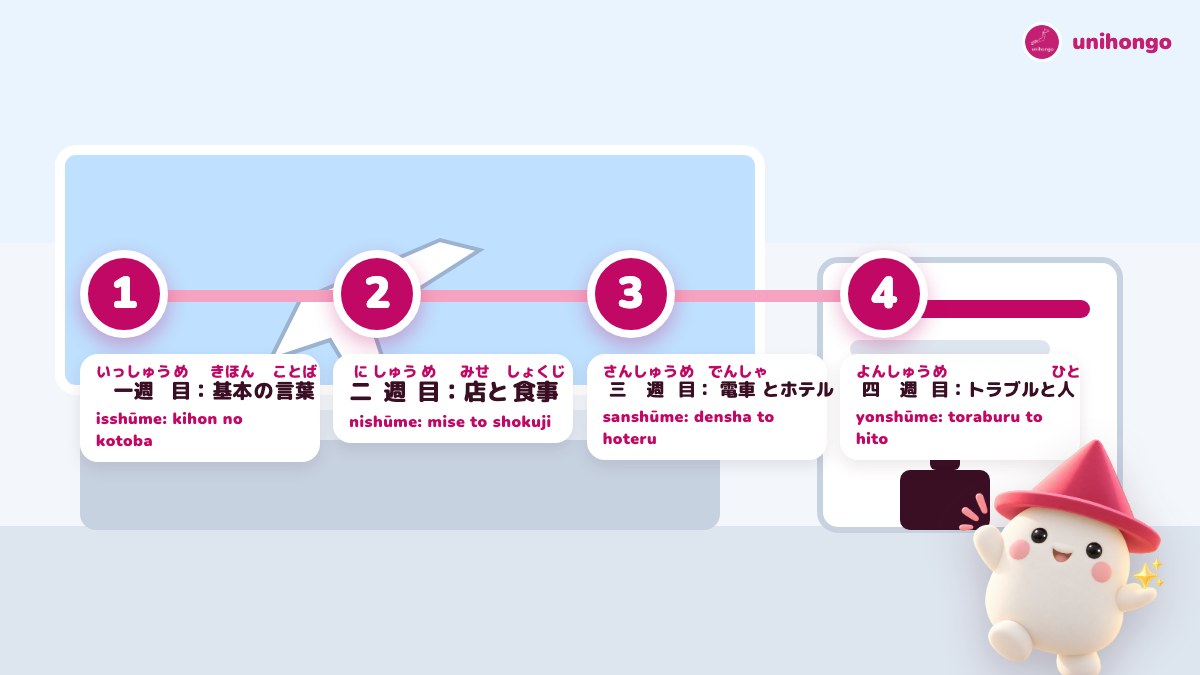
Each week of the plan has one theme, about fifteen phrases, and a scene to rehearse. The themes are ordered by how often you will need them: the sounds of week one are in every exchange, the shop phrases of week two happen several times a day, trains and hotels come in week three, and the fourth week handles the things that happen once and reviews everything.
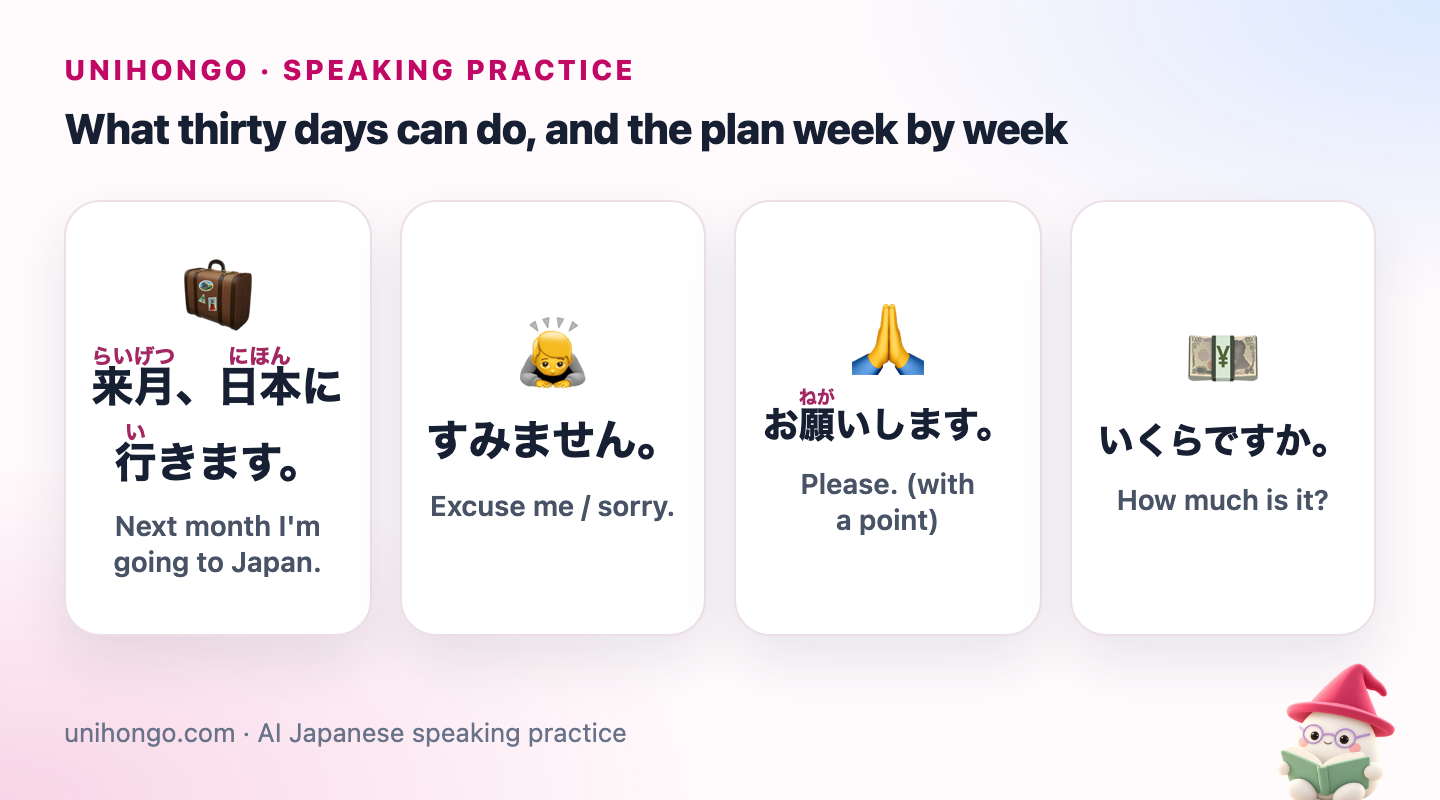
| Japanese | Romaji | Meaning |
|---|---|---|
| 来月、日本に行きます。 | Raigetsu, Nihon ni ikimasu. | Next month I'm going to Japan. |
| すみません。 | Sumimasen. | Excuse me / sorry. |
| お願いします。 | Onegai shimasu. | Please. (with a point) |
| いくらですか。 | Ikura desu ka. | How much is it? |
| 駅はどこですか。 | Eki wa doko desu ka. | Where is the station? |
| Week | Theme | Scene to rehearse | Also this week |
|---|---|---|---|
| 1 | Survival sounds, numbers, yes and no, politeness | Buying one thing at a convenience store | Katakana, days 1 to 7 |
| 2 | Shops, cafés and restaurants | The whole café visit from door to bill | Ten kanji signs |
| 3 | Trains, directions, the hotel desk | Asking the way and finding the platform | Times and dates |
| 4 | Trouble, people, saying goodbye, and review | A lost item at a station office | All sixty, said in one sitting |
If your trip is shorter than a month away, cut from the end: do weeks one and two fully and take the most useful five phrases from each of weeks three and four. If it is longer, do not add grammar; add listening to the replies.
Week one: the sounds that do most of the work
Week one is small words said thousands of times. Sumimasen opens every exchange, onegai shimasu closes every request, and the pair of them with a point will get you through more of Japan than any grammar. Add the numbers, the three thank-yous and the two words for yes and no, and spend the rest of the week on katakana, because the next three weeks' menus and signs are written in it.
| Japanese | Romaji | Meaning |
|---|---|---|
| ありがとうございます。 | Arigatō gozaimasu. | Thank you. (polite, standard) |
| はい。 | Hai. | Yes. |
| いいえ。 | Iie. | No. |
| 大丈夫です。 | Daijōbu desu. | I'm fine / no thank you. |
| これをください。 | Kore o kudasai. | This one, please. |
| 分かりません。 | Wakarimasen. | I don't understand. |
| 英語は話せますか。 | Eigo wa hanasemasu ka. | Do you speak English? |
| トイレはどこですか。 | Toire wa doko desu ka. | Where is the toilet? |
| 一つ、二つ、三つ | hitotsu, futatsu, mittsu | one, two, three (things) |
| 千円 | sen'en | a thousand yen |
| こんにちは。 | Konnichiwa. | Hello. (daytime) |
| おはようございます。 | Ohayō gozaimasu. | Good morning. |
| すみません、もう一度お願いします。 | Sumimasen, mō ichido onegai shimasu. | Sorry, one more time please. |
| ゆっくりお願いします。 | Yukkuri onegai shimasu. | Slowly, please. |
Daijōbu desu is the traveller's polite no: no bag, no receipt, no upsell. Hitotsu, futatsu, mittsu are the general counters that work for almost anything you point at. And eigo wa hanasemasu ka is worth knowing but worth using last; staff who are asked in Japanese first will often slow their Japanese down, which teaches you more than their English.
Week two: shops, cafés and restaurants
Week two is the transaction. A convenience store, a café counter and a small restaurant each ask the same three or four questions, and this week you learn both your lines and theirs. Rehearse the whole café visit as one scene, door to bill, every day of the week; by Sunday it should take you no thought at all.
| Japanese | Romaji | Meaning |
|---|---|---|
| 一人です。 | Hitori desu. | Just one person. |
| これをお願いします。 | Kore o onegai shimasu. | This one, please. (pointing at a menu) |
| 以上です。 | Ijō desu. | That's all. |
| お会計お願いします。 | Okaikei onegai shimasu. | The bill, please. |
| カードで。 | Kādo de. | By card. |
| 袋はいりますか。 | Fukuro wa irimasu ka. | Staff: Do you need a bag? |
| 袋、お願いします。 | Fukuro, onegai shimasu. | A bag, please. |
| 温めますか。 | Atatamemasu ka. | Staff: Shall I heat it up? |
| ホットで。 | Hotto de. | Hot, please. (a drink) |
| 持ち帰りで。 | Mochikaeri de. | Takeaway, please. |
| おすすめは何ですか。 | Osusume wa nan desu ka. | What do you recommend? |
| お水をください。 | Omizu o kudasai. | Water, please. |
| アレルギーがあります。卵です。 | Arerugī ga arimasu. Tamago desu. | I have an allergy. Eggs. |
| ごちそうさまでした。 | Gochisōsama deshita. | Thank you for the meal. |
The two staff lines, about the bag and about heating, are the convenience-store questions that catch every traveller on the first day. Learn them as sounds so that you hear them coming. De after a noun, as in kādo de, hotto de, mochikaeri de, is the traveller's all-purpose way to specify an option without a verb.
Week three: trains, directions and the hotel desk
Week three takes you between places. The phrases are few, but the replies are the hardest of the month, because directions come back as a stream of lefts, rights and landmarks. So this week is half speaking and half listening: learn migi, hidari and massugu as sounds you can catch from a fast reply, and practise checking a platform or a train with a yes-no question that gets a hai or an iie rather than an explanation.
| Japanese | Romaji | Meaning |
|---|---|---|
| この電車は新宿に行きますか。 | Kono densha wa Shinjuku ni ikimasu ka. | Does this train go to Shinjuku? |
| 何番線ですか。 | Nanbansen desu ka. | Which platform? |
| 東京までいくらですか。 | Tōkyō made ikura desu ka. | How much to Tokyo? |
| まっすぐ | massugu | straight on |
| 右 | migi | right |
| 左 | hidari | left |
| 近いですか。 | Chikai desu ka. | Is it near? |
| 歩いて何分ですか。 | Aruite nanpun desu ka. | How many minutes on foot? |
| チェックインをお願いします。 | Chekkuin o onegai shimasu. | Check-in, please. |
| 予約しています。スミスです。 | Yoyaku shite imasu. Sumisu desu. | I have a reservation. Smith. |
| 荷物を預かってもらえますか。 | Nimotsu o azukatte moraemasu ka. | Could you keep my luggage? |
| 朝食は何時ですか。 | Chōshoku wa nanji desu ka. | What time is breakfast? |
| Wi-Fiのパスワードは? | Waifai no pasuwādo wa? | The Wi-Fi password? |
| タクシーを呼んでください。 | Takushī o yonde kudasai. | Please call a taxi. |
Ask directions in a form that can be answered by pointing: eki wa doko desu ka plus an expectant look gets a gesture and a massugu, which you can follow. Asking how to get somewhere invites a route you cannot follow. At the hotel desk, your booking name in katakana syllables and the word yoyaku do most of the work; staff at hotels used to foreign guests will switch to English, and it is fine to let them.
Week four: trouble, people, and saying goodbye
The last week covers the things that happen once, and matters more than its size suggests, because a small problem handled calmly in Japanese is the memory travellers keep. It also adds the people phrases: what you say when someone is kind, when you want a photo, when you leave a guesthouse. Then the whole sixty are reviewed in one sitting on the last day.
| Japanese | Romaji | Meaning |
|---|---|---|
| 道に迷いました。 | Michi ni mayoimashita. | I'm lost. |
| 財布をなくしました。 | Saifu o nakushimashita. | I've lost my wallet. |
| 助けてください。 | Tasukete kudasai. | Please help me. |
| 病院はどこですか。 | Byōin wa doko desu ka. | Where is a hospital? |
| お腹が痛いです。 | Onaka ga itai desu. | My stomach hurts. |
| 写真を撮ってもいいですか。 | Shashin o totte mo ii desu ka. | May I take a photo? |
| 写真を撮ってもらえますか。 | Shashin o totte moraemasu ka. | Could you take a photo of us? |
| きれいですね。 | Kirei desu ne. | It's beautiful. |
| 美味しいです。 | Oishii desu. | It's delicious. |
| 日本は初めてです。 | Nihon wa hajimete desu. | It's my first time in Japan. |
| カナダから来ました。 | Kanada kara kimashita. | I'm from Canada. |
| 楽しかったです。 | Tanoshikatta desu. | It was fun. (said when leaving) |
| お世話になりました。 | Osewa ni narimashita. | Thank you for everything. (to a host) |
| また来ます。 | Mata kimasu. | I'll come again. |
Osewa ni narimashita is the line for a guesthouse host, a homestay family or anyone who looked after you; said with a bow at the door, it is the most Japanese thing a visitor can say. Shashin o totte mo ii desu ka should be used before photographing people, shop interiors and anything in a temple that looks like it might be off limits, because it often is.
The daily twenty minutes
The plan works only if the phrases are said aloud, every day, with the body involved. Reading a list makes you recognise phrases; saying them with a point, a nod or a bow makes them available under pressure, which is the only condition that matters in a shop. Split the block into three parts and keep each one short.
| Part | What you do | Why |
|---|---|---|
| Say ten | Read the day's ten phrases aloud five times each, with the gesture that goes with them | Builds the automatic version your mouth needs |
| Listen to five | Play five phrases or staff lines, shadow each one twice, eyes closed | Trains you to hear the reply before you can translate it |
| Run one scene | Perform the week's scene from start to finish aloud, both roles | Links the phrases into the order you will need them |
Sunday is review: say the previous weeks' phrases in one sitting, and anything that stalls goes back on Monday's ten. By week four this review is the whole sixty, and saying them in one go without a list is the sign that you are ready.
What to skip until after the trip
The hardest part of a thirty-day plan is leaving things out. Everything below is worth learning and none of it serves a first trip, so it waits. The exception is the short list of signs, which takes one evening and pays for itself at every station.
| Japanese | Romaji | Meaning |
|---|---|---|
| 出口 | deguchi | exit |
| 入口 | iriguchi | entrance |
| 駅 | eki | station |
| 円 | en | yen |
| 男 | otoko | men (toilet sign) |
| 女 | onna | women (toilet sign) |
| 営業中 | eigyōchū | open (sign on a shop door) |
| 準備中 | junbichū | closed, preparing (same sign, other side) |
- Verb conjugation tables. The sixty phrases contain every form you need, already conjugated.
- Keigo and humble forms. You will hear them from staff; you will not need to produce any.
- Counters beyond hitotsu, futatsu, mittsu and the people counter. Pointing plus a general counter works everywhere.
- Kanji beyond the signs above. Menus with pictures and station signs in Latin letters cover a first trip.
- Hiragana, if the month is tight. Katakana reads menus and shop names; hiragana can be the first thing you learn when you get home.
- Casual speech. Everyone you meet on a trip is a stranger, and polite form is right for all of them.
What the first day honestly feels like
With this month behind you, landing feels like this: the airport is in English and you are briefly disappointed. Then the first convenience store asks fukuro wa irimasu ka, you hear it, you answer daijōbu desu, and the clerk does not blink. That moment is worth the month. The café goes to plan because you rehearsed it twenty times. The station is harder; you ask for a platform, hear a number, and stand on it, not entirely sure, until the train with the right name arrives.
You will also meet the limits. A friendly stranger will ask you something beyond the sixty and you will smile and say wakarimasen, and it will be fine. An announcement will be long and you will understand one word of it. None of that is failure; it is the exact shape of what thirty days buys, and most travellers come home wanting the next sixty phrases. That is the moment to learn hiragana and start on grammar, with a reason that is now personal.
Let the month plan itself around your dates
The plan above is general; yours has a departure date and a particular set of worries. Tell Mocchi, Unihongo's study assistant, your date, your level and how many minutes you can give it each day, and ask for a plan with /plan: it builds a personal study path with small daily tasks and will shorten or reshape it with /adjust-plan when your schedule changes. Each day's task runs in the chat, finished tasks tick themselves off, and the speaking tasks open AI Sensei, where the missions Order at a Café and Ask the Way to the Station are the week-two and week-three scenes with a teacher playing the other side.
Mocchi needs a free account, which you can make at unihongo.com/login; Kana Dash for the katakana week needs none at all.