
The shape of a first email
A polite Japanese email to a stranger is a fixed sequence, and a reader expects each part in its place. Fill the sequence and the result is polite even if the grammar inside each line is simple. Skip a part, especially the subject line or the introduction, and the email feels abrupt however good the grammar is.
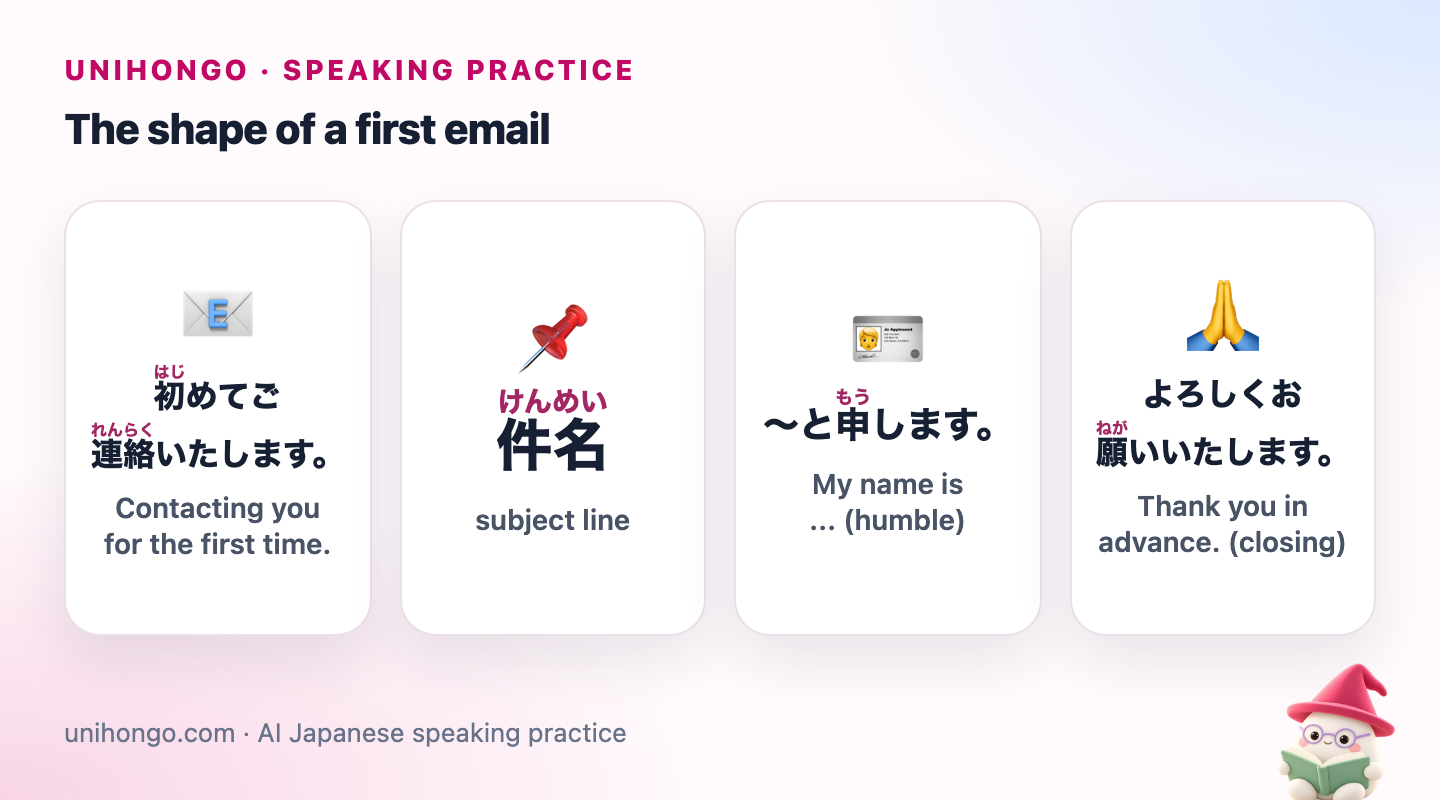
| Japanese | Romaji | Meaning |
|---|---|---|
| 初めてご連絡いたします。 | Hajimete gorenraku itashimasu. | Contacting you for the first time. |
| 件名 | kenmei | subject line |
| 〜と申します。 | ... to mōshimasu. | My name is ... (humble) |
| よろしくお願いいたします。 | Yoroshiku onegai itashimasu. | Thank you in advance. (closing) |
- Subject line: what you want, in a noun phrase.
- Recipient: the name or role with sama, on its own line.
- Introduction: first contact, your name, and in one phrase who you are.
- Request: one thing, asked softly, with the needed details (date, number, item).
- Closing: a thank-you-in-advance line.
- Signature: full name, katakana for a foreign name, contact details if relevant.
Subject lines that get opened
The subject line in a Japanese email is a label, not a sentence: the topic followed by the kind of message. Shops and offices sort their inbox by these labels, and a vague subject such as hello or question can wait days. Put the topic first and the request type after it, and add a date if there is one.
| Japanese | Romaji | Meaning |
|---|---|---|
| お問い合わせ | otoiawase | inquiry |
| 営業時間についてのお問い合わせ | Eigyō jikan ni tsuite no otoiawase | Subject: Inquiry about opening hours |
| 予約のお願い | Yoyaku no onegai | Subject: Reservation request |
| 見学のお願い | Kengaku no onegai | Subject: Request to visit |
| 予約変更のご相談 | Yoyaku henkō no gosōdan | Subject: About changing a booking |
| 商品の在庫について | Shōhin no zaiko ni tsuite | Subject: About stock of an item |
The opening: who you are writing to and who you are
The first line is the recipient. A known person gets their surname plus sama; an unknown person at a company or office gets gotantōsha-sama, person in charge; a shop or office as a whole gets its name plus onchū. Then introduce yourself in one line: that this is your first contact, your name with the humble to mōshimasu, and if useful a phrase saying who you are, such as a student from Canada or a guest arriving next month.
One phrase to leave out: osewa ni natte orimasu. It opens most business emails in Japan, but it means thank you for your continued support and implies that you already deal with each other. In a first email to a stranger it reads oddly, as if you have forgotten you never met.
| Japanese | Romaji | Meaning |
|---|---|---|
| ご担当者様 | Gotantōsha-sama | To the person in charge |
| 山田様 | Yamada-sama | Dear Mr/Ms Yamada |
| さくら書店 御中 | Sakura Shoten onchū | To Sakura Bookshop (an organisation) |
| 初めてご連絡いたします。スミスと申します。 | Hajimete gorenraku itashimasu. Sumisu to mōshimasu. | First contact; my name is Smith. |
| カナダの大学で日本語を勉強している学生です。 | Kanada no daigaku de nihongo o benkyō shite iru gakusei desu. | I am a student studying Japanese at a university in Canada. |
| お世話になっております。 | Osewa ni natte orimasu. | Thank you for your continued help. (existing contacts only) |
The request: ask, don't instruct
The request is one sentence, two at most, and the form matters more than the vocabulary. Shite kudasai, which textbooks teach as please do, is an instruction and sounds blunt in writing to a stranger. The soft forms end with a question: I would like to, would it be possible; could you let me know. Add the facts the reader needs to answer, a date, a number of people, an item name, in the same sentence or the next.
| Japanese | Romaji | Meaning |
|---|---|---|
| 予約をしたいのですが、可能でしょうか。 | Yoyaku o shitai no desu ga, kanō deshō ka. | I would like to make a reservation; would that be possible? |
| 営業時間を教えていただけますでしょうか。 | Eigyō jikan o oshiete itadakemasu deshō ka. | Could you let me know your opening hours? |
| お忙しいところ恐れ入りますが | Oisogashii tokoro osoreirimasu ga | Sorry to trouble you when you are busy, but ... |
| この商品の在庫はありますでしょうか。 | Kono shōhin no zaiko wa arimasu deshō ka. | Shop: Do you have this item in stock? |
| チェックインの時間を変更したいのですが。 | Chekkuin no jikan o henkō shitai no desu ga. | Host: I would like to change my check-in time. |
| 見学は可能でしょうか。 | Kengaku wa kanō deshō ka. | School: Would it be possible to visit? |
| 十一月三日、二名で考えております。 | Jūichigatsu mikka, nimei de kangaete orimasu. | I have in mind 3 November, two people. |
Desu ga at the end of a sentence is the softener: it trails off and leaves the decision to the reader. Deshō ka is a gentler desu ka. Together they make a request that a Japanese reader finds easy to say yes or no to, which is the whole point.
The closing and the signature
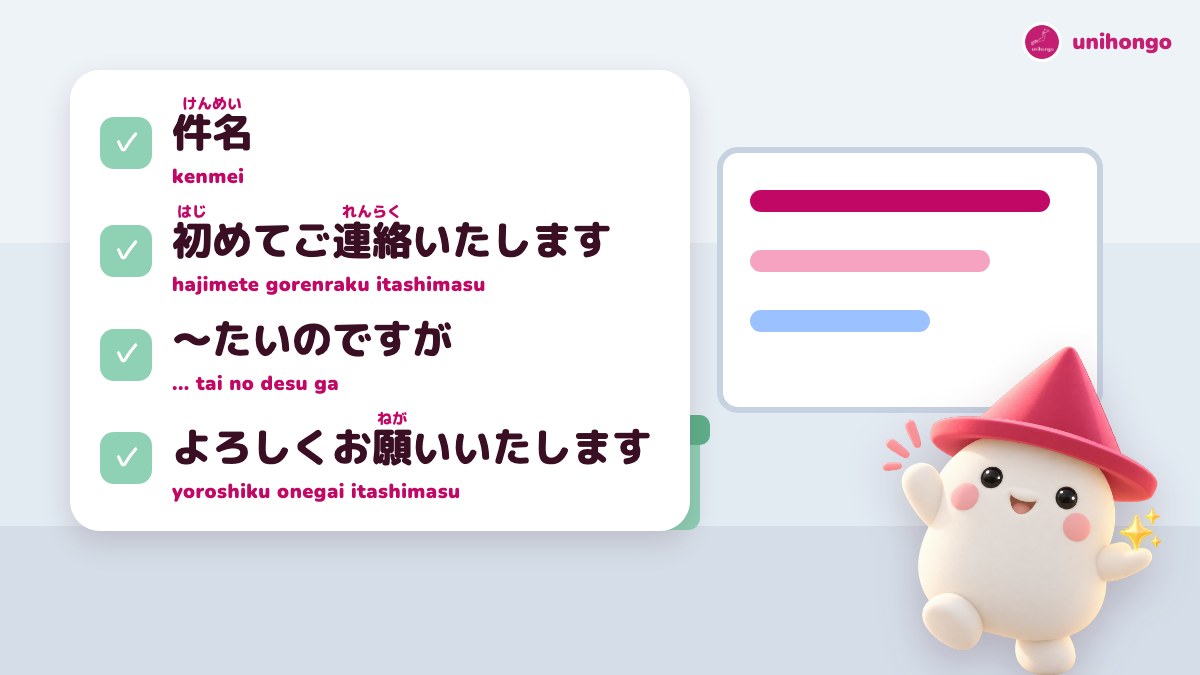
Every Japanese email ends with a request line, even when there is nothing left to request; it is the written equivalent of a bow. The standard is yoroshiku onegai itashimasu, with a softener in front of it. Then a blank line and your signature: full name, the katakana spelling of a foreign name so the reader can pronounce it, and contact details where relevant. Many writers add ijō (that is all) before the closing in longer emails; in a six-line email it is optional.
| Japanese | Romaji | Meaning |
|---|---|---|
| お手数をおかけしますが、よろしくお願いいたします。 | Otesū o okake shimasu ga, yoroshiku onegai itashimasu. | Sorry for the trouble; thank you in advance. |
| ご返信をお待ちしております。 | Gohenshin o omachi shite orimasu. | I look forward to your reply. |
| 以上、よろしくお願いいたします。 | Ijō, yoroshiku onegai itashimasu. | That is all; thank you in advance. |
| アンナ・スミス | Anna Sumisu | Anna Smith (signature in katakana) |
| 電話番号 | denwa bangō | phone number |
Three first emails: a shop, a host, a school office
The frame is the same; only the subject, the self-description and the request change. Here is how each version differs, so you can assemble yours from the lines above.
| Part | Shop | Guesthouse host | School office |
|---|---|---|---|
| Subject | Item name + ni tsuite | Yoyaku henkō no gosōdan | Kengaku no onegai |
| Recipient | Shop name + onchū | Host's name + sama | Gotantōsha-sama |
| Who you are | Hajimete gorenraku itashimasu + name | Name + the booking date | Name + student, country, level |
| Request | Stock, shipping abroad, holding an item | Earlier or later check-in, luggage | A visit, a course start date, the application |
| Details | Item name, colour, size | Booking name, dates, time | Preferred dates, number of people |
| Closing | Yoroshiku onegai itashimasu | Same | Same, with ijō in a longer email |
For the host, a mention of the booking in the first line saves them a search: name, dates, and the booking site if there is one. For the school, one line about your level helps them answer in the right register and sometimes in English.
The reply you may get
Replies from shops and offices are polite and formulaic, which makes them easier to read than they look. The first line thanks you for the inquiry, the last line is a closing, and the actual answer sits in the middle. A yes often contains kanō or dekimasu; a no is wrapped in osoreirimasu ga (we are sorry but) and ends in kanemasu (we are unable to). Dates, times and prices stand out visually, so scan for them first.
| Japanese | Romaji | Meaning |
|---|---|---|
| お問い合わせいただきありがとうございます。 | Otoiawase itadaki arigatō gozaimasu. | Thank you for your inquiry. |
| ご予約につきましては、可能でございます。 | Goyoyaku ni tsukimashite wa, kanō de gozaimasu. | As for the reservation, it is possible. |
| 恐れ入りますが、当日の変更はいたしかねます。 | Osoreirimasu ga, tōjitsu no henkō wa itashikanemasu. | We are sorry, but same-day changes are not possible. |
| ご希望の日時をお知らせください。 | Gokibō no nichiji o oshirase kudasai. | Please let us know your preferred date and time. |
| ご不明な点がございましたら、お気軽にお問い合わせください。 | Gofumei na ten ga gozaimashitara, okigaru ni otoiawase kudasai. | If anything is unclear, feel free to ask. |
| 何卒よろしくお願い申し上げます。 | Nanitozo yoroshiku onegai mōshiagemasu. | Closing: With kind regards. (very formal) |
If the reply asks a question, answer it in the same frame but shorter: the recipient, a thank-you for the reply (gohenshin arigatō gozaimasu), the answer, the closing. The second email is where osewa ni natte orimasu becomes correct, because you now deal with each other.
Mistakes that make a first email feel abrupt
- No subject line, or a subject such as hello. Name the request.
- Opening with osewa ni natte orimasu to a stranger. Use hajimete gorenraku itashimasu.
- San instead of sama in writing to a shop or office. Sama is the written default for customers and strangers.
- Shite kudasai for the request. Switch to shitai no desu ga or itadakemasu deshō ka.
- Putting two or three requests in one email. One request, one email, until you know the reader.
- Signing in Latin letters only. Add katakana so that the reader can say your name.
- Emoji, exclamation marks and casual endings such as ne. Save them for friends.
A second pair of eyes before you press send
The one thing a first email needs that a textbook cannot give is a check of the finished text. Paste yours to Mocchi, Unihongo's study assistant, with /correct and ask for each correction with a short reason; then ask whether any line reads as an instruction rather than a request. Mocchi keeps track of the forms you miss, so the second email's check is faster and the pattern of your mistakes becomes visible. When the reply arrives, /explain it and ask which lines are set phrases and which carry the answer.
If the email is about a reservation you will then confirm by voice, the phone-reservation mission in AI Sensei is the natural next step; many shops reply with please call. A free account at unihongo.com/login is enough for both the check and the call rehearsal.