
The summer card in four phrases
These four phrases are the backbone of a summer greeting card. The first opens a midsummer card; the second is its late-summer equivalent; the third is the most common closing; and the fourth is the season word often written next to the date.
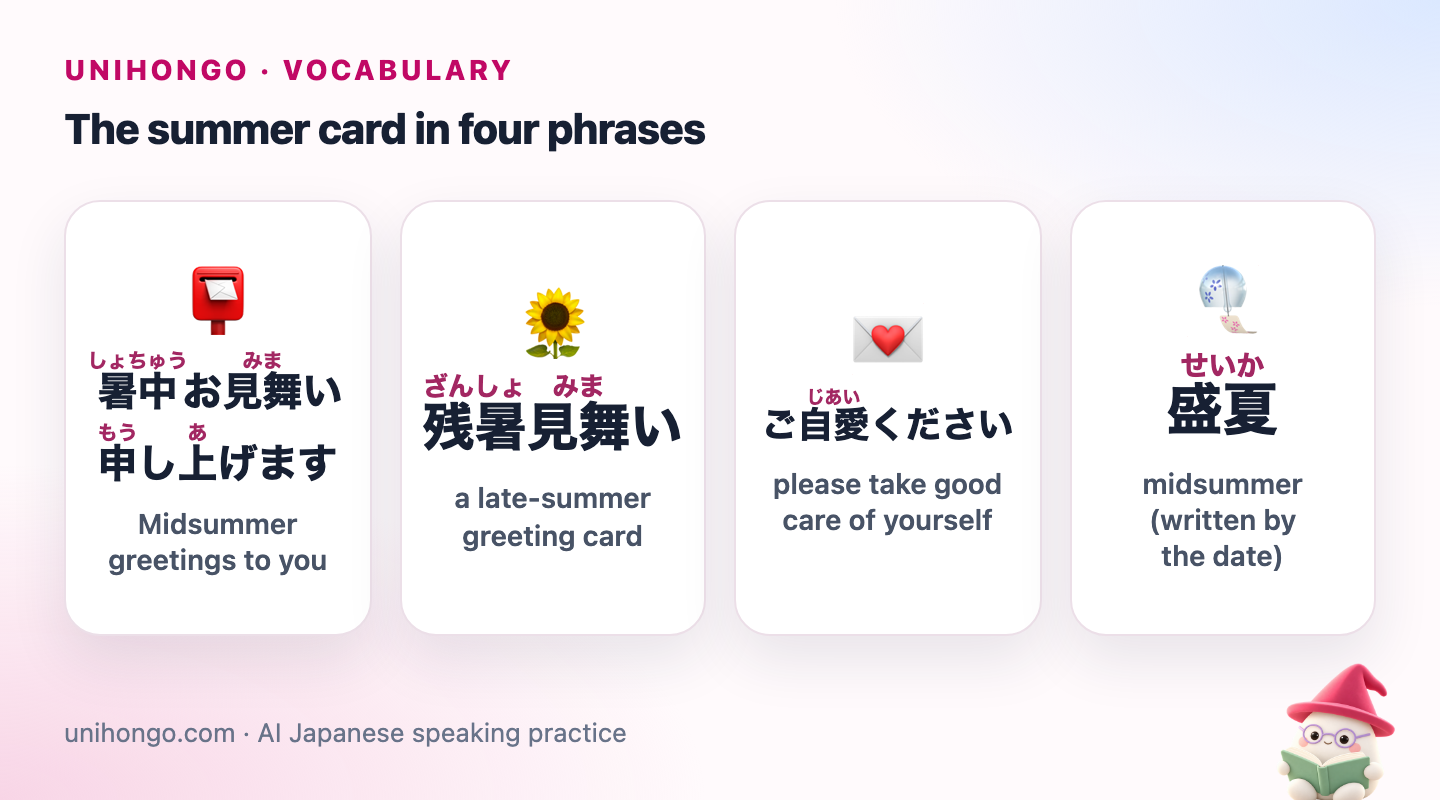
| Japanese | Romaji | Meaning |
|---|---|---|
| 暑中お見舞い申し上げます | Shochū omimai mōshiagemasu | Midsummer greetings to you |
| 残暑見舞い | zansho mimai | a late-summer greeting card |
| ご自愛ください | gojiai kudasai | please take good care of yourself |
| 盛夏 | seika | midsummer (written by the date) |
Mimai means a visit or inquiry to someone going through something difficult, the same word used in byōki mimai, visiting someone who is ill. A summer card is a written visit to ask how the reader is coping with the heat.
When to send which card
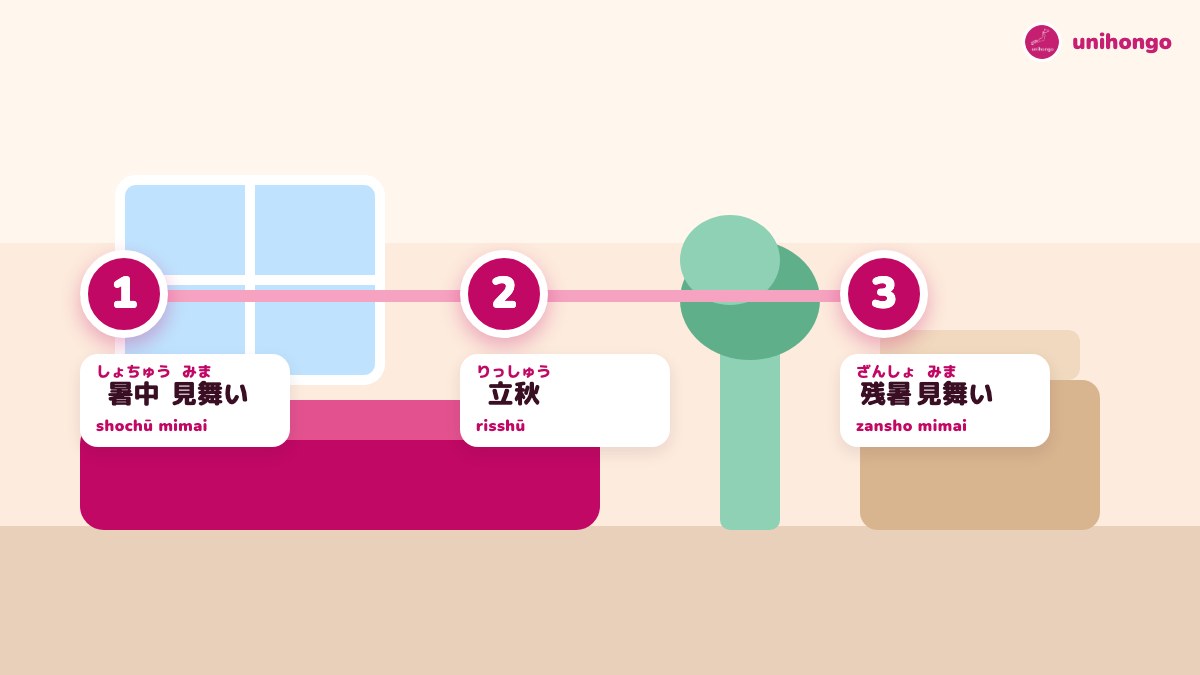
The switch from one card to the other is tied to the traditional seasonal calendar. Risshū, the start of autumn in that calendar, falls around 7 or 8 August. Before it, it is still midsummer, shochū; after it, any remaining heat is zansho, lingering heat. The start of the shochū period is less fixed: many people wait until the rainy season ends, and others start from shōsho, a seasonal day in early July.
| Japanese | Romaji | Meaning |
|---|---|---|
| 梅雨が明けたら出します。 | Tsuyu ga aketara dashimasu. | I'll send it once the rainy season ends. |
| 立秋を過ぎたので、残暑見舞いにします。 | Risshū o sugita node, zansho mimai ni shimasu. | Autumn has officially begun, so I'll send a late-summer card. |
| 残暑お見舞い申し上げます | Zansho omimai mōshiagemasu | Late-summer greetings to you |
| Card | Roughly when | Opening line |
|---|---|---|
| Shochū mimai (暑中見舞い) | Early or mid July to around 7 August | 暑中お見舞い申し上げます |
| Zansho mimai (残暑見舞い) | From around 8 August to the end of August | 残暑お見舞い申し上げます |
The four-part structure
A summer card is short, usually a few lines under the large opening greeting. The order is fixed, which makes it easy to write once you know a set phrase for each part.
| Japanese | Romaji | Meaning |
|---|---|---|
| 厳しい暑さが続いておりますが、いかがお過ごしでしょうか。 | Kibishii atsusa ga tsuzuite orimasu ga, ikaga osugoshi deshō ka. | The fierce heat continues; how have you been? (formal) |
| おかげさまで、私は元気に過ごしております。 | Okagesama de, watashi wa genki ni sugoshite orimasu. | Thankfully, I am keeping well. (humble) |
| 暑さ厳しき折、どうぞご自愛ください。 | Atsusa kibishiki ori, dōzo gojiai kudasai. | In this fierce heat, please take good care of yourself. (formal) |
| 令和九年 盛夏 | Reiwa kyūnen seika | Midsummer, Reiwa 9 (2027) (date line) |
- Greeting: the opening line, written larger than the rest, with no other words.
- Asking after the reader: a line about the heat and a question about their health.
- Your news: one or two sentences about yourself, your family or your studies.
- Closing: a wish for their health through the rest of the summer, then the date line.
Atsusa kibishiki ori uses an old adjective form, kibishiki, that survives in formal letters. You do not need to use it in speech; in a friendly card, atsui hi ga tsuzukimasu ga, genki desu ka is fine. Zansho cards often end the date line with banka, late summer, or with the month, hachigatsu, instead of seika.
A model card for a teacher or host family
This polite card works for a former teacher, a host family, a landlord you get on with or a senior colleague. It uses polite and humble forms without being stiff. Read it aloud once in full before you copy it, and change the news line to something true about you.
| Japanese | Romaji | Meaning |
|---|---|---|
| 暑中お見舞い申し上げます。 | Shochū omimai mōshiagemasu. | Midsummer greetings to you. |
| 毎日暑い日が続いていますが、先生はお元気でいらっしゃいますか。 | Mainichi atsui hi ga tsuzuite imasu ga, sensei wa ogenki de irasshaimasu ka. | It's hot every day; are you keeping well, Sensei? |
| 私は今年の夏、日本語能力試験のN3に向けて勉強しています。 | Watashi wa kotoshi no natsu, Nihongo Nōryoku Shiken no enu san ni mukete benkyō shite imasu. | This summer I'm studying for JLPT N3. |
| 先生に教えていただいたことを思い出しながら、毎日頑張っています。 | Sensei ni oshiete itadaita koto o omoidashinagara, mainichi ganbatte imasu. | I'm working hard every day, remembering what you taught me. |
| まだまだ暑さが続きますので、どうぞご自愛ください。 | Madamada atsusa ga tsuzukimasu node, dōzo gojiai kudasai. | The heat will go on for a while, so please take good care of yourself. |
A lighter card for a friend
With friends, the structure stays but the language relaxes. Many people still start with the fixed greeting, because it marks the card as a summer card, and then switch to plain form. A small drawing of a wind chime, goldfish or watermelon is a common touch. Summer-themed postcards with these illustrations are sold in stationery shops and post offices, and many people now send the same message by email or a messaging app.
| Japanese | Romaji | Meaning |
|---|---|---|
| 暑中お見舞い申し上げます! | Shochū omimai mōshiagemasu! | Midsummer greetings! |
| 毎日暑いね。元気にしてる? | Mainichi atsui ne. Genki ni shiteru? | It's so hot every day. How are you doing? (casual) |
| こっちは先週、初めて花火を見に行ったよ。 | Kotchi wa senshū, hajimete hanabi o mi ni itta yo. | Last week I went to see fireworks for the first time. (casual) |
| 夏バテしないように気をつけてね。 | Natsubate shinai yō ni ki o tsukete ne. | Take care not to get worn down by the heat. (casual) |
| また秋に会おうね! | Mata aki ni aō ne! | Let's meet up again in the autumn! (casual) |
Replying to a summer card
If you receive a card, a short reply is polite. Thank them for the card, share a piece of your own news and close with the same caring wish. If the reply goes out after risshū, switch to the late-summer opening even if their card was a midsummer one.
| Japanese | Romaji | Meaning |
|---|---|---|
| 残暑お見舞い申し上げます。 | Zansho omimai mōshiagemasu. | Late-summer greetings to you. |
| 暑中見舞いをありがとうございました。 | Shochū mimai o arigatō gozaimashita. | Thank you for your summer card. |
| お元気そうで安心しました。 | Ogenki sō de anshin shimashita. | I was relieved to hear you are well. |
| 暦の上では秋ですが、まだ暑い日が続きますね。 | Koyomi no ue de wa aki desu ga, mada atsui hi ga tsuzukimasu ne. | It is autumn by the calendar, but the hot days go on. |
| くれぐれもお体を大切に。 | Kuregure mo okarada o taisetsu ni. | Please do take good care of yourself. |
Koyomi no ue de wa aki desu ga, it is autumn according to the calendar, but..., is the classic opening idea of a zansho card. It neatly explains why you are writing about heat after summer has officially ended.
Common learner mistakes on summer cards
- Sending a shochū mimai in mid-August. After risshū, it should be zansho mimai.
- Writing omimai mōshiagemasu without shochū or zansho. The season word is what makes it a summer card.
- Using gojiai kudasai to describe yourself. It is a wish for the reader only; never write watashi mo jiai shimasu.
- Sending a summer card to a family in mourning in the same cheerful tone. Customs vary, so keep it simple and gentle, without celebratory drawings.
- Adding too much news. One or two lines are enough; the card is about the reader.
Write and send one this summer
Draft your card and send it to Mocchi with a note on who it is for, for example: /correct my shochū mimai to my former Japanese teacher. Mocchi checks the set phrases, tells you if any line is too casual for a teacher, and suggests a lighter version for a friend. Because Mocchi remembers what you wrote, next summer you can ask it to help with the same card again.
Formal set phrases also need a steady rhythm when you say them aloud, for example on a summer phone call. The sentence intonation drills on the pronunciation coach let you listen, record yourself and get scores for rhythm and pitch with a tip.