
The seaside in four words
Start with an invitation and three nouns. The invitation is how a summer beach trip usually begins between friends; the nouns are the waves you check, the tan or burn you take home, and the beach hut where you buy lunch.
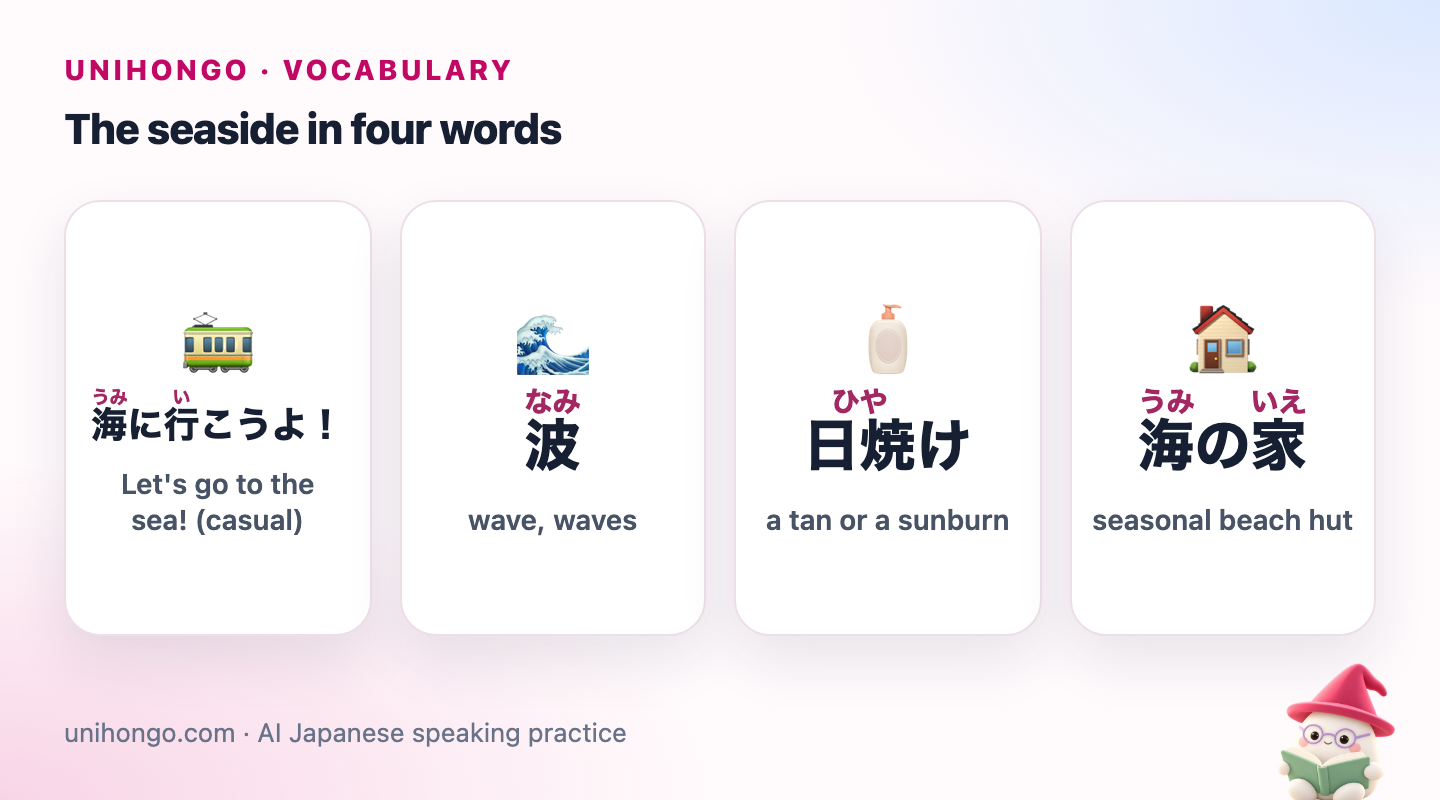
| Japanese | Romaji | Meaning |
|---|---|---|
| 海に行こうよ! | Umi ni ikō yo! | Let's go to the sea! (casual) |
| 波 | nami | wave, waves |
| 日焼け | hiyake | a tan or a sunburn |
| 海の家 | umi no ie | seasonal beach hut |
Ikō is the volitional form of iku, let's go, and yo makes the invitation warmer and more insistent. With a coworker or someone older, say umi ni ikimasen ka, wouldn't you like to go to the sea?
Beach, coast and shore
Japanese has several words where English often says beach. They overlap, but each has a typical use, and place names usually keep the older forms.
| Japanese | Romaji | Meaning |
|---|---|---|
| 砂浜がきれいですね。 | Sunahama ga kirei desu ne. | The sandy beach is beautiful. |
| 海岸沿いを散歩しました。 | Kaigan zoi o sanpo shimashita. | I walked along the coast. |
| 沖まで行かないでね。 | Oki made ikanaide ne. | Don't swim out too far, OK? (casual) |
| 海辺のカフェ | umibe no kafe | a seaside café |
| Word | Reading | Typical use |
|---|---|---|
| 海 | umi | The sea; also the seaside in umi ni iku |
| 海岸 | kaigan | Coast or shoreline; common in place names |
| 砂浜 | sunahama | A sandy beach |
| 浜 | hama | Beach; often in place names and compounds |
| 海辺 | umibe | By the sea, the seaside; slightly literary |
| 沖 | oki | Offshore, the open water away from the beach |
Waves and tides
Waves are nami, and the most common thing people say about them is whether they are high or calm. Rough seas, nami ga takai, are a common reason for a beach to close swimming for the day. The tide is shio: high tide is manchō and low tide kanchō. In spring, many families go shiohigari, digging for clams at low tide.
One word worth knowing for safety is rigan ryū (離岸流), a rip current. Warning signs at some beaches use it, and lifeguards may shout it.
| Japanese | Romaji | Meaning |
|---|---|---|
| 今日は波が高いですね。 | Kyō wa nami ga takai desu ne. | The waves are high today. |
| 波が穏やかで泳ぎやすい。 | Nami ga odayaka de oyogiyasui. | The sea is calm, so it's easy to swim. (casual) |
| 満潮 | manchō | high tide |
| 干潮 | kanchō | low tide |
| 潮干狩りに行きました。 | Shiohigari ni ikimashita. | We went clam digging. |
| 離岸流に気をつけてください。 | Rigan ryū ni ki o tsukete kudasai. | Please watch out for rip currents. |
Swimming and the rules on the sand
Swimming in the sea is kaisuiyoku (海水浴), and the beach season starts with umibiraki, the official opening, on a date set by each beach. During the season, swimming areas are often marked with buoys and watched by lifeguards. Outside it, or on rough days, you may see the sign yūei kinshi, no swimming. Rules on alcohol, music and barbecues differ by beach, so it is worth reading the notice board at the entrance.
| Japanese | Romaji | Meaning |
|---|---|---|
| 海水浴 | kaisuiyoku | sea bathing, swimming in the sea |
| 海開きはいつですか。 | Umibiraki wa itsu desu ka. | When does the beach open for swimming? |
| 遊泳禁止 | yūei kinshi | No swimming (sign) |
| ここ、足がつかないよ。 | Koko, ashi ga tsukanai yo. | My feet don't touch the bottom here. (casual) |
| 浮き輪を膨らませよう。 | Ukiwa o fukuramaseyō. | Let's blow up the swim ring. (casual) |
| 監視員はどこにいますか。 | Kanshiin wa doko ni imasu ka. | Where is the lifeguard? |
Shells, crabs and jellyfish
Children collect shells and chase small crabs among the rocks, an activity called iso asobi. Jellyfish, kurage, are the creature everyone warns you about. Many people say they become more common towards late summer, and some beaches post warnings or close when there are many. A jellyfish sting is kurage ni sasareta, I was stung by a jellyfish; tell a lifeguard or the beach hut staff.
| Japanese | Romaji | Meaning |
|---|---|---|
| 貝殻を拾いました。 | Kaigara o hiroimashita. | I picked up some shells. |
| カニがいた! | Kani ga ita! | There's a crab! (casual) |
| ヤドカリ | yadokari | hermit crab |
| クラゲに刺されました。 | Kurage ni sasaremashita. | I was stung by a jellyfish. |
| クラゲが多いから、気をつけて。 | Kurage ga ōi kara, ki o tsukete. | There are a lot of jellyfish, so be careful. (casual) |
Hiyake: a tan, a burn and sunscreen
Hiyake is one word for two results. Hiyake shita can mean you got a nice tan or a painful burn, and people make it clear with the colour: akaku natta, went red, or kuroku natta, went dark. The stinging feeling of sunburn has its own sound word, hirihiri. Many people in Japan protect their skin carefully with sunscreen, hats, long sleeves and parasols, though attitudes to a summer tan vary by age and person.
| Japanese | Romaji | Meaning |
|---|---|---|
| 日焼け止めを塗った? | Hiyakedome o nutta? | Did you put on sunscreen? (casual) |
| 塗り直したほうがいいよ。 | Nurinaoshita hō ga ii yo. | You'd better put some more on. (casual) |
| 日焼けして、肩が赤くなりました。 | Hiyake shite, kata ga akaku narimashita. | I got sunburned and my shoulders went red. |
| 背中がヒリヒリする。 | Senaka ga hirihiri suru. | My back stings. (casual) |
| いい色に焼けたね。 | Ii iro ni yaketa ne. | You've got a nice tan. (casual) |
Sunscreen is nuru, spread on, the same verb as for butter or paint. Saying hiyakedome o tsukeru is also understood, but nuru is what most people say.
Mini dialogue: meeting a friend at the station
Most beach trips start at a station. Here two friends meet on the platform and check the plan before boarding. The lines are casual, as they would be between friends.
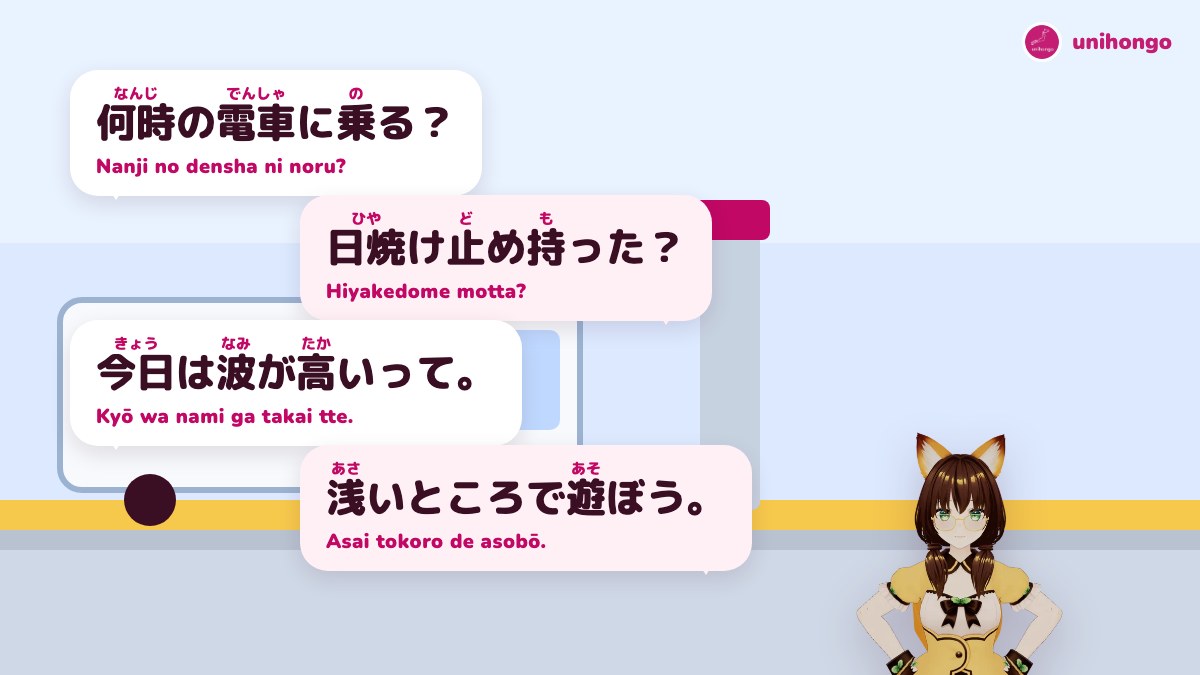
| Japanese | Romaji | Meaning |
|---|---|---|
| 何時の電車に乗る? | Nanji no densha ni noru? | Friend: Which train are we taking? |
| 十時のに乗ろう。 | Jūji no ni norō. | You: Let's take the ten o'clock one. |
| 日焼け止め持った? | Hiyakedome motta? | Friend: Did you bring sunscreen? |
| 持ったよ。浮き輪もある。 | Motta yo. Ukiwa mo aru. | You: Got it. I've got the swim ring too. |
| 今日は波が高いって。 | Kyō wa nami ga takai tte. | Friend: They say the waves are high today. |
| じゃあ、浅いところで遊ぼう。 | Jā, asai tokoro de asobō. | You: Then let's stay in the shallows. |
| お昼は海の家で食べようか。 | Ohiru wa umi no ie de tabeyō ka. | Friend: Shall we have lunch at a beach hut? |
Common learner mistakes with sea words
- Saying bīchi ni oyogu. You swim in the sea, so say umi de oyogu; bīchi is the sand.
- Using hiyake only for a tan. It also means sunburn, so add akaku or kuroku if it matters.
- Saying nami ga ōkii to mean rough seas. It is understood, but nami ga takai is the standard phrase.
- Saying hiyakedome o kiru. Sunscreen is put on with nuru, not worn.
- Assuming every beach has lifeguards all summer. Check the season dates and the notice board.
Turn the beach trip into a speaking rehearsal
Ask Mocchi: make a short story of a beach day in easy Japanese using nami, hiyake and umi no ie, then quiz me on it. Mocchi writes the story at your level, explains any sentence you tap with /explain, and remembers the words you stumble on.
Then say it for real with AI Sensei. Pick Hana-sensei and ask the Sensei to play a friend planning a beach day with you, in casual Japanese. You decide the train, check the waves and agree where to eat, and the session report shows what to fix.