
Summer in four words
Start with the sentence and the three nouns that come up in almost every summer conversation in Japan. The sentence is weather talk at its most basic; the nouns are the insect, the dessert and the holiday that people associate with the season.
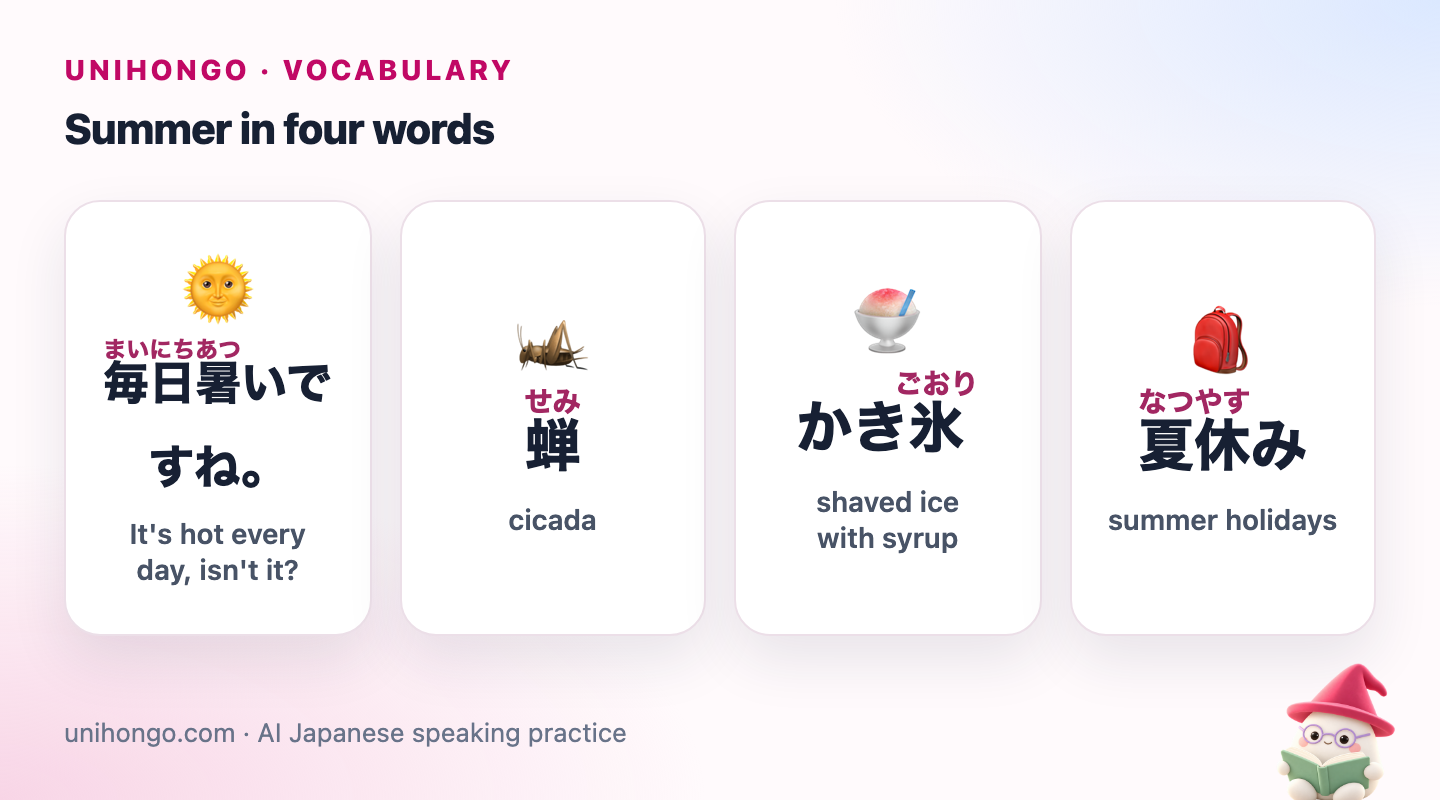
| Japanese | Romaji | Meaning |
|---|---|---|
| 毎日暑いですね。 | Mainichi atsui desu ne. | It's hot every day, isn't it? |
| 蝉 | semi | cicada |
| かき氷 | kakigōri | shaved ice with syrup |
| 夏休み | natsuyasumi | summer holidays |
Mainichi atsui desu ne works with neighbours, shop staff, coworkers and taxi drivers. A typical reply is hontō ni, really, or sō desu ne, mō iya ni narimasu ne, it really gets to you.
Three words that all mean hot
English uses hot for the weather, a cup of tea and spicy food. Japanese splits these, and choosing the right one is one of the first things a teacher will correct.
| Japanese | Romaji | Meaning |
|---|---|---|
| 今日は本当に暑い! | Kyō wa hontō ni atsui! | It's so hot today! (casual) |
| お風呂が熱すぎます。 | Ofuro ga atsusugimasu. | The bath is too hot. |
| 暑くて溶けそう。 | Atsukute tokesō. | It's so hot I could melt. (casual) |
| 夜になっても涼しくなりませんね。 | Yoru ni natte mo suzushiku narimasen ne. | It doesn't cool down even at night. |
| Word | Reading | Use it for | Example |
|---|---|---|---|
| 暑い | atsui | Hot weather or a hot room | Kyō wa atsui. (Today is hot.) |
| 熱い | atsui | Something hot to the touch | Ocha ga atsui. (The tea is hot.) |
| 辛い | karai | Spicy food | Kono karē wa karai. (This curry is spicy.) |
| 蒸し暑い | mushiatsui | Hot and humid weather | Kyō wa mushiatsui. (It's muggy today.) |
The sounds of summer: cicadas and wind chimes
Cicadas start singing in many parts of Japan in July and keep going into September. Their noise is so loud in city parks that people complain about it, yet many also say summer does not feel like summer without it. Several kinds have names based on their song, and the higurashi, which sings at dusk, is linked with the end of summer in songs and stories.
The other classic summer sound is the fūrin (風鈴), a small glass or metal wind chime hung under the eaves. Its ringing is said to make people feel cooler. Tastes differ, and in apartment blocks a loud chime can annoy neighbours, so many people take it in at night.
| Japanese | Romaji | Meaning |
|---|---|---|
| 蝉の声がにぎやかですね。 | Semi no koe ga nigiyaka desu ne. | The cicadas are lively, aren't they? |
| 朝から蝉がうるさい。 | Asa kara semi ga urusai. | The cicadas have been noisy since morning. (casual) |
| ミンミンゼミ | minminzemi | a large cicada named after its song |
| ヒグラシが鳴くと、夏も終わりですね。 | Higurashi ga naku to, natsu mo owari desu ne. | When the evening cicadas sing, summer's nearly over. |
| 風鈴の音で涼しく感じます。 | Fūrin no oto de suzushiku kanjimasu. | The wind chime makes me feel cooler. |
Insects and birds naku (鳴く) in Japanese, the same verb used for animals calling. Humans use the different kanji 泣く for crying, also read naku.
Staying cool at home
Most homes in Japan rely on air conditioning in summer, but older habits are still common: an electric fan, cold barley tea in a jug in the fridge, insect screens on the windows and mosquito coils on the balcony. These are the words you will need if you share a flat, stay with a host family or simply want to describe your evening.
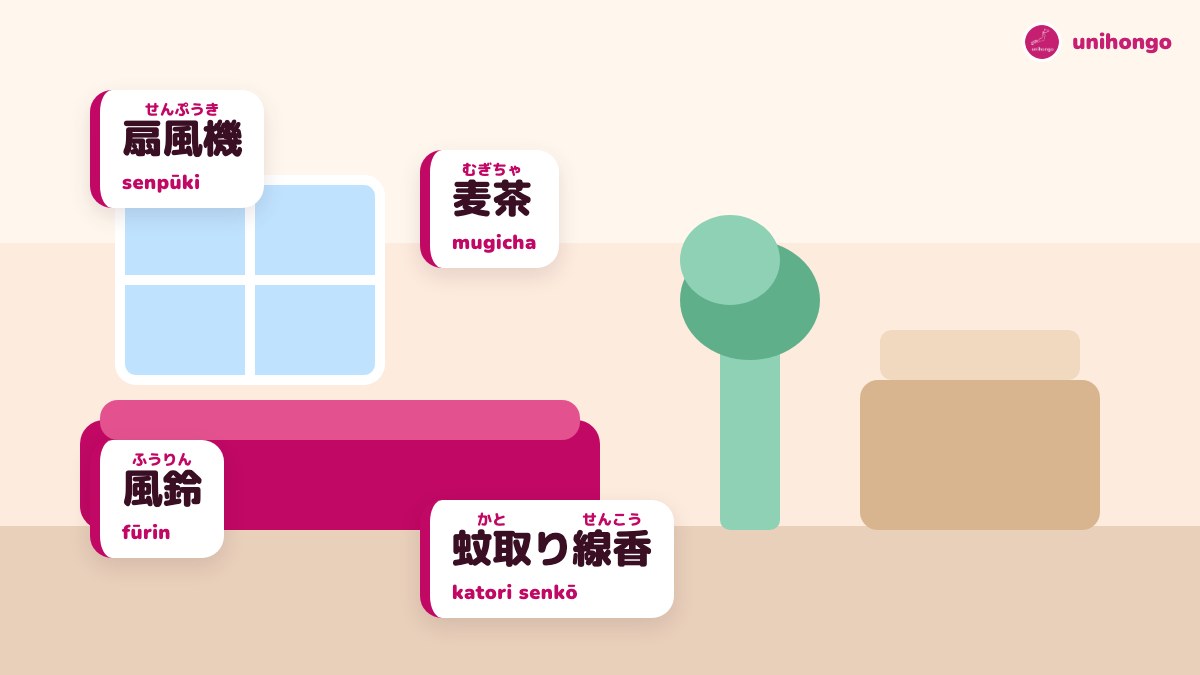
| Japanese | Romaji | Meaning |
|---|---|---|
| 扇風機 | senpūki | electric fan |
| エアコンをつけてもいい? | Eakon o tsukete mo ii? | Mind if I turn on the air conditioner? (casual) |
| 冷房、強すぎませんか。 | Reibō, tsuyosugimasen ka. | Isn't the air conditioning too strong? |
| 麦茶 | mugicha | roasted barley tea, served cold |
| 網戸を閉めてね。蚊が入るから。 | Amido o shimete ne. Ka ga hairu kara. | Close the screen, OK? Mosquitoes get in. (casual) |
| 蚊取り線香 | katori senkō | mosquito coil |
Summer food and the famous menu sign
Summer menus in Japan change to cold dishes. Restaurants that serve ramen often add hiyashi chūka, cold noodles with sliced toppings and a tangy sauce, and announce it with a sign that has become a summer symbol in its own right: hiyashi chūka hajimemashita, we have started serving cold Chinese noodles. At home, people eat thin sōmen noodles in cold broth, edamame with a cold drink, and watermelon.
| Japanese | Romaji | Meaning |
|---|---|---|
| 冷やし中華始めました | Hiyashi chūka hajimemashita | Cold noodles now served (shop sign) |
| そうめん | sōmen | thin wheat noodles, eaten cold |
| かき氷、何味にする? | Kakigōri, nani aji ni suru? | What flavour of shaved ice will you have? (casual) |
| いちごとメロン、どっちにしよう。 | Ichigo to meron, dotchi ni shiyō. | Strawberry or melon, which one shall I get? |
| 頭がキーンとする! | Atama ga kīn to suru! | Brain freeze! (casual) |
| すいか | suika | watermelon |
Kīn is a sound word for a sharp, ringing pain, and atama ga kīn to suru is what everyone says after eating shaved ice too fast. It is casual, friendly and very easy to slip into conversation at a stall.
Natsuyasumi: summer holidays for children and adults
For children, natsuyasumi comes with homework: workbooks, a picture diary called e-nikki, and often a free research project, jiyū kenkyū, which families sometimes rush to finish in the last week of August. In some neighbourhoods, children still gather in the morning for radio exercises, rajio taisō, though how common this is varies a lot by area.
Most working adults do not have a long summer break. They take a few days, often around Obon in mid-August, and ask each other where they are going.
| Japanese | Romaji | Meaning |
|---|---|---|
| 夏休みの宿題、終わった? | Natsuyasumi no shukudai, owatta? | Have you finished your summer homework? (casual) |
| 自由研究 | jiyū kenkyū | free research project for school |
| 絵日記を書きます。 | Enikki o kakimasu. | I'll write a picture diary. |
| 夏休みはどこか行きますか。 | Natsuyasumi wa doko ka ikimasu ka. | Are you going anywhere for the summer break? |
| 家でゆっくりします。 | Ie de yukkuri shimasu. | I'll just relax at home. |
Mini dialogue: summer chat with a neighbour
| Japanese | Romaji | Meaning |
|---|---|---|
| こんにちは。今日も暑いですね。 | Konnichiwa. Kyō mo atsui desu ne. | Neighbour: Hello. Hot again today, isn't it? |
| 本当に。蝉の声で目が覚めました。 | Hontō ni. Semi no koe de me ga samemashita. | You: It really is. The cicadas woke me up. |
| うちの子は、もう夏休みなんですよ。 | Uchi no ko wa, mō natsuyasumi nan desu yo. | Neighbour: My kids are already on summer holiday. |
| いいですね。宿題は大変ですか。 | Ii desu ne. Shukudai wa taihen desu ka. | You: Nice. Is the homework tough? |
| 自由研究が一番大変です。 | Jiyū kenkyū ga ichiban taihen desu. | Neighbour: The research project is the hardest part. |
| かき氷でも食べて、がんばってください。 | Kakigōri demo tabete, ganbatte kudasai. | You: Have some shaved ice and keep going! |
Common learner mistakes with summer words
- Writing 熱い for the weather. Weather is 暑い; 熱い is for things you touch, drink or bathe in.
- Saying samui about air conditioning that is pleasantly cool. Use suzushii; samui means it is too cold.
- Using naku with the crying kanji 泣く for cicadas. Animals and insects take 鳴く.
- Calling every cold noodle dish sōmen. Sōmen, soba, udon and hiyashi chūka are different dishes, and menus list them separately.
- Assuming adults get the whole summer off. Most take only a few days, so ask natsuyasumi wa itsu desu ka, when is your summer break?
Make summer words automatic
Ask Mocchi something specific, such as: give me ten Japanese summer words with one example sentence each and quiz me on 暑い and 熱い. Mocchi lists the words, checks your answers, and remembers which ones you missed, so the next /review starts with those.
Then send the same words to the games page. Vocabulary Dash can run on your own flashcards, which turns semi, mugicha and senpūki into a quick timed round that you can replay on a hot afternoon.