
Heat and humidity in four phrases
These four cover most summer heat conversations: the small-talk line, the illness everyone warns about, the advice that goes with it, and the state you are in after a ten-minute walk to the station.
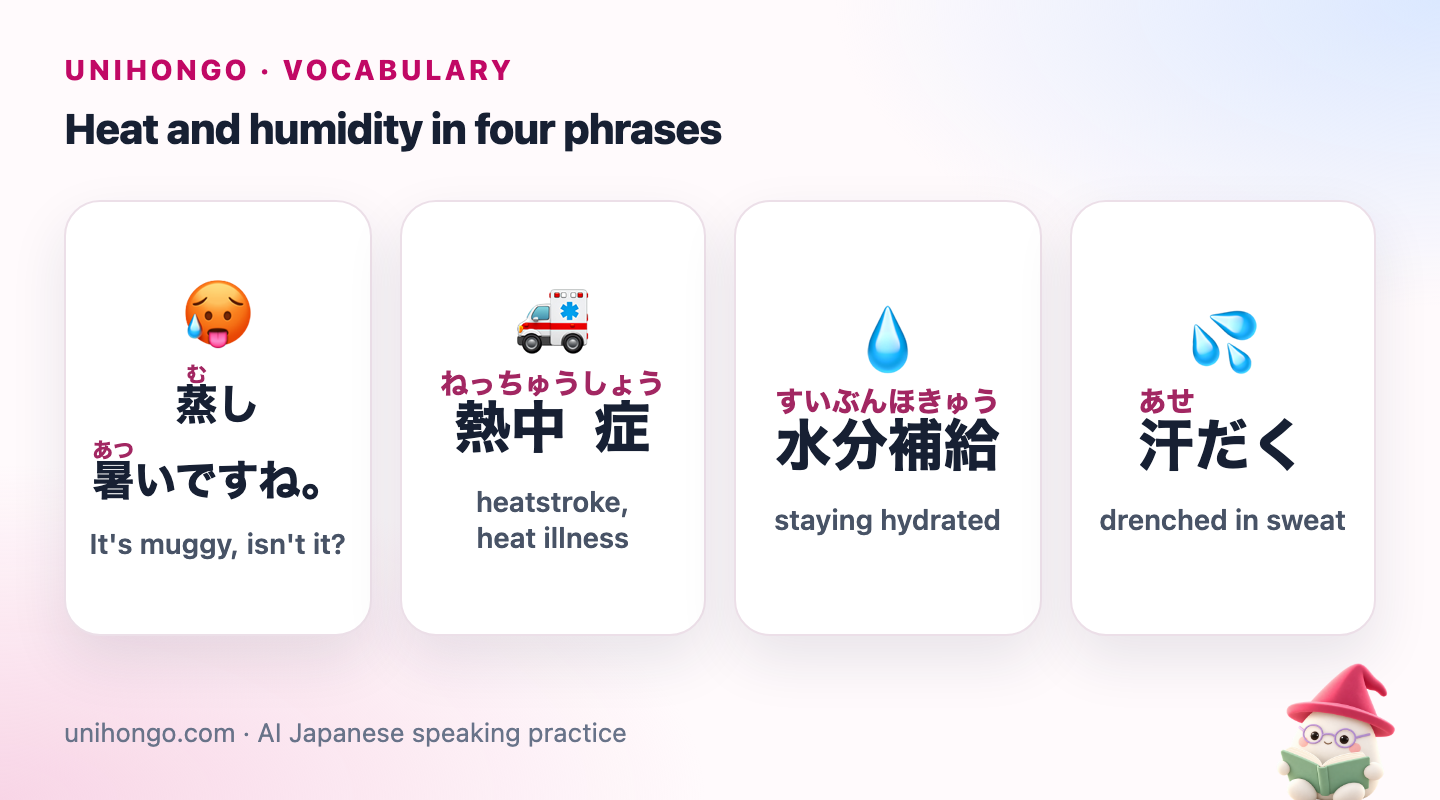
| Japanese | Romaji | Meaning |
|---|---|---|
| 蒸し暑いですね。 | Mushiatsui desu ne. | It's muggy, isn't it? |
| 熱中症 | netchūshō | heatstroke, heat illness |
| 水分補給 | suibun hokyū | staying hydrated |
| 汗だく | asedaku | drenched in sweat |
Mushiatsui combines musu, to steam, and atsui, hot. It describes the air, so use it for the weather or a stuffy room, not for food or a bath.
The forecast words for hot days and nights
Weather reports in Japan use fixed terms based on the day's highest temperature, and they come up in conversation too. If a friend says kyō mo mōshobi da tte, they mean it will be 35°C or more again. Nights that stay warm are just as tiring, and the word for them is nettaiya, a tropical night.
| Japanese | Romaji | Meaning |
|---|---|---|
| 今日も猛暑日だって。 | Kyō mo mōshobi da tte. | They say it'll be over 35 degrees again today. (casual) |
| 熱帯夜で眠れませんでした。 | Nettaiya de nemuremasen deshita. | It was too hot a night to sleep. |
| もう十日連続の真夏日です。 | Mō tōka renzoku no manatsubi desu. | That's ten days in a row over 30 degrees. |
| 今年の夏は本当に暑いですね。 | Kotoshi no natsu wa hontō ni atsui desu ne. | This summer is really hot. |
| Term | Reading | Meaning |
|---|---|---|
| 夏日 | natsubi | A day with a high of 25°C or more |
| 真夏日 | manatsubi | A day with a high of 30°C or more |
| 猛暑日 | mōshobi | A day with a high of 35°C or more |
| 熱帯夜 | nettaiya | A night that stays at around 25°C or above |
| 猛暑 | mōsho | Fierce heat, a heatwave |
Sweat, fatigue and summer tiredness
Talking about how the heat makes you feel is normal small talk in Japan, even at work. Sweat is ase, and being soaked in it is asedaku or ase bisshori. Summer fatigue has its own name, natsubate, the tired, no-appetite feeling many people get in midsummer. Darui, sluggish, is the adjective that goes with it.
| Japanese | Romaji | Meaning |
|---|---|---|
| 駅まで歩いただけで汗だくです。 | Eki made aruita dake de asedaku desu. | I'm soaked in sweat just from walking to the station. |
| 汗びっしょりになっちゃった。 | Ase bisshori ni natchatta. | I'm dripping with sweat. (casual) |
| 夏バテで食欲がありません。 | Natsubate de shokuyoku ga arimasen. | Summer fatigue has killed my appetite. |
| なんか体がだるい。 | Nanka karada ga darui. | I feel kind of sluggish. (casual) |
| 暑さで頭がぼーっとします。 | Atsusa de atama ga bōtto shimasu. | The heat makes my head foggy. |
Atsusa, the heat, is made by replacing the final i of atsui with sa. The same pattern gives samusa, the cold, and shitsudo no takasa, how high the humidity is.
Staying cool on the street
Out of doors, people protect themselves with parasols, called higasa, hats, handheld electric fans and cooling towels, and they buy cold drinks from vending machines on almost every corner. Many people use a parasol regardless of gender, though habits vary. Shade is hikage, and walking on the shady side of the street is a summer reflex.
| Japanese | Romaji | Meaning |
|---|---|---|
| 日傘 | higasa | sun parasol |
| 日陰を歩きましょう。 | Hikage o arukimashō. | Let's walk in the shade. |
| 冷たい飲み物を買ってきます。 | Tsumetai nomimono o katte kimasu. | I'll go and get a cold drink. |
| ハンディファン | handi fan | handheld electric fan |
| 塩分もとったほうがいいですよ。 | Enbun mo totta hō ga ii desu yo. | You should take some salt too. |
Hydration: what posters and teachers say
Suibun hokyū is everywhere in summer: on station posters, in school letters, on the radio and in office emails. The usual advice is to drink little and often, before you feel thirsty, and some people add a salty sweet or a sports drink. You will often hear it as a kind closing line at the end of a phone call or an email in July and August.
| Japanese | Romaji | Meaning |
|---|---|---|
| こまめに水分補給をしましょう。 | Komame ni suibun hokyū o shimashō. | Drink little and often. (poster style) |
| ちゃんと水分とってね。 | Chanto suibun totte ne. | Make sure you drink enough. (casual) |
| 喉が渇く前に飲んでください。 | Nodo ga kawaku mae ni nonde kudasai. | Please drink before you feel thirsty. |
| 熱中症に気をつけてください。 | Netchūshō ni ki o tsukete kudasai. | Please watch out for heatstroke. |
| 暑い日が続きますので、ご自愛ください。 | Atsui hi ga tsuzukimasu node, gojiai kudasai. | The heat continues, so please take care of yourself. (formal, in writing) |
Gojiai kudasai, please look after yourself, is a formal closing used in letters and business emails. In speech with friends, karada ni ki o tsukete ne is warmer and more natural.
Helping someone who feels unwell in the heat
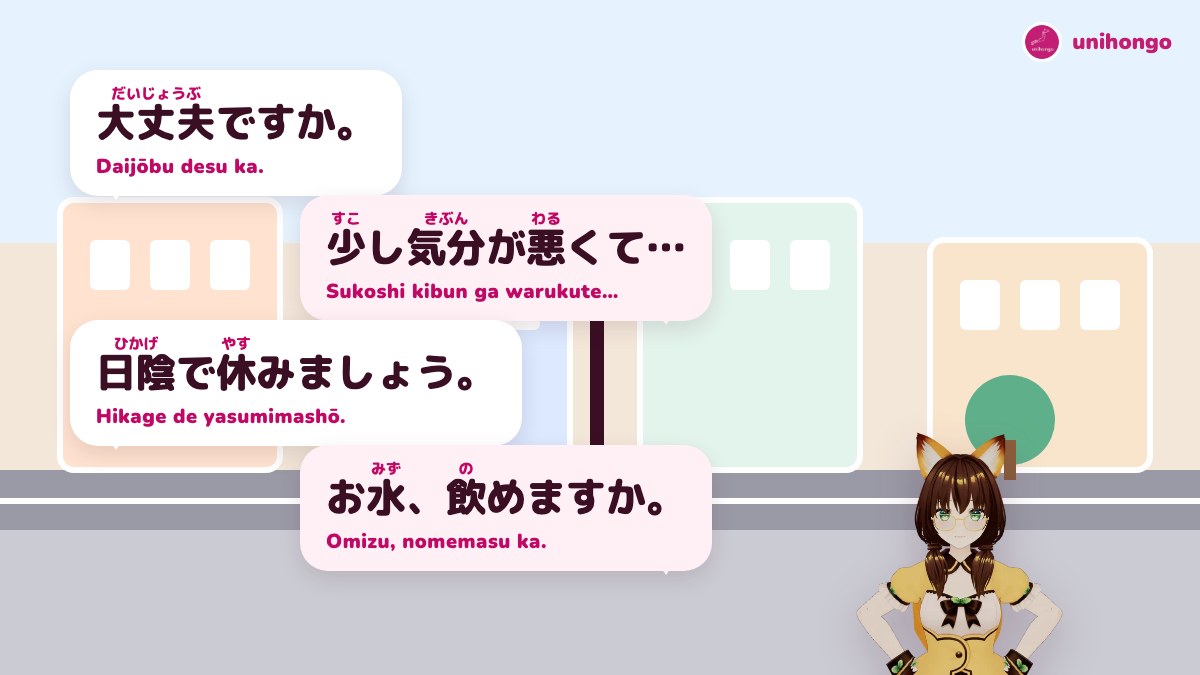
If someone on the street or at a station looks dizzy or pale in the heat, a few simple sentences help: ask if they are all right, move them into the shade or an air-conditioned place, and offer water if they can drink. If they cannot respond clearly or cannot drink, call 119 and say kyūkyūsha o onegai shimasu. Station staff and shop staff are used to this in summer and will help.
| Japanese | Romaji | Meaning |
|---|---|---|
| 大丈夫ですか。 | Daijōbu desu ka. | Are you all right? |
| 少し気分が悪くて… | Sukoshi kibun ga warukute… | Person: I feel a little sick... |
| 日陰で休みましょう。 | Hikage de yasumimashō. | Let's rest in the shade. |
| お水、飲めますか。 | Omizu, nomemasu ka. | Can you drink some water? |
| めまいがします。 | Memai ga shimasu. | Person: I feel dizzy. |
| 救急車を呼びましょうか。 | Kyūkyūsha o yobimashō ka. | Shall I call an ambulance? |
Mini dialogue: arriving at the office in July
| Japanese | Romaji | Meaning |
|---|---|---|
| おはようございます。外、暑かったでしょう。 | Ohayō gozaimasu. Soto, atsukatta deshō. | Coworker: Morning. It must have been hot outside. |
| はい、もう汗だくです。 | Hai, mō asedaku desu. | You: Yes, I'm already soaked in sweat. |
| 今日も猛暑日らしいですよ。 | Kyō mo mōshobi rashii desu yo. | Coworker: Apparently it's another 35-degree day. |
| 昨日も熱帯夜で、あまり寝られませんでした。 | Kinō mo nettaiya de, amari neraremasen deshita. | You: Last night was hot too, I couldn't sleep much. |
| 夏バテしないように、水分とってくださいね。 | Natsubate shinai yō ni, suibun totte kudasai ne. | Coworker: Drink plenty so the heat doesn't wear you down. |
| ありがとうございます。気をつけます。 | Arigatō gozaimasu. Ki o tsukemasu. | You: Thank you. I'll be careful. |
Deshō with a rising tone shows sympathy: it must have been hot. Answering with a concrete detail, such as asedaku desu, keeps the small talk going naturally.
Common learner mistakes with heat phrases
- Saying shitsudo desu for it's humid. Shitsudo is the humidity level; say shitsudo ga takai or mushiatsui.
- Mixing up netchūshō, heat illness, and nettaiya, a hot night. They share the kanji 熱 but mean different things.
- Saying kibun ga warui when you mean you are annoyed. It means you feel physically sick.
- Using gojiai kudasai with friends. It is a formal written phrase; with friends say karada ni ki o tsukete ne.
- Calling 110 for a medical emergency. 110 is the police; 119 is for an ambulance or the fire brigade.
Practise caring and complaining in one routine
Start with Mocchi: ask it to quiz me on Japanese heat phrases, polite and casual, and correct my answers. Mocchi checks each answer, points out register slips such as gojiai kudasai with a friend, and brings back the phrases you miss next time.
Then rehearse the moment that matters most out loud. In AI Sensei, choose Ibuki-sensei and ask the Sensei to play a coworker who feels dizzy after walking in the heat. Ask if they are all right, suggest resting somewhere cool and offer water, then read the session report for anything that sounded too blunt.