
Typhoon season in four words
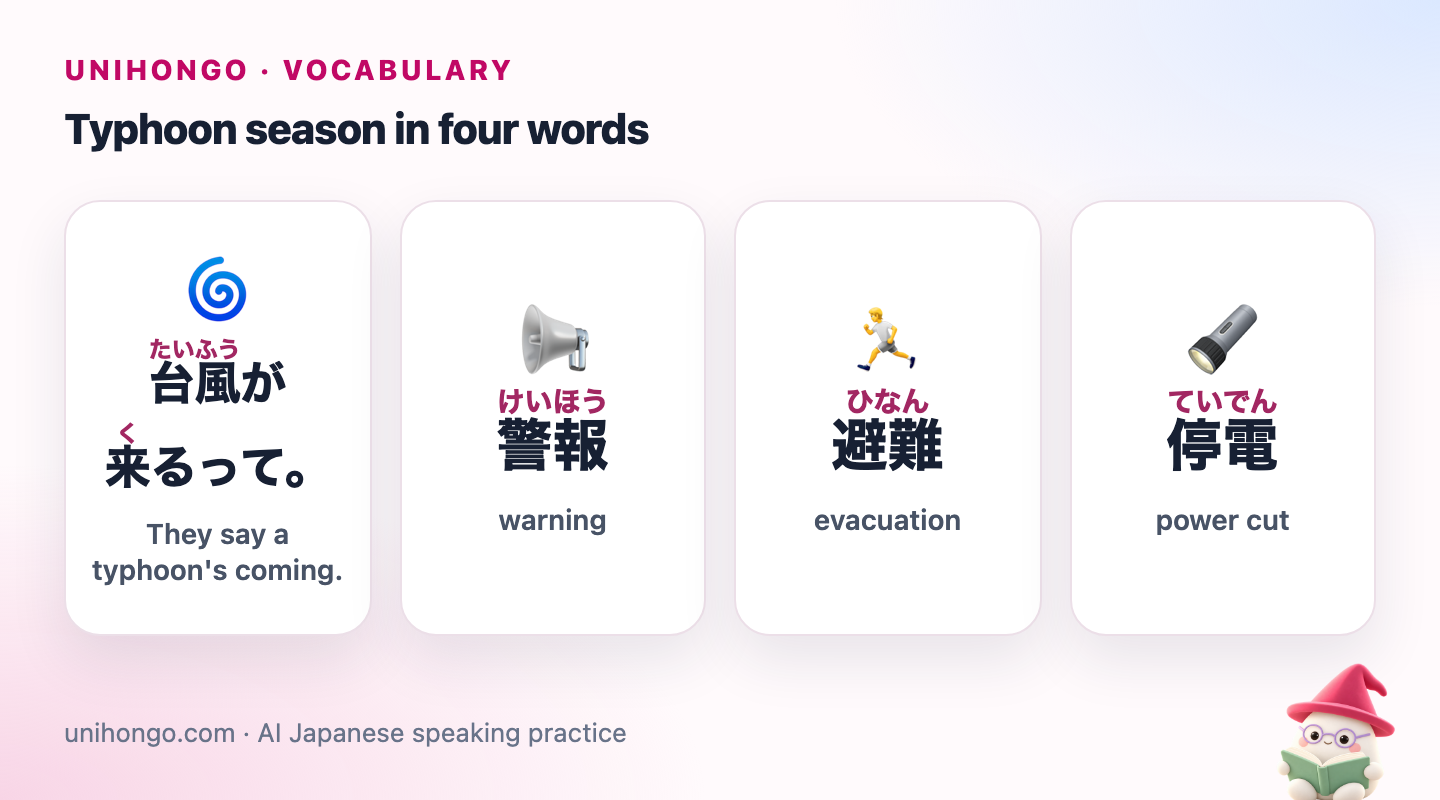
When a typhoon approaches, conversations start with the news that it is coming and quickly move to three things: the warning on the TV, whether anyone has to evacuate, and whether the power will go out.
| Japanese | Romaji | Meaning |
|---|---|---|
| 台風が来るって。 | Taifū ga kuru tte. | They say a typhoon's coming. |
| 警報 | keihō | warning |
| 避難 | hinan | evacuation |
| 停電 | teiden | power cut |
Typhoons are numbered rather than named in Japanese news: taifū jūgō is typhoon number 10 of that year. Kuru, to come, and sekkin suru, to approach, are the verbs you will hear most in conversation.
Advisories, warnings and emergency warnings
Weather information in Japan comes in steps, from advisory to warning to emergency warning, and is issued for specific kinds of danger such as heavy rain, storms, high waves or floods. The names of these bulletins and their level labels have been revised in recent years, so the exact wording on screen can change; the core words below stay useful.
| Japanese | Romaji | Meaning |
|---|---|---|
| 大雨警報が出ています。 | Ōame keihō ga dete imasu. | A heavy rain warning has been issued. |
| 暴風警報が解除されました。 | Bōfū keihō ga kaijo saremashita. | The storm warning has been lifted. |
| 今夜、台風が最も接近します。 | Kon'ya, taifū ga mottomo sekkin shimasu. | The typhoon will be closest tonight. |
| ニュースをこまめに確認しましょう。 | Nyūsu o komame ni kakunin shimashō. | Let's check the news regularly. |
| Word | Reading | Meaning |
|---|---|---|
| 注意報 | chūihō | Advisory: be careful |
| 警報 | keihō | Warning: serious damage is possible |
| 特別警報 | tokubetsu keihō | Emergency warning: exceptional danger |
| 大雨 | ōame | Heavy rain |
| 暴風 | bōfū | Storm-force winds |
| 高潮 | takashio | Storm surge |
Evacuation words from your city
Evacuation information comes from your city, town or ward, not from the weather agency. Since 2021 it has used five alert levels, with clear names for the key steps. Level 3 asks older people and others who need time to start evacuating; level 4, hinan shiji, means everyone in the area should evacuate from danger; level 5 means a disaster may already be happening and you should take the safest action you can immediately. Messages arrive by TV, loudspeaker, city apps and emergency alerts on mobile phones.
Evacuation does not always mean going to a shelter. If your home is safe from flooding and landslides, staying home or moving to a higher floor may be the advice. Your city's hazard map, hazādo mappu, shows which areas are at risk.
| Japanese | Romaji | Meaning |
|---|---|---|
| 高齢者等避難 | kōreisha tō hinan | Level 3: older people and others evacuate |
| 避難指示 | hinan shiji | Level 4: evacuation instruction |
| 緊急安全確保 | kinkyū anzen kakuho | Level 5: take the safest action now |
| 避難所はどこですか。 | Hinanjo wa doko desu ka. | Where is the evacuation shelter? |
| ハザードマップを確認しました。 | Hazādo mappu o kakunin shimashita. | I've checked the hazard map. |
| 二階に避難します。 | Nikai ni hinan shimasu. | We'll move up to the first floor. |
Note that nikai is the second storey in Japanese counting, which is the first floor in British English. Japanese counts the ground floor as ikkai.
Getting your home ready
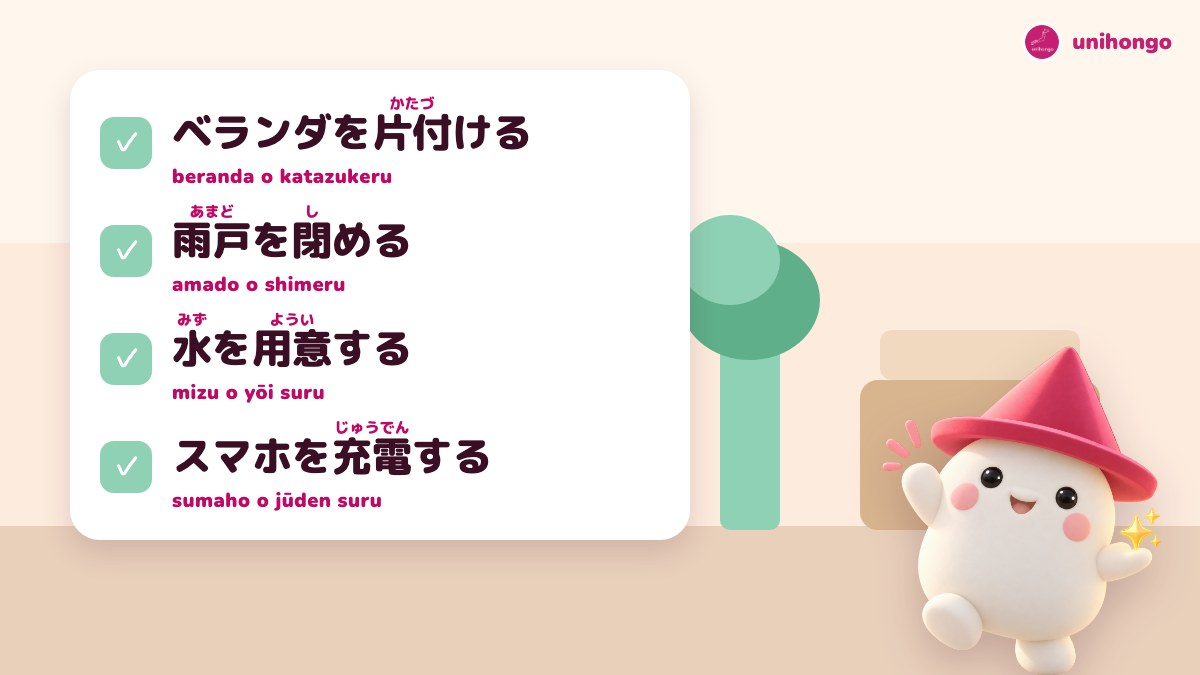
Typhoon preparation, sonae, is a familiar routine. People bring in anything on the balcony that could blow away, close storm shutters, amado, where they have them, sometimes tape windows, charge phones and power banks, and keep water, food and a torch ready. Supermarkets often get busy the day before a strong typhoon, so it helps to stock up early.
| Japanese | Romaji | Meaning |
|---|---|---|
| ベランダの物を片付けます。 | Beranda no mono o katazukemasu. | I'll clear things off the balcony. |
| 雨戸を閉めて。 | Amado o shimete. | Close the storm shutters. (casual) |
| 水を用意しておきます。 | Mizu o yōi shite okimasu. | I'll get some water ready. |
| スマホを充電しておこう。 | Sumaho o jūden shite okō. | Let's charge our phones now. (casual) |
| 懐中電灯 | kaichū dentō | torch, flashlight |
| 非常食 | hijōshoku | emergency food |
Power cuts, water cuts and staying in touch
Strong winds can bring down power lines, and some areas lose water, especially apartment blocks where pumps need electricity. The words are short and worth knowing: teiden for a power cut and dansui for a water cut. Power companies publish outage information online, and neighbours share updates. Telling family and friends that you are safe is a common message after a storm passes.
| Japanese | Romaji | Meaning |
|---|---|---|
| 停電しました。 | Teiden shimashita. | The power has gone out. |
| まだ電気が戻りません。 | Mada denki ga modorimasen. | The power still isn't back. |
| 断水 | dansui | water supply cut |
| お宅は水が出ますか。 | Otaku wa mizu ga demasu ka. | Is your water running? (to a neighbour) |
| こちらは無事です。 | Kochira wa buji desu. | We're safe here. |
Trains, schools and work
Typhoons disrupt daily life in predictable ways. Rail companies may announce keikaku unkyū, a planned suspension, the day before. Schools may become kyūkō, closed for the day, and send messages to parents early in the morning. Many companies tell staff to work from home, leave early or come in late. After the storm, services restart gradually, so expect crowds.
| Japanese | Romaji | Meaning |
|---|---|---|
| 明日は計画運休だそうです。 | Ashita wa keikaku unkyū da sō desu. | Apparently trains will be suspended tomorrow. |
| 電車が止まっています。 | Densha ga tomatte imasu. | The trains have stopped. |
| 学校が休校になりました。 | Gakkō ga kyūkō ni narimashita. | School has been cancelled. |
| 明日は在宅勤務でもいいですか。 | Ashita wa zaitaku kinmu de mo ii desu ka. | Would it be all right if I worked from home tomorrow? |
| 運転再開の見込みは立っていません。 | Unten saikai no mikomi wa tatte imasen. | There's no estimate yet for when trains will restart. |
Mini dialogue: a neighbour on the stairs
| Japanese | Romaji | Meaning |
|---|---|---|
| 台風、今夜来るみたいですね。 | Taifū, kon'ya kuru mitai desu ne. | Neighbour: The typhoon's coming tonight, it seems. |
| そうですね。ベランダの物、もう片付けましたか。 | Sō desu ne. Beranda no mono, mō katazukemashita ka. | You: Yes. Have you cleared your balcony yet? |
| はい。お水も多めに買っておきました。 | Hai. Omizu mo ōme ni katte okimashita. | Neighbour: Yes. I bought extra water too. |
| このあたりの避難所はどこですか。 | Kono atari no hinanjo wa doko desu ka. | You: Where's the shelter around here? |
| 小学校の体育館ですよ。 | Shōgakkō no taiikukan desu yo. | Neighbour: It's the primary school gym. |
| ありがとうございます。お互い気をつけましょう。 | Arigatō gozaimasu. Otagai ki o tsukemashō. | You: Thank you. Let's both stay safe. |
Otagai ki o tsukemashō, let's both be careful, is a warm, natural way to end a chat with a neighbour before any storm. After it passes, ask daijōbu deshita ka, were you all right?
Common learner mistakes in typhoon season
- Treating chūihō and keihō as the same. An advisory and a warning are different steps.
- Thinking evacuation always means going to a shelter. Follow your city's advice for your location; sometimes staying high indoors is safer.
- Saying denki ga kieta for a power cut across the area. It is understood, but teiden shita is the standard word.
- Writing kyūkō as 休講. 休講 is a cancelled university lecture; a whole school closed is 休校. Both are read kyūkō.
- Going out to look at the waves or the river. Local authorities ask people to stay away from coasts and rivers during typhoons.
Prepare the words before the storm
Ask Mocchi: help me write a typhoon checklist in Japanese and a message telling my manager the trains have stopped. Mocchi writes both at your level, uses /explain on any sentence you want broken down, and remembers the evacuation words so it can quiz you again when the next typhoon is forecast.
For the spoken side, open AI Sensei and choose Haru-sensei. Ask the Sensei to play a neighbour in your building the evening before a typhoon, and practise asking about the shelter, sharing supplies and checking on each other the next morning. Your session report lists the corrections and the vocabulary you used.