
Kyūshoku in four words
Kyūshoku (給食) literally means supplied food. The meal is cooked either in the school's own kitchen or in a central kitchen that serves several schools, and it is planned by nutrition staff to be balanced. A typical tray holds rice or bread, a main dish, a side dish, soup and a carton of milk.
These four words come up in every conversation about it, at home and at school.
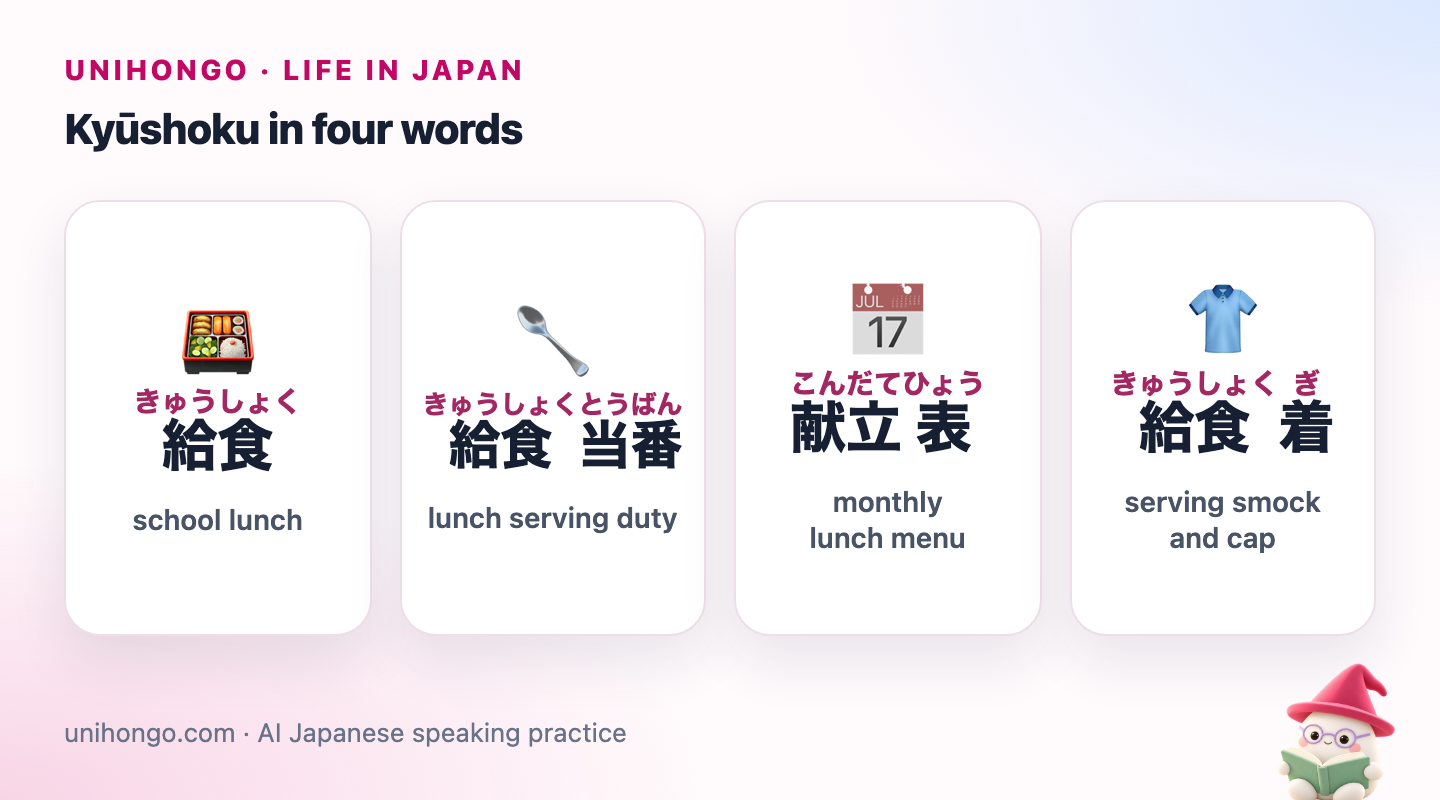
| Japanese | Romaji | Meaning |
|---|---|---|
| 給食 | kyūshoku | school lunch |
| 給食当番 | kyūshoku tōban | lunch serving duty |
| 献立表 | kondatehyō | monthly lunch menu |
| 給食着 | kyūshokugi | serving smock and cap |
How a lunch period runs
Lunch happens in the classroom, not a canteen. The routine is very similar across the country, though the details belong to each school.
| Japanese | Romaji | Meaning |
|---|---|---|
| いただきます。 | Itadakimasu. | Said together before eating. |
| ごちそうさまでした。 | Gochisōsama deshita. | Said together after eating. |
| おかわりしてもいいですか。 | Okawari shite mo ii desu ka. | Child: May I have seconds? |
| 給食着を洗って持ってきてください。 | Kyūshokugi o aratte motte kite kudasai. | Notice: Please wash the smock and bring it back. |
- Desks are moved into small groups, and everyone washes their hands.
- The children on serving duty put on the smock, cap and often a mask, and carry the food containers from the kitchen or a collection point.
- They serve the class from the front of the room while the others line up with trays.
- When everyone is seated, a child on duty leads itadakimasu, and the class eats together, often with the teacher.
- Second helpings, okawari, are shared out by the teacher or the children if there is food left.
- The class says gochisōsama deshita together, then clears up: milk cartons are often opened flat for recycling, and the containers go back.
Serving duty usually rotates weekly by group. On Friday the smock goes home to be washed and ironed, and comes back on Monday for the next child. If your child brings one home, that is the job: wash it, check the name label, and send it back in its bag.
The monthly menu and the words on it
At the start of each month a kondatehyō comes home. It lists each day's dishes, often with the main ingredients grouped by what they do for the body, and sometimes the energy and protein for the meal. Many families stick it on the fridge so they do not cook the same thing for dinner.
Menus mix Japanese home cooking with dishes that children love everywhere, and many schools serve regional specialities or a seasonal dish on festival days. The words below appear on most menus.
| Japanese | Romaji | Meaning |
|---|---|---|
| 主食 | shushoku | staple (rice, bread, noodles) |
| 主菜 | shusai | main dish |
| 副菜 | fukusai | side dish |
| 汁物 | shirumono | soup |
| 牛乳 | gyūnyū | milk |
| 行事食 | gyōjishoku | special dish for a festival or event |
| 郷土料理 | kyōdo ryōri | local traditional dish |
| アレルギー表示 | arerugī hyōji | allergen information |
Allergies and dietary requests
If your child has a food allergy, tell the school before they start or as soon as it is diagnosed. A common process is a form filled in by a doctor, often called the gakkō seikatsu kanri shidōhyō (学校生活管理指導表), followed by a meeting with the homeroom teacher, the school nurse and the nutrition staff. Together you agree on what happens for each dish.
The main options are jokyoshoku (除去食), the same dish with the allergen left out, daitaishoku (代替食), a substitute dish, or bringing food from home on days when the school cannot make the dish safe. What a school can offer depends on its kitchen, so the answer can differ between neighbouring schools.
For religious, vegetarian or other dietary needs, the same meeting is the place to ask. Some schools can leave out certain foods, others suggest bringing a lunch from home on some days. Explain calmly and ask what is possible; schools are used to these conversations.
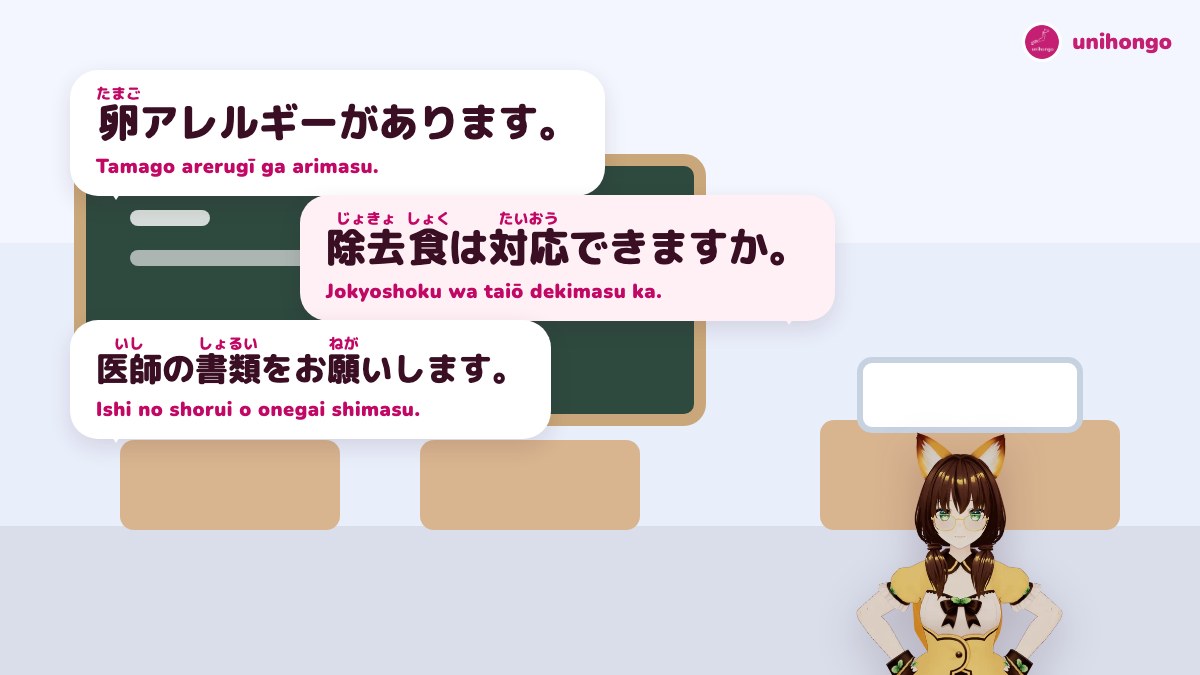
| Japanese | Romaji | Meaning |
|---|---|---|
| 子どもに卵アレルギーがあります。 | Kodomo ni tamago arerugī ga arimasu. | My child has an egg allergy. |
| 除去食は対応できますか。 | Jokyoshoku wa taiō dekimasu ka. | Can you provide meals with it removed? |
| 医師の診断書が必要ですか。 | Ishi no shindansho ga hitsuyō desu ka. | Do you need a doctor's certificate? |
| 宗教上の理由で豚肉が食べられません。 | Shūkyōjō no riyū de butaniku ga taberaremasen. | For religious reasons, they cannot eat pork. |
| その日はお弁当を持たせてもいいですか。 | Sono hi wa obentō o motasete mo ii desu ka. | May I send a lunch box on that day? |
Lunch fees: what you may pay
Traditionally, parents pay the cost of the ingredients as a monthly kyūshokuhi (給食費), and the city or school pays for the kitchen and staff. Payment is often by automatic bank withdrawal, kōza furikae (口座振替), set up with a form at the start of the year.
This has been changing. From April 2026 the national government supports lunch costs at public elementary schools, so many families there pay nothing or less than before, and a number of cities had already made lunch free, sometimes including junior high. Arrangements still differ by city, year and school level, so read the notice from the school or check your city's page rather than relying on what a friend in another town pays.
Families on a low income can often get help with school costs, including lunch, through a school support programme run by the city, usually called shūgaku enjo (就学援助). Ask at the school or the city's board of education.
| Japanese | Romaji | Meaning |
|---|---|---|
| 給食費はかかりますか。 | Kyūshokuhi wa kakarimasu ka. | Is there a fee for school lunch? |
| 口座振替の用紙 | kōza furikae no yōshi | bank withdrawal form |
| 就学援助について聞きたいです。 | Shūgaku enjo ni tsuite kikitai desu. | I'd like to ask about school support. |
Mini dialogue: calling about a slow eater
Some children find kyūshoku hard at first: unfamiliar food, eating with a whole class, and a fixed time to finish. It is fine to tell the teacher. Many teachers no longer push children to finish everything, but approaches vary, so talking early helps.
| Japanese | Romaji | Meaning |
|---|---|---|
| 給食のことで少しご相談があります。 | Kyūshoku no koto de sukoshi gosōdan ga arimasu. | You: I'd like to talk about school lunch. |
| はい、どうされましたか。 | Hai, dō saremashita ka. | Teacher: Yes, what's the matter? |
| 食べるのが遅くて、毎日焦っているようです。 | Taberu no ga osokute, mainichi asette iru yō desu. | You: He eats slowly and seems stressed every day. |
| 量を少なめにすることもできますよ。 | Ryō o sukuname ni suru koto mo dekimasu yo. | Teacher: We can give him a smaller portion. |
| ありがとうございます。助かります。 | Arigatō gozaimasu. Tasukarimasu. | You: Thank you. That helps a lot. |
What surprises newcomers
- Children serving each other. It is part of school life and education, not a lack of staff.
- Eating in the classroom with the teacher. Lunch is a class activity, and there may be quiet eating or a short broadcast at some schools.
- Milk with rice. Many children find it odd at first, but it is the norm in many schools.
- No choices on the day. The menu is set; requests are made in advance and for real needs such as allergies.
- Washing the smock. A forgotten smock on Monday is a small but real problem for the next child, so put a reminder on the calendar.
Turn the menu into a weekly vocabulary list
The kondatehyō is a free reading text that arrives every month. Copy the dishes you cannot read into Mocchi with /create-flashcards, choosing a photo of each dish, and use /review-flashcards once a day; within a couple of months most menus become readable at a glance. When the school sends a dense allergy form, ask Mocchi to explain each line before you fill it in.
For the vocabulary itself, Sushi Sort in Unihongo's games is a quick way to practise food words in short rounds while you wait at the school gate.