
The rules in four cards
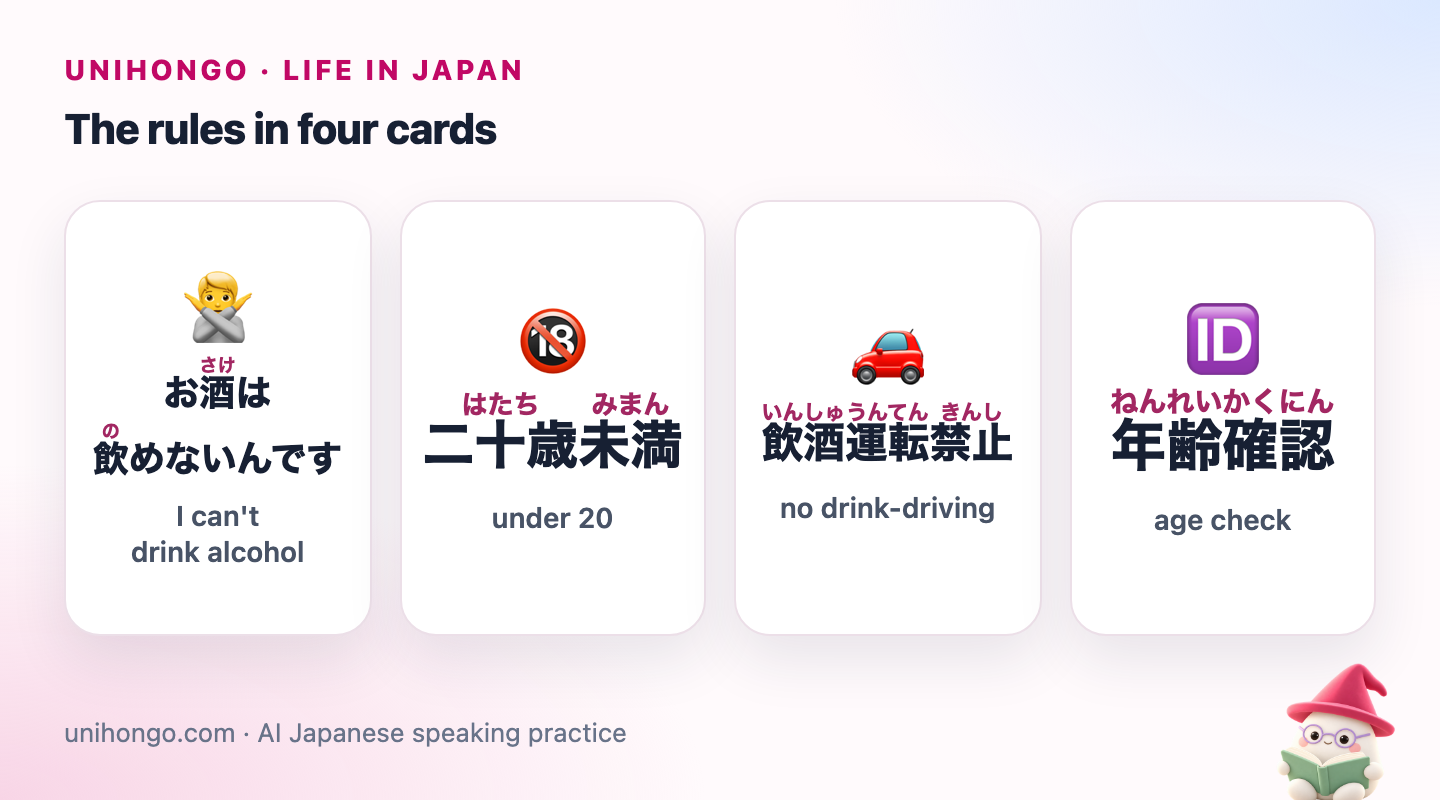
Four short phrases cover the most important rules and the most useful sentence for anyone who does not want to drink. You will see the first three on posters, receipts and register screens.
| Japanese | Romaji | Meaning |
|---|---|---|
| お酒は飲めないんです | O sake wa nomenai n desu | I can't drink alcohol |
| 二十歳未満 | hatachi miman | under 20 |
| 飲酒運転禁止 | inshu unten kinshi | no drink-driving |
| 年齢確認 | nenrei kakunin | age check |
Age 20: buying and drinking
Drinking alcohol is allowed from 20. The age of adulthood was lowered to 18 in 2022, but the ages for alcohol, tobacco and gambling stayed at 20. Shops are expected not to sell alcohol to under-20s, so many convenience store and supermarket registers show an age confirmation screen when you buy alcohol, and you tap a button to confirm you are 20 or over. Staff may also ask to see ID, especially if you look young; your residence card works.
At restaurants, staff may ask a group whether everyone is over 20 before serving alcohol. A university club party with first-year students is the classic situation where this matters.
| Japanese | Romaji | Meaning |
|---|---|---|
| 二十歳以上ですか。 | Hatachi ijō desu ka. | Are you 20 or over? |
| 画面のタッチをお願いします。 | Gamen no tatchi o onegai shimasu. | Clerk: Please touch the screen. |
| 身分証明書をお持ちですか。 | Mibun shōmeisho o omochi desu ka. | Clerk: Do you have ID? |
| はい、在留カードです。 | Hai, zairyū kādo desu. | Yes, here's my residence card. |
Drink-driving: strict for everyone, including cyclists
Japan's Road Traffic Act forbids driving after drinking alcohol, and penalties include heavy fines, imprisonment and losing your licence. The responsibility is shared: a person who lends a car to someone who has been drinking, a person who serves alcohol to someone they know will drive, and a passenger who knowingly rides with a drinking driver can all be punished.
Since November 2024, riding a bicycle with alcohol in your system is also punishable, along with the people who provide the alcohol or the bicycle. Riding while drunk was already illegal. In practice, the rule people follow is simple: if you drink, even one glass, you do not drive or cycle, and the next morning you check that you are completely sober. Groups often choose a designated driver, called a handoru kīpā.
| Japanese | Romaji | Meaning |
|---|---|---|
| 車なので、ノンアルでお願いします。 | Kuruma na node, non'aru de onegai shimasu. | I'm driving, so a non-alcoholic one, please. |
| 自転車なので飲みません。 | Jitensha na node nomimasen. | I'm on my bike, so I won't drink. |
| 代行を呼びましょうか。 | Daikō o yobimashō ka. | Shall we call a driving service? |
| ハンドルキーパー | handoru kīpā | designated driver |
Daikō, short for unten daikō, is a service in many areas where a driver comes to take you and your own car home. It is common outside big cities, where people drive to dinner.
Drinking in public
Unlike many countries, Japan has no general ban on drinking in public. You will see people drinking at cherry blossom parties in parks, on long-distance trains and at summer festivals. Local rules can still apply. Shibuya ward in Tokyo, for example, restricts street drinking in the area around Shibuya station at night all year round, and some parks or events set their own rules. Being visibly drunk and causing a nuisance can lead to police involvement anywhere.
On commuter trains, drinking is legal but generally avoided during busy hours, and opening a can of beer in a crowded carriage will get looks. On long-distance trains such as the shinkansen, a beer with a bentō is completely normal.
| Japanese | Romaji | Meaning |
|---|---|---|
| ここで飲んでも大丈夫ですか。 | Koko de nonde mo daijōbu desu ka. | Is it OK to drink here? |
| 路上飲酒禁止 | rojō inshu kinshi | no drinking on the street |
Reading the drink menu
Drink menus use a mix of kanji, katakana and abbreviations. The names below cover most izakaya menus, and the second group tells you how a spirit is served. Chūhai and sawā both mean a spirit mixed with soda and flavour, usually lemon or grapefruit; the difference is mostly in the name.
| Japanese | Romaji | Meaning |
|---|---|---|
| 生ビール | nama bīru | draught beer |
| 瓶ビール | bin bīru | bottled beer |
| 中ジョッキ | chū jokki | medium mug |
| ハイボール | haibōru | whisky and soda |
| レモンサワー | remon sawā | lemon sour (spirit, soda, lemon) |
| 日本酒 | nihonshu | sake |
| 熱燗 | atsukan | hot sake |
| 焼酎 | shōchū | shōchū (distilled spirit) |
| 梅酒 | umeshu | plum wine |
| ロック | rokku | on the rocks |
| 水割り | mizuwari | with water |
| ソーダ割り | sōdawari | with soda |
| ノンアルコール | non arukōru | alcohol-free |
All-you-can-drink plans and their rules
Nomihōdai is a set price for unlimited drinks within a time limit, often 90 minutes or two hours. The menu shows which drinks are included; premium items may cost extra. Last orders, rasuto ōdā, usually come about 30 minutes before the end. Many restaurants require everyone at the table to choose the plan, and some ask you to finish a drink before ordering the next. Non-drinkers can often choose a cheaper soft drink plan.
| Japanese | Romaji | Meaning |
|---|---|---|
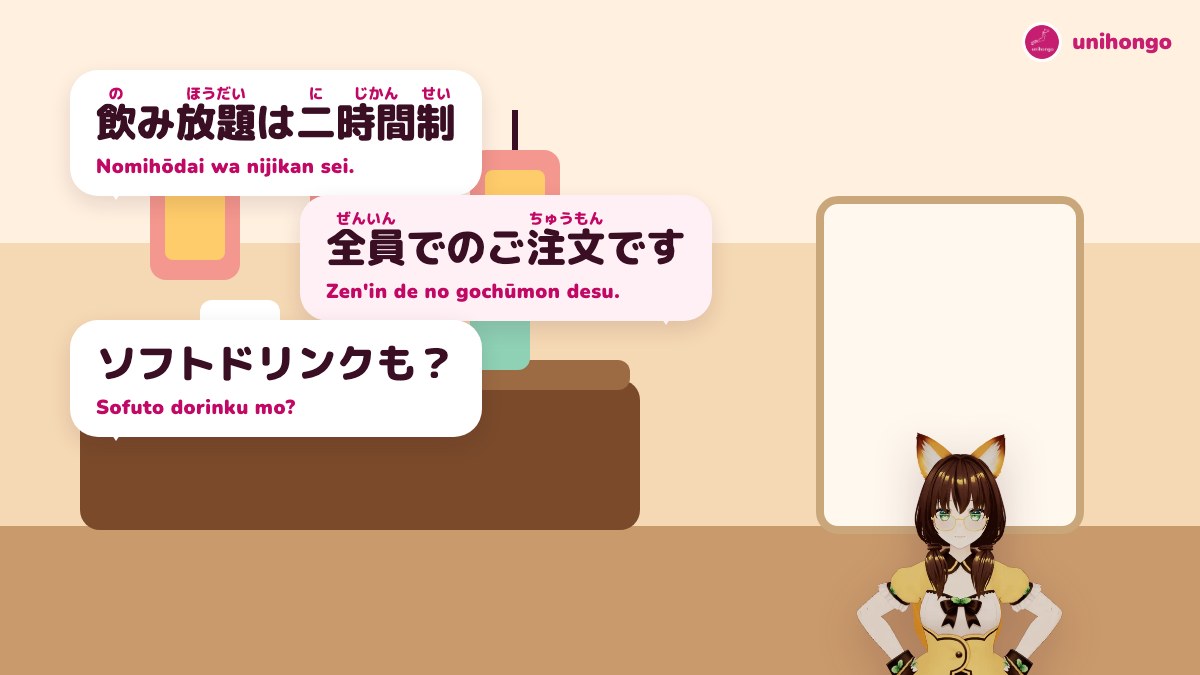
| 飲み放題は二時間制です。 | Nomihōdai wa nijikan sei desu. | Staff: All-you-can-drink is two hours. |
| 全員でのご注文になります。 | Zen'in de no gochūmon ni narimasu. | Staff: The whole table needs to order it. |
| ソフトドリンク飲み放題はありますか。 | Sofuto dorinku nomihōdai wa arimasu ka. | Is there a soft drink plan? |
| ラストオーダーです。 | Rasuto ōdā desu. | Staff: It's last orders. |
Not drinking, and when someone drinks too much
Many people in Japan do not drink, for health, religion, pregnancy, medication or simple preference, and saying so is accepted far more than newcomers expect. Order oolong tea or a soft drink, join the toast, and if someone tries to pour, cover your glass lightly with your hand and smile. Pressuring someone to drink is called aruhara, alcohol harassment, and forcing someone to drink fast, ikki nomi, is dangerous and widely condemned.
If someone collapses, cannot be woken, vomits while lying down or breathes strangely, it may be acute alcohol poisoning. Turn them on their side, do not leave them alone, and call 119 for an ambulance.
| Japanese | Romaji | Meaning |
|---|---|---|
| 今日は控えておきます。 | Kyō wa hikaete okimasu. | I'll take it easy tonight. |
| 体質的に飲めないんです。 | Taishitsuteki ni nomenai n desu. | Alcohol doesn't agree with my body. |
| ウーロン茶でお願いします。 | Ūroncha de onegai shimasu. | Oolong tea, please. |
| 救急車をお願いします。 | Kyūkyūsha o onegai shimasu. | An ambulance, please. (to 119) |
| 友達が意識がありません。 | Tomodachi ga ishiki ga arimasen. | My friend is unconscious. |
Mistakes newcomers make
- Driving the morning after a long night. Alcohol can still be in your system; wait until you are clearly sober.
- Assuming 18 is enough because it is the age of adulthood. For alcohol it is 20.
- Thinking you must drink at work parties. A soft drink is completely fine.
- Ordering shōchū rokku expecting something mild. It is much stronger than beer.
- Opening a can on a packed commuter train. It is legal but looks out of place.
Order, decline and stay safe out loud
Menus are vocabulary, and saying no is speaking. Ask Mocchi to quiz you: give me ten Japanese drink menu words and ask me how each is served. Mocchi explains each answer and remembers the ones you miss.
For the spoken side, the First Round at an Izakaya mission in AI Sensei puts you at the table with the menu. Ask Haru-sensei to play a colleague who keeps offering you another drink, and practise declining warmly.