
Work events in four cards
Most work events fall into a few familiar types. Shain ryokō is a company trip, undōkai a sports day, and bābekyū a barbecue, often shortened to BBQ on notices. Hanami is the spring party under the cherry blossoms, usually after work or on a weekend.
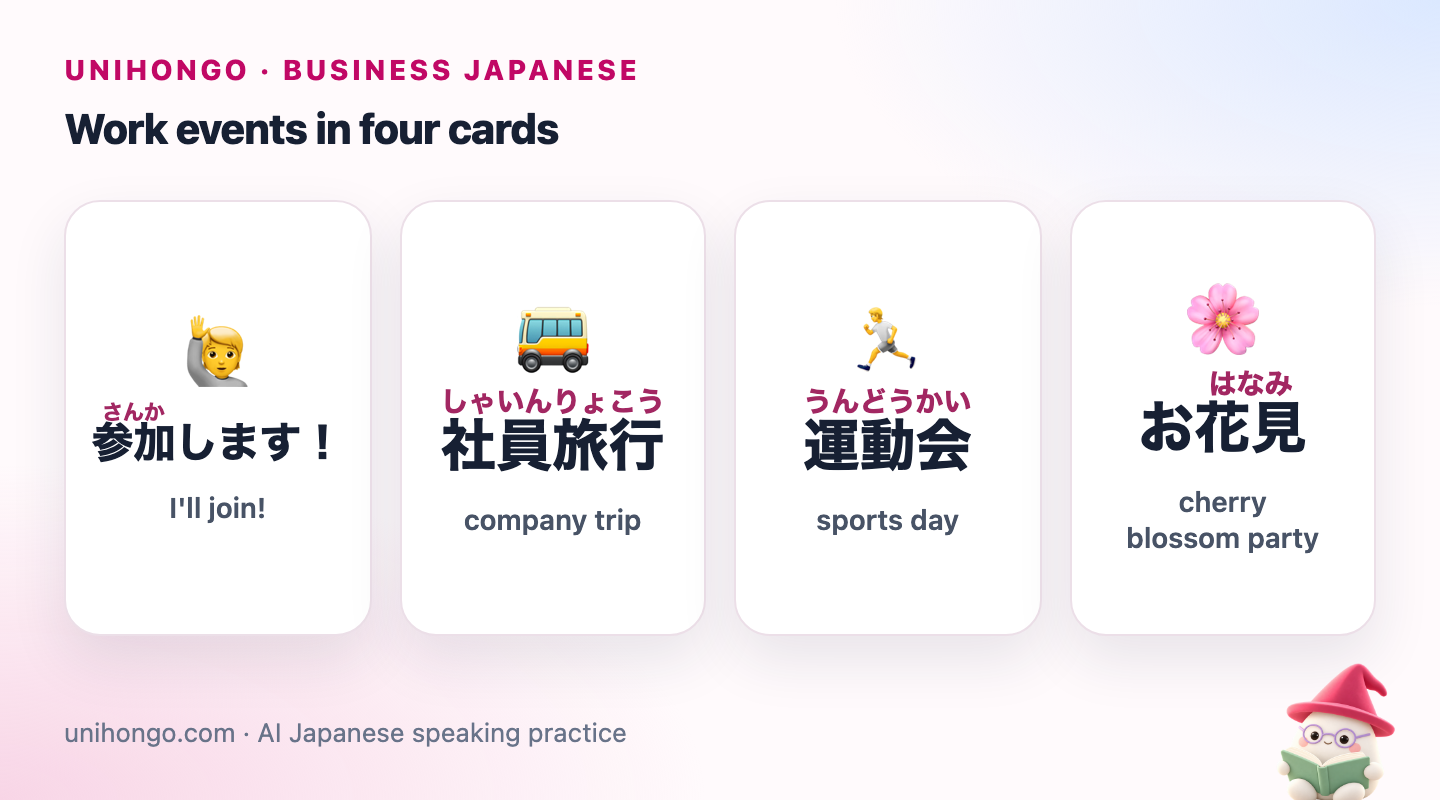
| Japanese | Romaji | Meaning |
|---|---|---|
| 参加します! | Sanka shimasu! | I'll join! |
| 社員旅行 | shain ryokō | company trip |
| 運動会 | undōkai | sports day |
| お花見 | ohanami | cherry blossom party |
Other events include a summer barbecue, a family day when children can visit the office, volunteer clean-ups, and the year-end and New Year parties. Some companies hold none; others hold one big event a year.
Reading the event notice
Events are announced by email, on the intranet or on a paper notice, and the format is similar everywhere. These are the words to find first.
| Japanese | Romaji | Meaning |
|---|---|---|
| 自由参加 | jiyū sanka | free to join (optional) |
| 参加必須 | sanka hissu | attendance required |
| 出欠 | shukketsu | attendance or absence |
| 締め切り | shimekiri | deadline |
| 集合時間 | shūgō jikan | meeting time |
| 集合場所 | shūgō basho | meeting place |
| 現地解散 | genchi kaisan | the group splits up at the venue |
| 家族参加可 | kazoku sanka ka | families welcome |
| 持ち物 | mochimono | things to bring |
Many notices ask you to reply with shukketsu by a deadline, often in a shared form or by replying to the organiser. Genchi kaisan means there is no organised return; you go home on your own from the last stop.
Company trips: the usual programme
A classic shain ryokō is one or two nights at a hot spring town, with a chartered bus or reserved train seats. The programme usually looks like this, though every company is different.
| Japanese | Romaji | Meaning |
|---|---|---|
| 宴会 | enkai | banquet |
| 相部屋 | aibeya | shared room |
| 食べられないものがあるんですが。 | Taberarenai mono ga aru n desu ga. | There are some foods I can't eat. |
| 部屋割りはどうなりますか。 | Heyawari wa dō narimasu ka. | How will the rooms be divided? |
- Meet in the morning at a station or the office, with a roll call by the organiser.
- Travel together, often with snacks passed around on the bus.
- Sightseeing or an activity such as fruit picking or a factory tour.
- Check in to the inn; many people change into the inn's yukata.
- A banquet dinner, enkai, with a toast, speeches and sometimes games.
- Free time: baths, a second round in someone's room, or an early night.
- Breakfast, a little more sightseeing, then home.
Rooms are often shared with colleagues of the same gender. If you have a reason to need a single room, such as health or religious practice, ask the organiser early and privately. Dietary needs are easier to arrange before the inn is booked than on the day.
Some people bring back a small box of local sweets, omiyage, for colleagues who could not come, and the organiser often handles this for the whole group. On the first working day after the trip, a short otsukaresama deshita and a thank-you to the organiser are all that is expected. If you join a trip for the first time, ask a colleague who went last year what people usually wear on the bus and to the banquet; that one question saves most of the guesswork.
Sports days, barbecues and hanami
Company sports days, undōkai, are less common than they used to be but have come back at some firms as a team-building event. Expect relay races, tug of war and silly games in teams, and a lot of cheering. Nobody expects you to be good; being cheerful counts for more.
At barbecues and hanami, the younger staff or the organiser often handle the preparation: reserving a spot, buying food and drinks, cleaning up. Offering to help is the easiest way to fit in. At hanami, someone may go early to hold a spot with a blue sheet, and rules on drinking and barbecues differ by park, so the organiser checks them.
| Japanese | Romaji | Meaning |
|---|---|---|
| 何か手伝いましょうか。 | Nanika tetsudaimashō ka. | Shall I help with something? |
| お肉、焼きますね。 | Oniku, yakimasu ne. | I'll grill the meat. |
| ゴミはこちらにまとめます。 | Gomi wa kochira ni matomemasu. | I'll gather the rubbish here. |
| 頑張れ! | Ganbare! | Go for it! (cheering) |
Mini dialogue: replying to the organiser
Here is a quick exchange with the organiser about a trip. Notice how the questions stay practical and short.
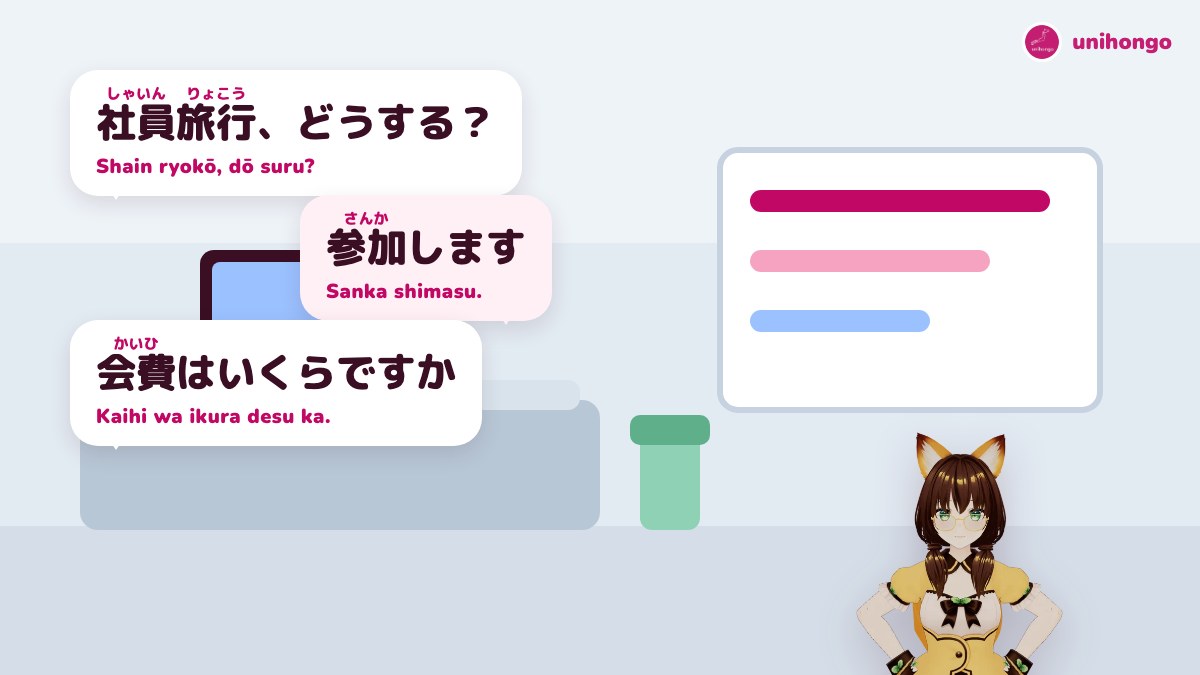
| Japanese | Romaji | Meaning |
|---|---|---|
| 社員旅行、どうする? | Shain ryokō, dō suru? | Organiser: What about the company trip? |
| 参加します。会費はいくらですか。 | Sanka shimasu. Kaihi wa ikura desu ka. | You: I'll join. How much is the fee? |
| 会社が全額出してくれるよ。 | Kaisha ga zengaku dashite kureru yo. | Organiser: The company is paying for all of it. |
| よかった。旅館に部屋風呂はありますか。 | Yokatta. Ryokan ni heyaburo wa arimasu ka. | You: Great. Does the inn have baths in the rooms? |
| 確認しておくね。 | Kakunin shite oku ne. | Organiser: I'll check for you. |
| ありがとうございます。助かります。 | Arigatō gozaimasu. Tasukarimasu. | You: Thank you. That helps a lot. |
Declining without awkwardness
If you cannot or do not want to go, reply by the deadline, thank the organiser and give a short reason. Family commitments, other plans or simply a scheduling conflict are all accepted. You do not need to explain in detail. If you skip a big trip, joining a smaller event later, or bringing back a small souvenir from your own travels, keeps relationships warm.
| Japanese | Romaji | Meaning |
|---|---|---|
| せっかくですが、今回は不参加でお願いします。 | Sekkaku desu ga, konkai wa fusanka de onegai shimasu. | It's kind of you, but I'll skip it this time. |
| その週末は家族の予定がありまして。 | Sono shūmatsu wa kazoku no yotei ga arimashite. | I have family plans that weekend. |
| 次の機会にはぜひ参加したいです。 | Tsugi no kikai ni wa zehi sanka shitai desu. | I'd love to join next time. |
| 楽しんできてください。 | Tanoshinde kite kudasai. | Have a great time. |
What surprises newcomers
- Optional does not always feel optional. In some teams almost everyone joins; in others few do. Watch your colleagues and ask a peer you trust.
- Drinking starts early. Beer may appear on the bus. You can always drink tea or soft drinks.
- Yukata at dinner. At inns many people wear the inn's yukata to the banquet. Wrap the left side over the right.
- Juniors do the chores. Newer staff often help with preparation; offering to help is appreciated.
- Expenses afterwards. If the company pays part of the trip, the cost may appear on your payslip or be collected separately. Ask HR if you are unsure.
Prepare for the bus and the banquet
The words on an event notice are short and dense, and Mocchi can unpack them. Paste a line from the notice and type /explain, and Mocchi breaks down each word and the polite forms. Then try: make me a quiz on company event words and remind me of the ones I miss next week.
For the social side, try a Unihongo roleplay with AI Sensei: ask Sakura-sensei to play a friendly colleague sitting next to you on the bus who asks about your weekend, your hobbies and your hometown.