
Four words on every vaccination day
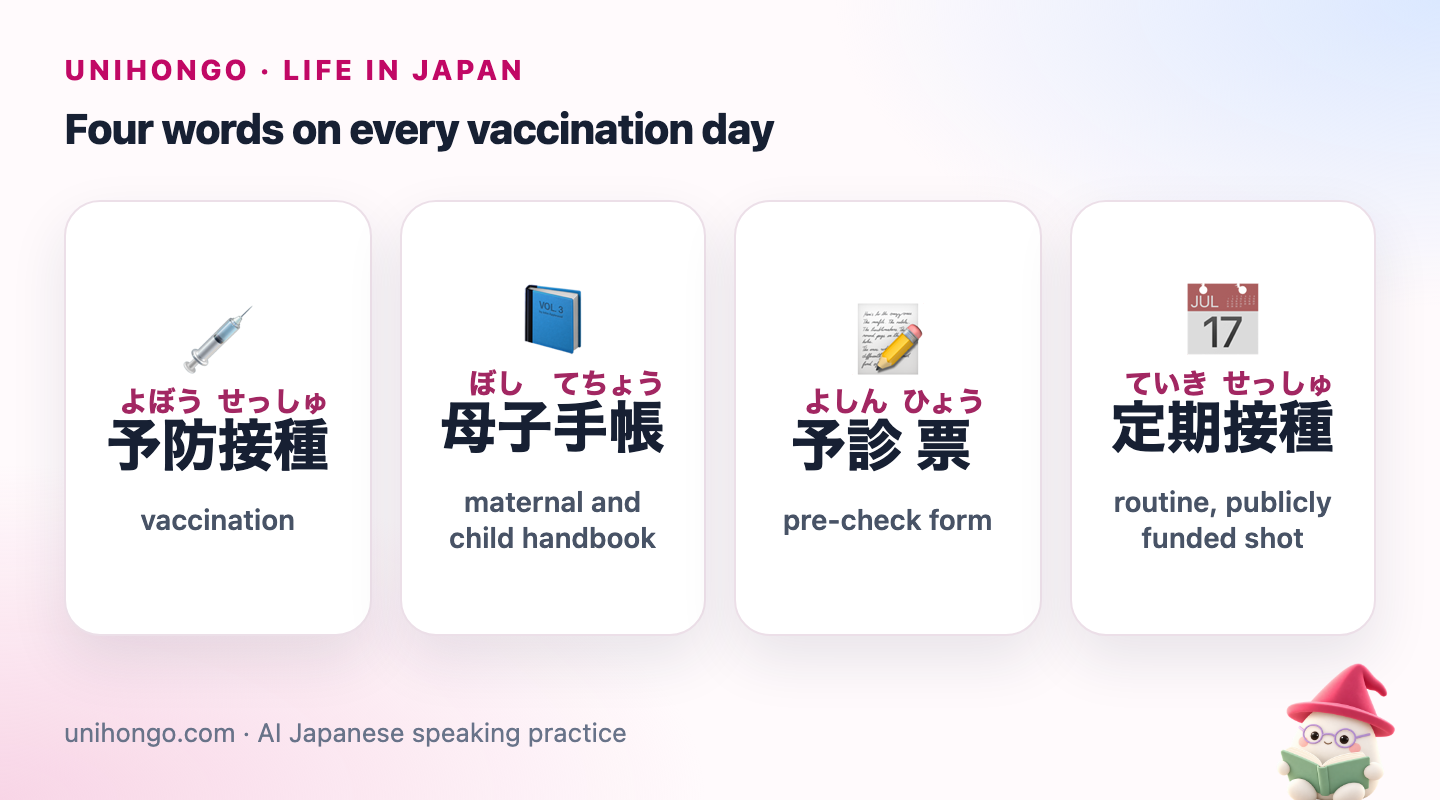
Yobō sesshu (予防接種) literally means preventive inoculation. Clinics, city letters and other parents also say wakuchin (ワクチン), vaccine, and chūsha (注射), injection. These four words are the ones you will see on the city's letters and hear at the clinic.
| Japanese | Romaji | Meaning |
|---|---|---|
| 予防接種 | yobō sesshu | vaccination |
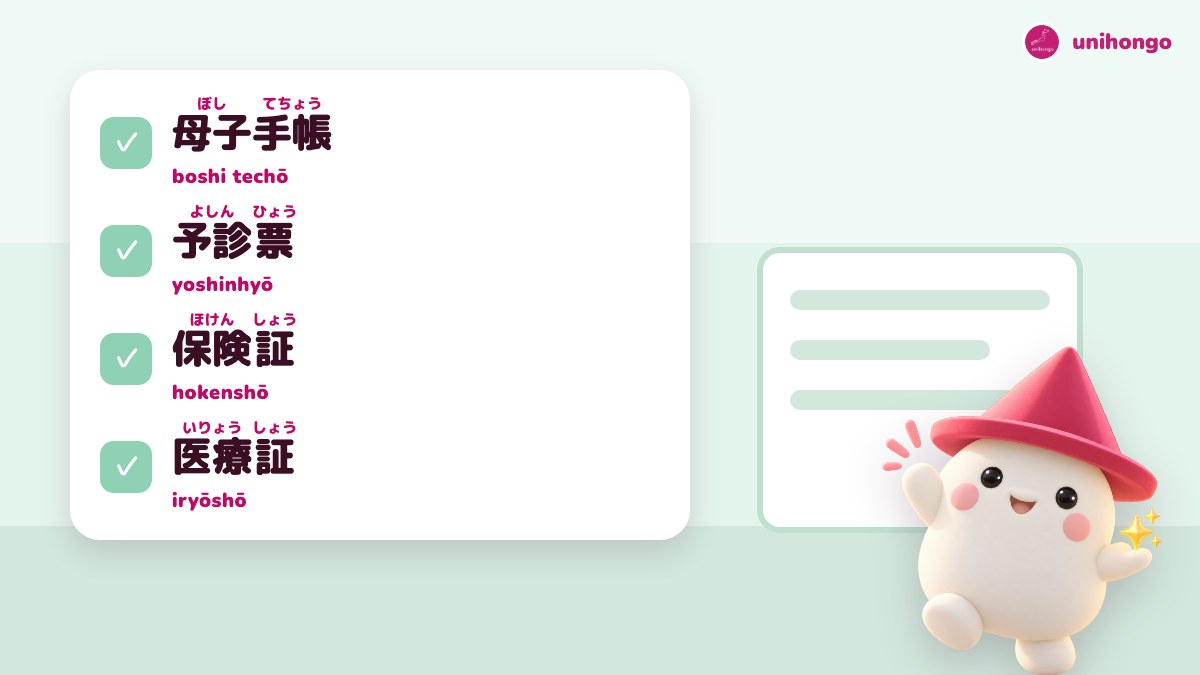
| 母子手帳 | boshi techō | maternal and child handbook |
| 予診票 | yoshinhyō | pre-check form |
| 定期接種 | teiki sesshu | routine, publicly funded shot |
Routine and voluntary vaccinations
Japanese law sets which vaccinations are routine. The city carries them out, usually through local clinics that have signed up to give them, and pays for them when they are given within the target ages. Other vaccines are voluntary: available, often recommended by pediatricians, but chosen and paid for by the family.
| Japanese | Romaji | Meaning |
|---|---|---|
| 任意接種 | nin'i sesshu | voluntary vaccination |
| 対象年齢 | taishō nenrei | target age |
| 接種期限 | sesshu kigen | deadline for the vaccination |
| 同時接種 | dōji sesshu | several vaccines at one visit |
| Point | Routine | Voluntary |
|---|---|---|
| Japanese term | Teiki sesshu | Nin'i sesshu |
| Cost | Publicly funded within the target ages | Usually paid by the family; some cities subsidise some vaccines |
| Forms | Pre-check forms sent or handed out by the city | Form provided by the clinic |
| Examples | Most infant vaccines, measles and rubella | Mumps, seasonal influenza for children |
| Who decides the timing | National schedule, explained by the city | You and your doctor |
If a routine vaccine is given after the target age, it may no longer be free, so keep an eye on the deadlines printed on the forms. The list of routine vaccines changes from time to time, as in 2024 when a combined five-in-one vaccine was added, so trust the city's current page over older blog posts.
How the city gets you started
After a birth is registered, the city usually sends or hands out a set of pre-check forms and a schedule, often around the time of the newborn home visit or the first checkup. If you move to a new city, your old forms may not be valid there, so ask the new city's health section for its own forms when you register your move.
The forms come with a list of participating clinics, shitei iryō kikan (指定医療機関). Most pediatric clinics are on it. Some cities give certain vaccines at group sessions at the health centre instead, so read the letter carefully.
| Japanese | Romaji | Meaning |
|---|---|---|
| 転入したので、予診票をもらいたいです。 | Tennyū shita node, yoshinhyō o moraitai desu. | I've moved here, and I'd like the pre-check forms. |
| この病院で受けられますか。 | Kono byōin de ukeraremasu ka. | Can we get it at this clinic? |
- Check the city's schedule and note which vaccines are due at the next age.
- Book a participating clinic, by phone or through its online booking.
- Fill in the pre-check form at home the day before, apart from the temperature.
- Take the temperature on the day and bring everything listed in the checklist below.
Booking the vaccination
Many clinics have special vaccination hours, often separate from the hours for sick children, so that healthy babies do not sit with patients who have colds. Some only take vaccinations by appointment. On the phone, the receptionist will usually ask the child's age, the vaccine names and whether it is the first visit.
| Japanese | Romaji | Meaning |
|---|---|---|
| 予防接種の予約をしたいんですが。 | Yobō sesshu no yoyaku o shitai n desu ga. | I'd like to book a vaccination. |
| 生後二か月です。 | Seigo nikagetsu desu. | She is two months old. |
| どのワクチンですか。 | Dono wakuchin desu ka. | Receptionist: Which vaccine? |
| 初めてです。 | Hajimete desu. | It's our first visit. |
| 予防接種の時間は何時からですか。 | Yobō sesshu no jikan wa nanji kara desu ka. | From what time are the vaccination hours? |
The pre-check form, line by line
The yoshinhyō is a short health questionnaire with yes or no boxes. The doctor reads it before deciding whether your child can be vaccinated that day, so answer honestly; a yes does not always mean no vaccination, it means the doctor will ask a question. At the bottom, the parent signs to say they understand the explanation and wish the child to be vaccinated.
| Japanese | Romaji | Meaning |
|---|---|---|
| 体温 | taion | body temperature |
| 今日の体調 | kyō no taichō | how the child is today |
| 最近一か月以内に病気にかかりましたか | saikin ikkagetsu inai ni byōki ni kakarimashita ka | Has the child been ill in the past month? |
| けいれん | keiren | seizure, convulsion |
| アレルギー | arerugī | allergy |
| 前回の予防接種で具合が悪くなりましたか | zenkai no yobō sesshu de guai ga waruku narimashita ka | Was the child unwell after the last vaccination? |
| 保護者の署名 | hogosha no shomei | parent's or guardian's signature |
| 接種を希望します | sesshu o kibō shimasu | I wish the child to be vaccinated |
On the day: what to bring and what to expect
Take your child's temperature at home and write it on the form. If the child has a clear fever, a temperature of 37.5°C or higher, the vaccination is normally postponed, and the clinic may check again on arrival. The doctor listens to the chest, looks at the form and asks a few questions. Several vaccines are often given in one visit, in different places on the arms or thighs.
Afterwards, clinics usually ask you to stay for a while so staff can watch for a reaction, then write the vaccination into the boshi techō. They will tell you what to look out for at home, such as redness or swelling at the injection site or a fever, and when to call. For anything that worries you, call the clinic, or 119 in an emergency.
| Japanese | Romaji | Meaning |
|---|---|---|
| 今日は熱はありません。 | Kyō wa netsu wa arimasen. | She doesn't have a fever today. |
| 今朝は三十六度八分でした。 | Kesa wa sanjūroku do hachibu deshita. | It was 36.8 degrees this morning. |
| 先週、少し風邪をひいていました。 | Senshū, sukoshi kaze o hiite imashita. | He had a slight cold last week. |
| 接種したところが赤く腫れています。 | Sesshu shita tokoro ga akaku harete imasu. | The injection site is red and swollen. |
Mini dialogue: in the examination room
| Japanese | Romaji | Meaning |
|---|---|---|
| 今日は二種類打ちますね。 | Kyō wa nishurui uchimasu ne. | Doctor: We'll give two vaccines today. |
| はい、お願いします。 | Hai, onegai shimasu. | You: Yes, please. |
| 前回、熱は出ましたか。 | Zenkai, netsu wa demashita ka. | Doctor: Did she get a fever last time? |
| いいえ、少し腫れただけでした。 | Iie, sukoshi hareta dake deshita. | You: No, just a little swelling. |
| では、しっかり抱っこしてくださいね。 | Dewa, shikkari dakko shite kudasai ne. | Doctor: Then please hold her firmly. |
| お風呂は入っても大丈夫ですか。 | Ofuro wa haitte mo daijōbu desu ka. | You: Is it OK for her to have a bath? |
Coming from abroad, and things that confuse parents
| Japanese | Romaji | Meaning |
|---|---|---|
| 海外で受けた予防接種の記録があります。 | Kaigai de uketa yobō sesshu no kiroku ga arimasu. | I have records of vaccinations done abroad. |
| あと何回必要ですか。 | Ato nankai hitsuyō desu ka. | How many more doses are needed? |
- Different schedules. Japan's timing and combinations differ from other countries. Bring your records to the health centre or pediatrician and ask for a plan.
- Forms from your old city. Pre-check forms are usually only valid in the city that issued them; ask your new city for its own.
- Missing the target age. A routine dose given late may no longer be publicly funded, so check deadlines.
- The checkup is not the vaccination. Infant health checkups, nyūyōji kenshin, are separate appointments, often at the health centre, though both use the boshi techō.
- Two kinds of hours. Arriving during sick-child hours for a vaccination can mean a longer wait or being asked to come back.
Rehearse the booking call and the form
Ask Mocchi to /create-flashcards from the words on your city's pre-check form, and review them the week before the appointment. If one question on the form is unclear, paste it into Mocchi with /explain to see what it asks before you tick a box.
Then practise the call itself. In AI Sensei, choose Sakura-sensei and ask the Sensei to play the receptionist at a pediatric clinic: book a vaccination for a two-month-old, give the vaccine names, and ask about the vaccination hours. The session report shows which counters and words you mixed up.